Decorative mirrors for small spaces can make a room feel brighter and more open without taking up valuable floor space. The trick is to position them where they reflect daylight, an attractive view, or a well-lit part of the room. Choose the right size and shape, and a mirror can add visual depth. Put it in the wrong place, and it may simply reflect clutter or create glare.
Think about a small bedroom with one window. The corner farthest from that window feels dark, and the walls seem closer than they really are. Adding a mirror might help, but only if it catches useful light and sends the reflection toward the part of the room that needs it.
This guide explains how to choose a mirror, where to position it, and which common mistakes to avoid.
Key Takeaways
- Place mirrors opposite or near windows when you want to redirect natural light.
- Check the reflection before choosing a permanent position. A mirror can make clutter look twice as noticeable.
- Tall mirrors add a sense of height, while wide mirrors can make narrow walls feel broader.
- Match a mirror’s width to the furniture or wall around it instead of choosing a size at random.
- Test for afternoon glare before drilling holes or installing heavy hardware.
- Mirrors reflect existing light; they do not create additional light.
Why Decorative Mirrors for Small Spaces Work
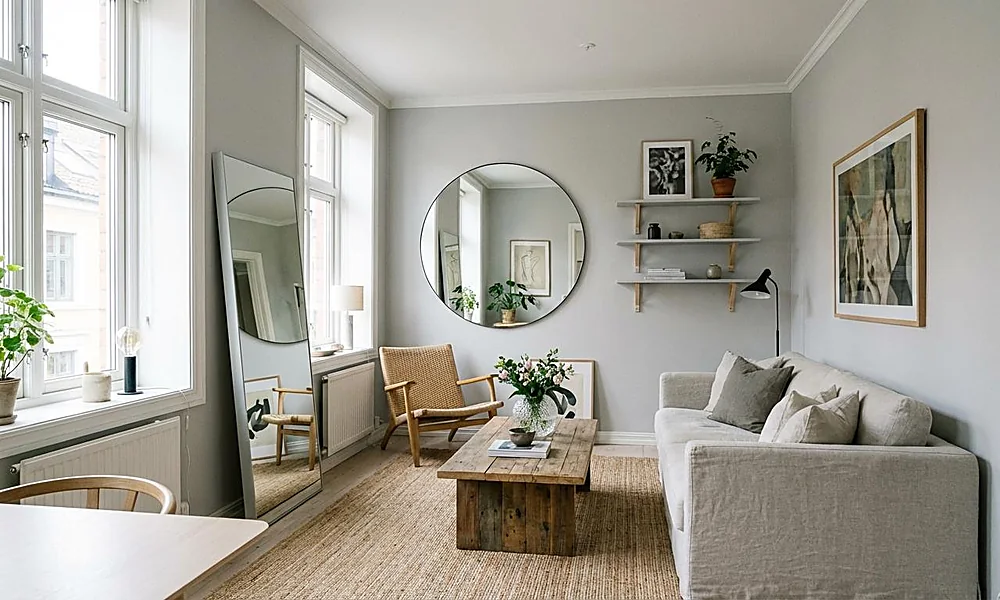
Small rooms often feel cramped because they have limited natural light and few clear sightlines. Mirrors can help with both problems. A mirror reflects the light that reaches its surface. When placed where it can catch daylight, it can redirect some of that light toward a darker area. The result depends on the window’s position, the mirror’s angle, and what sits around it.
Mirrors also create the impression of extra depth. When a mirror reflects a window, doorway, attractive view, or neatly styled part of the room, the reflection can make the space feel as though it continues beyond the wall.
However, the effect is not automatic. A mirror facing a blank wall simply reflects that wall. One facing an untidy desk or crowded shelf can make the room feel busier.
The goal is not to cover every empty wall with glass. It is to choose one or two positions that improve the room’s light and visual balance.
The Light Rules: Where to Place Mirrors Near Windows
Before hanging a mirror, identify the room’s main light source. In most homes, that will be a window or a glazed door. Then consider which wall allows the mirror to reflect that light into the area where you spend time.
Rule 1: Place a mirror opposite a window when the reflection is useful
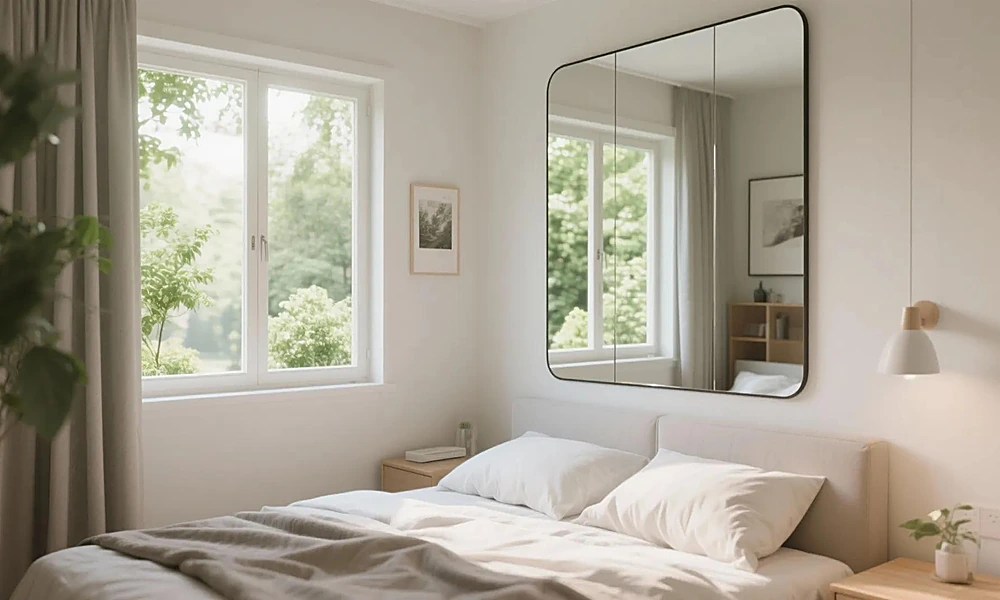
A mirror on the wall opposite a window can reflect daylight and the outdoor view back into the room. This is often a useful option for dark bedrooms, small living rooms, and rooms with only one main window.
Check what the window actually shows. A garden, tree, or open view can make an attractive reflection. A close wall, busy parking area, or unattractive service space may not have the same effect.
The Glazing Manual from the Glass and Glazing Federation explains how mirrors can create an illusion of extra space and bring reflected light deeper into a room. It also emphasizes the importance of giving the mirror something attractive to reflect.
Rule 2: Use an adjacent wall when direct reflection causes glare

An opposite-window position is not always the best choice. If sunlight reflects directly toward your sofa, television, desk, or usual seating position, the mirror may become distracting.
Try the wall beside the window instead. A slightly different angle may still catch useful daylight while directing the reflection away from your eyes and screens.
The best position depends on the room’s layout, so test it at different times of day before installing the mirror.
Rule 3: Use mirrors to brighten darker areas
A mirror can help move existing daylight toward a part of the room that feels dim. Position it so its reflection reaches the darker side rather than pointing it toward another shadowed corner.
If the area receives no useful daylight at all, a mirror cannot solve the problem by itself. It needs a source of light to reflect, such as a lamp or light coming through an adjoining doorway.
Rule 4: Remember that mirrors do not create light
A mirror can redirect daylight during the day, but its effect changes after sunset. At night, it reflects the room’s lamps and other light sources. A mirror facing a harsh ceiling light may create an uncomfortable reflection. One positioned to catch a softly lit corner or table lamp may create a more balanced effect.
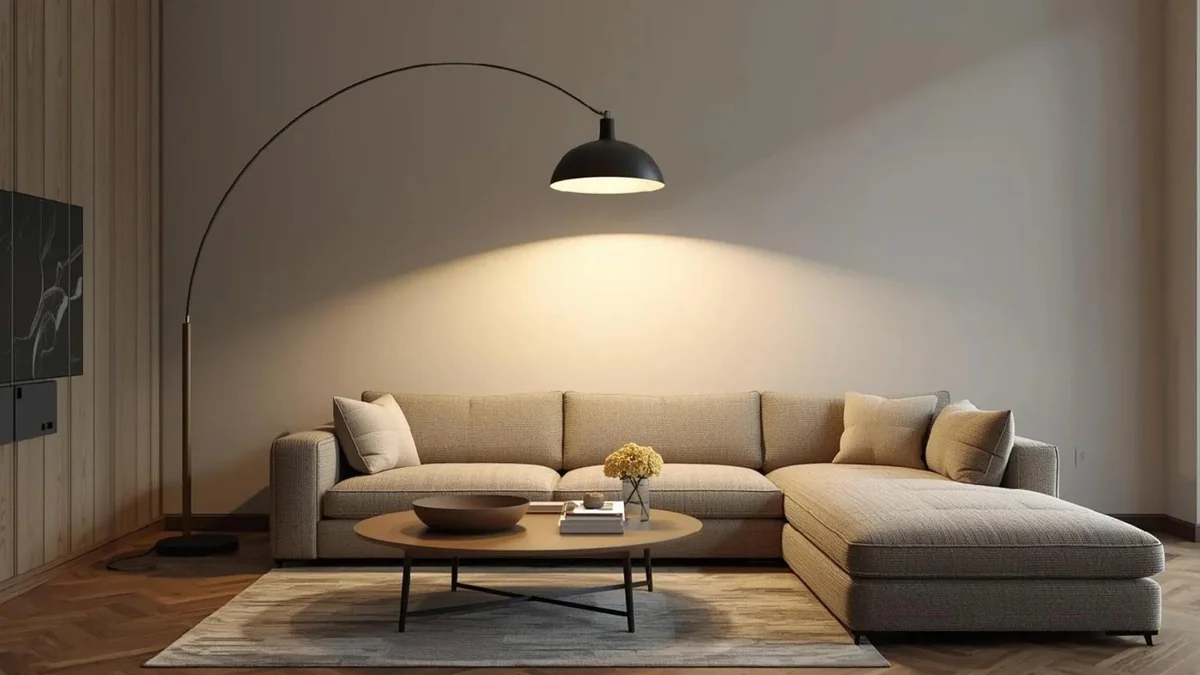
For evening lighting ideas, consider how a room’s lamps work together rather than relying on the mirror alone.
Mirror Size and Shape Choices for Tight Rooms

The right mirror should solve a specific visual problem. Before choosing a shape, consider whether the room needs more apparent height, width, light, or softness.
Tall vertical mirrors for low ceilings
A tall, narrow mirror draws the eye upward and introduces a strong vertical line. This can help a room with a low ceiling feel a little taller. It is particularly useful beside a wardrobe, near a bedroom entrance, or on a narrow wall where a wide design would not fit.
If you also need a mirror for checking outfits, see our separate guide to best full length mirrors, which covers reflective height and full-body sizing.
Wide horizontal mirrors for narrow walls
A wide mirror can make a short wall or narrow hallway feel broader. It works well above a console, dresser, or slim storage unit. Make sure the mirror does not extend so far beyond the furniture that the arrangement feels unbalanced.
Round mirrors to soften a boxy room
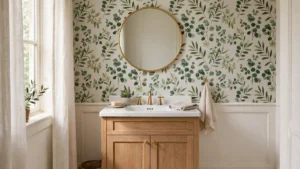
Round mirrors introduce a curved shape that contrasts with rectangular furniture, doors, and windows. They work particularly well above small entryway tables, bedside furniture, and compact consoles. They are mainly a styling choice rather than a guaranteed way to make a room look larger. Their effect depends on their size and what they reflect.
Frameless and slim-framed mirrors
In a small room, a heavy frame can make the mirror feel like another large piece of furniture on the wall. Frameless designs and slim neutral frames keep more attention on the reflection. They can also work well in rooms that already have several decorative details.
How wide should a mirror be over furniture?

A useful decorating guideline is to choose a mirror around two-thirds to three-quarters the width of the furniture beneath it. This is a rule of thumb, not a strict measurement.
For example, if a console table is 36 inches wide, a mirror around 24–27 inches wide may create a balanced arrangement. A larger mirror can work too, but check how it relates to the surrounding wall and nearby objects.
The main goal is proportion. A very small mirror above a wide console may look disconnected, while an oversized frame can overwhelm a compact entryway.
Small-Space Mirror Placement Ideas That Work

The best position depends on what you want the mirror to achieve. Use this table as a starting point.
| Your goal | Where to place the mirror | Mistake to avoid |
|---|---|---|
| Brighten a dark corner | On a wall that reflects a nearby window or lamp toward the corner | Pointing it toward another dark area |
| Make a room feel deeper | Face it toward a window, doorway, or attractive view | Reflecting clutter or a blank wall |
| Make a narrow hallway feel wider | Use a wide mirror along a suitable long wall | Blocking the walking path with a bulky floor mirror |
| Improve an entryway | Hang a mirror above a slim console or near the entrance | Placing it where the door can strike it |
| Add height to a small bedroom | Use a tall vertical mirror on a narrow wall | Choosing a frame that overwhelms the space |
| Soften a boxy room | Place a round mirror above a console or dresser | Using several unrelated shapes without a clear arrangement |
Placement in a small bedroom
A bedroom mirror should be useful without making the room feel crowded. A wall near the wardrobe or dressing area is often a practical choice. If you want more daylight, check whether the mirror can reflect the window without sending direct sunlight toward the bed or your eyes. You should also consider what the mirror shows from the bed itself.
For a calm, natural bedroom arrangement, minimalist plant decor can help balance reflective surfaces with greenery and simple furnishings.
Placement in a narrow hallway
A wide mirror can make a narrow hallway feel less enclosed by reflecting the opposite side of the space. Mount it securely and leave enough room for people to walk past without bumping into it.
If the hallway has little natural light, position the mirror to reflect light from a nearby room or a suitable lamp.
Placement in a small living room
A mirror can work above a console, beside a sofa, or on a wall that reflects a window. The best choice depends on the seating arrangement and the view from the main entrance.
Before installing it, sit on the sofa and check the reflection from that position. You may notice that a mirror that looks attractive while standing reflects a television screen or a cluttered corner when you sit down.
Use mirrors with greenery carefully
A mirror can reflect an indoor plant and make a small arrangement feel fuller without adding another pot to the floor. Place the mirror so it reflects healthy foliage rather than crowded shelves or tangled cables. You can also use the reflection to connect a plant corner visually with the rest of the room.
For more ideas, explore plants for small spaces.
Decorative Mirrors for Small Spaces: Mistakes to Avoid

Even a beautiful mirror can make a room feel less comfortable when its position is poorly planned. Check these common mistakes before installing one.
1. Reflecting clutter
A mirror repeats whatever is in front of it. If it faces an untidy desk, open wardrobe, laundry basket, or crowded shelf, that visual mess appears again in the reflection. Stand where you normally enter or sit in the room and check what the mirror will show. Choose a view that adds light, depth, or a feature worth noticing.
2. Choosing a mirror that is too small
A tiny mirror on a large empty wall may look more like an afterthought than a useful design feature. Consider the wall’s width and the furniture beneath it. A mirror should have enough presence to suit its surroundings without taking over the entire room.
3. Hanging the mirror too high
A decorative mirror usually works best when its center is near normal eye level. A commonly used gallery guideline is around 57–60 inches from the floor to the center, although the right position depends on the mirror, furniture, and people using the room.
When placing a mirror above a console or dresser, consider the gap between the furniture and the frame. The mirror should feel connected to the furniture rather than floating far above it.
4. Ignoring afternoon glare
A mirror that looks perfect in the morning may reflect direct sunlight into your eyes later in the day. Test the location during the brightest part of the afternoon. If the reflection is uncomfortable, move the mirror to an adjacent wall or adjust its position.
5. Choosing a heavy frame for a crowded room
Large decorative frames can add visual weight. In a small room that already has patterned furniture, shelves, and artwork, a thick ornate frame may make the wall feel busier. A slim, simple frame can keep the focus on the reflection and help the room feel more open.
6. Installing a mirror without suitable fixings
Large mirrors can be heavy. Use mounting hardware appropriate for the mirror’s weight and wall construction, and follow the manufacturer’s instructions. Do not rely on a small picture hook for a heavy mirror. If you are unsure about the wall or fixing method, get help from a qualified installer.
FAQ: Decorative Mirrors for Small Spaces
1. Where should mirrors be placed in a small room?
Place mirrors opposite or near windows when you want to reflect daylight into the room. You can also use them to reflect a doorway, attractive view, or well-lit corner. Before installing one, check the reflection from your usual seating or standing position.
2. Do mirrors really make a room look bigger?
Mirrors can make a room feel larger by reflecting part of the space and creating an impression of extra depth. They can also redirect existing daylight toward darker areas. The effect is strongest when the mirror reflects a window, view, or attractive part of the room rather than clutter.
3. Should a mirror face a window?
It can. A mirror opposite a window may reflect daylight and the outdoor view into the room. However, direct sunlight can cause glare at certain times. If the reflection reaches your eyes, sofa, or television, try an adjacent wall or a different angle.
4. What shape mirror is best for a small room?
Choose the shape according to the room’s proportions. Tall vertical mirrors can draw the eye upward, wide horizontal mirrors can make narrow walls feel broader, and round mirrors can soften a boxy interior. The size and placement matter as much as the shape.
5. How big should a mirror be above a console or sofa?
A useful starting point is around two-thirds to three-quarters of the furniture’s width. For example, a 36-inch console could work with a mirror around 24–27 inches wide. Treat this as a decorating guideline and adjust it to suit the wall and surrounding furniture.
Conclusion: Decorative Mirrors for Small Spaces
Decorative mirrors for small spaces work best when their position has a clear purpose. Use them to reflect daylight, bring attention to an attractive view, or create a sense of extra depth. Choose a shape that suits the room, match the mirror’s size to the surrounding furniture, and check for glare before installing it.
Most importantly, look at the reflection before you commit to a position. A mirror should make the room feel brighter and more balanced, not double the clutter or create another distraction.
Disclaimer
Mirror placement and sizing recommendations in this article are general interior-design guidelines. The results depend on room layout, window direction, daylight, mirror dimensions, and personal preference. Always follow the manufacturer’s instructions and use suitable fixings when installing a mirror.