A good full length mirror does not need to be as tall as you are. Because of how light reflects, a mirror roughly half your height can show your entire body when positioned correctly. The right size, however, depends on your height, mounting position, available wall space, and whether you prefer a leaning or wall-mounted design.
Choosing a mirror becomes easier when you understand the sizing rule first. Then you can compare the main mirror types, decide where to place one, and check that it is properly secured.
Key Takeaways
- A mirror approximately half your height can show your full body when positioned correctly.
- A 60-inch mirror is a practical option for many households, but taller users may prefer additional height.
- Leaning, wall-mounted, over-the-door, arched, and lighted mirrors serve different needs.
- Bedroom, closet, and entryway locations are usually the most practical.
- Secure leaning mirrors with an appropriate anti-tip fixing, particularly in homes with children or pets.
- Check the actual reflective glass dimensions instead of relying only on the frame measurements.
What the Best Full Length Mirrors Have in Common

The best full length mirrors are not necessarily the most expensive or decorative. They are the ones that provide a clear reflection, fit the available space, and remain stable during everyday use.
Look for four practical qualities.
1. Enough reflective height
A mirror does not have to match your full height to show your head and feet. The half-your-height rule explains why a shorter mirror can still provide a complete reflection. Its position matters just as much as its dimensions.
2. Useful width
A wider mirror gives you more room to check an outfit and see your overall appearance without standing at an exact angle. Narrow mirrors can work in tight spaces, but they may feel restrictive when you are checking clothing from side to side.
3. A stable installation
A floor-standing mirror should have a secure support system. A wall-mounted mirror needs suitable fixings for the wall material. A mirror that looks attractive but moves easily is not a good everyday choice.
4. A clear, undistorted reflection
Look for glass that provides a consistent image from top to bottom. A simple check is to look at a straight vertical line, such as a door frame, through the mirror. If the line appears noticeably bent or wavy, the reflection may be distorted.
This sizing principle follows the basic law of reflection, which explains that the angle at which light strikes a flat mirror equals the angle at which it reflects. When you look at your reflection, light from your head and feet reaches specific points on the mirror before travelling toward your eyes. Because of this geometry, a mirror does not need to match your full height to show your entire body. Understanding this principle makes it easier to choose a mirror that provides enough reflective space without taking up unnecessary wall area.
The Half-Your-Height Rule: How Tall a Mirror You Need

The half-your-height rule is the most useful starting point when choosing a full length mirror.
When light travels from the top of your head to a mirror and then reflects toward your eyes, the reflection point sits halfway between your eyes and the top of your head. The same principle applies when you look at your feet. This means the reflective surface only needs to cover the distance between those two halfway points.
In simple terms, a mirror approximately half your height can show your entire body when your eyes and the mirror are positioned correctly.
A practical full length mirror height chart
Use this chart as a starting point when comparing mirror sizes. The minimum heights are approximate examples based on the half-height principle. The suggested size ranges allow extra room for positioning and shared household use.
| Your height | Approximate eye level | Approximate minimum mirror height | Practical mirror size |
|---|---|---|---|
| 5 ft (152 cm) | 56 in | 30 in | 36–48 in |
| 5 ft 4 in (163 cm) | 60 in | 32 in | 42–56 in |
| 5 ft 8 in (173 cm) | 64 in | 34 in | 48–60 in |
| 6 ft (183 cm) | 68 in | 36 in | 52–64 in |
| 6 ft 4 in (193 cm) | 72 in | 38 in | 56–71 in |
These are practical estimates, not strict purchasing limits. The exact reflective area and mounting position affect the result. A frame can also make a mirror look taller without adding any usable glass.
Example: Choosing a mirror for someone who is 5 ft 8 in
Imagine you are 5 ft 8 in tall, or 68 inches. If your eye level is approximately 64 inches, the reflection point for the top of your head is around 66 inches from the floor. The corresponding point for your feet is around 32 inches.
That creates a reflective viewing band of approximately 34 inches. A mirror with more reflective height gives you additional positioning flexibility. It can also be more convenient if other people in your household are taller.
How high should you position a full length mirror?
For an adult, a useful starting point is to position the reflective area so its top reaches slightly above eye level and its lower section covers the required viewing area.
For a wall-mounted mirror, measure the actual glass rather than the outside frame. For a leaning mirror, the angle changes the position of the reflective surface, so check the reflection while standing at your normal viewing distance.
Full Length Mirror Types Compared
The right mirror type depends on your wall space, installation preferences, and daily routine. Five common styles cover most household needs.
| Mirror type | Best suited to | Main consideration |
|---|---|---|
| Leaning mirror | Bedrooms and dressing areas | Needs floor space and anti-tip security |
| Wall-mounted mirror | Hallways and smaller rooms | Requires suitable wall fixings |
| Over-the-door mirror | Dorm rooms and rental spaces | Door movement and hook compatibility |
| Arched mirror | Decorative interiors | Curved frame can reduce usable glass height |
| Lighted mirror | Dim dressing areas | Check brightness and dimming controls |
1. Leaning full length mirrors

Leaning mirrors rest against a wall and usually have a tall, floor-standing design. They are useful when you want a large reflective surface without permanently mounting the mirror to the wall.
Their main advantage is flexibility. You can position one in a bedroom, dressing area, or spacious closet. The important consideration is stability. A heavy mirror can tip if someone bumps it or pulls on its frame. Use a suitable anti-tip fixing rather than relying on its weight or the angle at which it rests.
2. Wall-mounted full length mirrors
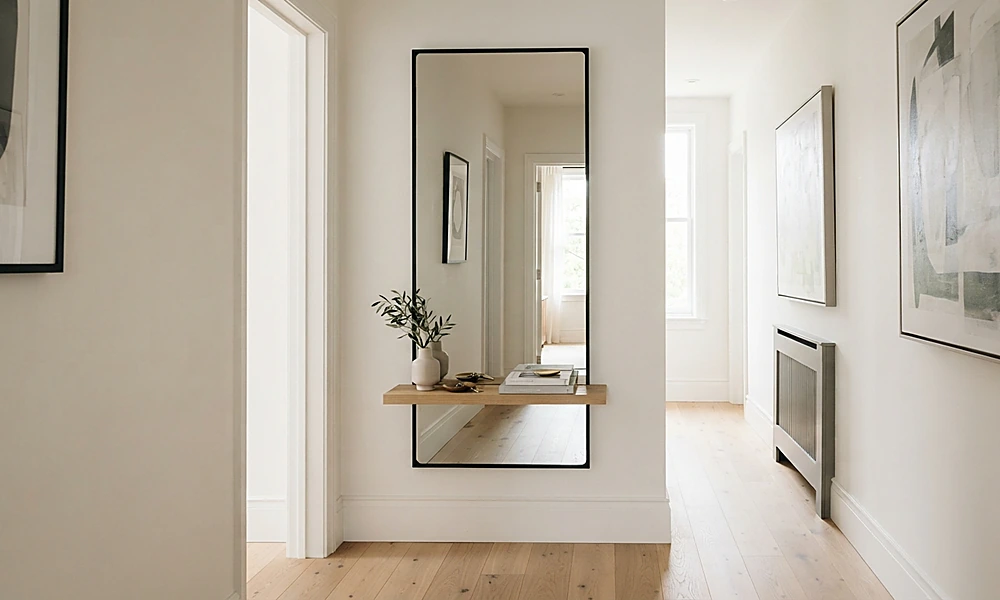
Wall-mounted mirrors attach directly to the wall. They are useful in narrow bedrooms, hallways, and areas where floor space is limited. They also keep the floor beneath the mirror clear, making cleaning easier. Before installation, check the wall material, mirror weight, and fixing requirements. The mounting hardware should be suitable for the actual load.
If you are decorating a compact home, a wall-mounted mirror can fit naturally into a wider layout. You can also explore these plants for small spaces when planning how to use limited floor and wall areas.
3. Over-the-door full length mirrors

Over-the-door mirrors use hooks or brackets that sit over the top edge of a door. They are often useful in rented homes, dorm rooms, and bedrooms where drilling into walls is not practical.
Before choosing one, check that the hooks fit your door thickness and that the mirror does not interfere with the handle or door movement. A thin or flexible door may allow the mirror to wobble whenever someone opens or closes it.
4. Arched full length mirrors

Arched mirrors have a curved top that gives them a softer appearance than a traditional rectangular frame. They can suit bedrooms, dressing areas, and interiors with rounded furniture or architectural details.
However, compare the glass dimensions carefully. A mirror may have a tall overall frame while its curved upper section reduces the usable reflective area.
If full-body visibility is your priority, check the height of the glass rather than choosing based on the overall frame measurement.
5. Lighted full length mirrors
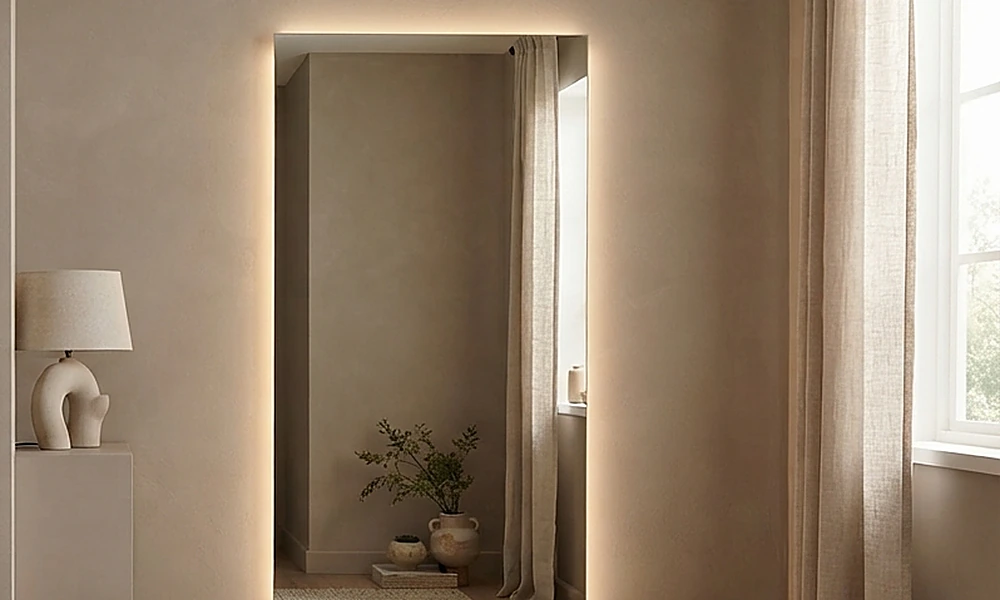
Lighted mirrors include LEDs around the frame or behind the reflective surface. They can help in rooms where overhead lighting creates strong shadows or does not illuminate the dressing area evenly.
Check whether the brightness is adjustable and whether the light color can be changed. A useful lighting setup should help you see clothing clearly without being uncomfortable to look at.
Also consider the mirror’s power requirements and whether its cable or electrical connection will work with your planned location.
Placement: Where a Full Length Mirror Works Hardest

A mirror is most useful when it is placed where you naturally get dressed, check your appearance, or prepare to leave home.
Bedroom or closet
The bedroom is a practical location because you can check your outfit while getting ready. If you have a walk-in closet, position the mirror where you have enough room to stand back and see your full appearance. A little extra distance makes it easier to judge the overall look of an outfit rather than focusing only on the upper body.
Entryway or hallway
An entryway mirror provides a convenient final check before leaving. It can be especially useful in homes where several people share the same entrance. Choose a position that does not obstruct the door, walking path, or storage area. If the hallway is narrow, a wall-mounted design may be more practical than a floor-standing mirror.
Near a window
Natural daylight can help you assess clothing colors more accurately. Position the mirror where daylight reaches the person standing in front of it. Avoid placing it where direct sunlight creates uncomfortable glare or where reflections interfere with everyday activities. Check the location at different times of day because the direction and intensity of daylight change.
For a room that combines natural materials and greenery, minimalist plant decor can help create a balanced setting without making the space feel crowded.
Bedroom placement and evening lighting
Think about how the mirror will look and function after sunset. Strong overhead lights can reflect directly into the glass, making it uncomfortable to use.
A more balanced arrangement uses softer room lighting and avoids positioning the mirror where bright bulbs shine straight into it. If you find reflections distracting while resting, choose a different wall rather than placing the mirror directly opposite the bed.
Full Length Mirror Safety: Anchoring and Glass Quality
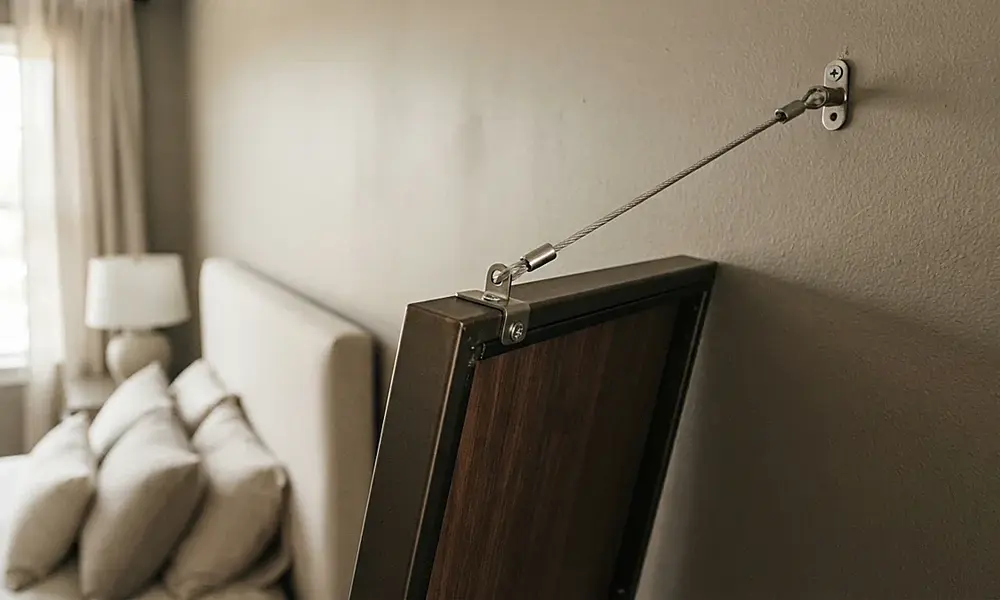
A full length mirror is a heavy household object, so installation deserves as much attention as appearance. This is especially important for leaning mirrors, which can fall if they are bumped or pulled.
Secure leaning mirrors against tipping
Do not assume that a leaning mirror is safe simply because it rests at an angle. Use a suitable anti-tip bracket, strap, or fixing designed for the mirror. Follow the manufacturer’s installation instructions and choose wall hardware that matches the wall construction. Where appropriate, secure the fixing into a wall stud or suitable masonry anchor.
In homes with children, pets, or furniture that can be climbed, treat anchoring as essential. Keep the mirror away from play areas and locations where it could be knocked over.
Check wall-mounted mirror fixings
Wall-mounted mirrors need hardware that can support their weight. Ordinary lightweight picture hooks or unsuitable drywall fixings may not be enough for a large glass panel.
Check the mirror’s weight and the manufacturer’s mounting instructions before drilling. Use appropriate fixings for the wall material and make sure the mirror is level and securely supported.
Understand glass and reflection quality
A clear reflection is important, but glass thickness alone does not guarantee quality. The overall construction, backing, frame support, and manufacturing quality all matter.
Check the product specifications for the type of glass and any safety-related features. Tempered or safety-backed glass may be available on some designs, but do not assume every mirror includes these features.
Inspect the mirror for visible defects, uneven reflections, loose frame components, or damage before installation. If the glass is cracked or the frame is unstable, do not use it.
FAQ: Best Full Length Mirrors
How tall should a full length mirror be?
A mirror approximately half your height can show your full body when positioned correctly. For someone who is 5 ft 8 in, the approximate minimum reflective height is 34 inches. A taller mirror provides more flexibility and may suit households with people of different heights.
What size full length mirror do I need?
Start with your height and use the half-your-height rule to estimate the minimum reflective area. Then consider the mirror’s mounting position, frame size, and who else will use it. A 48–60-inch mirror is a practical range for many adults, while taller users may prefer a larger option.
Do leaning full length mirrors need to be anchored?
Yes. A leaning mirror can tip if it is bumped, pulled, or disturbed. Use an appropriate anti-tip fixing and follow the installation instructions. This is particularly important in homes with children, pets, or active household spaces.
How high should you hang a full length mirror?
Position the mirror so the reflective surface covers the viewing area between your feet and the top of your head. The top edge generally needs to reach slightly above eye level, but the exact mounting height depends on your height and the mirror’s dimensions.
Are lighted full length mirrors worth it?
They can be useful in rooms where ordinary lighting creates shadows or leaves the dressing area too dark. Before choosing one, check the brightness settings, light color, power requirements, and whether the LEDs illuminate your reflection evenly.
Conclusion
The best full length mirrors combine the right reflective height, a clear image, suitable placement, and secure installation. Start with the half-your-height rule, then choose a size that gives you enough flexibility for your household.
Compare leaning, wall-mounted, over-the-door, arched, and lighted designs based on the space available and how you plan to use the mirror. Most importantly, check the actual glass dimensions and secure the mirror properly. A well-sized, safely installed mirror will be more useful in everyday life than one chosen for appearance alone.
Disclaimer
This article provides general buying and home-installation guidance. Mirror dimensions, mounting requirements, and safety features vary by design and manufacturer. Always check the product specifications and installation instructions before mounting or using a full length mirror.