Key Takeaways
- Why are my plant leaves turning yellow? Possible causes include water stress, poor light, nutrients, temperature changes, pests, disease, and natural ageing.
- Wet soil combined with yellowing can indicate excessive moisture or root problems.
- Very dry soil can also lead to yellowing, wilting, and leaf drop.
- Low light may cause pale foliage and stretched growth.
- Nutrient deficiencies can produce distinctive yellowing patterns, but they should not be diagnosed from color alone.
- A few old yellow leaves can simply be part of the plant’s natural life cycle.
- Check the entire growing environment before reaching for fertilizer.
- Correct the likely cause first, then monitor new growth rather than expecting damaged leaves to become green again.
Quick Answer: Why Are My Plant Leaves Turning Yellow?
Why are my plant leaves turning yellow? The most common reasons include improper watering, insufficient or excessive light, nutrient deficiencies, temperature stress, poor drainage, root problems, pests, diseases, and normal ageing.
If only one or two older leaves near the bottom of the plant have turned yellow while new growth looks healthy, natural leaf ageing may be responsible. However, if many leaves are yellowing at once, especially new leaves, you should investigate the growing conditions.
The pattern matters too. Yellow leaves with wet soil can suggest a watering or root problem, while pale leaves and weak, stretched growth can point toward insufficient light.
1. Overwatering Is a Common Reason for Yellow Leaves
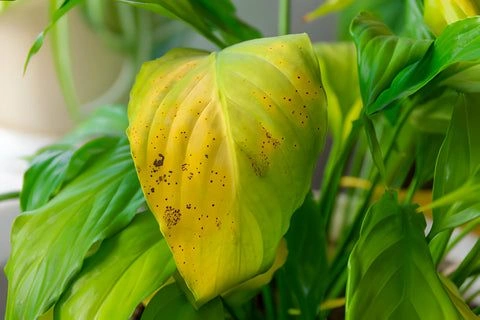
One of the first things to check when asking why my plant leaves are turning yellow is the soil moisture.
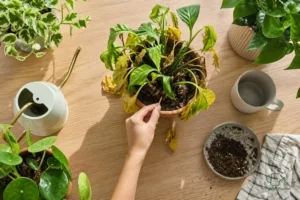
Too much water can leave the growing medium saturated for long periods. As a result, there is less oxygen around the roots, and prolonged waterlogging can damage roots and eventually cause yellow foliage.
Overwatering does not always mean you are watering every day. A large pot, poor drainage, heavy soil, cool conditions, and a plant with low water requirements can all contribute to excessively wet roots.
Signs of possible overwatering
| What you notice | What it may suggest |
|---|---|
| Soil stays wet for a long time | Poor drainage or excessive watering |
| Several old and new leaves yellow | Root or moisture stress |
| Plant looks wilted despite wet soil | Possible root damage |
| Roots are soft and brown | Possible root rot |
| Yellow leaves fall quickly | Significant stress |
If the soil is consistently soggy, check the drainage holes and inspect the roots when appropriate. Healthy roots should not be soft, mushy, or badly deteriorated. Root rot can produce yellow leaves because damaged roots cannot function properly.
2. Underwatering Can Also Cause Yellow Leaves
It may sound strange, but too little water can produce yellow foliage as well.
When a plant remains too dry, leaves may wilt, develop brown or crispy edges, and eventually yellow and drop. Older leaves may be affected first as the plant responds to water stress.
Therefore, do not automatically assume that yellow leaves mean you should stop watering.
Instead, feel the growing medium several centimetres below the surface. Watering should be based on the plant, pot, soil, season, and growing conditions rather than an inflexible calendar.
3. Your Plant May Not Be Getting Enough Light
Light is essential for photosynthesis, and inadequate light can cause foliage to become pale or yellow. Plants may also become stretched or leggy as they grow toward available light.
If your plant sits in a dark corner and the leaves are becoming pale while stems stretch toward a window, insufficient light could be part of the problem.
However, more light is not always better.
Suddenly moving a plant from a low-light position into strong direct sunlight can scorch sensitive foliage. University of Minnesota Extension recommends gradually introducing plants to brighter conditions rather than making an abrupt change.
4. Nutrient Deficiency Can Turn Leaves Yellow
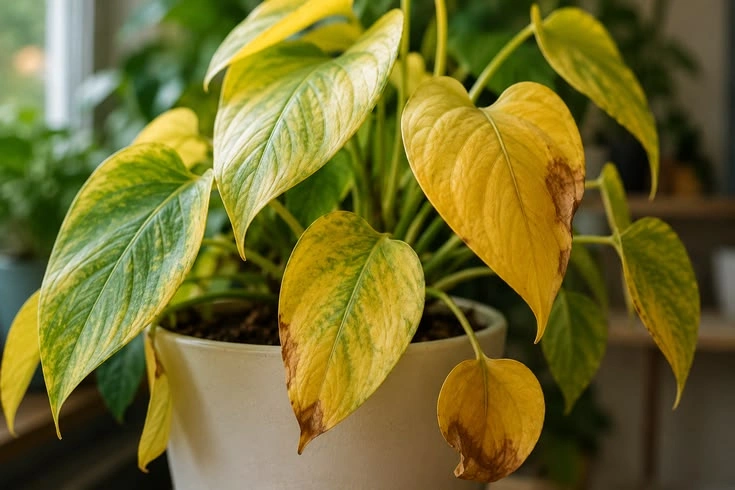
Plants need several essential nutrients for healthy growth. When nutrients are lacking or unavailable to the roots, foliage may become pale or yellow.
Nitrogen deficiency commonly causes more general yellowing, particularly on older leaves. Iron deficiency, by contrast, often affects younger leaves first and can produce yellow tissue while the veins remain greener. Magnesium and manganese deficiencies can also produce interveinal yellowing.
Still, do not diagnose a nutrient deficiency based on color alone.
Poor roots, unsuitable soil conditions, and watering problems can prevent a plant from taking up nutrients even when nutrients are present.
Should you immediately add fertilizer?
Not necessarily.
Adding fertilizer without identifying the cause can make the situation worse. First, check water, light, roots, pot size, soil condition, and the plant’s normal care requirements.
If a genuine nutrient shortage is suspected, use a fertilizer appropriate for that plant and follow the product label carefully. Over-fertilizing can damage plants.
5. Natural Ageing Can Make Older Leaves Yellow
Sometimes the answer to why my plant leaves are turning yellow is surprisingly simple: the leaf has reached the end of its useful life.
Plants naturally shed older, less productive leaves as they produce new growth. One or two lower leaves turning yellow while the rest of the plant remains healthy is often not a reason for alarm.
This is especially worth considering when:
- Only older lower leaves are affected
- New leaves look healthy
- The plant continues producing growth
- The soil and roots appear normal
- There are no signs of pests or disease
In this situation, you may not need to change your care routine at all.
6. Temperature Changes and Drafts Can Stress Plants
Plants respond to their surrounding environment, and sudden changes in temperature can contribute to yellowing and leaf drop.
Cold drafts, heat sources, sudden temperature changes, and unsuitable temperatures can all stress houseplants. Plants placed beside radiators, heaters, cold windows, air-conditioning outlets, or drafty doors may be particularly vulnerable.
If yellowing started soon after moving your plant to a different room or changing its position, consider whether the temperature or airflow changed at the same time.
7. Poor Drainage and the Wrong Pot Can Cause Trouble
A pot that is much larger than the plant may hold excess moisture around a relatively small root system. Likewise, a container without adequate drainage can make it difficult for excess water to escape.
University of Minnesota Extension recommends choosing a pot only one size larger when repotting and notes that excessive soil around a small root system can retain too much water.
Therefore, when considering why my plant leaves are turning yellow, look beyond the watering can. The container and growing medium are part of the watering system too.
8. Pests Can Cause Yellow or Speckled Leaves
Tiny pests can sometimes be responsible for yellowing foliage.
Aphids, spider mites, whiteflies, scale insects, and mealybugs can damage plants in different ways. Some feed on plant sap, while others affect roots or weaken already stressed plants.
Inspect both sides of the leaves, along stems, and around leaf joints.
Look for:
- Fine webbing
- Tiny insects
- White cotton-like clusters
- Sticky residue
- Speckled or pale foliage
- Scale-like bumps
Finding pests early makes management much easier.
9. Diseases Can Also Cause Yellowing
Yellow foliage can sometimes accompany fungal, viral, or other plant diseases.
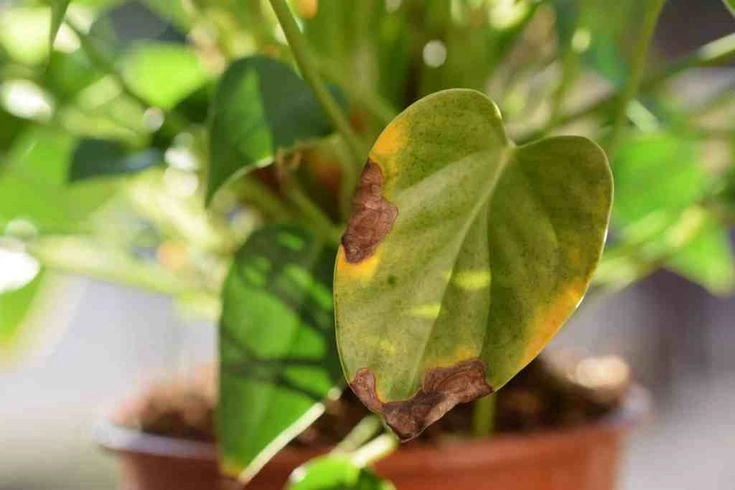
Disease-related yellowing often appears alongside additional symptoms such as spots, unusual patterns, wilting, stunted growth, dieback, or visible fungal growth.
For example, fungal leaf spots can produce dark areas surrounded by yellow tissue. Root diseases may cause yellowing together with poor growth and deteriorating roots.
Because several plant problems can look similar, avoid treating a disease based only on yellow leaves.
10. A New Plant May Simply Be Adjusting
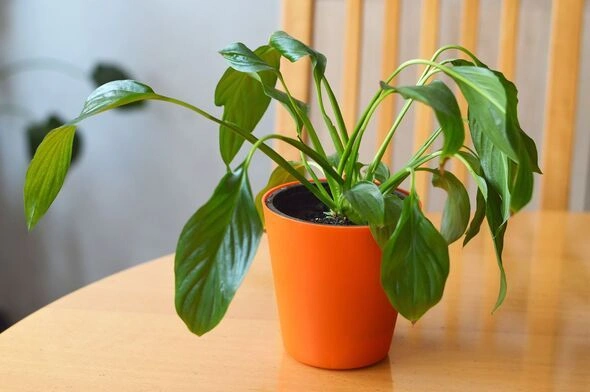
Bought a new houseplant recently? A little yellowing or leaf drop can happen while it adjusts to a different environment.
Plants may experience changes in light, humidity, temperature, watering, and airflow after moving from a nursery or greenhouse into a home. Illinois Extension notes that this adjustment can cause temporary yellowing or leaf drop.
Give the plant stable conditions and monitor it instead of immediately changing everything.
How to Tell What Is Causing the Yellow Leaves
The fastest way to understand why are my plant leaves turning yellow is to examine several clues together.
| Yellowing pattern or symptom | Possible cause |
| One or two old lower leaves | Natural ageing |
| Yellow leaves with constantly wet soil | Overwatering or root problems |
| Wilted plant with very dry soil | Underwatering |
| Pale foliage and stretched growth | Insufficient light |
| Young leaves yellow with greener veins | Possible iron-related chlorosis |
| Older leaves yellow generally | Possible nitrogen deficiency |
| Yellowing plus insects or webbing | Pest activity |
| Yellowing plus spots or unusual patterns | Possible disease |
| Yellowing after relocation | Environmental adjustment |
| Yellowing near cold drafts | Temperature stress |
These are clues rather than guaranteed diagnoses. The same symptom can have different causes, which is why examining the whole plant is more reliable than focusing on one leaf.
What to Do When Your Plant Has Yellow Leaves
Do not make five changes at once. Instead, work through the basics.
Check the soil
Feel the growing medium before watering again. Determine whether it is excessively dry, appropriately moist, or staying wet for too long.
Examine the roots
If the plant is clearly struggling and root inspection is practical, check whether the roots appear healthy or soft and deteriorated. Root condition can reveal problems that are not obvious from the leaves.
Review the light
Ask whether the plant receives the amount of light its species needs. If it needs brighter conditions, make changes gradually rather than exposing it suddenly to intense sunlight.
Inspect for pests
Check leaf undersides, stems, and new growth. Early detection can prevent a small pest problem from spreading to other plants.
Think about recent changes
Remember what happened before the yellowing appeared. Did you move the plant? Repot it? Change its watering routine? Put it near a heater or air conditioner?
That timeline can be surprisingly useful.
Should You Remove Yellow Leaves?
Completely yellow, damaged, or dying leaves generally will not become green again. Removing them can improve the plant’s appearance and remove foliage that is already past recovery.
However, avoid removing healthy leaves simply because they have a small yellow area. If a leaf still has substantial green tissue, leaving it attached can allow the plant to continue using it while you correct the underlying problem. RHS recommends retaining predominantly green leaves while a plant recovers.
Always use clean cutting tools when pruning.
Common Mistakes to Avoid
Watering on a fixed schedule
A plant does not necessarily need water every Monday or every three days. Soil moisture changes with plant type, pot size, season, temperature, light, and growth rate.
Adding fertilizer too quickly
Yellow leaves do not automatically mean the plant needs fertilizer. Water, roots, light, and environmental stress should be checked first.
Moving the plant into harsh sunlight
A sudden jump from low light to strong direct sunlight can cause additional leaf damage. Make changes gradually.
Repotting without a reason
Repotting can help a root-bound plant, but unnecessary repotting can add another environmental change when the plant is already stressed.
Treating every yellow leaf as a disease
Yellowing is a symptom, not a diagnosis. Natural ageing, water stress, light problems, nutrients, pests, and diseases can all produce similar changes.
A Simple Yellow Leaf Checklist
Before you panic about why your plant leaves are turning yellow, run through this checklist:
-
Check how wet or dry the soil is.
-
Confirm the pot has suitable drainage.
-
Look at the roots if root problems are suspected.
-
Check whether the plant receives enough light.
-
Look underneath leaves for pests.
-
Look for spots, unusual patterns, or fungal growth.
-
Check for cold drafts or nearby heat sources.
-
Consider whether the plant was recently moved.
-
Check whether only older leaves are affected.
-
Avoid adding fertilizer until you have a reason.
-
Remove completely yellow or dead leaves when appropriate.
-
Monitor new growth after correcting the likely problem.
Final Thoughts
So, why are my plant leaves turning yellow? There is rarely one universal answer. Yellowing is the plant’s visible response to something happening below or around the surface, and the correct solution depends on the pattern.
Start with the basics: check the soil, roots, light, temperature, drainage, and foliage for pests or disease. Then make one sensible change at a time and watch how the plant responds.
Most importantly, do not assume that every yellow leaf means your plant is dying. One ageing leaf can be completely normal, while widespread yellowing is a useful warning that the plant’s growing conditions need attention.
With careful observation and consistent care, you can often identify the real reason behind the yellowing and give your plant a much better chance to produce healthy new growth.
Frequently Asked Questions
Why are my plant leaves turning yellow but not falling off?
Yellow leaves can remain attached for some time. The cause may be mild stress, natural ageing, watering problems, insufficient light, nutrient issues, or another growing-condition problem. Look at the soil, affected leaves, roots, and new growth together.
Can yellow leaves turn green again?
A completely yellow leaf generally will not return to its original green color. However, correcting the underlying problem can protect remaining foliage and allow healthier new growth.
Should I cut off yellow leaves?
If a leaf is completely yellow or clearly dying, removing it is reasonable. However, leaves that still contain substantial green tissue may be worth keeping while you correct the underlying problem.
Does yellowing always mean overwatering?
No. Why are my plant leaves turning yellow has many possible answers. Both overwatering and underwatering can cause yellowing, while light, nutrients, temperature, pests, disease, and natural ageing can also be involved.
Why are the new leaves turning yellow?
Yellowing on new leaves can sometimes point toward nutrient availability problems, particularly certain micronutrient deficiencies. However, root stress and unsuitable growing conditions can also interfere with nutrient uptake, so the whole growing environment should be evaluated.
Why are only the bottom leaves turning yellow?
If just a small number of older lower leaves are yellowing while the plant continues producing healthy new growth, natural ageing is one possible explanation. Persistent or widespread yellowing, however, deserves a closer inspection.
Can too much sunlight cause yellow leaves?
Yes. Excessive or sudden exposure to strong sunlight can damage foliage, especially when a plant has previously been growing in lower light. Pale or scorched areas may develop depending on the plant and conditions.