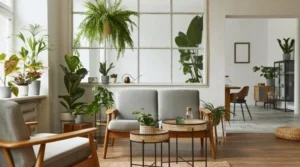
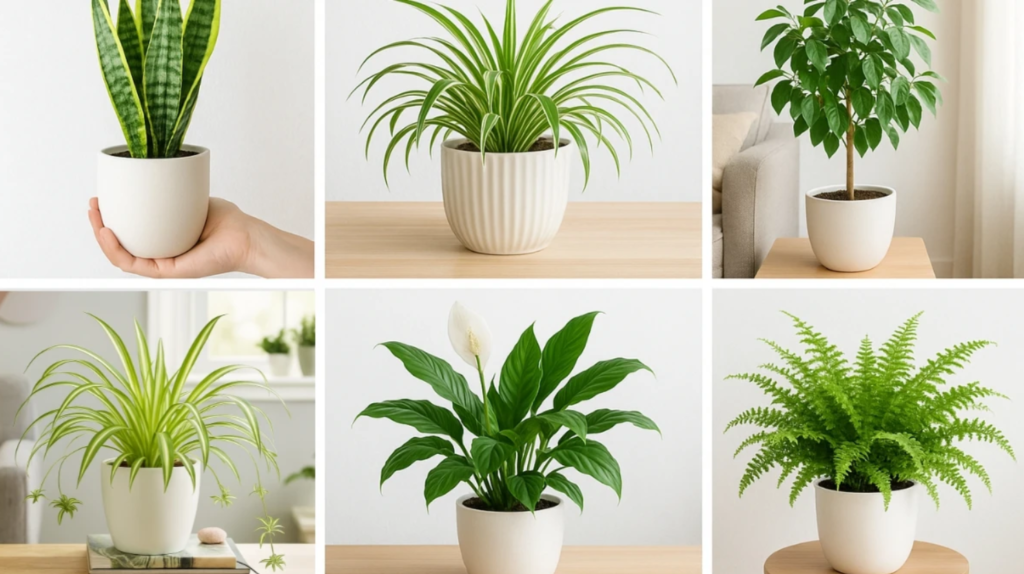
Cheap indoor plants like pothos, snake plant, spider plant, and heartleaf philodendron let you build a full indoor jungle for under $100. Start with a few inexpensive starter plants, then multiply them for free through propagation. Add thrifted pots and smart grouping, and a small budget stretches into a lush, layered space.
BUDGET PLANT COMPARISON TABLE
(Adapted from the single Plant Profile format, since this guide covers a roster of affordable houseplants rather than one species.)
| Plant | Botanical Name | Typical Price | Light | Water | Toxic to Pets? | Difficulty |
| Pothos | Epipremnum aureum | $5–$15 | Low to bright indirect | When top 1–2 in. dry | Yes (calcium oxalates) | Very easy |
| Snake Plant | Dracaena trifasciata | $8–$20 | Low to bright | Every 2–4 weeks | Mildly toxic | Very easy |
| Spider Plant | Chlorophytum comosum | $5–$12 | Bright indirect | When top inch dry | Mildly toxic | Very easy |
| Heartleaf Philodendron | Philodendron hederaceum | $6–$15 | Low to medium | When top inch dry | Yes (calcium oxalates) | Very easy |
| ZZ Plant | Zamioculcas zamiifolia | $10–$20 | Low to bright | Every 2–3 weeks | Yes (calcium oxalates) | Very easy |
| Pilea | Pilea peperomioides | $8–$18 | Bright indirect | When top inch dry | No (non-toxic) | Easy |
| Tradescantia | Tradescantia zebrina | $5–$10 | Bright indirect | When top inch dry | Mildly toxic | Easy |
Toxicity guidance is based on the ASPCA Toxic and Non-Toxic Plants database. Always supervise pets and call your vet or the ASPCA Animal Poison Control Center if ingestion happens.
INTRODUCTION
You don’t need a big budget to fill your home with green. That’s the myth, and it’s time to let it go.
So many people scroll past those gorgeous indoor jungles online and think the same thing. They assume a room like that costs hundreds, maybe thousands of dollars. The truth is a lot simpler, and a lot cheaper.
Cheap indoor plants are the foundation of almost every stunning plant collection you’ve ever admired. The secret isn’t spending more. It’s choosing the right plants, finding them in the right places, and learning one free trick that turns a single plant into a whole shelf.
This guide walks you through every step. You’ll learn which affordable houseplants thrive for beginners, where to find them for next to nothing, and how budget plant decor pulls the whole look together. We’ll also cover plant propagation, which is the closest thing to free plants you’ll ever find.
By the end, you’ll have a clear, under-$100 plan to build a jungle that looks far more expensive than it is. Let’s get into it.
Why You Don’t Need Money to Build an Indoor Jungle
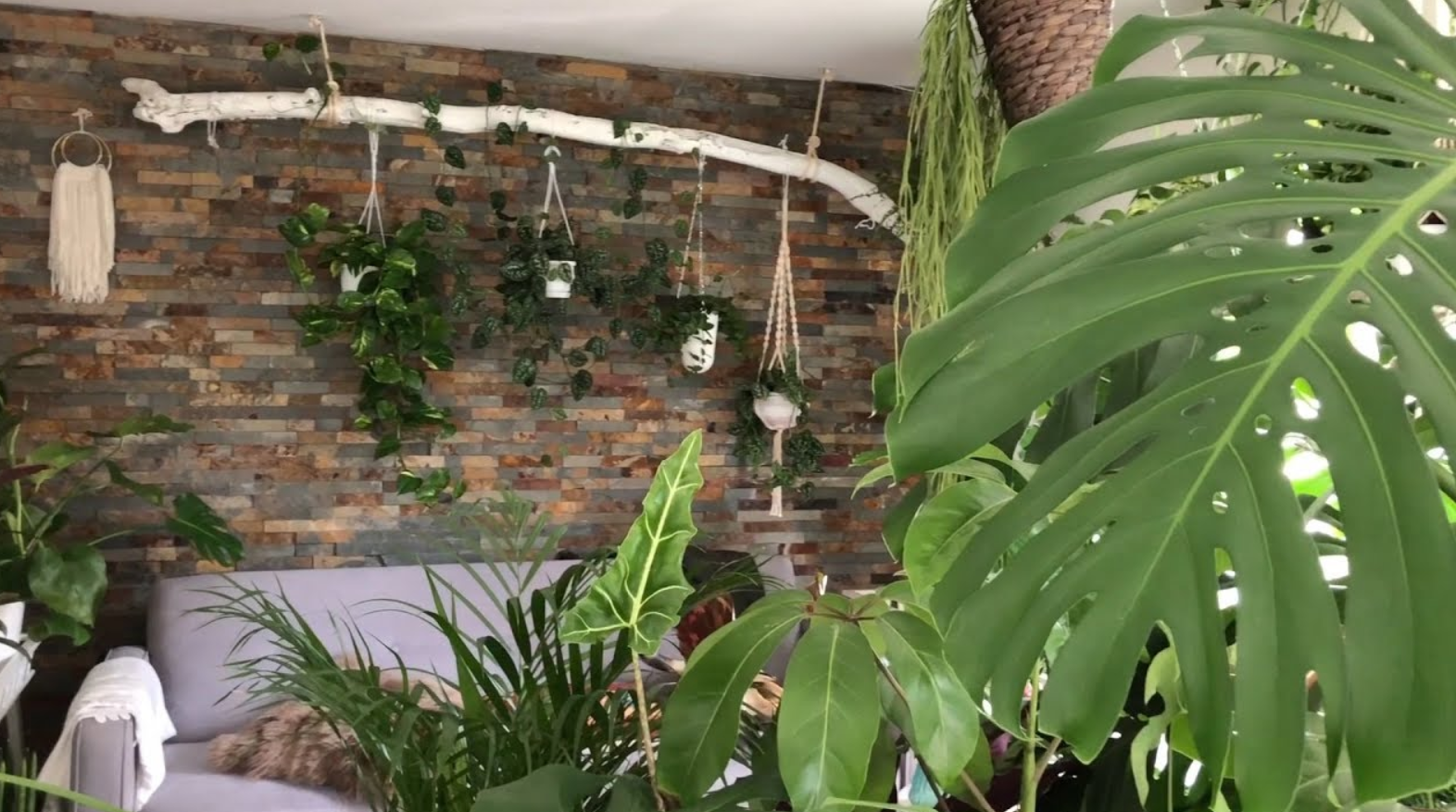
Here’s something nurseries rarely advertise. A large, full plant and a tiny, cheap one are often the exact same species. The only real difference is time.
That $60 trailing pothos in the designer pot started as a $6 nursery cutting. Someone just grew it for a year. When you buy small and grow it yourself, you pay for the plant, not the patience.
So the budget strategy comes down to three moves. First, buy a few inexpensive starter plants. Then multiply them through propagation. Finally, style them with cheap or thrifted decor so the collection looks intentional.
This approach also happens to be more rewarding. You watch your plants fill in over weeks and months, and the jungle feels earned. Beginners tend to learn faster this way too, because cheap plants are forgiving when you make early mistakes. And you will make a few. We all did.
The Real Secret to Cheap Indoor Plants: Propagation
If you only learn one thing from this guide, make it this. Plant propagation is how budget plant parents build big collections for almost nothing.
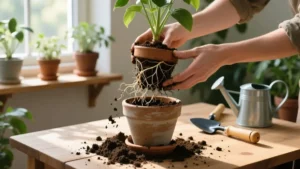
Propagation just means making new plants from parts of an existing one. You take a cutting, encourage it to grow roots, and pot it up. That’s it. One healthy plant can give you several new ones every season, and those new plants can produce even more.
Why One Plant Becomes Ten
Think of it like compound interest, but green. A single pothos with six vines can become six new plants. Give those a few months, and each one is ready to be cut again.
This is why experienced collectors rarely buy the same plant twice. Once they have one pothos, one spider plant, or one philodendron, they never need to pay for that species again. Friends share cuttings, and the collection grows sideways across an entire community.
So when you buy your first affordable houseplants, you’re not just buying decor. You’re buying a renewable supply.
Water Propagation vs Soil Propagation
There are two simple ways to root a cutting, and both work well for beginners.
Water propagation is the satisfying one. You snip a healthy cutting just below a node, which is the small bump where leaves and roots emerge, and drop the stem in a glass of water. Roots usually appear within a couple of weeks. You get to watch the whole thing happen, which makes it great for kids and first-timers.
Soil propagation skips the glass. You plant the cutting straight into moist potting mix and keep it humid while roots form. It often produces sturdier roots, since the plant doesn’t have to adjust from water to soil later.
For pothos, philodendron, tradescantia, and spider plants, both methods are reliable. Snake plants and ZZ plants root more slowly and do better in soil, so be patient with those.
A few quick rules keep your success rate high. Always cut just below a node. Use clean scissors so you don’t spread disease. Change the water every few days if you’re rooting in a glass. And place cuttings in bright, indirect light, never harsh direct sun.
The Best Cheap Indoor Plants for Beginners
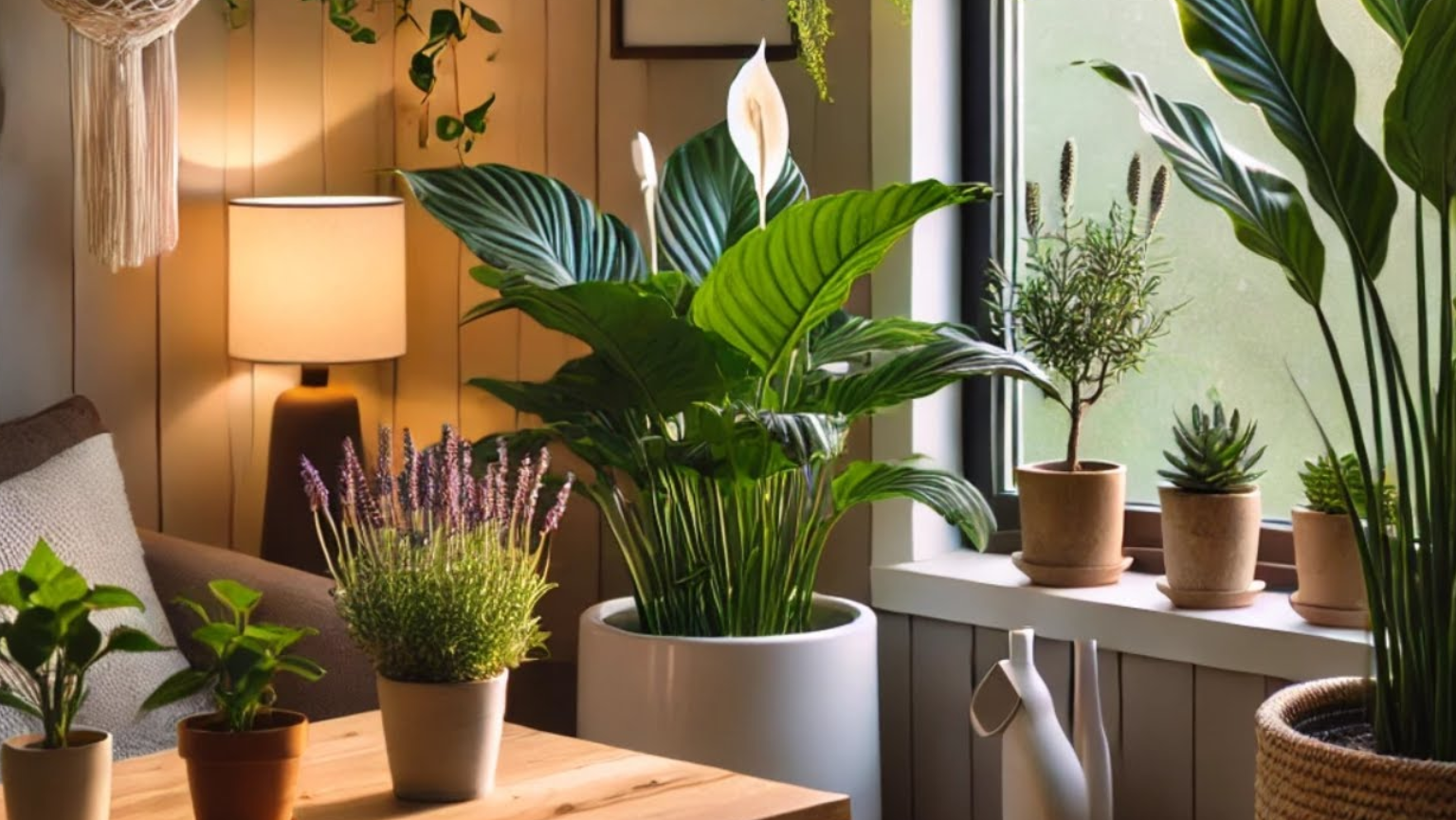
Now for the roster. These are the most reliable, most affordable houseplants you can find, and every one of them propagates easily. Together, they form the backbone of a beautiful budget jungle.
Pothos (Epipremnum aureum)
If a plant could be famous, pothos would be a celebrity. It’s the classic beginner plant for good reason.
Pothos tolerates low light, irregular watering, and the occasional missed week. Its trailing vines look lush draped from a shelf or climbing a wall. You’ll often find it for $5 to $15, and it roots in water faster than almost anything.
Care snapshot: bright indirect light is ideal, though it survives in low light. Water when the top inch or two of soil feels dry. Yellow leaves usually mean too much water, not too little.
Pet note: pothos contains insoluble calcium oxalates and is toxic to cats and dogs if chewed, according to the ASPCA. Keep it on a high shelf if you have curious pets.
Snake Plant (Dracaena trifasciata)
The snake plant is the plant for people who think they kill everything. It’s nearly impossible to neglect to death.
Its tall, upright leaves add height and structure to a room, which helps a collection feel layered. It thrives in low light and only needs water every two to four weeks. Overwatering is the main risk, so when in doubt, wait.
You can propagate it by dividing the root clump or by leaf cuttings in soil, though leaf cuttings take patience. Prices usually land between $8 and $20.
Pet note: the ASPCA lists snake plant as mildly toxic, so keep it out of reach of pets that like to nibble.
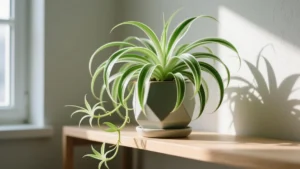
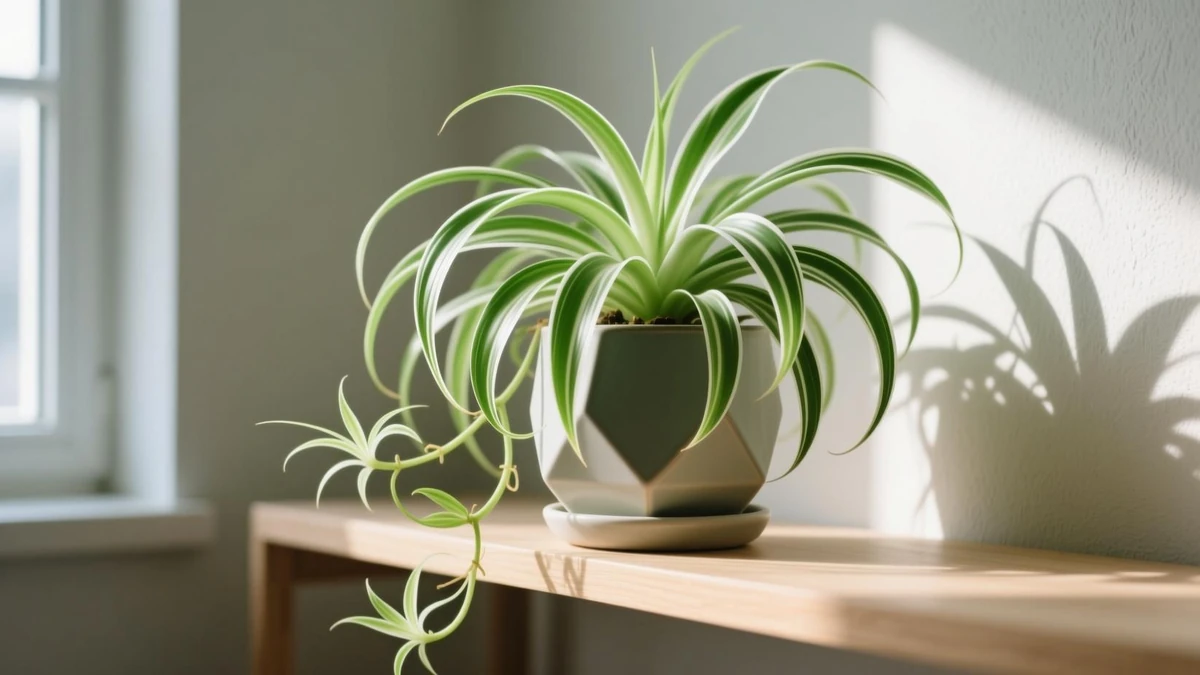
Spider Plant (Chlorophytum comosum)
Few plants reward you as quickly as the spider plant. It practically propagates itself.
Mature spider plants send out long stems with baby plantlets, often called pups, dangling on the ends. You can root those pups in water or soil, and suddenly one plant becomes a dozen. It’s arguably the best value in the entire plant world.
It likes bright indirect light and even moisture, and it forgives the occasional dry spell. Browning leaf tips often point to dry air or mineral buildup from tap water, so filtered water can help.
Pet note: the ASPCA rates spider plant as mildly toxic, capable of causing mild stomach upset if eaten in quantity.
Heartleaf Philodendron (Philodendron hederaceum)
The heartleaf philodendron is pothos’s softer-looking cousin. Its heart-shaped leaves trail beautifully, and it’s just as forgiving.
It handles low to medium light and bounces back fast after a missed watering. Cuttings root readily in water, so it spreads through your home with almost no effort. Expect to pay $6 to $15 for a starter.
Pet note: like pothos, philodendron contains calcium oxalates and is toxic to pets if ingested. Keep it elevated.
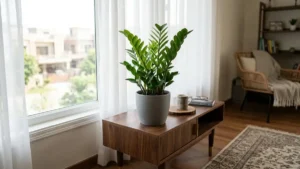
ZZ Plant (Zamioculcas zamiifolia)
The ZZ plant is the low-light champion. Its glossy leaves look almost fake because they’re so perfect.
It stores water in thick underground rhizomes, so it shrugs off neglect and dim corners that defeat other plants. Water it every two to three weeks at most. It grows slowly, which is the one tradeoff, but its toughness makes it worth the wait.
Prices run $10 to $20, slightly higher than the others, but a single ZZ lasts for years.
Pet note: the ZZ plant contains calcium oxalates and is toxic to pets if chewed.
Pilea and Other Easy Wins
A few more plants deserve a spot on your budget list. The pilea, or Chinese money plant, produces baby plants around its base that you can pot up for free. Best of all, the ASPCA lists it as non-toxic, so it’s a great pick for pet homes.
Tradescantia, sometimes called inch plant, grows fast and roots in days, making it ideal for filling space quickly. Both stay affordable, usually under $15, and both reward propagation generously.
Where to Find Affordable Houseplants Without Getting Ripped Off
Choosing the right plants is half the battle. Knowing where to buy them is the other half. The same plant can cost $6 in one place and $40 in another, so shop smart.
Plant Swaps and Cuttings From Friends
This is the cheapest source of all, because it’s free. Plant people love to share, and most have more cuttings than they know what to do with.
Ask friends, coworkers, and neighbors if you can take a cutting from a plant you admire. Local plant swap events and online community groups exist in most cities, and they run on trading rather than cash. Bring one cutting, leave with five.
Big-Box Clearance Racks and Rescue Plants
Hardware stores and garden centers often have a sad, marked-down shelf in the back. Those droopy, half-price plants are gold for budget gardeners.
Most “dying” clearance plants are just thirsty, root-bound, or sunburned, and they recover quickly with basic care. Check for healthy roots and avoid anything with obvious pests, like webbing or sticky residue. A $3 rescue pothos can become the star of your collection.
Facebook Marketplace and Buy Nothing Groups
Online local marketplaces are full of affordable houseplants, often from people moving or downsizing. You’ll find large, established plants for a fraction of retail.
Buy Nothing groups take it further, since everything posted is free. People give away pups, cuttings, and whole plants regularly. Patience pays off here, so check listings often.
Seasonal Sales and Smart Timing
Timing matters. End-of-season clearances, late summer markdowns, and holiday sales all bring prices down. Grocery stores and discount retailers sometimes carry surprisingly cheap, healthy plants too, so it pays to keep an eye out wherever you already shop.
Building the Jungle Look on a Budget
A pile of cheap plants isn’t a jungle. The styling is what makes it look intentional and lush. The good news is that budget plant decor can look every bit as polished as the expensive version.
Group and Layer for Impact
One plant looks lonely. A cluster looks designed. Grouping plants together instantly creates that full, jungle feeling.
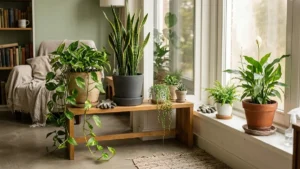
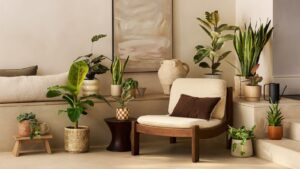
Mix heights and shapes for depth. Use a tall snake plant in the back, a trailing pothos in the middle, and a compact pilea up front. Layering this way fools the eye into seeing abundance, even with just a handful of plants.
Cheap Pots and Thrifted Containers
Designer pots cost more than the plants inside them. Skip them. Thrift stores, dollar stores, and your own cabinets are full of free or cheap containers.
Mugs, baskets, tins, and glass jars all make charming planters. Just add drainage, either by drilling a hole or by keeping the plant in its nursery pot and tucking it inside the decorative one. A coordinated color story, like all terracotta or all white, makes mismatched containers look like a collection rather than clutter.
Shelves, Hangers, and DIY Stands
Vertical space is free real estate. Plants climbing a wall or cascading from a high shelf read as lush and established.
Cheap floating shelves, tension rods in a bright window, and simple macrame hangers stretch a small collection across a whole wall. You can even repurpose a ladder, a stool, or a stack of books as a plant stand. Height and layers do the heavy lifting.
A Sample Under-$100 Indoor Jungle Shopping List
So what does $100 actually buy? Here’s a realistic starting plan. Your prices will vary by region, but this shows how far a small budget stretches.
| Item | Quantity | Estimated Cost |
| Pothos starter | 1 | $8 |
| Snake plant | 1 | $12 |
| Spider plant (with pups) | 1 | $10 |
| Heartleaf philodendron | 1 | $10 |
| Pilea (non-toxic) | 1 | $12 |
| Bag of quality potting mix | 1 | $10 |
| Thrifted or dollar-store pots | 6 | $12 |
| Macrame hanger or shelf | 1 | $10 |
| Small grow light (optional) | 1 | $15 |
| Total | ~$99 |
And remember, this is just the beginning. Within a few months, propagation turns those starter plants into a dozen or more, all for the cost of the originals. The collection grows while the spending stops.
Caring for Your Budget Jungle
Cheap plants still need good care, but the basics are simple once you understand them. Get these four things right, and your jungle thrives.
Light is the most important factor and the one beginners get wrong most often. Most affordable houseplants want bright, indirect light, which means near a window but out of harsh direct sun. Low-light plants like snake plant and ZZ tolerate darker corners, while spider plants and pileas want brighter spots. If a plant gets leggy and stretched, it’s reaching for more light.
Water kills more houseplants than drought ever will. Overwatering is the number one beginner mistake. The fix is easy: check the soil with your finger, and water only when the top inch or two feels dry. When in doubt, wait a day.
Soil should drain well so roots don’t sit in water. A standard indoor potting mix works for everything on this list. Adding a handful of perlite improves drainage even further, and it’s cheap.
Feeding is a bonus, not a requirement. A diluted, balanced houseplant fertilizer once a month during spring and summer keeps growth strong. Skip feeding in winter, when most plants rest.
TROUBLESHOOTING SECTION
Even tough plants have off days. Here’s how to read the signs and fix the most common problems fast.
| Symptom | Possible Cause | Solution | Prevention |
| Yellow leaves | Overwatering | Let soil dry out; check for root rot | Water only when top 1–2 in. are dry |
| Brown, crispy leaf tips | Dry air or tap water minerals | Boost humidity; use filtered water | Group plants; mist sensitive species |
| Leggy, stretched growth | Not enough light | Move to a brighter spot | Match plant to its light needs |
| Drooping leaves | Underwatering or overwatering | Check soil; water if dry, drain if soggy | Build a consistent watering routine |
| Sticky residue or webbing | Pests (aphids, spider mites) | Wipe leaves; treat with insecticidal soap | Inspect new plants before bringing home |
| No new growth | Dormancy or low light | Be patient in winter; improve light | Feed lightly in the growing season |
| Mushy stems at the base | Root rot from overwatering | Trim rot; repot in fresh, dry mix | Use pots with drainage holes |
A quick tip on root rot, since it’s the silent killer of budget jungles. If a plant smells sour or the stems feel mushy, act fast. Pull it out, trim away any black or slimy roots, and repot in fresh, well-draining soil. Many plants recover if you catch it early.
EXPERT TIPS
These are the lessons that separate a struggling beginner from a confident plant parent. They’re simple, but they make a real difference.
Quarantine new plants for two weeks. Even cheap clearance plants can carry pests. Keep newcomers away from your collection until you’re sure they’re clean. One infested bargain plant can spread mites to everything.
Rotate your pots a quarter turn each week. Plants lean toward light. A small weekly turn keeps growth even and full instead of lopsided.
Bottom-water your thirsty plants. Set the pot in a tray of water for twenty minutes and let the soil drink from below. This encourages deep roots and prevents overwatering at the surface.
Save your propagation for the growing season. Cuttings root fastest in spring and summer, when plants are actively growing. Winter propagation works, but it’s slower, so don’t lose heart.
Don’t repot too soon. Many plants, like snake plants and pileas, actually prefer being a little snug. Repot only when roots circle the bottom or poke out the drainage holes. Fewer pots also means a smaller budget.
Group plants to create a microclimate. Clustering plants raises local humidity, which most tropical houseplants love. It looks lush and it’s functional, so it’s a free care upgrade.
PRODUCT RECOMMENDATIONS
You can build a jungle with almost no gear, but a few inexpensive tools make budget plant parenting easier. Below are honest category picks. These are guidance on what to look for rather than fake testing claims, so use them to shop smart.
Potting Mix
Best Overall: A general-purpose indoor houseplant mix with added perlite.
- Why it works: It drains well and suits everything on this list.
- Who should buy it: Anyone starting a collection of mixed tropicals.
- Who should skip it: Succulent or cactus owners, who need a grittier blend.
- Pros: Versatile, widely available, affordable. Cons: You may still want extra perlite for chronic overwaterers.
Budget Pick: A basic indoor potting soil, amended with a cheap bag of perlite you mix in yourself.
- Why it works: Mixing your own stretches a few dollars across many pots.
- Who should buy it: Cost-focused beginners potting several plants at once.
- Pros: Lowest cost per pot. Cons: Slightly more effort.
Grow Light
Best Overall: A clip-on, full-spectrum LED grow light.
- Why it works: It rescues plants in dark apartments and prevents leggy growth.
- Who should buy it: Anyone with few windows or a north-facing space.
- Who should skip it: People with a bright, sunny window already.
- Pros: Affordable, energy efficient, flexible placement. Cons: Cheaper models can look harsh; pick a warmer tone for living spaces.
Beginner Pick: A small grow light with a built-in timer.
- Why it works: The timer removes the guesswork, so plants get consistent light.
- Who should buy it: First-timers who forget routines.
- Pros: Set and forget. Cons: Slightly higher cost than a basic bulb.
Watering and Monitoring
Premium Pick: A long-spout watering can paired with a simple soil moisture meter.
- Why it works: The spout reaches dense foliage, and the meter ends overwatering guesswork.
- Who should buy it: Beginners who struggle to judge when to water.
- Who should skip it: Confident growers happy using the finger test, which is free and just as reliable.
- Pros: Reduces the top beginner mistake. Cons: The meter is a nice-to-have, not a must-have.
Display and Decor
Budget Pick: A set of macrame plant hangers and thrifted containers.
- Why it works: It adds vertical drama for very little money.
- Who should buy it: Small-space dwellers maximizing wall and window space.
- Pros: Cheap, stylish, space-saving. Cons: Hanging pots dry out faster, so check them more often.
A final note on spending. None of these are required to grow healthy plants. Sunlight, water, and a free thrifted pot will do the job. Buy tools only when they solve a problem you actually have.
FAQ SECTION
What is the cheapest indoor plant to buy?
Pothos and spider plants are among the cheapest, often $5 to $12. Both propagate easily, so a single plant quickly becomes many for free.
What indoor plants are cheap and easy to care for?
Pothos, snake plant, spider plant, heartleaf philodendron, and ZZ plant are all inexpensive and very forgiving, which makes them ideal for beginners on a budget.
How can I get free houseplants?
Take cuttings from friends, join local plant swaps or Buy Nothing groups, and propagate plants you already own. Spider plants and pileas even produce free babies on their own.
What is the easiest plant to keep alive indoors?
The snake plant and ZZ plant are the easiest. Both handle low light and infrequent watering, so they survive neglect that would kill fussier plants.
Are cheap indoor plants safe for pets?
Some are not. Pothos, philodendron, ZZ, and snake plant can harm pets per the ASPCA. For pet-safe choices, try pilea, parlor palm, or Boston fern instead.
KEY TAKEAWAYS
- Buy small and grow big. Inexpensive starter plants become full, lush specimens with time, so you pay for the plant, not the patience.
- Propagation is your superpower. One healthy plant produces many free ones, which means you rarely have to buy the same species twice.
- Shop smart, not retail. Clearance racks, plant swaps, and Buy Nothing groups turn affordable houseplants into nearly free ones.
- Styling makes the jungle. Grouping, layering, thrifted pots, and vertical space create an expensive look on a tiny budget.
- Match plants to your space and pets. Pick species that fit your light, and check ASPCA toxicity before bringing plants into a home with animals.
CONCLUSION
Building a stunning indoor jungle was never about money. It’s about knowing where to start and how to multiply what you have.
Cheap indoor plants give you that start. A few forgiving, affordable houseplants, a glass of water for propagation, and some thrifted pots are all you need to fill a room with green for under $100. The collection then grows itself, season after season, while your spending stops.
One honest note worth keeping in mind. You may have heard that houseplants purify your air, a claim that traces back to a 1989 NASA chamber study. Later research, including a widely cited 2019 review, found that you’d need hundreds of plants to match the effect of simply opening a window in a normal room. So plants aren’t a substitute for ventilation or an air purifier. What they do offer is real and well documented: a calmer, greener, more pleasant space that tends to lift mood and make a home feel alive. That’s reason enough.
Looking ahead, expect propagation-friendly collecting to keep growing as more people discover that plant parenting fits any budget. Start with one cutting this week. Root it, pot it, and watch your jungle begin. The greenest homes rarely belong to the biggest spenders. They belong to the most patient growers.