Metal garden planters have quietly become one of the most popular ways to grow plants outdoors. A row of galvanised troughs along a fence, a rusty corten box full of grasses, a slim copper pot by the back door — metal suits modern gardens, cottage gardens and tiny patios alike. It is strong, holds its shape for years, and ranges from industrial to elegant. But not every metal behaves the same way in a garden. Some rust, some get scorching hot, and some cost far more than they are worth for a simple herb bed. This guide covers the main types, what each one does well, and the problems to watch for.

Why Gardeners Choose Metal Planters
Metal planters earn their place for practical reasons as much as for looks. A steel or aluminium planter will not crack in a frost the way terracotta can, and it will not rot the way untreated wood does. Thin-walled metal gives you more soil inside for the same outside footprint, which matters on a small patio. Many troughs also come in long, low shapes that work as instant raised beds.
There are trade-offs, though. Metal conducts heat, so a dark planter in full sun can warm the soil enough to stress roots. Bare steel rusts, and some metals can stain the patio underneath.
Galvanised Steel: The Workhorse
Galvanised steel is the most common metal for garden planters, and usually the cheapest. The steel is coated in zinc, which protects it from rust for years. Its mottled silver-grey finish suits vegetable gardens and relaxed, informal planting. Galvanised troughs are a classic choice for herbs, salads and strawberries.
Look for planters with drainage holes already drilled, or be ready to drill your own with a metal bit. Without drainage, a trough becomes a pond after the first heavy rain. Gravel at the bottom does not fix this — water still needs a way out, as our guide to plant pot drainage explains. If you are worried about the zinc coating, line the inside with a food-safe liner.
Corten Steel: Rust on Purpose
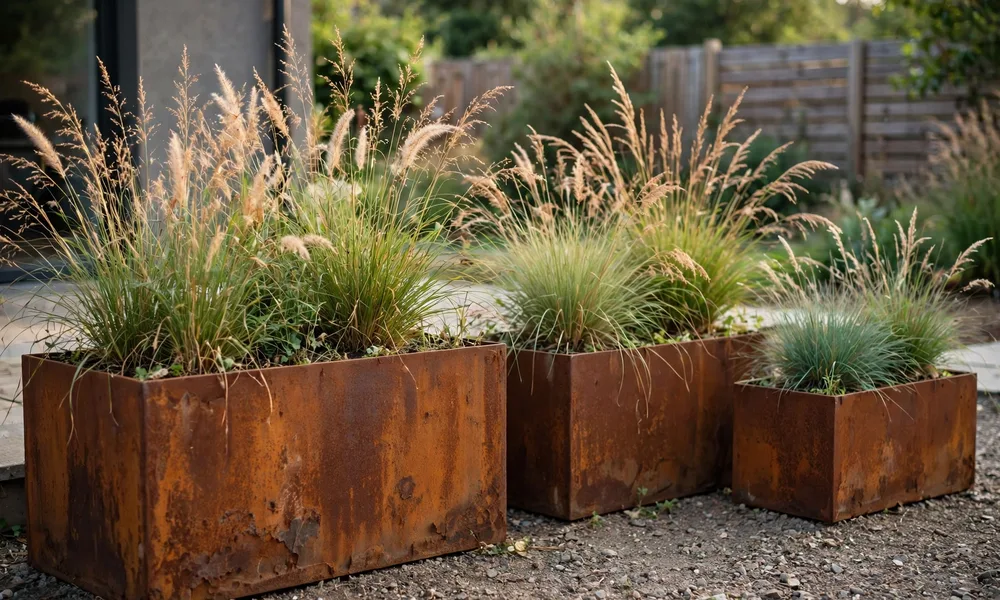
Corten steel, also called weathering steel, is the rusty-looking metal you see in modern garden design. It forms a stable orange-brown rust layer that then protects the steel underneath from further corrosion. A corten planter will last for decades outdoors with no paint and no treatment.
The look is bold, so corten works best as a statement piece: one or two large planters with ornamental grasses, a small tree, or architectural plants like phormium. It takes several months for the rust layer to settle, and during that time rain can wash rusty water onto pale paving, so keep new corten off light stone until the colour has stabilised. Corten is heavy and expensive, so measure your space and budget first.
Aluminium: Light and Rust-Free
Aluminium is the easy option. It never rusts, it is light enough to move even when planted, and it comes in almost any colour thanks to powder coating. Slim aluminium planters in black, white or grey suit balconies and roof terraces, where weight matters.
Aluminium is softer than steel, so thin planters can dent if knocked, and cheap ones can feel flimsy. Choose a decent wall thickness, and in very hot spots, give it afternoon shade.
Copper and Brass: Beautiful but Pricey
Copper and brass planters are the jewellery of the garden. A polished copper pot glows in the sun, and as it weathers it develops a soft green-blue patina that many gardeners love. These metals suit small feature planters by a door or on a table, where they will be seen up close.
They are the most expensive option by far, and not the best choice for large plantings. Copper can also be toxic to some plants in high concentrations, so use it as a decorative outer pot with the plant kept in its own pot inside.

Rust, Heat and Drainage: The Three Problems to Solve
Whatever metal you choose, three issues decide whether your planter succeeds. Rust is the first. Galvanised steel resists it, aluminium avoids it, and corten controls it — but plain untreated steel will rust through in a season or two. Touch up any scratches on a coated planter with a suitable metal paint.
Heat is the second. In full summer sun, a dark metal planter can get hot enough to dry out the outer soil and scorch roots near the walls. Light-coloured or galvanised planters stay cooler, and a thick coir liner inside helps insulate the roots.
Drainage is the third, and the most important. Every metal planter needs holes in the bottom, and it needs to sit slightly raised — on small feet, bricks or a pot riser — so water can escape instead of pooling underneath. A planter sitting flat on a patio will trap water, stain the surface, and keep the roots too wet. If your planter has no holes, drill them before you plant.
What to Plant in Metal Planters
Metal planters suit plants that like good drainage and do not mind warm soil. Herbs such as rosemary, thyme, oregano and lavender thrive in galvanised troughs, and they love the sharp drainage metal provides. Salad leaves, spring onions and strawberries do well in wide, shallow troughs.
Ornamental grasses are the classic choice for corten steel, because their fine leaves soften the hard, rusty edges. Avoid plants that need constantly moist soil unless you are prepared to water daily in summer.

Styling Metal Planters in Your Garden
Metal planters look best when they are repeated. One trough can look lost, but two or three of the same size and finish along a wall or fence create a rhythm that pulls a garden together. Mix heights rather than mixing metals: a tall slim planter beside a low wide trough in the same finish looks deliberate.
Pair metal with soft materials to stop a garden feeling cold. Wooden decking, gravel and soft planting all balance the hard edges of steel, and a galvanised trough full of trailing plants looks far better than one with stiff, upright plants. If you are comparing materials before you buy, our guide to ceramic vs terracotta pots shows how clay planters behave very differently from metal.
Choosing the Right Metal for Your Garden
Start with the spot, not the planter. A sunny vegetable patch calls for galvanised steel troughs: cheap, deep and practical. A modern patio suits one or two corten planters with grasses. A balcony or roof terrace needs light aluminium that will not rust. And a front door that needs a little shine deserves a copper or brass pot as a feature.
Metal garden planters are a long-term purchase, so buy the best quality you can afford and check the drainage before you plant anything. Get the metal, the drainage and the planting right, and a metal planter will outlast most other containers in your garden — and look better every year. If you enjoy giving old containers a second life, our creative planter ideas include more projects that actually work.