Yes, you can ship flowers in the mail — but only if you pack them the way florists do. A bouquet tossed loose into a box will arrive wilted and crushed. Packed with water for the stems, cushioning around the blooms, and a box that holds everything still, it will often arrive looking freshly cut. Pick the right flowers, keep them hydrated, and send them fast.
Below is what survives the post, how to pack a bouquet, how long it can travel, what it costs, and what never to mail.
Can You Ship Flowers in the Mail?
Most postal services will accept flowers, but they treat them as perishable goods. They cannot guarantee freshness and will not refund a bouquet that arrives wilted. A parcel may sit in a warm depot, travel upside down, and wait a day longer than planned.
Still, people mail flowers successfully every day. Gardeners post bouquets to friends, small growers ship orders across the country, and dried flowers travel by post with almost no trouble.
Which Flowers Survive Shipping Best
The best candidates are sturdy, long-stemmed flowers with firm petals and buds not yet fully open. Roses, carnations, chrysanthemums, lilies, sunflowers, and alstroemeria travel well, especially in bud or just beginning to open.
Delicate flowers are a much bigger risk. Sweet peas, poppies, and thin-petalled flowers in full bloom bruise at the slightest knock and wilt within hours. Hydrangeas look tough but drink enormous amounts of water and can collapse in a single warm afternoon.
Cut the stems the morning you post them, when the flowers are freshest and fully hydrated. Choose blooms about three-quarters open, with firm petals and no brown edges.
What You Need to Pack Flowers for Posting
Gather a sturdy cardboard box slightly longer than your bouquet, tissue paper, bubble wrap or crumpled kraft paper, plastic water tubes, floral tape, a plastic bag or cling film, scissors, and strong packing tape. A cold pack helps in warm weather.
The water tubes are the single most important item. A damp paper towel works for a short trip, but a water tube keeps the stem ends submerged for the whole journey. They cost very little from a florist or craft shop. Never put a vase or any open container of water in the parcel: it will leak and may get the parcel refused.
How to Pack Flowers for the Mail, Step by Step
Start by trimming the stems at an angle and standing the flowers in clean water with flower food for at least an hour, ideally overnight. Hydrated flowers survive the post far better than thirsty ones. For more on keeping blooms alive once they arrive, see our guide on how to keep cut flowers fresh longer.

Next, fit a water tube onto each stem, or bundle the stems and fit two or three tubes around the bunch. Fill each tube, push the stem end in, and close the cap firmly. Wrap the tube ends in cling film and secure with floral tape, so water stays inside the wrapping if a tube tips over.
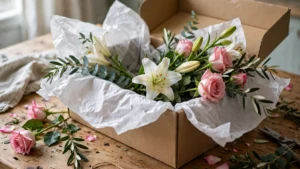
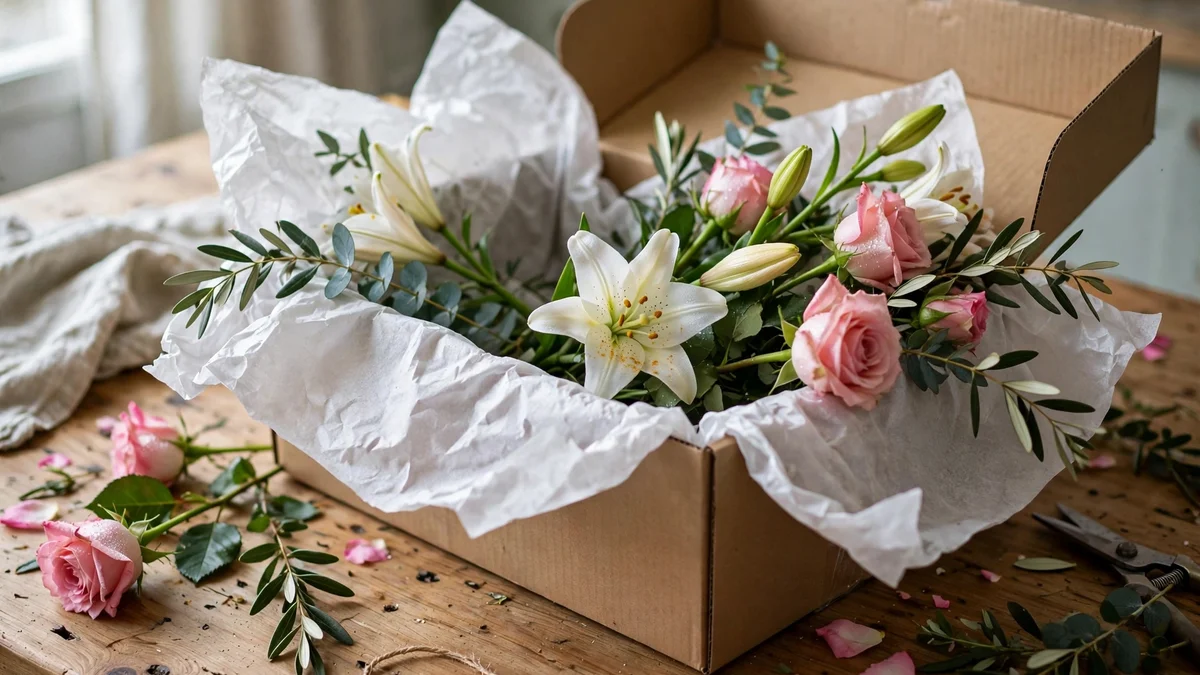
Wrap the bouquet loosely in tissue paper, covering the blooms without pressing them flat. Lay it in the box and fill every gap with crumpled paper or bubble wrap so it cannot slide around. Flowers that shift in transit get bruised, so snug is good, as long as nothing squashes the blooms.
If the weather is warm, tuck a cold pack beside the stems, not touching the petals, and wrap it in paper first so condensation does not drip onto the flowers. Close the box, tape every seam, and include a note telling the recipient to put the flowers in water straight away.
How Long Can Flowers Spend in the Mail?
Time is the biggest enemy. Aim for the fastest service you can afford, ideally overnight or next-day delivery, and post early in the week so the parcel never sits in a depot over a weekend. One night in transit is usually fine. After two days, even hardy flowers look tired, and after three days most are wilted beyond saving.
Weather matters just as much as time. Flowers travel best in cool, mild weather. In a heatwave, even an overnight parcel can arrive limp, and in freezing weather the stems can be damaged by frost. If the forecast is extreme, wait a few days or send dried flowers instead.
What Does It Cost to Ship Flowers?
There is no single price, because the cost depends on the size and weight of the parcel, the distance, and the speed. A small bouquet sent by standard parcel post is the cheapest option, while overnight courier delivery of a large bouquet costs several times more. As a rough guide, expect postage for a small bouquet to cost about as much as the flowers themselves.
What Not to Mail
Some things should never go in a parcel. Never mail flowers in a vase or any container of loose water, and never mail a bouquet soaking wet, as the box will go soft and may fall apart. Do not mail flowers abroad without checking the rules first: many countries restrict fresh plants and flowers, and a parcel can be held or destroyed at customs.
Also avoid sending flowers that are already wilting, fully open, or shedding petals, since the journey will only make them worse. And if the recipient will be away, do not post flowers at all: a bouquet left on a doorstep in the sun will not survive the afternoon.

Mistakes That Ruin Mailed Flowers
The most common mistake is packing flowers too loosely. A bouquet that can slide and bounce around the box will arrive bruised, no matter how short the trip. The second is posting too late in the week, so the parcel sits untouched over a weekend. The third is trusting a damp paper towel for a two-day journey; it dries out within hours. For more on the habits that shorten a bouquet’s life, read our guide to why cut flowers wilt so fast.
What the Recipient Should Do on Arrival
They should unwrap the bouquet straight away, re-trim the stems at an angle, and stand the flowers in a clean vase of fresh lukewarm water with flower food. Limp blooms often perk up within a few hours of drinking, so tell them not to throw anything away too quickly. Our guide to how to make a bouquet with grocery store flowers has arranging tips that work just as well for garden flowers.

A Quick Checklist Before You Post
Flowers cut fresh and hydrated, stems in filled water tubes, tubes wrapped in plastic and taped, bouquet wrapped in tissue, box snug with all gaps filled, cold pack added if it is warm, parcel taped on every seam, and the fastest delivery service you can afford, posted early in the week.
Mailing flowers takes a little more effort than handing over a bouquet, but it is a lovely way to send something personal across the miles. Pick hardy flowers, pack them with water and cushioning, send them fast, and your bouquet can travel surprisingly well.