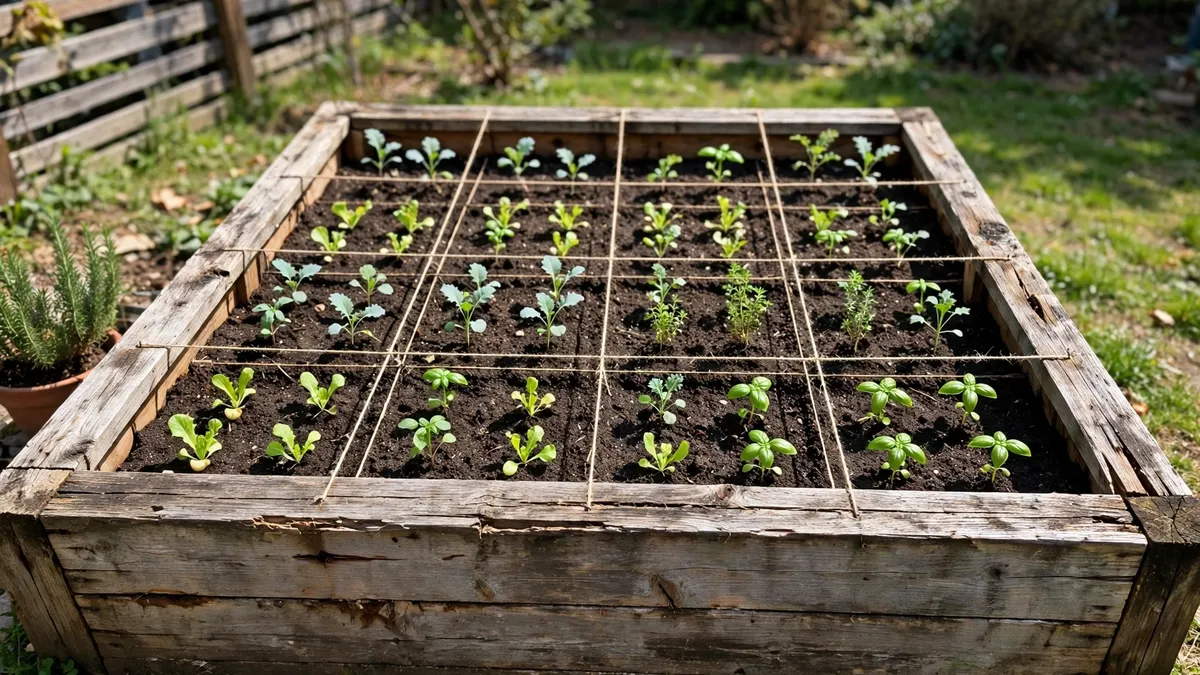
A square raised garden bed is the simplest shape a vegetable garden can take. Four equal sides, no long reach across a wide rectangle, and a footprint that fits a corner or a patio edge. The classic 4 by 4 foot bed is the standard for a reason: you can reach every inch of it from outside, and it divides neatly into sixteen one-foot squares.
This guide covers the sizes that work, the square-foot grid, the materials, the soil each size needs, what to plant, and where to put the bed.
Why Square Works So Well
In a 4 by 4 foot bed the middle is only two feet from any side, so you can reach everything without stepping on the soil. Soil you never walk on stays loose and drains well.
Square beds are also modular. Two squares with a path between them form a neat growing area; four in a block with crossing paths make a small kitchen garden. They fit corners a long bed cannot, and if you rent, a square bed is the easiest shape to dismantle and move.
Square Raised Bed Sizes
A 2 by 2 foot bed is the starter square: four squares, enough for a herb patch or a salad bed for one person, and small enough for a balcony.
A 3 by 3 foot bed is the in-between size. Nine squares is enough for a useful mix of salads and herbs for a couple, and it still fits where a 4 by 4 would not.
A 4 by 4 foot bed is the classic. Sixteen squares can feed two people for much of the season, and it is the size the square-foot gardening method was designed around. It is also the largest square most people should build: any bigger and the middle becomes hard to reach.
A 6 by 6 foot bed breaks the reach rule: the centre is three feet from every edge. Two 4 by 4 foot beds with a path between them grow more, and more comfortably, than one big square.

Square-Foot Gardening in a Square Bed
Divide the bed into one-foot squares and plant each by the room its crop needs: one large plant, four medium, nine small, or sixteen tiny ones per square.
Mark the grid with string, thin wooden laths, or bamboo canes. A permanent grid of laths is worth the effort: it shows at a glance which squares are empty, which makes succession sowing easy. Re-sow as soon as a square empties: pull the radishes, sow lettuce in the same square the same day.
The usual spacing is simple. One per square: a tomato, a pepper, a bush courgette, or a head of broccoli. Four per square: lettuce, chard, or bush beans. Nine per square: spinach, beets, or bush peas. Sixteen per square: radishes, carrots, or spring onions.
Put tall crops on the north side: a tomato or climbing bean at the back, leafy greens in the middle, radishes along the front edge.

Materials for a Square Frame
A square frame is the easiest shape to build, because all four sides are the same length. Four boards, four corner posts, and a box of screws is the whole list, with no long side to bow under wet soil.
Cedar is the best wood: it resists rot naturally and lasts 10 to 15 years. Douglas fir is the middle ground at 5 to 7 years, and untreated pine is the budget option at 3 to 5 years. Avoid old railway sleepers and painted boards, which can leach chemicals into food-growing soil. For the full timber choices, see our raised bed gardening for beginners guide, which covers the frame, the fill, and the first planting.
Metal kits suit square beds well too. A 4 by 4 foot galvanized steel bed goes together in under an hour and holds its shape without bracing, but the edges warm the soil on hot days, so mulch matters more.
Keep the bed 10 to 12 inches deep for most crops. Check the corners before you fill it: when both diagonals match, the bed is truly square.

Filling a Square Bed: How Much Soil You Need
Soil is the biggest cost of a square bed, and the square shape makes the maths easy: multiply length by width by depth, all in feet, for the volume in cubic feet. A 4 by 4 foot bed 12 inches deep needs 16 cubic feet of mix; a 3 by 3 needs 9, and a 2 by 2 needs just 4.
Fill in layers. Start with cardboard or a few inches of twigs and leaves at the base to smother weeds, then add the growing mix: roughly 60 percent screened topsoil, 30 percent mature compost, and 10 percent aeration material such as coarse perlite or fine bark. Our guide to the best soil mix for raised beds gives the full recipe. Fill a little above the rim, because the mix settles by an inch or two in the first week, then top it up before planting. Do not put gravel at the bottom: it raises the water level and steals growing space.
What to Plant in a Square Bed
A square bed rewards a mix rather than a single crop. Sixteen squares in a 4 by 4 foot bed can hold a dozen different vegetables at once, which spreads the harvest across the season.
Start with the reliable earners. Leafy greens give the highest yield per square foot: lettuce, spinach, kale, and chard can be picked leaf by leaf for weeks. Radishes are ready in about a month and fit between slower crops. Bush beans, peppers, and dwarf cherry tomatoes suit the sunny squares, and a trellis on the north side turns one square of climbing beans into six feet of height. Our guide to the best vegetables for small raised beds lists the compact varieties to look for and the crops to skip when space is tight.

Where to Put Square Beds
Most vegetables need at least six hours of direct sun a day, and tomatoes, peppers, and courgettes do best with eight or more, so watch your garden for a day before you commit. Put the bed close to a tap: a bed near water gets watered far more reliably than one at the far end of the garden.
Leave proper paths between beds: two feet minimum for a watering can, three if you use a wheelbarrow. Lay several square beds in straight rows with paths running north to south, so each bed gets even light. Keep the bed level: a tilted bed dries out at one end and floods at the other.
Square Beds: Small Shape, Big Harvest
A square raised garden bed will not grow everything, and it will not suit a gardener who wants long rows of a single crop. But for a small garden, a patio, or a first vegetable patch, the square shape is hard to beat: easy to reach, build, and lay out in a grid. Start with one 4 by 4 foot bed, divide it into squares, plant a mix, and re-sow every empty square. The bed stays small. The harvest does not have to.