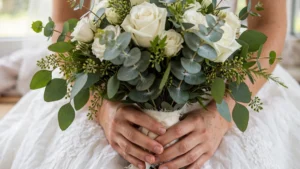
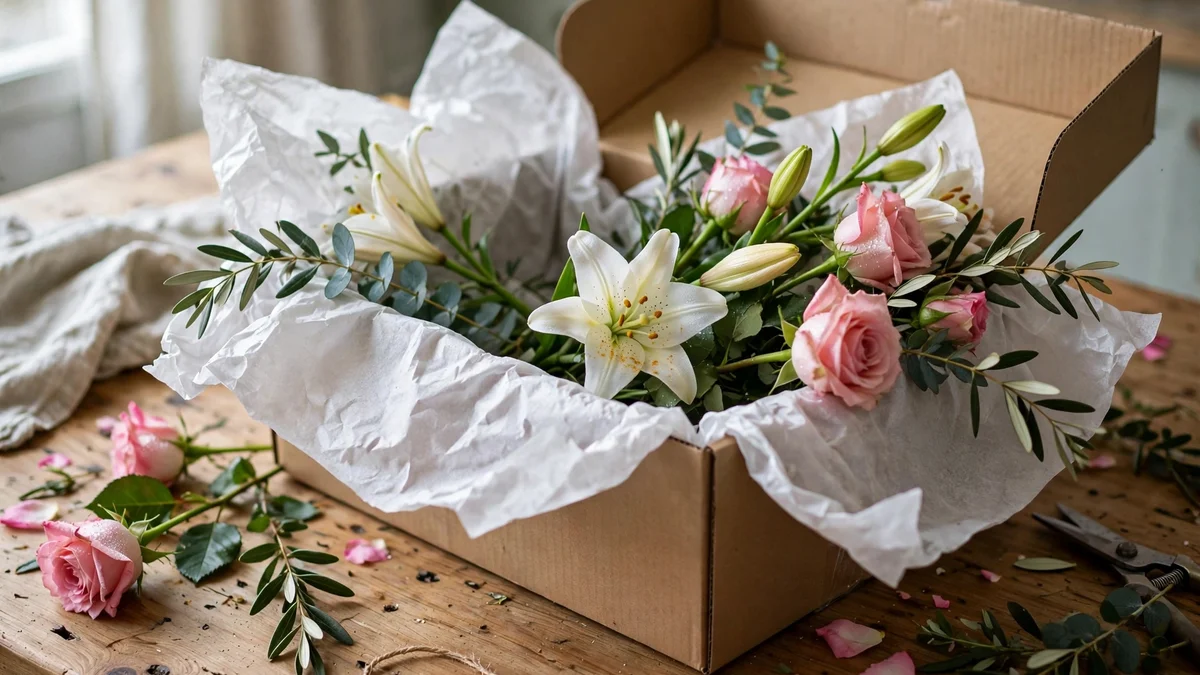
Greenery is the quiet part of a bridal bouquet that does most of the work. The roses and peonies get the attention, but it is the eucalyptus, ruscus and olive branch around them that give the bouquet its shape, its movement and its depth. Without greenery, even the most expensive flowers can look flat, like blooms pressed together with nowhere to breathe.
When brides search for greenery for bridal bouquets, they usually ask two questions: which foliage should I choose, and how much do I need? The wrong greenery can overpower delicate flowers, wilt before the ceremony ends, or quietly push up the florist’s bill. Get it right, and the greenery makes the flowers look better than they would on their own.

What Greenery Actually Does in a Bouquet
Greenery plays four roles at once. First, it frames the flowers. A ring of soft foliage around the edge stops the blooms from ending abruptly and softens the outline against the dress. Second, it adds texture. Flowers are mostly round and soft; greenery brings in long lines, fine leaves, silvery tones and trailing stems that stop the bouquet from looking like a single blob of colour.
Third, greenery fills gaps cheaply. A bouquet built entirely from roses needs a lot of roses to look full. The same fullness can be reached with fewer flowers and well-placed foliage, which is one of the simplest ways to keep the cost down. Fourth, it adds scent and movement: eucalyptus smells fresh and clean, olive branch catches the light, and trailing ruscus moves gently as the bride walks.
The Greenery Types That Work Best
Not every leaf belongs in a bridal bouquet. The best greenery holds up for hours out of water, has stems that are easy to wire or tape, and does not shed leaves onto the dress.
Silver dollar eucalyptus is the most popular choice. Its round, silvery-green leaves are instantly recognisable, it smells wonderful, and it dries beautifully, so it doubles as a keepsake. Baby blue eucalyptus has smaller, more delicate leaves, while seeded eucalyptus adds tiny seed pods for texture.

Italian ruscus is the workhorse. Its long, arching stems and small pointed leaves fill gaps, add height and trail gently over the edge of a bouquet without looking messy. It is tough, long-lasting and inexpensive. Israeli ruscus is similar but shorter and bushier, good for compact posies.
Olive branch is the choice for a relaxed, Mediterranean feel. Its narrow grey-green leaves catch the light, and a few stems are enough to change the whole character of a bouquet. It pairs beautifully with white and cream flowers and suits outdoor weddings.
Ferns bring softness and a woodland feel. Leatherleaf fern is the sturdiest, with glossy dark fronds that frame a bouquet well. Maidenhair fern is far more delicate and feathery, but it wilts quickly in heat, so save it for cool-weather weddings. Asparagus fern adds a fine, airy texture that fills gaps without adding weight.
How Much Greenery Should You Use?
The most useful rule is simple: greenery should support the flowers, not compete with them. For a classic round bouquet, about one quarter to one third of the visible bouquet should be foliage. That is enough to frame the flowers and fill the gaps without the bouquet reading as a bunch of leaves with flowers poked in.
Loose, garden-style bouquets can carry more, up to half greenery, because their charm comes from the mix of textures and trailing stems. A greenery-heavy bouquet with just a few roses scattered through it looks deliberate and modern, and it is one of the most affordable styles, since foliage costs far less than flowers.
Count stems rather than guessing. A medium hand-tied bouquet usually needs 8 to 12 greenery stems alongside 15 to 20 flower stems. Tell your florist the proportion you want in plain words, such as “about a third greenery”.
Pairing Greenery With Flowers
Pairing is mostly about contrast. Dark, glossy greenery such as salal or leatherleaf fern makes pale flowers glow, so it suits white roses, cream peonies and blush ranunculus. Silvery foliage such as eucalyptus or dusty miller cools down warm colours, so it works well with burgundy dahlias and terracotta roses. Fine, feathery greenery such as asparagus fern softens large, heavy flowers such as hydrangeas and peonies.
Keep the number of greenery types low. Two or three varieties in one bouquet look intentional; five or six look confused. A reliable combination is one statement foliage, such as silver dollar eucalyptus, plus one filler, such as Italian ruscus, plus one trailing element if the shape calls for it. To compare the shapes those pairings sit in, see our guide to the types of bridal bouquets and how each one suits different dresses and venues.

Greenery by Season
Most greenery is available all year, which is one of its advantages over flowers, but some types are at their best in particular seasons. Eucalyptus and ruscus are reliable in every month. Olive branch is best in late spring and summer, when the leaves are fresh and supple. Ferns are lush in spring and summer but can look tired in deep winter.
Autumn is the season to lean into texture: dried grasses, wheat and seeded eucalyptus suit the warm, low light. Winter weddings suit dusty miller, fir and pine sprigs, and magnolia leaves. For the full picture of what is in season when, see our seasonal flowers guide on what blooms in each season.
What Greenery Costs, and How to Keep It Fresh
Greenery is one of the cheapest parts of a bouquet. A bunch of eucalyptus typically costs a few pounds or dollars, ruscus even less, while a single garden rose can cost several times more. Florists usually charge for greenery by the bunch, so adding foliage is rarely what pushes a quote up.
Expect greenery to make up roughly 10 to 20 percent of a bouquet’s flower budget, and a bouquet that is half greenery can cost a third less than the same size built entirely from premium flowers. For real price ranges across bouquets and arrangements, see our guide to how much flowers cost before you ask for a quote.

Keeping greenery fresh is easy. Most foliage lasts far longer out of water than flowers do. Keep stems in cool water overnight before the wedding, mist them lightly on the morning, and keep the bouquet out of direct sun and away from radiators. Eucalyptus and olive branch are especially tough and will still look good at the end of the evening. Maidenhair fern is the exception: keep it in water until the last possible moment, and expect it to wilt first.
Getting It Right on the Day
Start with the mood, not the shopping list. Decide whether you want modern and silvery, relaxed and Mediterranean, or soft and woodland, then pick one statement greenery and one filler to match. Keep the proportion in mind and pair the foliage with flowers it contrasts with. Do that, and the greenery will make the flowers look their best, hold the bouquet together all day, and give your photographs a depth that flowers alone cannot manage.