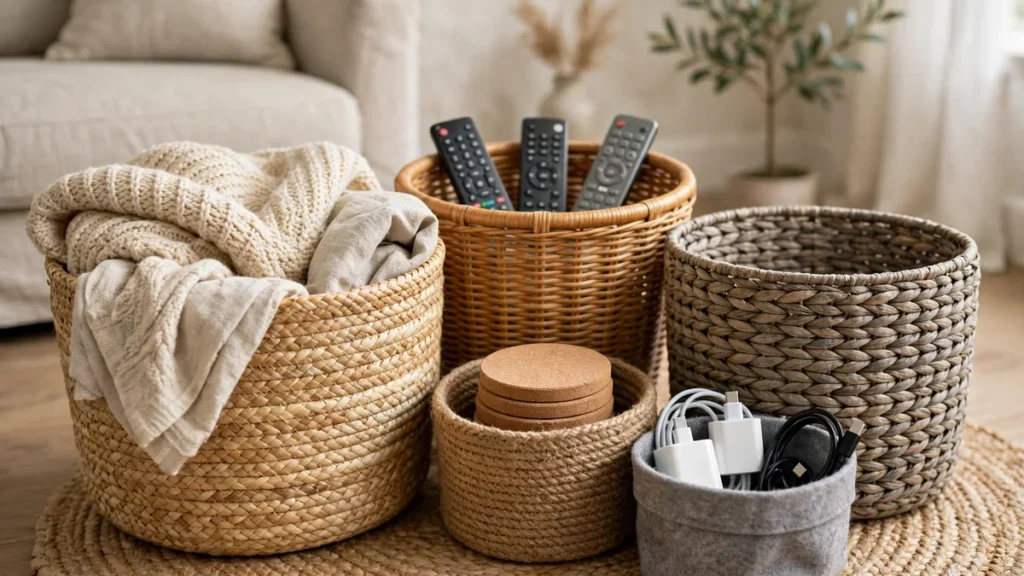
Decorative storage baskets for living room clutter work best when you choose the material for the job and the size for the items you need to store. A practical system uses one large basket for throws, one medium basket for remotes and chargers, and one small basket for everyday odds and ends. Seagrass, water hyacinth, rattan, jute, and felt each offer different textures and levels of structure.
That order matters. It is easy to choose a basket because its color or weave looks attractive, then discover that it bends under heavy blankets or does not fit the shelf. Material affects how a basket holds its shape and responds to everyday use. Size determines whether it can store your belongings without creating more clutter. Get both right, and your storage can look like part of the room’s design.
Key Takeaways
- Choose seagrass when you want a firmer woven basket for regular use.
- Water hyacinth offers a thicker, softer-looking texture for relaxed storage.
- Rattan is useful when you want a more structured basket or lidded design.
- Use three main basket sizes: large for throws, medium for everyday items, and small for loose accessories.
- Give each basket one storage category to keep clutter under control.
- Keep natural-fiber baskets dry and clean them gently.
- Use labels and practical placement to make the storage system easier for everyone in your home.
Why Decorative Storage Baskets for Living Room Clutter Work

Visible clutter can make a living room feel less organized, even when the rest of the space is well arranged. Baskets provide a simple place for items that otherwise collect on sofas, tables, shelves, and floors.
They help in three ways. First, they give everyday belongings a designated storage area. Throws can go beside the sofa, while remotes and controllers can stay in a basket near the television. Second, woven materials add texture to rooms that contain many smooth surfaces, such as glass tables, painted walls, and upholstered furniture. Third, baskets are easy to move when you need to change the room layout or clear a surface.
However, a decorative basket should still suit its intended use. A basket holding heavy toys needs a firm base and secure handles. A small basket for coasters or reading glasses does not need the same level of structure.
Also consider whether you need a lid. Lidded baskets conceal stored items and work well in visible areas. Open baskets are more convenient when you reach inside throughout the day.
The Material Map for Living Room Baskets: Seagrass vs. Water Hyacinth vs. Rattan

The material affects a basket’s texture, appearance, and practical use. The table below compares five common choices.
| Material | Appearance and Character | Practical Considerations | Suitable Uses |
|---|---|---|---|
| Seagrass | Fine, natural woven texture with a subtle sheen | Firm and suitable for regular handling; construction quality still matters | Throws, toys, and everyday storage |
| Water hyacinth | Thick, soft-looking braids with a warm, relaxed appearance | Softer texture; avoid overloading baskets that are not designed for heavy items | Decorative storage, light blankets, and shelf baskets |
| Rattan | Structured woven or caned appearance | Rigid construction can help a basket retain its shape | Lidded storage, structured baskets, and decorative pieces |
| Jute | Coarse, rustic, natural texture | May shed or soften with repeated heavy use; check the weave and finish | Lightweight everyday storage and casual decor |
| Felt or fabric | Smooth, soft-sided, and often collapsible | Easy to move and store; seams and handles need checking | Shelf cubbies, accessories, and lightweight items |
The seagrass and water hyacinth comparison is supported by material guides from Artex Nam An and Viet Trang Craft. Both are maker or supplier sources, so their product-related claims should be read with that context in mind. The jute and felt descriptions are general practical guidance rather than formal durability ratings.
Seagrass vs. Water Hyacinth: Which Should You Choose?
Seagrass generally has a finer fiber and a firmer feel, while water hyacinth has thicker, softer strands. That difference affects the final weave and the way each material looks in a room.
Choose seagrass when you want a neater, firmer-looking basket for items that are handled regularly. Water hyacinth is a good option when you prefer a thicker weave and a softer decorative appearance.
Neither material is waterproof. Both should be kept in dry indoor spaces and protected from prolonged moisture. The Artex Nam An material comparison explains their differences in fiber size, texture, and care.
Is Rattan a Durable Choice for Living Room Storage?
Rattan is often used when a basket needs a more structured appearance. Its woven construction can provide a firmer shape than a soft-sided fabric bin. It is worth checking the frame, rim, base, and handle connections before choosing a basket for heavier belongings.
A well-constructed basket is not defined by material alone. Weave density, frame support, handle attachment, and the weight of the items you store all affect how it performs.
How to Check Basket Quality Before Buying

Look beyond the surface color and decorative pattern. Check these details:
- Weave density: Look for consistent weaving without large, unintended gaps.
- Base support: Press the base gently. It should feel suitable for the weight you plan to store.
- Handles: Check whether handles are securely woven, stitched, or attached to a supporting frame.
- Rim construction: A firm rim helps the basket keep its shape during regular use.
- Finish: Check for loose strands, rough edges, and areas that may catch on blankets or clothing.
These are practical inspection tips, not a certified quality standard. Always compare the basket’s construction with the job you expect it to do.
Size Systems: A Three-Basket Rule for Living Rooms

You do not need a matching set of baskets to organize a living room. Three useful size categories can handle many everyday storage needs.
Large Baskets: 16–20 Inches or Bigger
Use a large basket for throws, blankets, cushions, or children’s toys. Place it beside the sofa, under a console, or in an unused corner.
Pay attention to the handles and base. A basket filled with blankets can become heavy, so it needs enough support for regular lifting and moving.
Medium Baskets: 12–14 Inches
Medium baskets work well for remotes, chargers, controllers, reading glasses, and similar accessories. They can sit on shelves, inside suitable console spaces, or beside a seating area.
Measure the shelf or cubby before choosing one. A basket that is slightly too wide or tall can make the storage space difficult to use.
Small Baskets: 8–10 Inches
Small baskets are useful for coasters, pens, matches, small accessories, and other objects that tend to collect on coffee tables.
You can use two or three small baskets in different areas, but avoid filling every available surface with containers. The purpose is to reduce visual clutter, not add more of it.
Follow the One-Category Rule
Give each basket one main job. For example:
- Large basket: blankets and throws.
- Medium basket: remotes and controllers.
- Small basket: coasters and small accessories.
When unrelated items collect in the same basket, it becomes another junk drawer. A clear category makes it easier to put belongings away and find them later.
Placement: Where Decorative Baskets Hide Chaos Gracefully

The right location makes storage convenient and helps baskets look intentional. Choose places that are close to where you use the items.
- Beside the sofa: Keep a large basket within reach for throws and cushions.
- Under a console: Use low baskets for accessories that you want nearby but out of sight.
- Near the fireplace: A basket can soften the look of a hard architectural feature while providing a place for blankets.
- On open shelves: Use medium baskets to group smaller belongings and create a more consistent appearance.
- Beside a reading chair: Keep a small basket for books, glasses, or other reading essentials.
Labels can make the system easier to maintain. Simple tags or discreet labels tell everyone in the household where items belong. You can also keep one deeper basket for quick tidying before guests arrive.
For more ideas on organizing everyday belongings, see our guide to home organization ideas. If you are working with a smaller room, our article on plants for small spaces offers additional ideas for making limited areas feel considered and functional.
Care: Keeping Decorative Storage Baskets Looking Good

Natural-fiber baskets need protection from excess moisture. Seagrass and water hyacinth can absorb moisture, and damp conditions may encourage mold or leave stains. Rattan and jute also benefit from dry storage and suitable indoor conditions.
The Canadian Conservation Institute’s guidance on caring for basketry and plant materials explains how humidity can affect plant-based woven materials, including the risk of mold and changes in shape.
Use these basic care practices:
- Keep baskets dry: Avoid damp rooms and areas where water is frequently spilled.
- Remove dust gently: Use a soft, dry brush or a vacuum with a suitable brush attachment.
- Clean small marks carefully: Follow the care instructions for the specific material. If you use a slightly damp cloth, avoid soaking the fibers and dry the basket thoroughly.
- Avoid prolonged direct sunlight: Strong sunlight can cause some natural materials and finishes to fade.
- Check the weave regularly: Look for loose strands, damaged handles, or changes in the basket’s shape.
- Use liners when appropriate: A removable liner can help protect the inside of a basket, especially when storing items that may leave marks.
Do not assume every woven basket can be cleaned in the same way. Check the manufacturer’s care instructions, particularly if the basket has a fabric lining, metal frame, painted finish, or glued components.
If you want to bring more natural textures into your room, explore our guide to modern green interior design. It covers ways to incorporate natural elements into an indoor space.
FAQ: Decorative Storage Baskets for Living Room
Which basket material is most durable for a living room?
Seagrass is a practical choice for regular handling because its fibers are relatively fine and firm. Rattan is useful when you want a more structured basket. Actual durability also depends on the weave, frame, handles, and weight of the items stored inside.
What size baskets work best in living rooms?
A large basket around 16–20 inches or bigger can hold throws and blankets. Medium baskets around 12–14 inches suit shelves and everyday accessories, while small baskets around 8–10 inches work for coasters and smaller objects. Measure your available space before choosing.
How do I stop natural-fiber baskets from smelling musty?
Keep baskets in dry, well-ventilated areas and away from damp floors or watering zones. Remove dust regularly and allow a basket to dry completely if it becomes damp. If you notice visible mold, deal with it carefully rather than continuing to use the basket as normal storage.
Seagrass or water hyacinth: which should I pick?
Choose seagrass if you prefer a finer, firmer weave for regular storage. Choose water hyacinth if you like a thicker, softer-looking texture. Both are natural materials, but neither should be treated as waterproof.
How do I organize a living room with baskets without adding clutter?
Give each basket one clear category, choose sizes that fit the items you store, and place containers near where those items are used. Avoid filling every corner with baskets. A small, useful system is easier to maintain than too many containers.
Conclusion: Decorative Storage Baskets for Living Room
Decorative storage baskets can make a living room easier to manage while adding useful texture to the space. Start by matching the material to the job, then choose large, medium, and small sizes for different categories of belongings. Place each basket where it will be used, keep natural fibers dry, and avoid overfilling them.
The best arrangement is not the one with the most baskets. It is the one that keeps everyday items accessible while allowing the room to feel organized and comfortable.
Disclaimer
Material characteristics and care needs can vary by weave, finish, construction, and manufacturer. Size recommendations in this guide are practical starting points, not formal industry standards. Check product-specific care instructions before cleaning or using a basket.