Key Takeaways
The best indoor plants for low light are not plants that prefer darkness. They are plants that can adapt to weaker indoor light without immediately struggling.
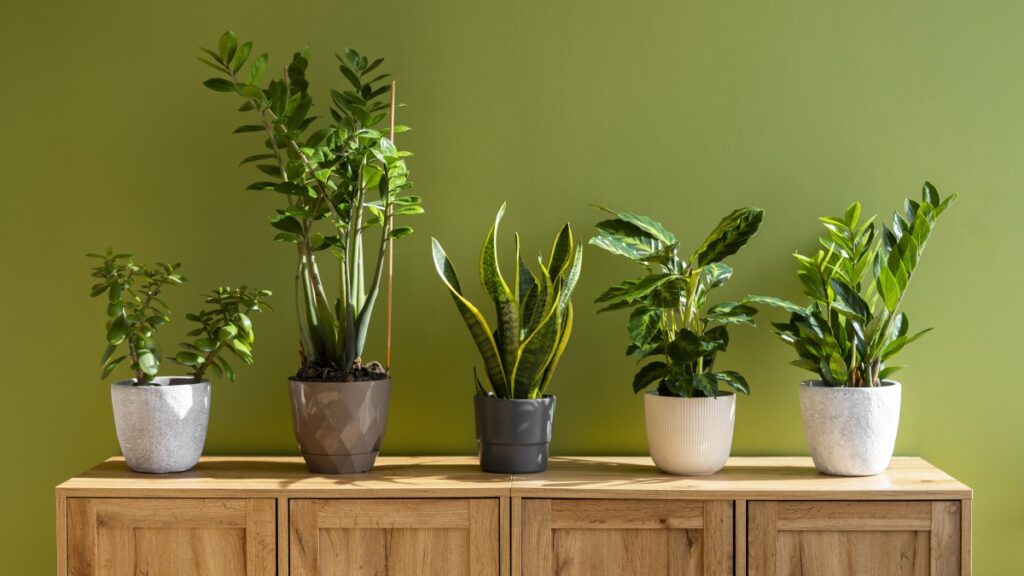
For the easiest care, start with a snake plant, ZZ plant, or cast iron plant. For trailing foliage, choose pothos or heartleaf philodendron. If you want a softer tropical appearance, a parlour palm can work well.
Most importantly, match the plant to the actual conditions in your home. A shaded room with daylight can support many beautiful houseplants, while a windowless room may require artificial plant lighting.
At Peeacelily, this is the key idea worth remembering: the right plant is not simply the one labelled “low light.” It is the one whose light, watering, humidity, temperature, and safety requirements match your particular room.
Quick Answer
The best indoor plants for low light include:
| Plant | Low-Light Tolerance | Watering Style | Best For |
|---|---|---|---|
| Snake Plant | Excellent | Infrequent | Beginners |
| ZZ Plant | Excellent | Infrequent | Busy homes |
| Cast Iron Plant | Excellent | Moderate | Darker rooms |
| Pothos | Very good | Moderate | Shelves and hanging pots |
| Chinese Evergreen | Very good | Moderate | Bedrooms and offices |
| Heartleaf Philodendron | Very good | Moderate | Trailing displays |
| Parlour Palm | Good | Moderate | Softer, tropical look |
| Spider Plant | Good | Moderate | Shelves and hanging baskets |
| Peace Lily | Good | More regular | Humid rooms |
| English Ivy | Good | Moderate | Trailing displays |
| Snake Plant varieties | Excellent | Infrequent | Small spaces |
| Pilea cadierei | Moderate | Moderate | Compact displays |
| Rhipsalis | Moderate | Moderate | Hanging pots |
| Boston Fern | Moderate | Regular | Humid rooms |
| Begonia varieties | Moderate | Regular | Decorative foliage |
The exact tolerance varies by species and cultivar, and variegated plants may need more light to maintain their patterns.
What Counts as a Low-Light Room?
A low-light room is not necessarily a dark room. It may have a north-facing window, a small window, filtered daylight, or a plant positioned several feet away from a brighter window.
The Royal Horticultural Society notes that many plants struggle when placed far back from windows, particularly during seasons when daylight is weaker. A useful practical rule is that if there is enough natural light for comfortable reading, some shade-tolerant houseplants may be able to grow there.
Therefore, before buying a plant, look at the room throughout the day rather than judging its brightness at one particular moment.
15 Best Indoor Plants for Low Light
1. Snake Plant
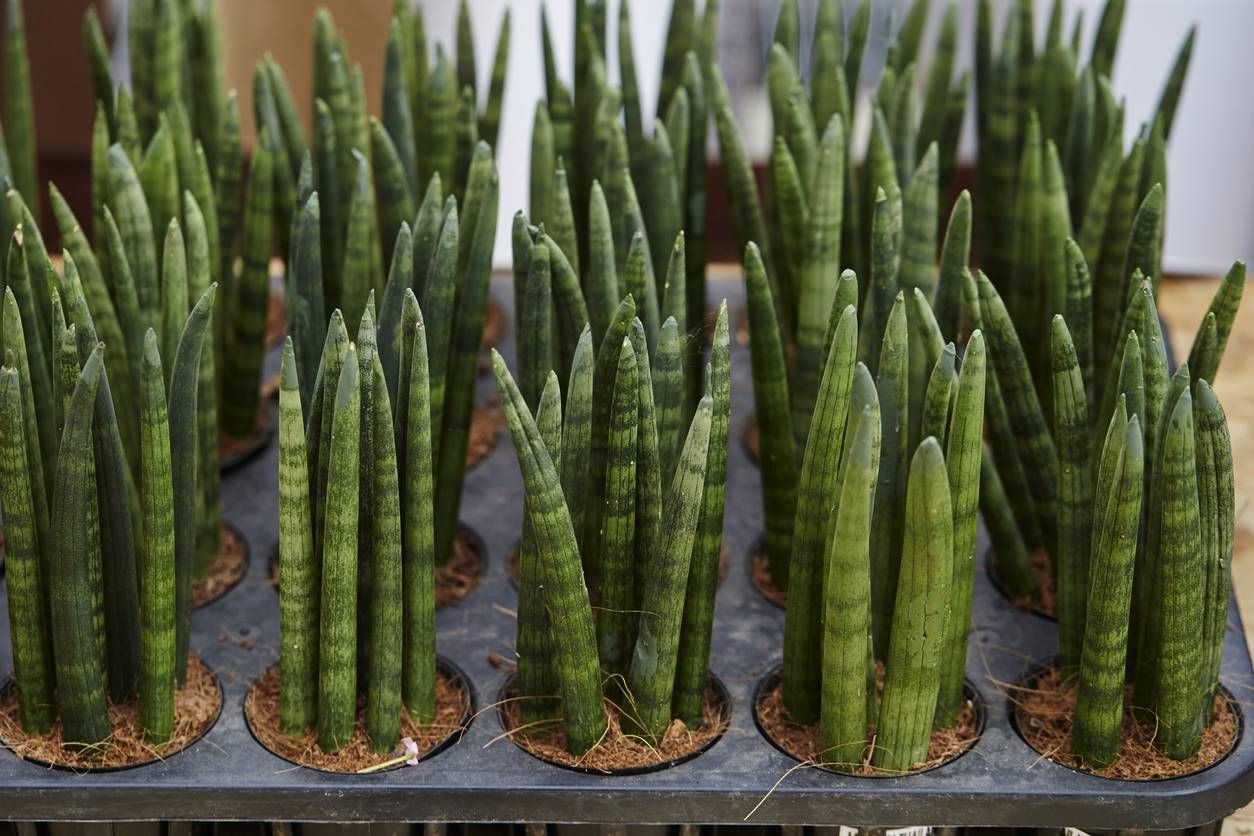
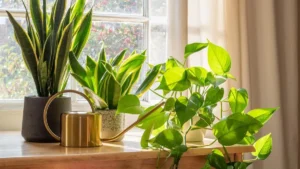
The snake plant is one of the strongest choices for people who want a plant that can tolerate a wide range of indoor conditions.
It handles both bright and low light and stores water in its thick leaves, so it generally needs less frequent watering than many tropical houseplants. The RHS recommends allowing the growing medium to dry between waterings and avoiding excessive moisture.
Best for: Bedrooms, offices, hallways, and beginners.
Pet note: Snake plants are toxic to cats and dogs if eaten.
2. ZZ Plant
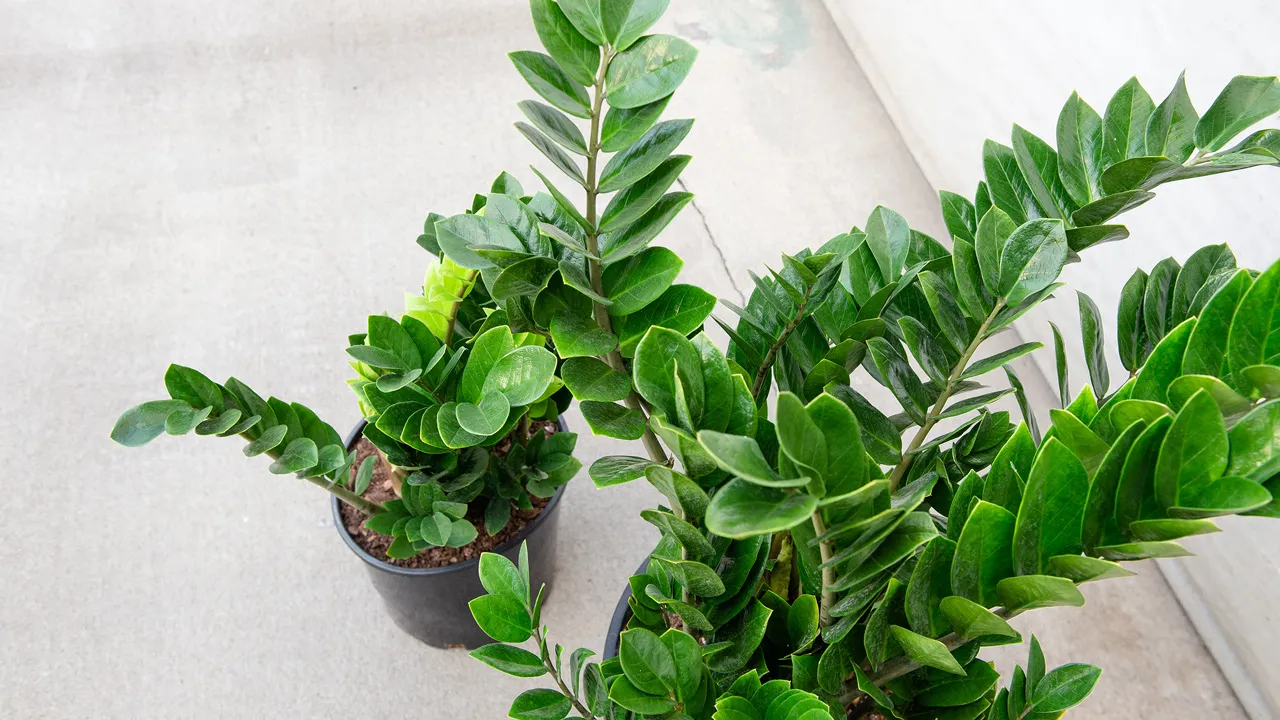
ZZ plants are another excellent option for rooms where natural light is limited.
Their underground rhizomes help them store water, which is one reason they can cope with periods of dryness. The RHS lists ZZ plants among its low-light-tolerant houseplants and recommends allowing the compost to dry before watering again.
Best for: Offices, apartments, bedrooms, and people who sometimes forget to water.
3. Cast Iron Plant
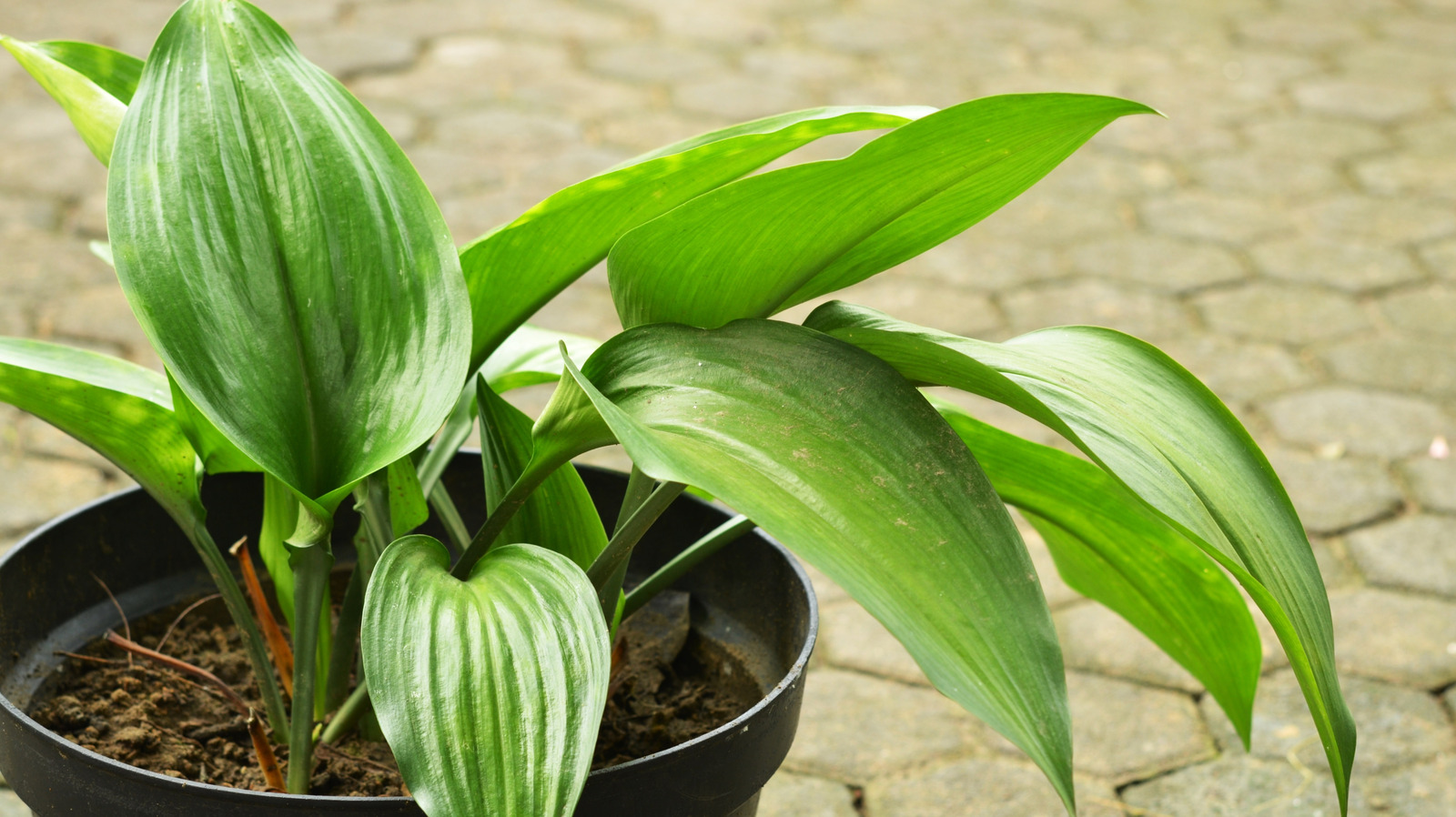
The cast iron plant has earned its name for good reason. Aspidistra elatior is particularly tolerant of shade and can handle darker areas where many other houseplants would struggle.
It is also available in attractive forms with spotted or striped foliage, giving you more choices than the plain green version.
Best for: Dark corners, hallways, and traditional interiors.
Pet note: ASPCA lists cast iron plant as non-toxic to dogs, cats, and horses.
4. Pothos
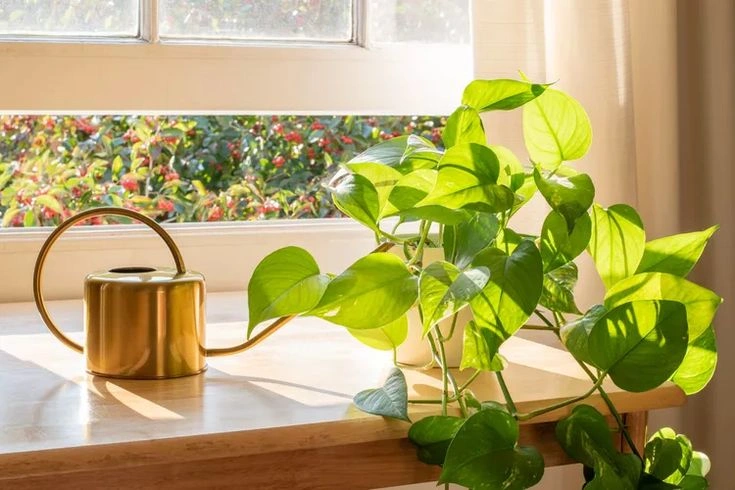
Pothos, scientifically known as Epipremnum aureum, is one of the most practical trailing plants for a low-light home.
It can cope with poorly lit locations, although growth and leaf coloration may be stronger with better indirect light. The RHS specifically includes pothos among plants suitable for low-light and fluctuating indoor conditions.
Its trailing stems also make it easy to display on a bookshelf, cabinet, or hanging planter.
Best for: Shelves, offices, bedrooms, and hanging baskets.
Pet note: Pothos contains insoluble calcium oxalates and is toxic to pets if chewed or eaten.
5. Chinese Evergreen
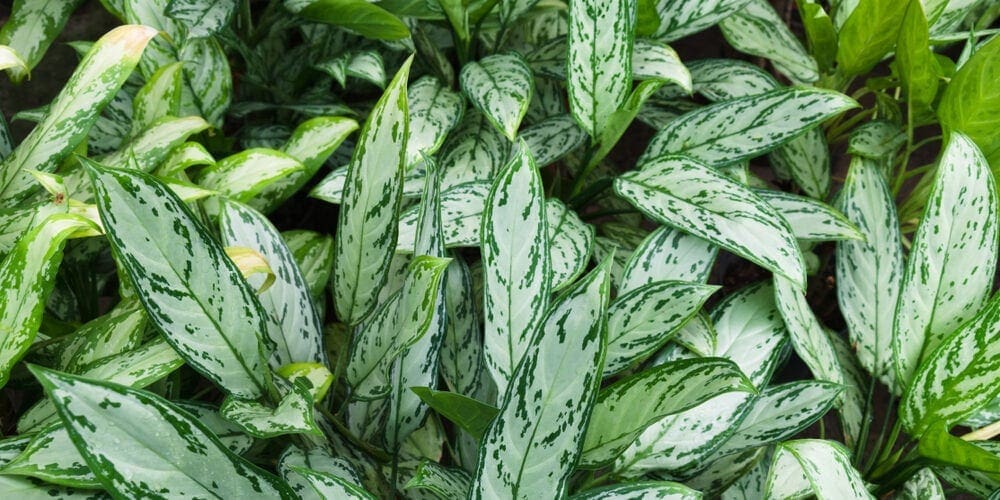
Chinese evergreen, or Aglaonema, is especially useful when you want attractive foliage without needing a very sunny room.
It prefers low to medium indirect light and can tolerate lower light better than many houseplants. However, highly variegated varieties can need brighter conditions to maintain their patterns.
Best for: Bedrooms, offices, and living rooms.
6. Heartleaf Philodendron
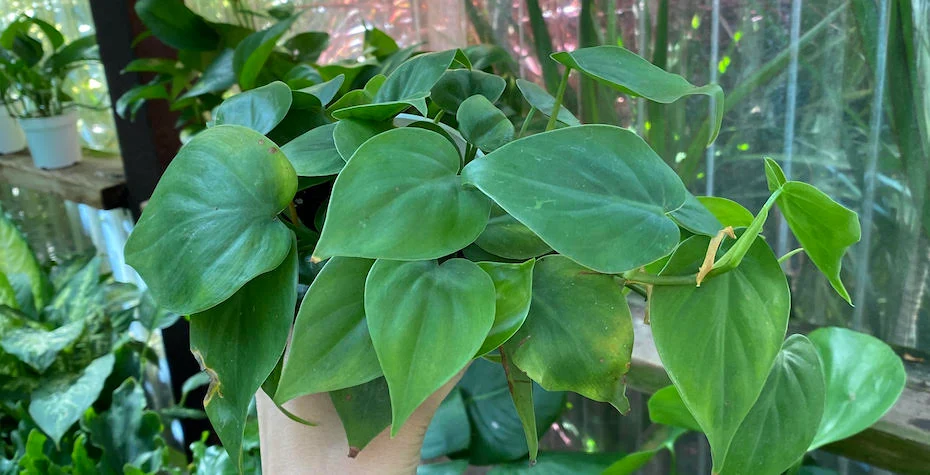
Heartleaf philodendron has glossy, heart-shaped leaves and a naturally trailing habit.
Philodendrons generally prefer bright, indirect light, but the heartleaf type is among the plants recommended for poorer indoor lighting conditions. The RHS and University of Minnesota Extension both identify heartleaf philodendron as a suitable choice for less brightly lit indoor locations.
Best for: Bookshelves, hanging planters, and desks.
Pet note: Philodendrons are toxic to cats and dogs when ingested.
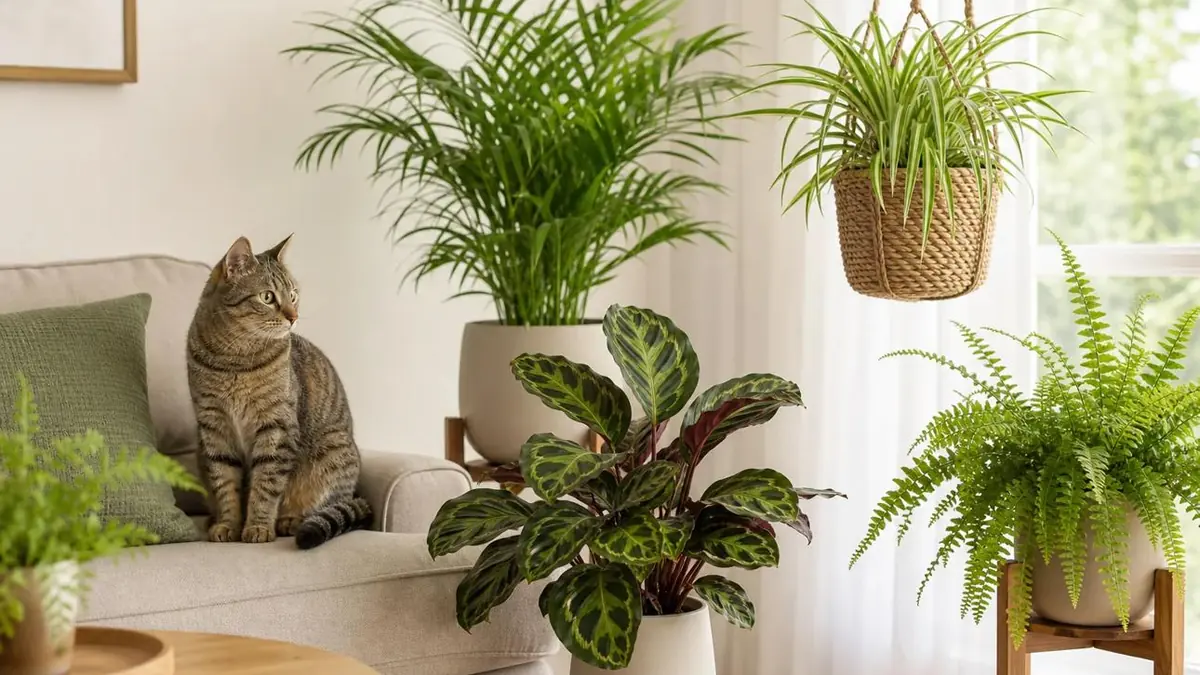
7. Parlour Palm
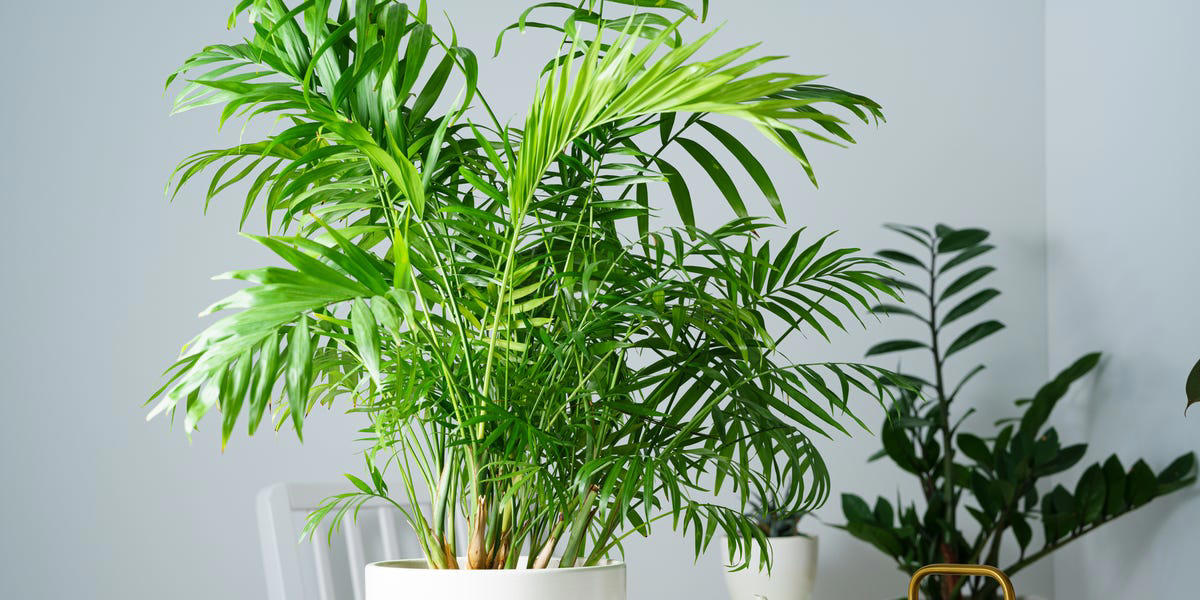
If you want something softer and more tropical, the parlour palm (Chamaedorea elegans) is worth considering.
The RHS specifically notes that parlour palms tolerate fairly low light and can be grown successfully indoors.
Its arching foliage works particularly well in rooms where you want height without a bulky plant.
Best for: Living rooms, bedrooms, and offices.
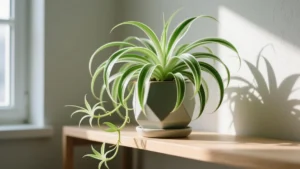
8. Spider Plant
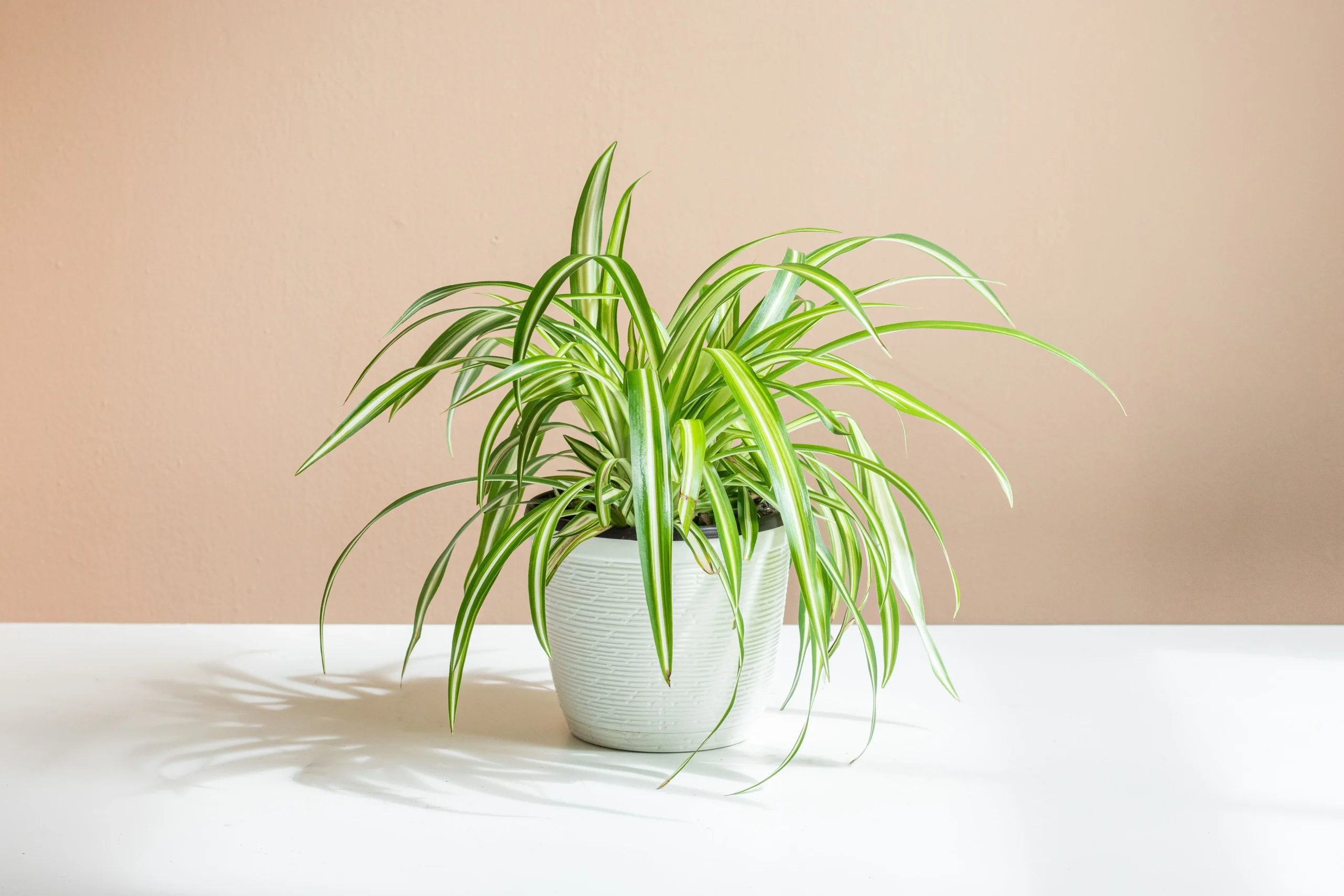
Spider plants are famous for producing small plantlets that hang from long stems, making them particularly attractive in baskets.
They tolerate low light, although growth can slow and variegated leaves may lose some of their pattern when light is insufficient.
Best for: Shelves, hanging baskets, and beginner plant collections.
Pet note: Spider plants are listed as non-toxic to cats and dogs by ASPCA.
9. Peace Lily
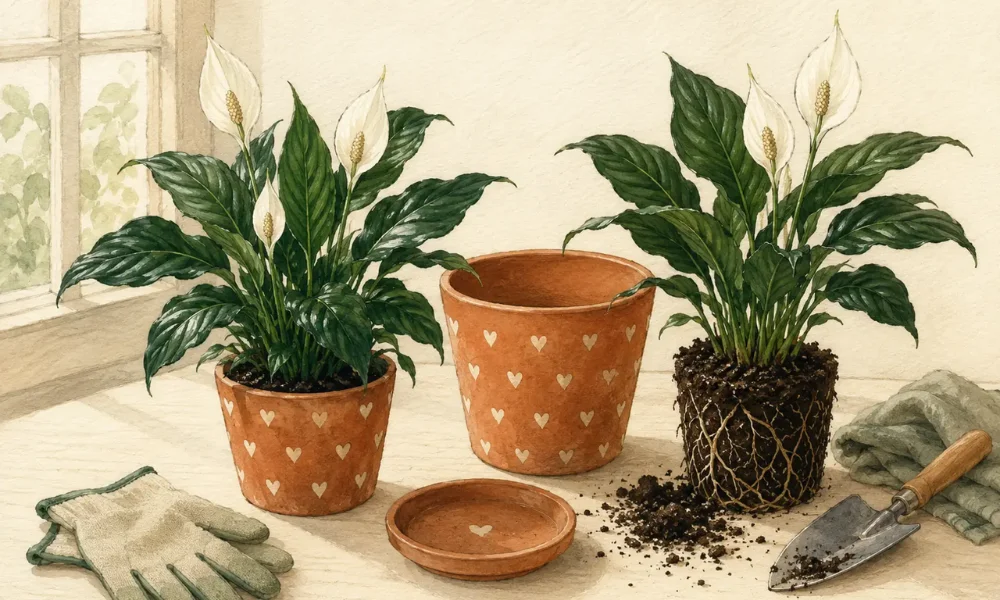
Peace lilies are popular because their dark foliage and white flower-like spathes provide strong visual contrast.
They can tolerate lower light, although flowering generally requires more suitable light conditions. They also appreciate moisture and humidity, so they can work particularly well in suitable bathrooms or other humid areas.
Best for: Humid rooms and shaded living spaces.
Pet note: Peace lilies are toxic to cats and dogs if eaten.
10. English Ivy
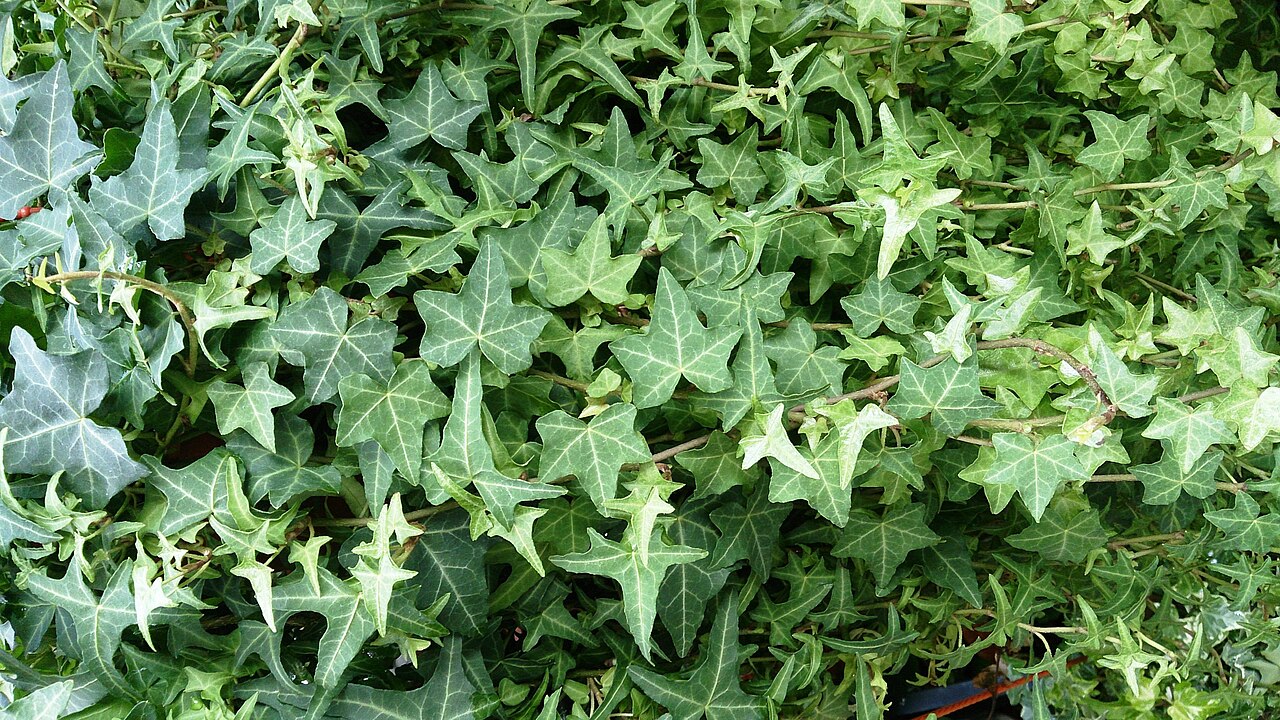
English ivy can tolerate shade and has a naturally trailing growth habit, which makes it useful for shelves and hanging containers.
The RHS describes ivy as tough and versatile and specifically recommends it for darker indoor locations.
Best for: Hanging baskets and high shelves.
11. Pilea cadierei
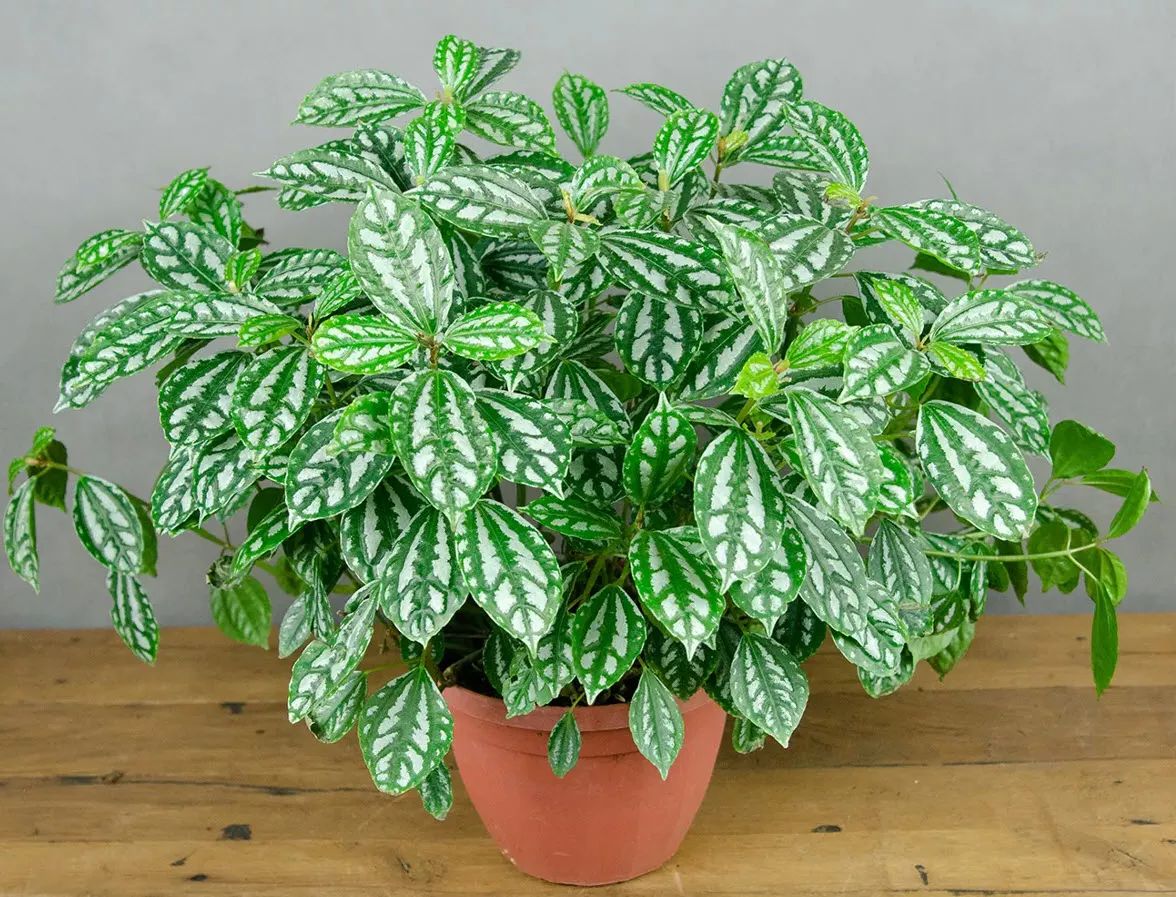
Also known as the aluminum plant, Pilea cadierei is valued for its patterned foliage.
The RHS includes it among houseplants recommended for shady rooms. It is a better choice when the room has some daylight rather than being genuinely dark.
Best for: Small shelves, desks, and compact plant displays.
12. Rhipsalis
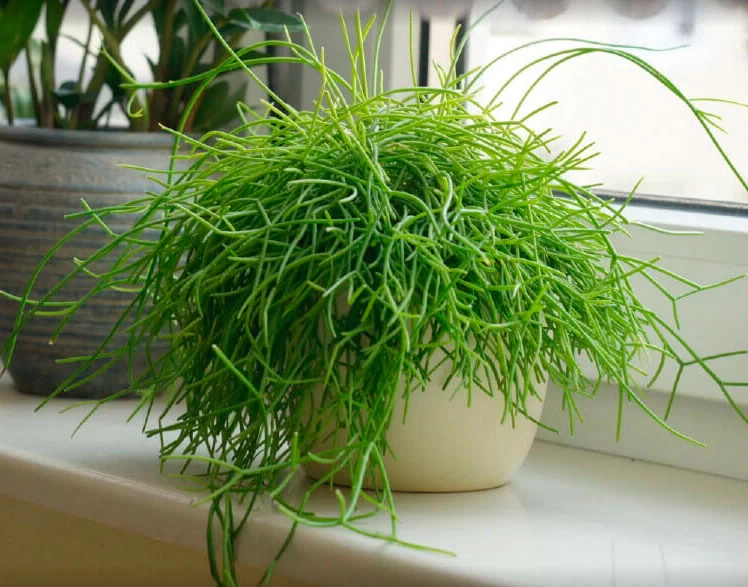
Rhipsalis is an unusual cactus because many species naturally grow in shaded rainforest environments rather than exposed desert conditions.
The RHS notes that Rhipsalis can tolerate a fair degree of shade and recommends it as a tough houseplant for lower-light conditions.
Best for: Hanging pots and people who want something different from traditional foliage plants.
13. Boston Fern
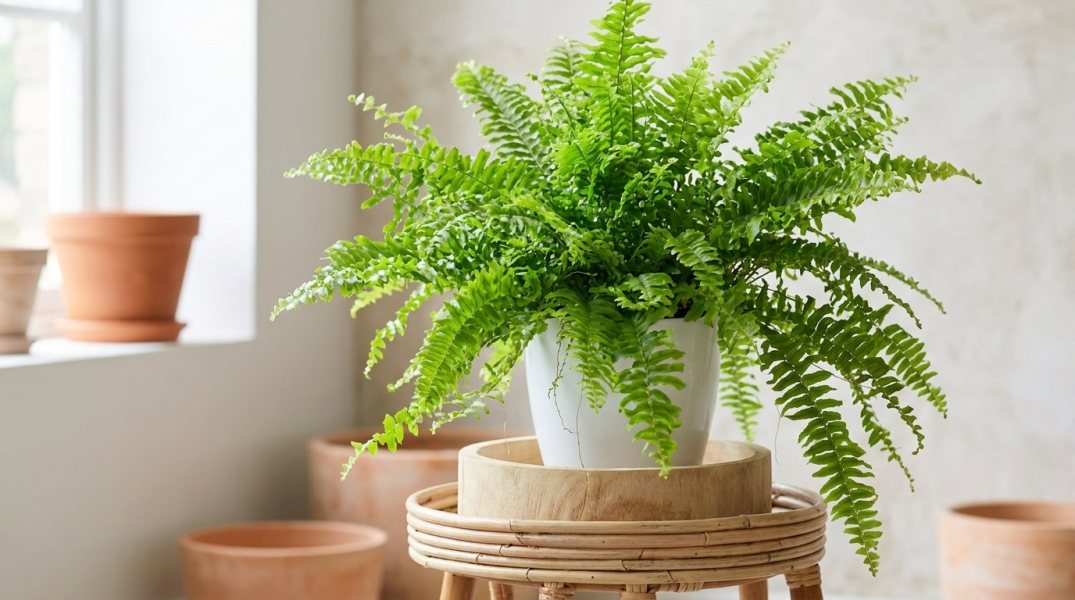
Boston fern is a classic choice for shady areas, particularly where humidity is reasonably high.
There is an important catch, though. Many indoor ferns are not genuinely good candidates for very low light. University of Minnesota Extension specifically notes that tropical ferns used as houseplants generally grow poorly in low-light locations, while plants such as pothos, snake plant, heartleaf philodendron, and Chinese evergreen are better choices for poorly lit rooms.
So, while Boston fern can suit a shaded, humid space, it should not be your first choice for a very dark room.
Best for: Humid bathrooms and shaded rooms with adequate daylight.
14. Begonia
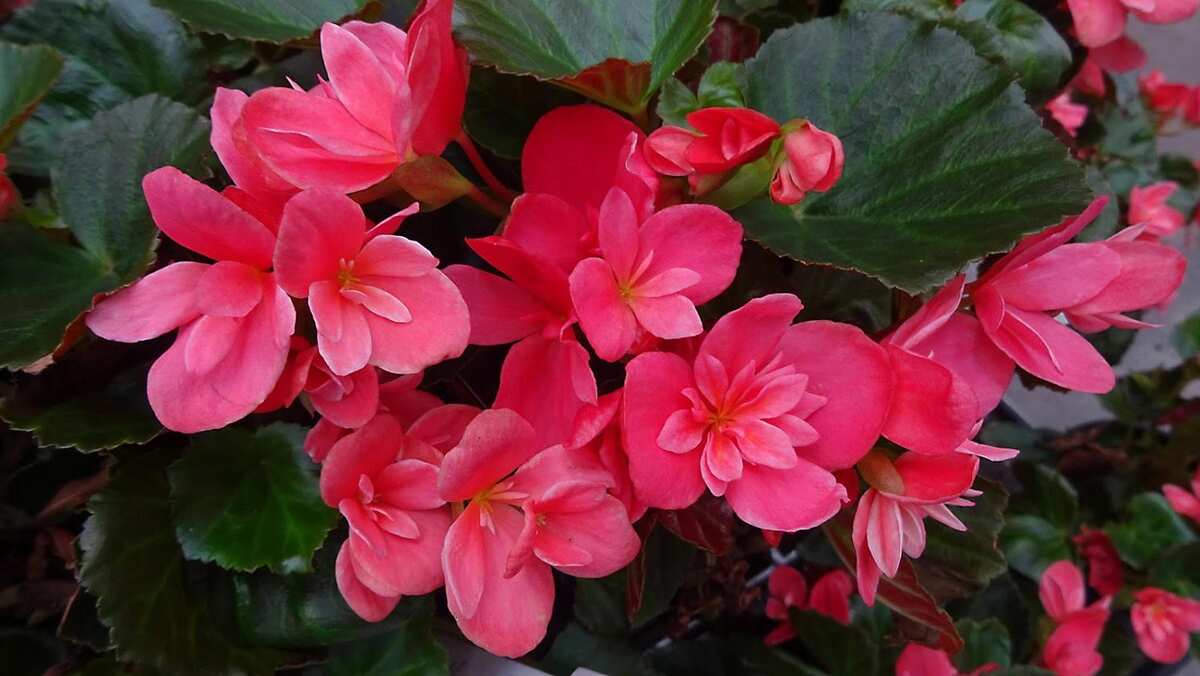
Some begonias, particularly foliage-focused types, can perform well in darker indoor locations.
The RHS notes that many begonias originate from dimly lit forest-floor environments and that several varieties can grow well in darker rooms. Their patterned leaves can also add colour without relying on flowers.
Best for: Decorative foliage displays.
15. Dracaena
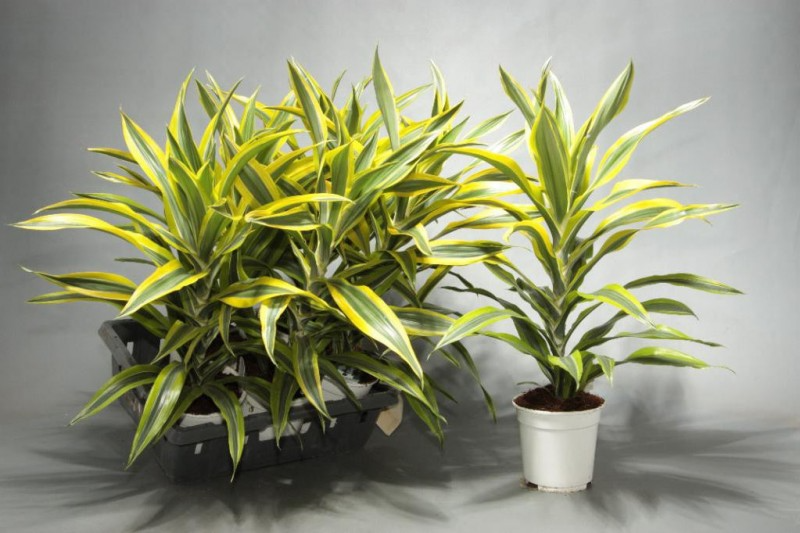
Dracaenas are popular indoor plants because of their upright form and architectural leaves.
However, they should be treated as low-light tolerant rather than true deep-shade plants. The RHS describes dracaenas as preferring bright, indirect light, so a room with some natural daylight is a better choice than a genuinely dark corner.
Best for: Offices, living rooms, and larger indoor spaces with filtered daylight.
How to Choose the Right Plant
Choosing among the best indoor plants for low light becomes easier when you consider more than the amount of sunlight.
| Your Priority | Good Choices |
| Very low maintenance | Snake plant, ZZ plant |
| Darker corner | Cast iron plant |
| Trailing growth | Pothos, heartleaf philodendron, ivy |
| Pet-friendly option | Spider plant, cast iron plant |
| Tropical appearance | Parlour palm, peace lily |
| Decorative foliage | Chinese evergreen, begonia |
| Hanging plant | Rhipsalis, pothos |
| Humid room | Peace lily, Boston fern |
Remember, plant labels such as “low light” do not mean the plant should be placed in darkness. Even shade-tolerant plants need enough light to continue photosynthesis and healthy growth.
How to Keep Low-Light Plants Healthy
Do Not Overwater
One of the biggest mistakes with low-light plants is watering them too often.
Because plants may grow more slowly under weaker light, the growing medium can remain wet for longer. Therefore, check the soil before watering rather than following a rigid weekly schedule.
Watch for Signs of Too Little Light
Weak, stretched growth, pale foliage, poor flowering, and yellowing lower leaves can indicate insufficient light.
If these symptoms appear, move the plant closer to a suitable source of natural daylight.
Use Artificial Lighting When Necessary
If a room receives almost no natural daylight, simply choosing a shade-tolerant plant may not solve the problem.
Artificial plant lighting can provide the additional light needed for plants in very dark areas. The RHS recommends making the most of natural daylight first and using suitable artificial lighting where necessary.
Be Careful With Variegated Plants
Variegated foliage often contains less green tissue than fully green leaves. Consequently, some variegated cultivars need brighter conditions to maintain their strongest patterns.
This is particularly relevant with spider plants and Chinese evergreen varieties.
Common Mistakes to Avoid
Putting a plant in complete darkness: Low-light tolerance is not the same as darkness tolerance.
Watering on a fixed schedule: Check the growing medium first.
Choosing based only on appearance: A beautiful plant is not necessarily suitable for your room.
Ignoring pets: Several popular low-light plants, including pothos, peace lily, philodendron, Chinese evergreen, ZZ plant, and snake plant, can be harmful if pets chew them.
Expecting fast growth: Lower light can mean slower growth, even when the plant is healthy.
Low-Light Plant Checklist
-
Check how much natural daylight the room receives.
-
Choose a species known to tolerate lower light.
-
Keep the plant away from extreme drafts and heat sources.
-
Check the growing medium before watering.
-
Watch for stretched or pale growth.
-
Consider artificial plant lighting for very dark spaces.
-
Check pet-safety information before bringing a plant home.
-
Give variegated plants enough light to maintain their patterns.
Frequently Asked Questions
What is the best indoor plant for a very low-light room?
Snake plants, ZZ plants, and cast iron plants are among the strongest choices for lower-light conditions. Even these plants, however, need some light and cannot live permanently in complete darkness.
Can indoor plants survive without sunlight?
They cannot survive indefinitely without a light source. Natural daylight is ideal, while artificial plant lighting can help when a room receives very little natural light.
Which low-light plant is easiest to care for?
Snake plants and ZZ plants are particularly forgiving choices because both can tolerate lower light and periods of relatively dry conditions.
Can pothos grow in a dark room?
Pothos can tolerate poor lighting better than many houseplants, but a completely dark room is unsuitable for long-term growth. Some daylight or appropriate artificial lighting is still necessary.
What is the best low-light plant for a bedroom?
Snake plants, ZZ plants, cast iron plants, and Chinese evergreen are practical choices for bedrooms that receive limited daylight. Choose according to the available space, watering habits, and whether pets have access to the plant.
Are low-light plants safe for pets?
Not all of them. Spider plant and cast iron plant are listed by ASPCA as non-toxic to cats and dogs, while snake plant, pothos, peace lily, and philodendron are among plants that can cause problems if pets ingest them.