New to Plants? Start here 💚 Get More Info

Pothos Plant Benefits: Science, Home Uses and Air Quality Explained

Pothos Plant Benefits: Science, Home Uses and Air Quality Explained

Pothos plant benefits include its ability to thrive in low-light indoor environments, support indoor greenery, and contribute to limited air quality improvement in controlled studies. The plant (Epipremnum aureum) is widely used in homes and offices because it is low maintenance, fast-growing, and adaptable. However, scientific research shows its air-purifying effects are stronger in lab conditions than in real indoor environments.

At Peeacelily, we explore practical plant science for everyday homes. The pothos plant benefits come from its strong adaptability, fast growth, and ability to survive in low-light indoor spaces where most plants struggle.

It is one of the most widely used indoor plants for beginners and interior styling because it requires minimal care while staying visually healthy in different environments.

Key Takeaways

  • Pothos (Epipremnum aureum) is a low-light tolerant indoor plant
  • It grows fast and adapts to different indoor conditions
  • Air purification benefits exist mainly in controlled lab studies
  • It is widely used in homes and offices for easy greenery
  • Real-world air impact is supportive, not primary purification

Botanical Classification and Growth Structure

What is pothos and how does it grow?

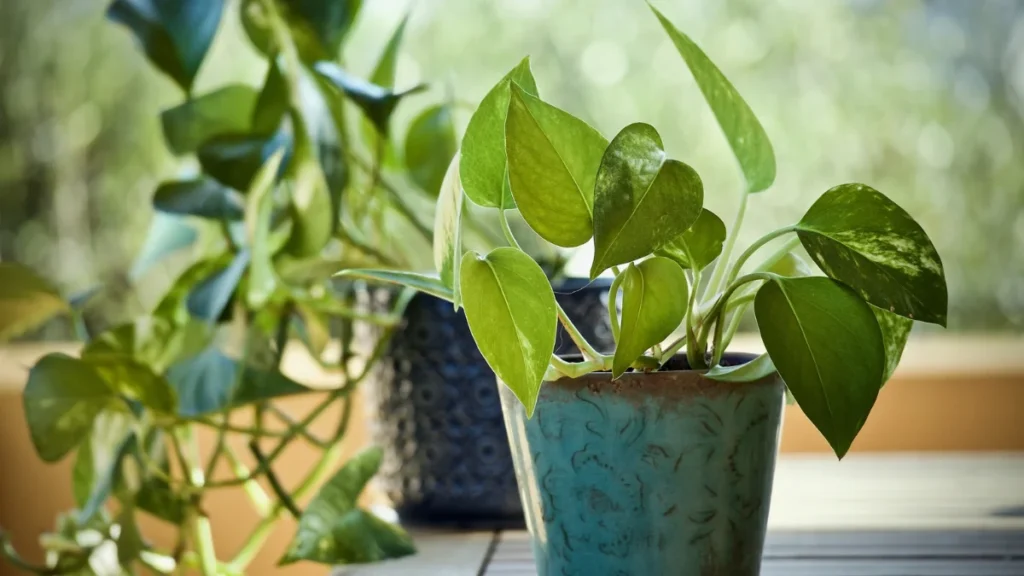
Pothos (Epipremnum aureum) is a tropical vine from the Araceae family, known for its trailing growth and aerial roots that help it climb or hang in indoor environments.

  • Family: Araceae
  • Genus: Epipremnum
  • Growth type: Evergreen trailing vine
  • Native region: Mo’orea (French Polynesia)
  • Indoor length: 1.5m–3m on average
  • Wild length: can exceed 15–20m

Pothos produces aerial roots at each node, allowing it to attach to surfaces and absorb moisture. This trait makes it highly adaptable for indoor growth systems like hanging pots and wall trellises.

Indoor Adaptation and Low-Light Survival Science

Why does pothos survive in low light?

Pothos survives low-light environments due to its efficient chlorophyll adaptation and ability to maintain photosynthesis under low-energy light conditions.

  • Broad leaves increase light absorption efficiency
  • Chlorophyll adjusts based on light availability
  • Maintains metabolic activity in indirect or artificial lighting
  • Survives in light levels as low as ~50–80 lux

Real Indoor Impact:

This adaptation allows pothos to grow in:

  • offices with fluorescent lighting
  • shaded rooms
  • north-facing windows

Air Quality Interaction 

Does pothos improve indoor air quality?

Pothos has demonstrated the ability to reduce certain volatile organic compounds (VOCs) in controlled laboratory studies, but its real-world air purification effect in homes is limited.

  • NASA Clean Air Study tested pothos in sealed chambers
  • VOCs studied include:
    • formaldehyde
    • benzene
    • toluene
    • xylene

Pothos contributes to environmental improvement but does not replace ventilation or air filtration systems.

Oxygen Production and Humidity Regulation

Does pothos improve indoor air conditions?

Pothos contributes to minor indoor environmental balance through photosynthesis and transpiration, but its effect is supportive rather than primary.

  • Photosynthesis converts CO₂ into oxygen during daylight
  • Transpiration releases moisture into surrounding air
  • Can slightly increase humidity in dry indoor spaces
  • Effect increases when multiple plants are grouped
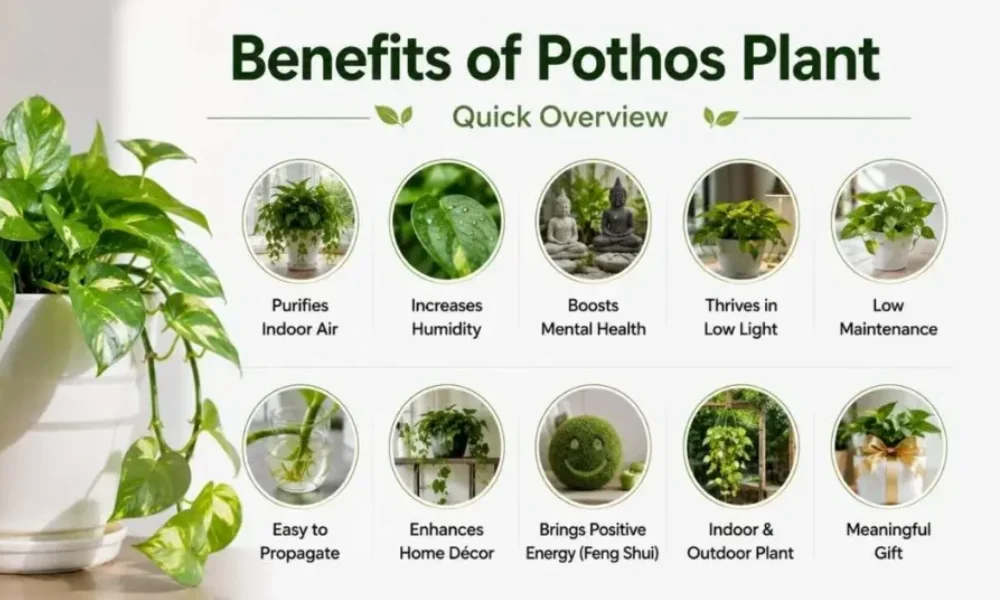
Pothos plant benefits

Indoor Air Interaction and Environmental Support

Pothos improves indoor environments in a subtle but measurable way when it comes to overall air balance. It absorbs carbon dioxide during the day and releases oxygen through photosynthesis, and this helps stabilize indoor air quality in closed rooms.

It also supports humidity balance through transpiration, especially in dry indoor environments like air-conditioned rooms or heated spaces. This effect does not replace ventilation, but it adds a natural layer of freshness to indoor air.

In modern homes, people place pothos near windows, shelves, and corners because it stays active even when light levels are low. This makes it a practical plant for apartments where airflow stays limited.

Mental Wellness and Environmental Psychology Impact

Green indoor plants like pothos influence human perception and stress response in measurable ways. Studies in environmental psychology show that exposure to greenery reduces mental fatigue and improves attention recovery.

Pothos plays a strong role here because it grows continuously and stays visually stable even in low-care environments. This creates a sense of calm consistency in indoor spaces.

People often connect pothos with a grounding effect in living spaces. The visual flow of its trailing vines adds softness to rigid interiors, and this supports a more relaxed mental environment. This is why many wellness-focused interiors include pothos in bedrooms, reading corners, and meditation areas.

Workplace Performance and Office Environment Benefits

Pothos performs well in office environments because it adapts to artificial lighting and irregular care routines. It stays healthy under LED and fluorescent lighting without special maintenance.

It also reduces visual monotony in office setups, especially in long desk-based work environments. This improves perceived comfort during extended screen exposure.

Workplace Performance 

Feature Pothos Plant Typical Office Environment
Light Requirement Low to medium indirect light Artificial LED/fluorescent lighting
Water Needs Low, weekly or bi-weekly Irregular care possible
Maintenance Level Very low High workload environments
Visual Impact Natural greenery flow Static, artificial interiors
Space Requirement Small to medium Desk or corner placement

This comparison shows why pothos fits modern office environments without adding maintenance pressure.

Home Functionality and Everyday Use Value

Pothos adds functional value in homes beyond decoration. Its trailing structure allows it to adapt to different interior styles, from minimal setups to dense plant walls.

It works well in small spaces because it grows vertically or horizontally depending on placement. This flexibility makes it useful for apartments where floor space stays limited.

Homeowners also prefer pothos because it propagates easily. A single plant can turn into multiple plants through stem cuttings placed in water or soil. This makes it a sustainable plant option for long-term indoor greenery.

Common home placements include:

  • hanging baskets in living rooms
  • shelves in bedrooms
  • kitchen corners with indirect light
  • bathroom areas with humidity

Pet Safety and Indoor Risk Awareness

Pothos improves indoor environments but requires responsible placement in homes with pets. It contains calcium oxalate crystals, which can irritate cats and dogs if ingested.

This makes placement strategy important for safety. Hanging pots or high shelves reduce access risk while still maintaining the plant’s visual and environmental benefits.

Pet Safety 

Factor Pothos Plant Impact
Toxic Compound Calcium oxalate crystals
Risk Level Mild to moderate irritation
Affected Pets Cats and dogs
Symptoms Drooling, mouth irritation, vomiting
Safe Placement Hanging pots or elevated shelves

This table helps users understand both benefits and safety considerations clearly.

Scientific Limitations of Pothos Benefits

Pothos shows measurable biological activity in controlled lab environments, but real indoor performance differs due to natural airflow and space size.

NASA Clean Air Study tested pothos in sealed chambers, where VOC levels stayed trapped. In real homes, air circulation reduces concentration of pollutants, so plant impact becomes weaker.

Key scientific limitations:

  • Air purification effect works in sealed environments only
  • Real homes have continuous air exchange
  • One or two plants cannot clean full-room air
  • Effect depends on plant density and room size

This makes pothos a supportive plant for air quality, not a replacement system.

Common Misconceptions 

Many online sources exaggerate pothos benefits. Scientific review shows these claims need correction.

Common misconceptions:

  • Pothos removes all toxins from air: False, only limited VOC reduction in lab settings
  • One plant cleans an entire room: Incorrect, requires multiple plants in controlled conditions
  • No maintenance required: False, it still needs water cycles and indirect light

Correct understanding:
Pothos improves indoor greenery experience and contributes minor environmental balance, but it does not function as a full air purification system.

Comparative Plant Performance

Pothos is often compared with other indoor plants to understand its real-world value.

Plant Type Air Interaction Light Tolerance Maintenance Pet Safety
Pothos (Epipremnum aureum) Moderate (lab-tested VOC reduction) High (low-light tolerant) Very low Toxic to pets
Snake Plant (Sansevieria) High oxygen release at night Medium Very low Mild toxicity
Peace Lily Strong humidity contribution Low-medium Medium Toxic
Spider Plant Mild air support Medium-high Low Pet-safe

This shows pothos ranks highest in ease of care + adaptability, not maximum air purification.

Real-World Use Case Summary

Pothos is widely used in indoor environments because it performs reliably under different conditions.

Most common use cases include:

  • Low-light apartments with limited sunlight
  • Office desks with artificial lighting
  • Hanging planters for space optimization
  • Decorative indoor greenery in small rooms

Its main advantage is consistency under low maintenance conditions, not specialized air cleaning power.

Key Safety Considerations

Pothos supports indoor aesthetics and environmental balance, but safety awareness is important.

Scientific safety facts:

  • Contains calcium oxalate crystals
  • Causes irritation if ingested by pets or humans
  • Non-lethal but causes discomfort reactions

Safe usage practices:

  • Place in hanging pots in pet homes
  • Avoid direct access for cats and dogs
  • Wash hands after pruning or cutting

Citrine Crystal Meaning and Its Connection with Pothos Plant Energy

Citrine is widely known in mineralogy and cultural symbolism as a yellow quartz variety associated with light energy and positive psychological association with brightness and warmth. In many wellness and lifestyle contexts, it is linked with ideas of motivation, confidence, and productivity.

From a scientific perspective, citrine does not generate financial or physical “wealth energy.” Instead, its value comes from color psychology and symbolic association, where yellow tones are often linked with alertness, optimism, and mental stimulation.

Money Manifestation and Abundance Energy

The concept of money manifestation and abundance energy comes from behavioral psychology and motivational frameworks rather than measurable physical science. People often use symbolic objects like citrine to reinforce goal-setting behavior, focus, and consistency.

In this context, citrine works as a visual reminder system, not a causal financial driver. It helps individuals stay aligned with productivity habits, financial planning, and decision-making focus.

Success Stone Citrine Benefits

Citrine is commonly called a success stone in holistic wellness practices due to its association with:

  • positive cognitive reinforcement
  • focus and goal orientation
  • symbolic connection with achievement mindset

However, these effects are psychological and environmental, not biological or financial mechanisms.

Connection with Pothos Plant Benefits

When combined conceptually with pothos plant benefits, citrine is often used in interior wellness design alongside greenery to create a balanced visual environment.

Pothos contributes:

  • natural green visual stability
  • low-light environmental adaptability
  • indoor air interaction support (limited scientific effect in real homes)

Citrine contributes:

  • warm visual contrast to green foliage
  • symbolic focus and motivation association
  • decorative brightness in indoor setups

Combined Wellness Interpretation 

In interior psychology and biophilic design, combining natural plants like pothos with mineral decor like citrine works on a visual and cognitive level, not a scientific energy transfer level.

This combination is used in:

  • work desks for focus-oriented environments
  • home corners designed for calm visual balance
  • creative spaces where color psychology matters

Key reality:

  • Pothos influences environment through biological processes (photosynthesis, transpiration)
  • Citrine influences perception through symbolic and visual psychology

Both support environmental mood design, but through completely different mechanisms.

Conclusion

The pothos plant benefits make it one of the easiest indoor plants to grow because it survives in low light, needs minimal care, and adapts well to homes and offices. While it offers limited air quality improvement in real conditions, its real value lies in durability, flexibility, and indoor greenery support.

The golden pothos plant benefits also include easy propagation and strong visual appeal, making it a practical choice for everyday indoor spaces.

Frequently Asked Questions

What are pothos plant benefits indoors?

Pothos improves indoor aesthetics, supports minor humidity balance, and survives in low-light conditions. Scientific studies show limited air purification in controlled environments, but real home impact is supportive rather than primary.

Is pothos good for air purification?

Pothos can remove certain VOCs like formaldehyde and benzene in sealed lab studies. However, real homes have airflow, so the effect is reduced and should not replace ventilation or air filters.

Is pothos safe for pets?

No. Pothos contains calcium oxalate crystals that can irritate cats and dogs if ingested. It is non-lethal but causes mouth irritation, drooling, and vomiting in some cases.

Why is pothos popular as an indoor plant?

Pothos is popular because it grows in low light, requires minimal care, and adapts to hanging or shelf setups. It is one of the most beginner-friendly indoor plants.

Does pothos need sunlight?

Pothos does not require direct sunlight. It grows well in indirect light and can survive in low-light indoor environments, although growth slows in very dark spaces.

Table of Contents

Scroll to Top