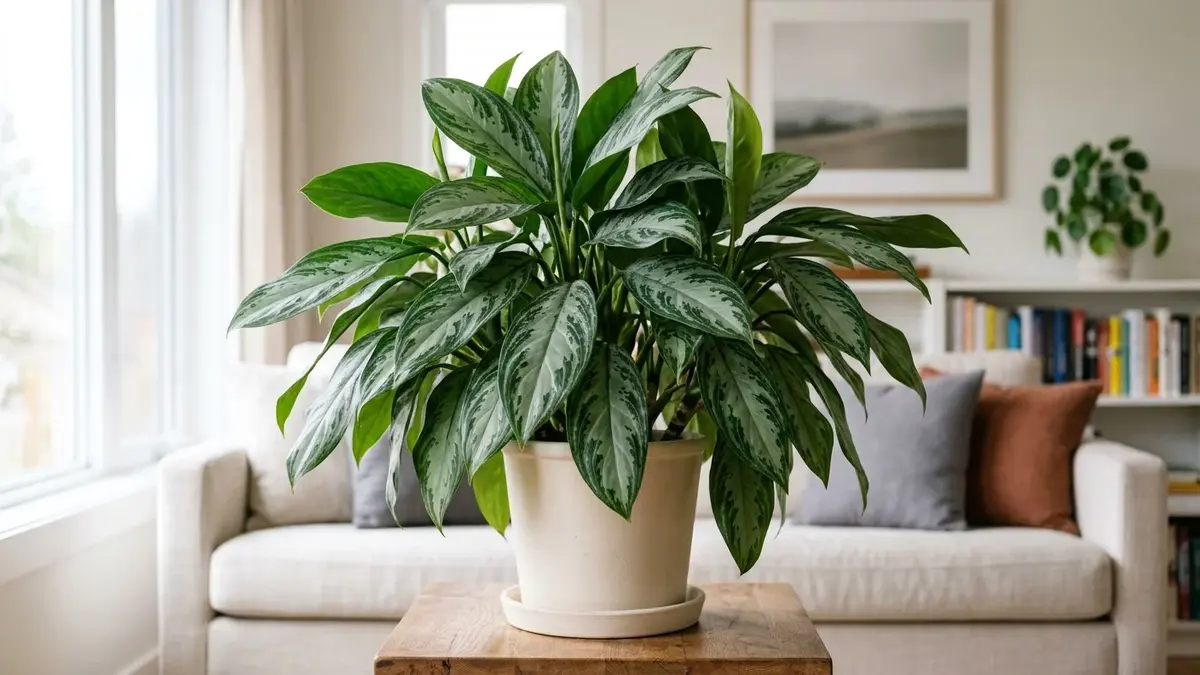
Chinese evergreen (Aglaonema) plant is one of the easiest houseplants to grow in low to moderate indirect light. Keep it in a warm room, water when the top one to two inches of soil feel dry, and use a well-draining potting mix. Choose a dark-green variety for a dimmer spot and a colorful variety for brighter indirect light.
Its attractive foliage, slow growth, and tolerance of indoor conditions make it a practical choice for homes and offices. But not every Chinese evergreen has the same light needs. Leaf color and pattern can help you decide where to place it.
This guide explains how to choose a variety, manage watering, prevent yellow leaves, and keep your Aglaonema healthy indoors.
Quick Answer: Chinese Evergreen Care at a Glance
Chinese evergreen grows well in low to moderate indirect light and prefers warm indoor temperatures. Water when the top one to two inches of soil dry out, keep the potting mix moist but not soggy, and provide drainage holes. Solid-green varieties generally tolerate lower light than colorful, heavily variegated types. Keep the plant away from pets because it contains insoluble calcium oxalates.
Key Takeaways
- Light: Low to moderate indirect light is suitable. Avoid direct sunlight on the leaves.
- Varieties: Solid-green types are better for dimmer rooms; colorful varieties need brighter indirect light.
- Water: Let the top one to two inches of soil dry before watering again.
- Soil: Use a standard, well-draining indoor potting mix.
- Temperature: Aim for 68–80°F (20–27°C). Protect the plant from temperatures below 55°F (13°C).
- Humidity: Normal household humidity is generally suitable.
- Feeding: Feed lightly during active growth and reduce feeding in winter.
- Pet safety: Chinese evergreen is toxic to cats, dogs, and horses if chewed or swallowed.
Chinese Evergreen Light Requirements: Does It Really Grow in Low Light?

Yes. Chinese evergreen is known for tolerating low light better than many common houseplants. Solid-green varieties can grow in dim indoor spaces, while variegated varieties generally need more light to maintain healthy growth and leaf patterns.
Clemson Cooperative Extension recommends low to moderate indirect light for Aglaonema. Some plants can also adapt to indoor office lighting, although growth may be slower when natural light is limited.
A low-light-tolerant plant still needs some light to grow. In a very dim corner, your Chinese evergreen may produce fewer leaves and grow slowly. If the plant becomes pale or stops producing new growth, consider moving it to a brighter location.
Where Should You Place a Chinese Evergreen?
Good locations include:
- A few feet from an east-facing window
- A bright room with filtered daylight
- A shaded area away from direct afternoon sunlight
- An office with suitable indoor lighting
Avoid placing it where strong sunlight falls directly on the leaves. Too much direct sun can cause scorched, bleached, or brown patches.
If you’re choosing plants for a darker room, our guide to low-light indoor plants covers other houseplants that tolerate limited natural light.
Chinese Evergreen Varieties: Matching Leaf Color to Light

One useful feature of Chinese evergreen is its wide range of leaf colors and patterns. Some varieties have deep-green foliage, while others display silver, cream, pink, or red markings.
The main difference for indoor placement is how much light the foliage needs.
| Variety or foliage type | Typical appearance | Suitable light |
|---|---|---|
| Solid-green Aglaonema | Mostly green leaves | Low to moderate indirect light |
| Dark-green and silver types | Green leaves with silver markings | Low to moderate indirect light |
| Pink or red varieties | Pink, red, or burgundy markings | Brighter indirect light |
| Heavily variegated types | Large areas of cream, silver, or pale color | Moderate indirect light |
These are general placement guidelines, not strict rules for every cultivar. Individual varieties can differ, so check the growing information for the specific plant you’re buying.
Which Chinese Evergreen Is Best for Low Light?
If your room doesn’t receive much natural light, start with a solid-green or predominantly dark-green variety. These generally tolerate dimmer conditions better than colorful cultivars.
If you prefer pink, red, or strongly patterned foliage, choose a brighter location with filtered daylight. The plant may survive in a darker spot, but its growth and color can become less impressive.
A simple rule helps: choose darker foliage for dimmer rooms and more colorful foliage for brighter rooms. No matter which variety you choose, avoid harsh direct sunlight.
How to Water a Chinese Evergreen

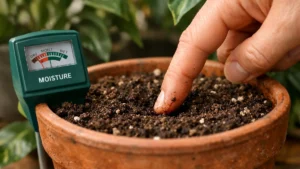
Water your Chinese evergreen when the top one to two inches of soil feel dry. You can check this by inserting a finger into the potting mix. If the soil still feels damp, wait before watering.
When the upper layer has dried:
- Pour room-temperature water slowly over the soil.
- Continue until excess water drains from the bottom.
- Empty the saucer or outer container.
- Let the soil begin drying again before the next watering.
Chinese evergreen prefers slightly moist soil, but it doesn’t like sitting in waterlogged conditions. Too much water can damage the roots and lead to yellow leaves.
How Often Should You Water a Chinese Evergreen?
A common starting point is every one to two weeks, but the exact interval depends on your room.
Your plant may need water more frequently when:
- The room is warm.
- It receives brighter indirect light.
- It is actively producing new leaves.
- The potting mix dries quickly.
It may need less frequent watering when:
- The room is cooler.
- Light levels are low.
- Growth slows during winter.
- The potting mix holds moisture for a long time.
Don’t follow a fixed weekly schedule without checking the soil. A Chinese evergreen in a dim room may take longer to dry than one near a bright window.
For more practical watering guidance, see our article on watering indoor plants correctly.
Best Soil and Pot for a Chinese Evergreen

Chinese evergreen grows well in a standard indoor potting mix that holds some moisture while allowing excess water to drain. You don’t need a complicated soil recipe.
A suitable mix should:
- Hold enough moisture to support the roots.
- Drain excess water instead of becoming soggy.
- Allow air to reach the root system.
- Stay loose rather than becoming dense and compacted.
If your potting mix feels heavy, add perlite to improve drainage and airflow. A quality commercial soilless houseplant mix is also a suitable starting point.
Does a Chinese Evergreen Need Drainage Holes?
Yes. Choose a pot with drainage holes so excess water can escape.
Without drainage, water can collect at the bottom of the container. The roots may remain wet for too long, increasing the risk of root damage and yellowing leaves.
If you prefer a decorative pot without holes, keep the plant in a smaller nursery pot with drainage and place that inside the decorative container. Remove the nursery pot when watering and let it drain before putting it back.
When Should You Repot a Chinese Evergreen?
Chinese evergreens grow relatively slowly, so they don’t need frequent repotting.
Consider repotting when:
- Roots are growing through the drainage holes.
- The root ball has filled most of the container.
- Water runs through the pot unusually quickly.
- The plant dries out much faster than it used to.
Choose a new container only slightly larger than the current one. A pot that’s much too large can hold excess moisture around the roots.
Chinese Evergreen Temperature and Humidity

Chinese evergreen prefers warm, stable indoor conditions. Clemson Cooperative Extension recommends a temperature range of about 68–80°F (20–27°C). The plant can tolerate cooler conditions for short periods, but temperatures below 55°F (13°C) can cause damage.
Keep it away from:
- Cold drafts near exterior doors
- Open windows during cold weather
- Air-conditioning vents
- Heating vents and radiators
- Sudden temperature changes
Cold damage may appear as dark, greasy-looking patches on the leaves. If you notice these symptoms after a cold night, move the plant to a warmer, more stable location.
Does Chinese Evergreen Need High Humidity?
No. Chinese evergreen tolerates normal household humidity and doesn’t require a special tropical setup.
Moderate humidity can support healthy foliage, especially during dry winter weather. If the air in your home becomes very dry, grouping plants together or using a room humidifier may help.
You can also wipe the leaves occasionally with a soft, damp cloth. This removes dust and helps keep the foliage clean.
Feeding a Chinese Evergreen

Chinese evergreen is a relatively slow-growing plant, so it doesn’t need heavy feeding.
During spring and summer, use a balanced liquid houseplant fertilizer at a diluted strength according to the product label. A light monthly feeding is a reasonable starting routine for a healthy, actively growing plant.
Follow these basic guidelines:
- Begin feeding when active growth starts.
- Use a balanced liquid fertilizer.
- Avoid applying more than the label recommends.
- Reduce or stop feeding during fall and winter when growth slows.
Too much fertilizer can cause salt buildup in the potting mix and damage roots. If the leaves look pale, don’t assume fertilizer is the answer. Low light, watering problems, and root stress can also affect leaf color.
Our guide to liquid fertilizer for indoor plants explains how to use liquid feeds without overdoing them.
Why Are My Chinese Evergreen’s Leaves Turning Yellow?

Yellow leaves are a common Chinese evergreen problem. The most useful first step is to check the soil. Both excessive watering and prolonged dryness can affect the foliage, while cold temperatures and poor light can also cause problems.
1. Overwatering
If the soil remains wet and the lower leaves turn yellow, overwatering may be the cause.
Check the potting mix and drainage holes. If the soil is soggy, allow it to dry appropriately before watering again. If it smells unpleasant or the roots are soft and dark, root damage may have developed.
2. Underwatering
If the soil is very dry and the leaves become yellow, dry, or crispy, the plant may need water.
Water thoroughly and allow excess moisture to drain. Then check the soil regularly rather than waiting until the plant becomes severely dry again.
3. Cold Temperatures
Chinese evergreen doesn’t like cold conditions. Dark or greasy-looking patches, especially after exposure to a cold draft, may indicate temperature damage.
Move the plant away from cold air and keep it in a warmer location.
4. Too Little Light
A Chinese evergreen can survive in low light, but extremely dim conditions may slow growth and cause weak or pale foliage.
This is especially relevant for colorful varieties. Move the plant to brighter indirect light if its new growth looks pale or its leaf patterns begin to lose definition.
5. Natural Aging
An older lower leaf may occasionally turn yellow and fall off as the plant grows. If the rest of the foliage looks healthy and new growth continues, this is usually normal.
What Should You Do About Yellow Leaves?
Start with these checks:
- Feel the soil to see whether it’s wet or dry.
- Confirm that the pot has drainage holes.
- Check whether the plant has been exposed to cold air.
- Review how much indirect light it receives.
- Look for signs of root damage if yellowing continues.
Avoid changing watering, light, and fertilizer all at once. Identify the likely cause first so you can make a useful adjustment.
For more troubleshooting help, see our guide to yellow leaves on indoor plants.
Is Chinese Evergreen Toxic to Cats and Dogs?

Yes. Chinese evergreen is toxic to cats, dogs, and horses, according to the ASPCA. The plant contains insoluble calcium oxalates, which can irritate an animal’s mouth and digestive tract when chewed or swallowed.
Possible signs include:
- Oral irritation and pain
- Swelling of the mouth, tongue, or lips
- Excessive drooling
- Vomiting
- Difficulty swallowing
Keep the plant away from pets that chew leaves or stems. A high shelf may not be enough for cats that climb, so choose a location your pet cannot reach.
If your pet chews or swallows part of the plant, contact your veterinarian or an animal poison-control service for advice. Don’t wait for symptoms to become severe.
The ASPCA’s Chinese evergreen safety listing provides the plant’s toxicity classification and reported clinical signs.
FAQ: Chinese Evergreen Plant Care
Can Chinese evergreen grow in low light?
Yes. Solid-green varieties tolerate low light well, although growth may slow in very dim rooms. Colorful varieties generally need brighter indirect light.
How often should I water a Chinese evergreen?
Water when the top one to two inches of soil feel dry. This often takes one to two weeks, but room conditions can change the timing.
Is Chinese evergreen toxic to cats and dogs?
Yes. It contains insoluble calcium oxalates that can cause mouth irritation, drooling, and vomiting if chewed or swallowed.
Why are my Chinese evergreen’s leaves turning yellow?
Overwatering is a common cause. Also check for dry soil, cold drafts, insufficient light, and natural aging of older leaves.
Does Chinese evergreen need direct sunlight?
No. It grows best in low to moderate indirect light. Direct sunlight can scorch its leaves and cause pale or brown patches.
What temperature is best for Chinese evergreen?
Aim for 68–80°F (20–27°C). Protect it from cold drafts and temperatures below about 55°F (13°C).
Final Thoughts
Chinese evergreen is a useful choice for indoor spaces where many plants struggle with limited light. The important part is choosing a variety that matches your room: solid-green types generally handle dimmer spots, while colorful varieties benefit from brighter indirect light.
Keep the soil slightly moist without making it soggy, provide warm indoor conditions, and feed lightly during active growth. With a suitable location and a steady care routine, your Aglaonema can maintain its attractive foliage without demanding constant attention.
Remember that the Chinese evergreen is toxic to pets, so place it somewhere they cannot chew its leaves.