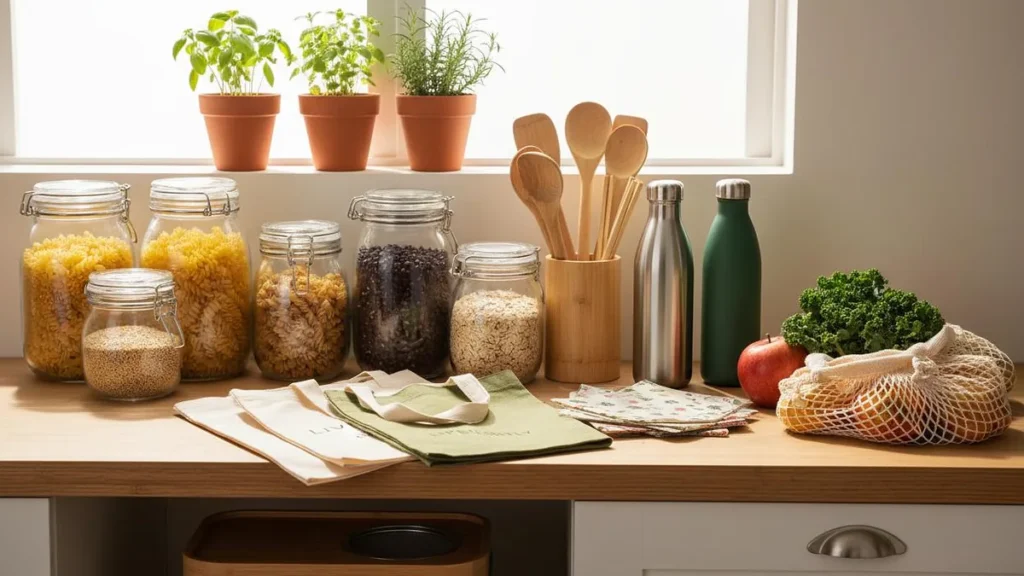
Before you throw away an empty glass jar, an old T-shirt, or a cardboard box, take a moment to think about what else it could do. That pasta sauce jar might organize your pantry. A worn T-shirt could become a cleaning cloth. An old colander could even find a second life as a hanging planter.
Learning how to repurpose household items is a simple way to make better use of things you already own. You do not need expensive supplies, special tools, or a long list of craft projects. Start with one item, find a practical new use for it, and see whether it makes everyday life a little easier.
The key is to choose items that are clean, safe, and useful. Keeping things you will never use only creates clutter, so every saved item should have a clear purpose.
Key Takeaways
- Reuse glass jars, old clothes, boxes, and other household items for practical everyday jobs.
- Give each item a specific purpose before storing it.
- Turn suitable household containers into planters, organizers, or seed-starting pots.
- Never assume a plastic container is food-safe just because it has a recycling number.
- Avoid reusing containers that held chemicals or items that are damaged or unsafe.
- Reuse what you need, and recycle or donate the rest when possible.
What Does Repurposing Mean?
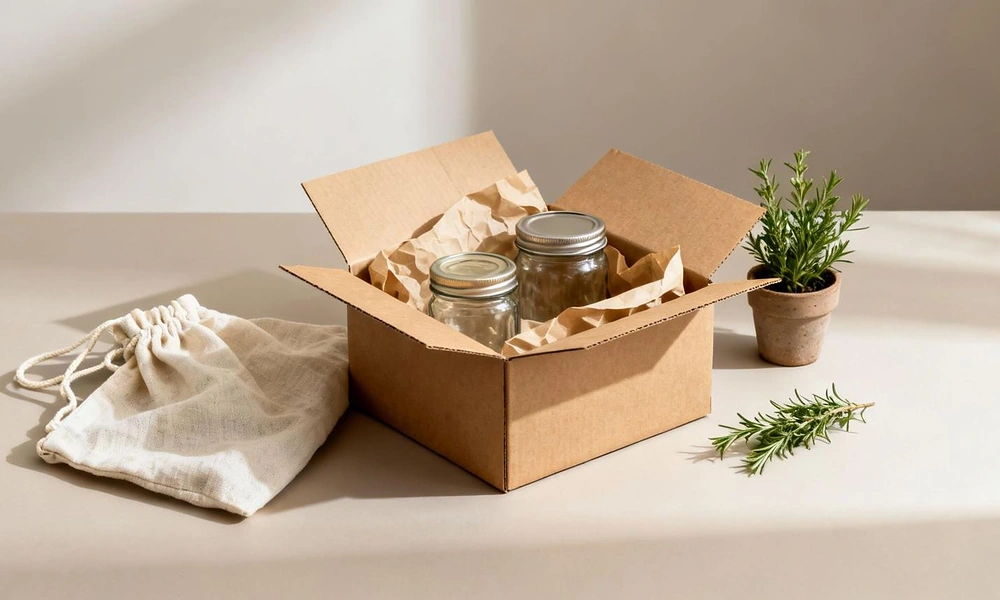
Repurposing means using an item for a different job instead of throwing it away. For example, you might turn a clean glass jar into a pencil holder or use an old towel as a cleaning cloth.
Repurposing is different from recycling. Recycling usually involves collecting and processing materials so they can be made into new products. Repurposing keeps an item in use with little or no processing.
Upcycling is another related term. It usually means improving an item’s appearance, usefulness, or value. Painting an old wooden stool to give it a fresh look is one example.
All three approaches can help reduce waste, but reuse is often the easiest place to start. You may already have what you need at home.
The U.S. Environmental Protection Agency reported that food made up about 24% of municipal solid waste sent to landfills in 2018. Its data also put the U.S. plastic recycling rate at 8.7% that year. These are historical figures, not current-year estimates, but they show why using items for longer and reducing unnecessary waste matter.
How to Decide What to Repurpose
Not every item deserves a second life. Some are too damaged to use safely, while others may sit in a cupboard for years without serving any purpose.
Before keeping something, ask yourself three simple questions.
1. Can I clean it properly?
Choose items that can be washed or cleaned for their intended new use. A glass jar that once held pasta sauce may work well for storing buttons or craft supplies after washing.
However, a container that held pesticides, motor oil, solvents, or other hazardous chemicals should never be reused for food or drinks. Some residues cannot be removed safely with ordinary household cleaning.
2. Is it in good enough condition?
Check for cracks, sharp edges, loose parts, mold, and other damage. A chipped jar might work as a container for paintbrushes if the damaged edge cannot cause an injury, but it should not be used for food storage.
The item’s condition must suit its new purpose. Do not use a damaged electrical item, an unstable piece of furniture, or a container that could break during normal use.
3. Do I have a real use for it?
This is the most important question. An empty jar is worth keeping if you need a place to store buttons, spices, or small craft supplies. Ten extra jars with no clear purpose may only take up space.
Try to give each saved item a job within a week. If you cannot find a practical use, recycle, donate, or dispose of it appropriately.
Easy Ways to Repurpose Kitchen Items
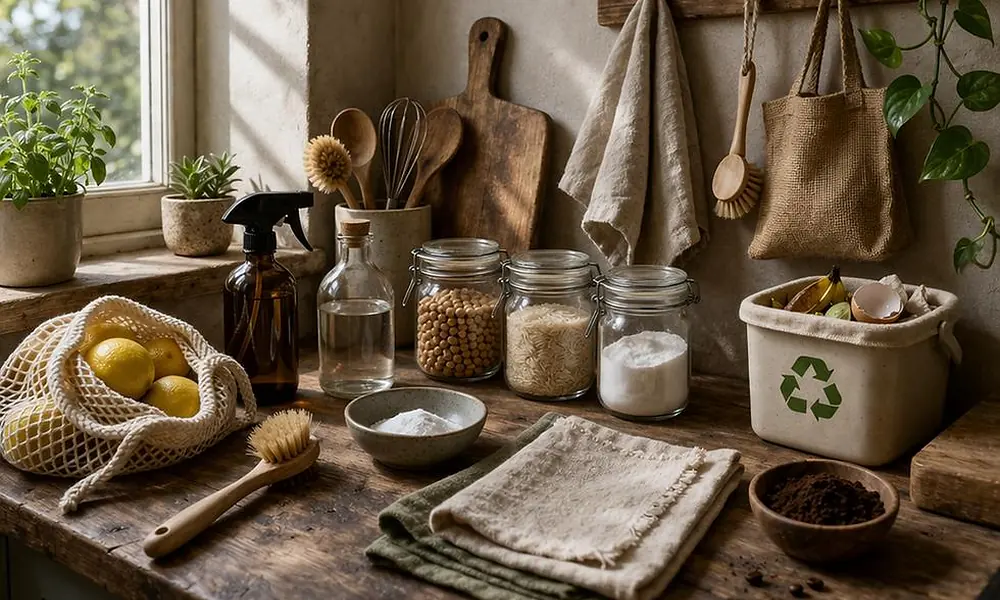
The kitchen is a good place to begin because it produces everyday items that can often serve another purpose. Choose clean, undamaged materials and start with projects that require little effort.
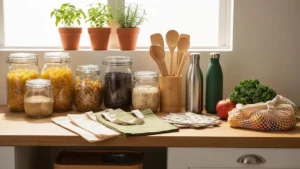
1. Turn Glass Jars Into Storage Containers
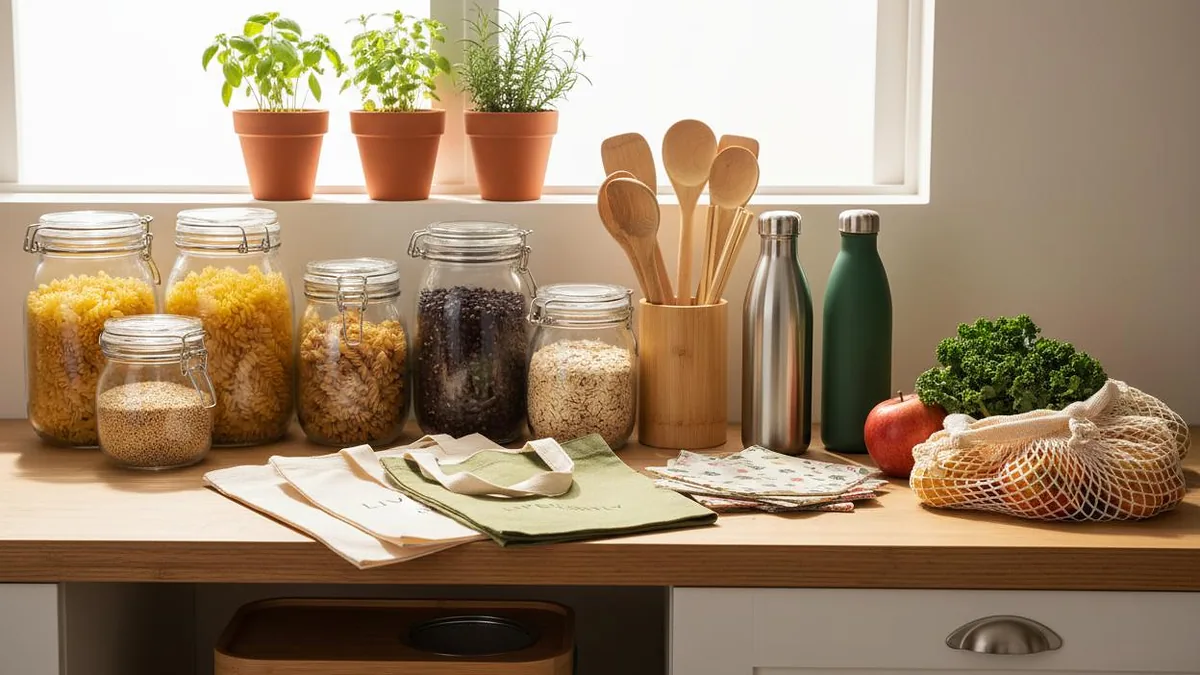
Clean glass jars can organize small household items. Use them to hold buttons, rubber bands, paper clips, craft supplies, or spare screws.
For pantry storage, use jars that are suitable for food contact and have clean, intact lids. Wash and dry them thoroughly before filling them. Do not use chipped jars for food, and do not assume that an old lid will create an airtight seal.
To remove lingering smells, wash the jar with warm water and dish soap. If needed, soak it with a little baking soda before rinsing and drying it completely.
2. Use Tin Cans as Organizers or Planters
An empty can can become a holder for pens, paintbrushes, or kitchen utensils. Remove the label, wash the can, and check the rim carefully for sharp edges.
You can also use a suitable can as a small planter. Make drainage holes in the bottom and place it on a tray to catch excess water. Choose a can without rust or sharp damage, and avoid leaving it outdoors if it is likely to corrode.
3. Make Plant Markers From Wine Corks
If you have natural corks left over, turn them into simple plant labels. Write the herb or plant name on each cork and attach it securely to a garden stake or sturdy stick.
This can help you identify basil, parsley, mint, or seedlings while they grow. Keep small corks and sticks away from young children and pets who might swallow them.
4. Reuse Citrus Peels for a Simple Cleaning Solution
Citrus peels can be used to make a vinegar-based cleaning solution for some household surfaces. Place clean orange or lemon peels in a jar, cover them with white vinegar, and leave the mixture for about two weeks. Strain the liquid before use.
This solution may help with light cleaning and grease on suitable surfaces, but it is not a disinfectant. Do not use vinegar-based cleaners on natural stone such as marble or limestone, and never mix vinegar with bleach. Test the solution on a small, hidden area first.
5. Give Used Coffee Grounds a Second Use
After brewing coffee, let the grounds cool before deciding whether to reuse them. Small amounts can be added to a suitable compost pile, where they contribute organic material.
Avoid piling used grounds around plants or treating them as a guaranteed fertilizer. Plants still need the right balance of nutrients, water, and growing conditions. If you do not compost, follow your local guidance for disposing of coffee grounds.
6. Turn Cardboard Egg Cartons Into Seed-Starting Trays
Clean cardboard egg cartons can hold small amounts of seed-starting mix while seeds begin to grow. Fill the cups with suitable mix, sow the seeds according to their packet instructions, and keep the material moist but not waterlogged.
Cardboard breaks down more readily than plastic, but the carton may soften or grow mold when it stays wet for too long. Transfer seedlings carefully when they are ready, and do not assume every carton is suitable for planting. Foam cartons should not be planted directly into garden soil.
7. Reuse Takeout Containers for Household Organization
Clean, sturdy takeout containers can organize craft supplies, small toys, screws, or other lightweight items. Clear containers are especially useful when you want to see what is inside.
Use them for food only when the container is intended for that purpose and remains in good condition. Follow the manufacturer’s instructions for washing, storing, and heating food. A container that is suitable for cold storage is not automatically safe for a microwave.
Repurpose Household Items in the Bathroom and Bedroom
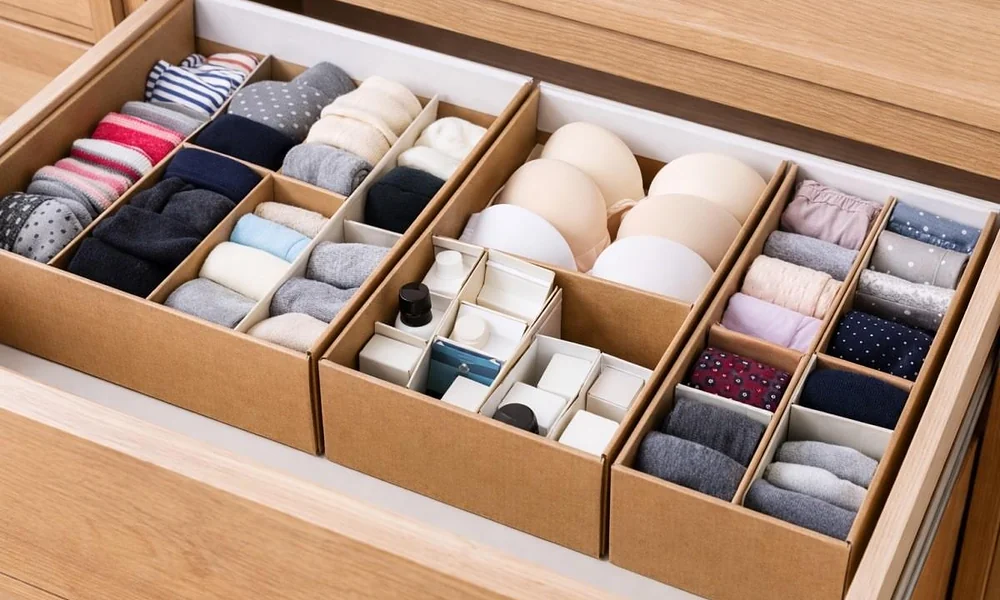
Bedrooms and bathrooms often contain worn textiles, boxes, and small containers that can still be useful. These ideas can help you organize your space without buying new storage products.
8. Turn Old T-Shirts Into Cleaning Cloths
A clean, worn T-shirt can become several reusable cleaning cloths. Cut it into manageable pieces and use them for dusting, wiping surfaces, or cleaning spills.
Set aside separate cloths for different tasks, especially for bathrooms and kitchens. Wash them after use, and discard them when they become too worn or cannot be cleaned properly.
9. Reuse Old Towels for Household Cleaning
Thin or faded towels can still absorb water. Cut them into smaller pieces for cleaning floors, wiping outdoor furniture, or drying tools after use.
Keep cloths used for chemicals, grease, or other difficult substances separate from those used around food. Wash reusable cleaning cloths thoroughly and let them dry between uses.
10. Use Old Toothbrushes for Small Cleaning Jobs
A retired toothbrush can reach narrow areas around taps, grout lines, window tracks, and other places that are difficult to clean with a larger brush.
Label it clearly so no one mistakes it for a toothbrush, and store it separately from personal-care items. Do not use a worn brush if its bristles are falling out or its handle is damaged.
11. Turn Shoe Boxes Into Drawer Organizers
Shoe boxes can divide drawers into sections for socks, cables, stationery, or other small belongings. Trim the boxes to fit, then group similar items together.
If the boxes will be visible on a shelf, cover them with leftover wrapping paper or plain paper. Keep cardboard away from damp areas so it does not become soft or moldy.
12. Use Clean Old Socks as Dusting Mitts
A clean sock can fit over your hand and help you dust blinds, baseboards, and other narrow surfaces. It can also be useful for wiping dust from furniture.
Use a separate sock for dirty jobs, and wash it after cleaning. Do not reuse socks that have absorbed chemicals or other substances that cannot be safely washed out.
13. Reuse Candle Jars Carefully
An empty candle jar may work as a holder for cotton pads, hair ties, or small craft supplies once the wax has been removed.
Let the container cool completely before cleaning it. Avoid pouring boiling water into cold glass, as a sudden temperature change can cause it to crack. Follow the candle maker’s care guidance where available, and do not use a jar for food if its material, condition, or cleanliness is uncertain.
14. Give an Old Ladder a New Purpose
A stable, retired ladder may be useful as a blanket rack or decorative display stand, provided it can support the intended load and cannot tip over easily.
Do not climb on it, and do not use it to hold heavy objects if its condition is uncertain. If it is unstable, cracked, or badly damaged, choose a safer reuse project or dispose of it properly.
Recycled Garden Ideas Using Household Items
The garden offers plenty of opportunities to reuse everyday objects. Before using anything outdoors, consider whether it can handle rain, sunlight, soil, and regular watering without breaking down or creating a safety problem.
15. Use Yogurt Cups as Temporary Seedling Pots
Clean yogurt cups can hold seed-starting mix while young plants develop. Make suitable drainage holes, place the cups on a tray, and water carefully so excess water can escape.
Check that the container is clean and sturdy, and remove seedlings before the roots become too crowded. Wash reusable cups between uses and discard them if they crack or become brittle.
16. Turn a Plastic Milk Jug Into a Watering Can
A clean milk jug can make a simple watering tool. Wash it thoroughly, fill it with water, and make small holes in the cap if you want a gentle flow.
Smooth any cut edges if you modify the jug, and keep the handle and cap secure. Use a container that originally held food or drink, not one that held household chemicals.
17. Protect Seedlings With a Milk-Jug Cloche
A clear or translucent jug can sometimes protect a small seedling from wind or a brief cold spell. Remove the bottom, smooth any sharp edges, and place the jug over the plant.
Do not leave a covered plant in strong sun or warm conditions without ventilation. The temperature inside can rise quickly, and the cover should not be treated as a substitute for checking local weather or the plant’s needs.
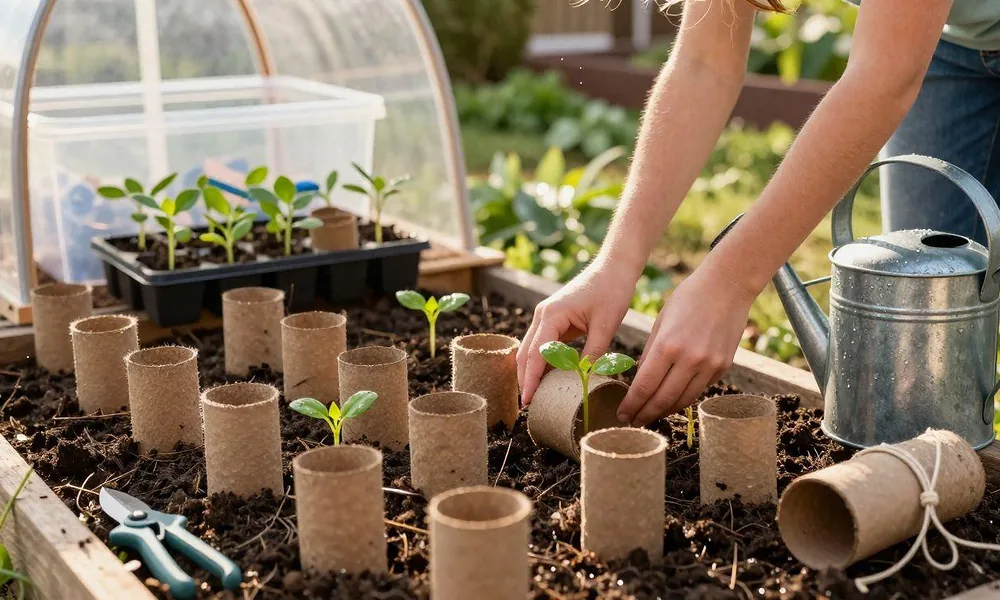
18. Use Toilet Paper Rolls for Seed Starting
Cardboard toilet paper rolls can hold seed-starting mix for some seedlings. Stand them upright in a tray, fill them with mix, and plant seeds according to the packet instructions.
Keep the rolls moist but not soaked. Since cardboard may break down unevenly, check the seedlings as they grow and move them before the roots become restricted.
19. Turn an Old Colander Into a Planter
A clean colander already has drainage holes, which makes it useful for growing some small plants. Add a suitable growing medium and choose plants that match the container’s size and light conditions.
A colander may dry out faster than a solid pot, so check moisture more often. If you plan to hang it, make sure the handle and support can safely hold the weight of the wet soil and plant.
20. Make Garden Markers From Wooden Spoons
An old wooden spoon can become a plant marker. Write the plant name on the handle with a suitable outdoor marker and place the spoon in the soil near the plant.
Wood will weather over time, so check the writing and replace the marker when it becomes difficult to read. Do not use painted or chemically treated wood in a way that could contaminate edible plants.
21. Reuse Suitable Containers for Small Garden Tools
Small buckets, sturdy tubs, and other clean containers can keep garden gloves, plant ties, labels, and hand tools together. Choose a container that can withstand outdoor conditions and does not have sharp edges.
If you reuse a container for plants, check that it is suitable for the intended use and has enough drainage. Never use containers that held pesticides, fuel, solvents, or other hazardous products around edible plants.
For more project ideas, see our related guide to recycled garden ideas when that article is published.
What Not to Repurpose: Safety Rules Worth Knowing
Repurposing should make your home more useful, not introduce new risks. A few basic checks can help you decide which items are suitable for another job.
Check Plastic Containers Before Reusing Them
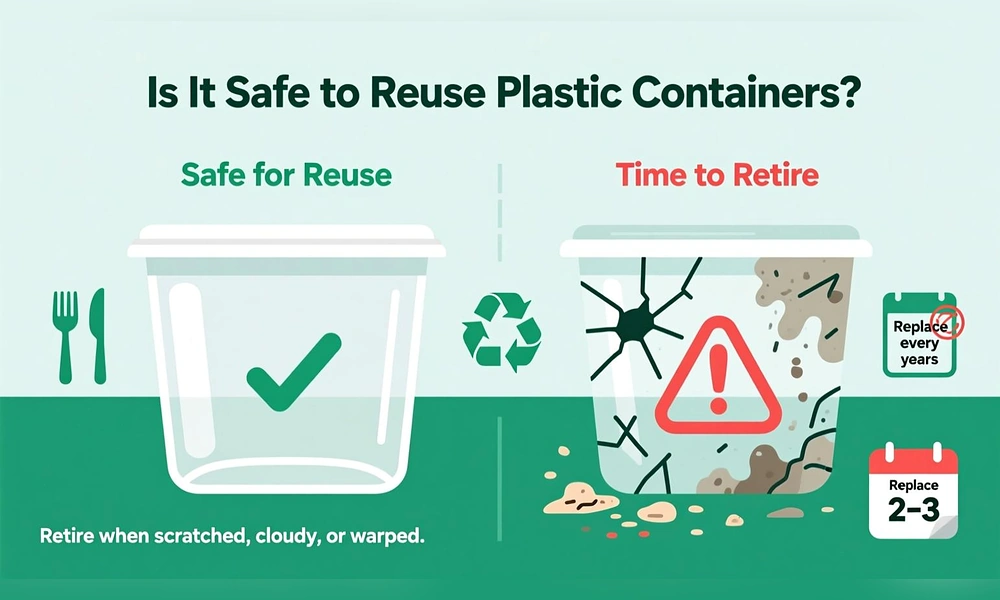
The number inside the recycling triangle identifies the type of plastic resin. It does not certify that a container is safe for every use, that it can be reused indefinitely, or that it can go in the microwave.
Follow these practical rules:
- Use containers for their intended purpose. A container made for food is a better starting point than one designed for chemicals or general storage.
- Check the manufacturer’s instructions. Do not microwave or put a container in the dishwasher unless its labeling says that it is suitable.
- Replace damaged containers. Avoid using plastic that is cracked, badly scratched, warped, or deteriorating.
- Do not reuse chemical containers for food or drinks. Washing does not make a pesticide, cleaning-product, or automotive-fluid container food-safe.
- Be careful with single-use packaging. Takeout tubs and drink bottles may not be designed for repeated washing, heating, or long-term storage.
The U.S. Food and Drug Administration explains that some plastic containers can melt or become unsuitable in microwave conditions. Use only containers labeled for microwave use and follow their instructions.
Be Careful With Old or Treated Wood
Before turning old timber into a planter or garden bed, find out whether it has been chemically treated. The EPA reports that chromated copper arsenate (CCA)-treated wood was used in residential settings before most residential uses were phased out at the end of 2003.
Avoid using wood of unknown treatment history for vegetable beds, especially if it may be old outdoor decking, landscaping timber, or another chemically treated product. Do not burn treated wood or use it for food-growing projects unless you can confirm it is appropriate.
Modern treated wood is not all the same, so check the product label and local guidance rather than assuming that every treated board has identical risks.
Do Not Reuse Damaged Safety Equipment
Some items should be replaced rather than repurposed for another protective job. Examples include:
- A bicycle or climbing helmet that has been damaged in an impact.
- A frayed electrical cord or damaged electrical appliance.
- A child car seat that is expired, damaged, or no longer meets the manufacturer’s safety guidance.
- Containers that held hazardous chemicals and cannot be safely reused.
You may be able to recycle or dispose of some of these items through a suitable local service, but do not put them back into use in a way that could put someone at risk.
Frequently Asked Questions About Repurposing Household Items
What are the easiest household items to repurpose?
Glass jars, old T-shirts, shoe boxes, and clean tin cans are good places to start. They can become organizers, cleaning cloths, or holders for small household items. Choose items that are easy to clean and have a clear purpose.
What is the difference between repurposing and upcycling?
Repurposing gives an item a different job, such as turning a jar into a pencil holder. Upcycling usually improves an item’s appearance or value, such as refreshing an old stool with paint. Recycling processes material so it can be made into another product.
Is it safe to reuse plastic containers for food?
Only reuse a container for food when it is intended for food contact, remains in good condition, and is used according to the manufacturer’s instructions. A recycling number alone does not establish food safety. Never reuse containers that held chemicals, and do not microwave plastic unless it is labeled for that purpose.
How can I remove smells from glass jars?
Wash the jar with warm water and dish soap first. If a smell remains, soak it with water and a little baking soda, then rinse and dry it completely. If the odor persists or the jar held a hazardous substance, do not use it for food storage.
Does repurposing household items really help reduce waste?
Repurposing can keep usable items in service and may help you avoid buying something new. The benefit depends on what you reuse, how long you use it, and whether it replaces a new purchase. Start with practical changes rather than keeping items you do not need.
How do I stop repurposing from creating clutter?
Give each item a clear job and a place to live. Keep only the number you are likely to use, and set a short deadline for finding a purpose. If an item remains unused, consider donating it, recycling it where accepted, or disposing of it responsibly.
Start With One Item You Already Own
Repurposing does not need to become a large craft project or a new hobby. It can be as simple as using a shoe box to organize a drawer, cutting an old T-shirt into cleaning cloths, or turning a suitable container into a temporary seedling pot.
Start with the three-question test: can you clean it, is it in good condition, and will you really use it? If the answer to all three is yes, give the item a practical new purpose.
Keep safety in mind, avoid collecting things without a plan, and use what you already have before buying more. Small, useful changes are easier to maintain than a cupboard full of projects you never finish.