A DIY greenhouse changed the way I grow, and the whole thing started with one ruined tray of pepper seedlings. A surprise April frost killed them overnight, after I had fussed over them for weeks on a sunny windowsill. That loss pushed me to build my own greenhouse, so a single cold night would never wipe out a crop again.
You start seeds earlier this way. You shield tender plants from sudden frost. And you keep growing well past fall, all without paying kit prices that climb into the thousands. At Peeacelily, we built ours over two weekends with hand tools and a rough sketch, so this guide gives you the same steps, the real numbers, and the small mistakes worth skipping.
Key Takeaways
- A simple DIY greenhouse costs $100 to $500, while store kits start near $2,000.
- A cold frame or PVC hoop house is the easiest first build by far.
- Twin-wall polycarbonate gives the best long-term value in most climates.
- Many small builds need no permit, but attached or large ones often do.
- No yard to spare? A DIY terrarium works as a tiny greenhouse on a shelf.
Why I Built a DIY Greenhouse Instead of Buying One
Honestly, the savings hooked me first. A backyard kit can run $2,000 to $25,000 once you add real glass and pay for setup. My build came in at $280. So that gap alone paid for two seasons of seeds, soil, and a small heater.
But control is what kept me going. Inside a DIY greenhouse, I start tomatoes, peppers, and basil in March, weeks before my neighbors dare to. I overwinter a potted lemon tree that would not survive my zone outdoors. And I keep slugs, wind, and late frosts away from young plants that bruise easily. You grow more, you lose less, and you decide the schedule.
Choosing the Right DIY Greenhouse Type for Your Space
Your yard, your climate, and your patience pick the build for you. So look at all three before you buy a single board.
Small and Budget DIY Greenhouse Options
- Cold frame: a low box with a clear hinged lid, ideal for seedlings and hardening off.
- Mini greenhouse: a covered shelf rack for a patio, deck, or balcony.
- PVC hoop house: bent pipe and poly film stretched over a garden row, cheap and fast.
Walk-In DIY Greenhouse Designs
- Lean-to: built against a wall or fence, so it saves wood and traps house heat.
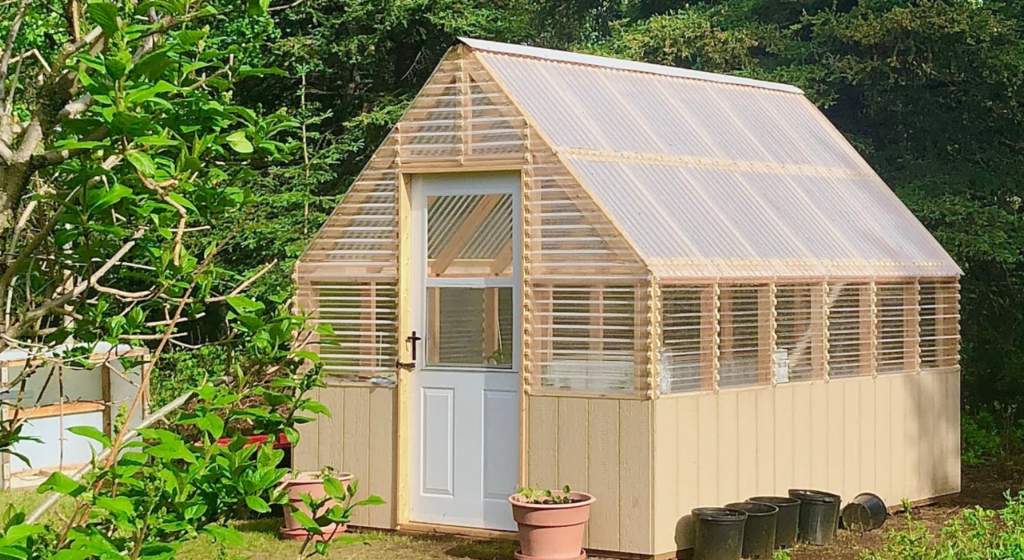
- A-frame: simple angled sides that shed snow well, and the build we chose.
- Gable: the classic peaked roof, best for permanent, year-round growing.
| Type | Best for | Cost (2026) | Build time | Difficulty | Permit likely? |
|---|---|---|---|---|---|
| Cold frame | Seedlings, hardening off | $30 to $80 | 2 to 4 hours | Beginner | No |
| PVC hoop house | Rows, season extension | $100 to $250 | 1 weekend | Beginner | Rarely |
| Lean-to (old windows) | Small yards, walls | $150 to $400 | 1 to 2 weekends | Intermediate | Sometimes |
| A-frame walk-in | All-purpose growing | $300 to $700 | 2 weekends | Intermediate | Sometimes |
| Gable walk-in (polycarbonate) | Permanent, year-round | $700 to $1,800 | 2 to 3 weekends | Advanced | Often |
| Store-bought kit | No-build buyers | $2,000 to $25,000 | Assembly only | Easy | Often |
Tools and Materials for Your DIY Greenhouse
Keep the parts list short, and the cost stays friendly. You need a frame, a covering, fasteners, and a door. That is it.
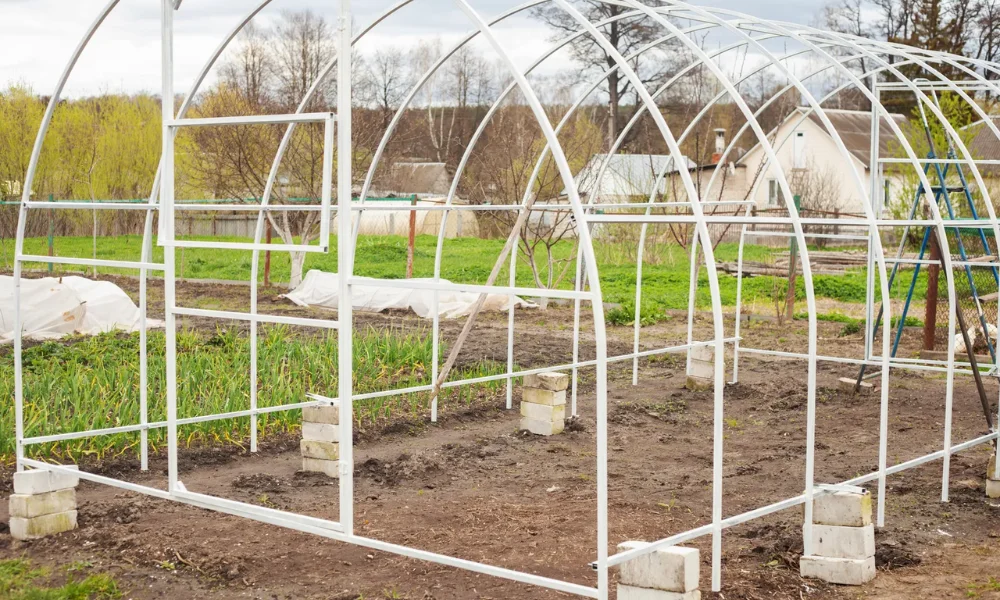
For the frame, pick one of these:
- PVC pipe: light, cheap, and quick for hoop houses.
- Treated lumber or cedar: strong and good-looking for a walk-in.
- EMT metal conduit: sturdier than PVC for a bigger frame.
The covering is the choice that shapes heat, lifespan, and budget the most, so do not rush it. We almost used free reclaimed windows from a neighbor who was remodeling, and old glass like that ranks among the smartest recycled garden ideas you can use. We went with 6-mil poly film in the end, only because the windows did not match our angled roof. Look at the full picture before you commit your cash.
| Covering | Upfront cost | Lifespan | Cost per year | Insulation | Best for |
|---|---|---|---|---|---|
| 6-mil poly film | Low | 2 to 3 years | Low | Low | Budget hoop houses |
| Twin-wall polycarbonate | High | 10+ years | Low to medium | High | Permanent, cold climates |
| Glass | Highest | 20+ years | Low long term | Medium | Premium look |
| Reclaimed windows | Free to low | 5 to 10 years | Very low | Medium | Recycled garden ideas |
| Clear or marine vinyl | Medium | 3 to 5 years | Medium | Low to medium | Removable panels |
How to Build a DIY Greenhouse Step by Step
Here is the build itself. We used an 8 by 8 foot A-frame, and these same steps shrink or grow with you.
1: Choose and Prep the DIY Greenhouse Site
Find a spot that gets six or more hours of direct sun. Check that water drains away and does not pool at the base. Keep it clear of tall trees and the windiest corner of the yard. Then level the ground well. We rushed this part, leveled twice, and lost half a Saturday to it, so do it right the first time.
2: Build the DIY Greenhouse Frame and Base
Match the foundation to the size. A small build sits fine on packed soil or a gravel pad. A larger one needs a wood base or concrete footings to stay put. Once the base is solid, frame the two angled walls with 2x4s, join them at the ridge, and check every corner with a level as you go. Square corners now save you crooked panels later.
3: Cover and Ventilate Your DIY Greenhouse
Pull the covering tight and fasten it down hard, so a gust cannot peel it back. Hang a door wide enough to carry a full tray through. Then add at least one roof vent or a small fan. Heat builds fast under any covering, and a sealed greenhouse will roast your plants by lunch on a clear day.
Here are our real numbers, since most guides hide them. The 8 by 8 A-frame cost $280: roughly $120 in 2x4s, $70 for a roll of 6-mil poly film, $40 in screws and hinges, and the rest on tape and a latch. The work took two weekends, mostly because of that leveling mess. The one thing I would change is simple. I would cut a roof vent on day one, because propping the door open and hand-watering through a hot July got old in a hurry.
Do You Need a Permit for a DIY Greenhouse?
This is the part almost every other guide skips, and it can cost you. Rules shift from one city or county to the next, so call your local building office before you dig. A few patterns repeat across most towns:
- Small, freestanding structures under a set square footage often need no permit at all.
- Attached lean-to builds usually do, since they tie into your house.
- Setback rules can force you to pull the greenhouse back from fences and property lines.
- An HOA may add its own caps on size, height, or look.
Five minutes on your city website beats a fine and a forced teardown later. I checked mine first, and a freestanding 8 by 8 needed nothing in writing.
Greenhouse Care Through the Seasons
A greenhouse is not a box you build and forget. So let the weather set your chores.
Cold-Climate Tips
- Sweep snow off the roof fast, because a heavy load can crush a light frame.
- Line the north wall with bubble wrap or foam for cheap, real insulation.
- Set water barrels or a small heater inside to hold daytime warmth overnight.
- Look up your USDA hardiness zone, so you know your true frost dates instead of guessing.
Hot-Climate Tips
- Open the vents and run a fan to push hot air out before noon.
- Drape shade cloth over the roof through peak summer weeks.
- Patch small tears in the covering with repair tape before they grow into big ones.
Recycled Garden Ideas and a DIY Terrarium for Small Spaces
You can build green and spend less at the same time. A few recycled garden ideas trimmed our budget and kept usable stuff out of the landfill:
- Old windows and storm doors become ready-made walls and roof panels.
- Clear plastic bottles and milk jugs turn into cloches for single seedlings.
- Pallet wood frames raised beds and a potting bench inside the greenhouse.
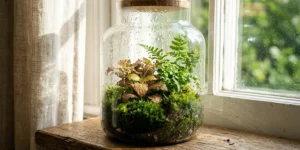
No yard at all? Start tiny. A DIY terrarium acts like a mini greenhouse on a desk or sill, because the glass traps heat and moisture for ferns, moss, and small tropicals. It is how I grew under glass for a full year before I had the space and the budget for the real thing.
Conclusion
A DIY greenhouse is one of the most rewarding projects a plant lover can take on. You control the climate, you grow far more, and you spend a fraction of what a kit costs. So start small with a cold frame or a DIY terrarium, then work up to a walk-in once you find your groove.
For more plant care, styling, and DIY plant guides, Peeacelily is here to help you grow with real confidence. Pick your spot, gather your parts, and get your first seedlings under glass this season.
Frequently Asked Questions
How much does it cost to build a DIY greenhouse?
A simple DIY greenhouse costs $100 to $500. Cold frames and hoop houses sit at the low end, near $30 to $250. A walk-in with polycarbonate panels runs $700 to $1,800. Store kits start around $2,000, so building your own saves real money. Your final cost comes down to the size, the covering, and whether you buy new parts or salvage them.
What is the cheapest way to build a DIY greenhouse?
Use a PVC hoop frame with 6-mil poly film, or build with old windows and scrap lumber. Both keep you close to $100. Pull free parts from marketplace listings, renovation piles, and habitat resale stores. A cold frame is the cheapest start of all, and you can finish one in a single afternoon.
Do you need a permit to build a DIY greenhouse?
Sometimes you do. Many small, freestanding builds need no permit, but attached or large ones often require one. Setback and HOA rules can apply too. So call your local building office or check the city website before you start. A quick search can save you a fine or a teardown down the road.
What is the best covering for a DIY greenhouse?
Twin-wall polycarbonate is the best all-round pick. It lasts ten years or more, holds heat well, and takes a hit without cracking. Poly film is the cheapest, yet it lasts only two to three years. Glass looks beautiful and lasts longest, but it costs the most and breaks. Old windows split the difference, with low cost and a long life.
How long does a DIY greenhouse last?
That depends on the covering. Poly film lasts two to three years. Clear vinyl lasts three to five. Reclaimed windows last five to ten. Polycarbonate lasts ten or more, and glass can pass twenty. A solid frame and a little yearly upkeep stretch the life of any build.