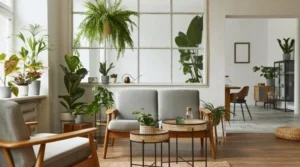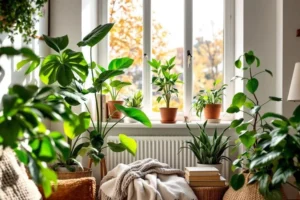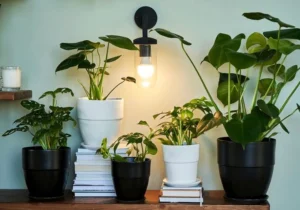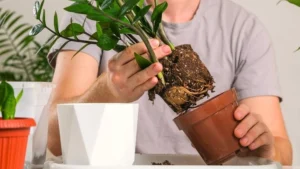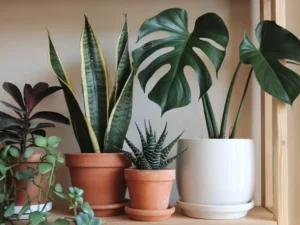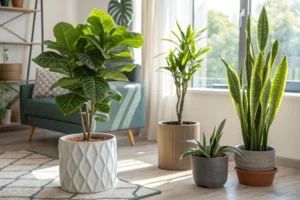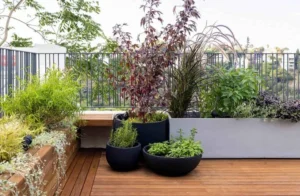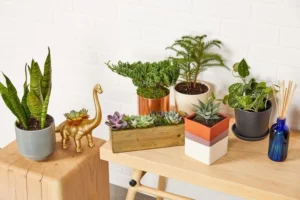
My snake plant has survived three apartment moves, one windowless hallway, and a full month when I forgot it existed. That patience is the point of drought tolerant plants. They wait for you. So you skip a watering, travel for work, or lose a week to deadlines, and they keep growing like nothing happened. At Peeacelily, these are the plants we reach for first, because they prove one thing. A green home does not need a green thumb.
So here are twelve I actually trust. A few are low light houseplants that settle into a dim corner. Others want a bright sill. But every one stores water somewhere, and every one forgives a missed drink. I have grown most of them, and yes, I have killed a few too, almost always by caring too much.
What Are Drought Tolerant Plants?
Drought tolerant plants keep a private water supply. These plants tuck moisture into thick leaves, plump stems, or chunky roots, so when the soil dries out, they live off the reserve and sit tight. They do not panic at a dry day. They sip slowly and hold on.
Still, that does not mean you ignore them forever. They want a deep soak, then a long dry stretch, and that pattern matters more than any calendar. Most come from hot, dry, rocky places, so a warm room and a slightly forgetful owner suit them fine. Snake plants and ZZ plants sit at the tough end, and both go two to three weeks between drinks. So water deeply, wait for the soil to dry, then repeat.
Drought Tolerant Plants vs Low Light Houseplants
Three terms get tangled, so here is the quick fix.
- Drought tolerant means the plant copes with dry soil and rare watering.
- Low light means it lives far from a window without sulking.
- Low maintenance is the wider bucket, both of those plus slow growth and few pests.
A plant can land in one group and not the others. Aloe shrugs off drought but craves sun, so it is no low light pick. But a small set does all three at once. Snake plants, ZZ plants, and pothos are drought tolerant and happy as low light houseplants, and those are your true forget-about-it choices.
Drought Tolerant Plants at a Glance
Find your light, check the pet column if a cat or dog rules your home, then skip to the plants that fit.
| Plant | Light Needs | Water (approx.) | Pet-Safe? | Best Spot |
|---|---|---|---|---|
| Snake Plant | Low to bright | 2 to 3 weeks | No | Bedrooms, dim corners |
| ZZ Plant | Low to medium | 2 to 3 weeks | No | Offices, dark hallways |
| Pothos | Low to bright | 1 to 2 weeks | No | Shelves, hanging baskets |
| Aloe Vera | Bright | 2 to 3 weeks | No | Sunny kitchen sill |
| Jade Plant | Bright | 2 to 3 weeks | No | Desks, bright sills |
| Ponytail Palm | Bright | 2 to 3 weeks | Yes | Living room accent |
| Cast Iron Plant | Low | 1 to 2 weeks | Yes | Dark corners |
| Spider Plant | Medium to bright | 1 week | Yes | Hanging baskets |
| Chinese Evergreen | Low to medium | 1 to 2 weeks | No | Low-light rooms |
| Haworthia | Bright | 2 to 3 weeks | Yes | Small sills, desks |
| Rubber Plant | Medium to bright | 1 to 2 weeks | No | Floor statement |
| Hoya | Bright indirect | 2 weeks | Yes | Trailing shelves |
12 Best Drought Tolerant Plants for Indoor Spaces
Here is the breakdown:
1. Snake Plant
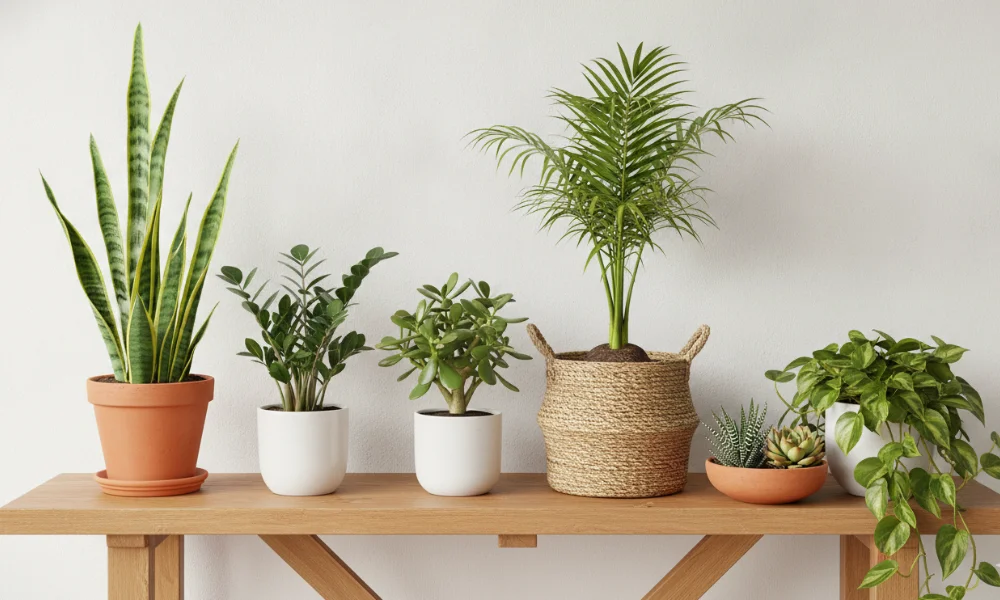
This was my first plant, and it is still going after years of neglect. The stiff upright leaves store water, so a skipped week barely registers. Bright window or shadowy corner, it adapts to both. So I water mine every two to three weeks, and less once winter slows it down. It is mildly toxic to cats and dogs, so I keep it high. Tall and a little architectural, it earns its spot beside a couch.
2. ZZ Plant
If I had to crown one survivor, the ZZ would take it. It hoards water in fat underground rhizomes and coasts for weeks. It also handles the kind of low light houseplants spot that makes other plants leggy, like a north room or an office. So water it every two to three weeks, then ease off in the cold months. Its sap irritates skin and pets, so rinse your hands after trimming. The glossy leaves brighten a dull corner.
3. Pothos
This is the plant I press into the hands of every nervous beginner. Its vines tumble off shelves, and it tells you exactly when it is thirsty. The leaves droop, you water, and an hour later they stand back up. Low light works, and brighter light keeps the gold streaks bold. So a drink every one to two weeks is plenty. Snip a vine, set it in water, and you have a new plant. But keep it away from pets, since it is toxic if chewed.
4. Aloe Vera
Aloe pulls its weight. The plump leaves hold water and a cooling gel, and the plant asks for almost nothing back. It wants bright light, so a sunny kitchen sill is ideal. Water it every two to three weeks, and only after the soil goes fully dry, because wet roots rot fast. I learned that the slow way. It is toxic to pets, so set it out of reach of curious mouths.
5. Jade Plant
Jade grows like a tiny tree, slowly thickening into a woody little thing you can keep for decades. The fleshy oval leaves bank water, so dry spells do not faze it. So give it bright light and a snug pot, then water every two to three weeks and let it dry out between drinks. It is toxic to cats and dogs. On a desk or a bright sill, it reads like a small living sculpture.
6. Ponytail Palm
The ponytail palm is not a palm at all, and it acts more like a camel. That swollen base stores water and carries it through weeks of drought. It wants bright light and fast-draining soil, a drink every two to three weeks, and very little in winter. And cat owners love this part: it is non-toxic. The long curling leaves spray out like a green fountain, so it makes a fun living-room accent.
7. Cast Iron Plant
Victorians grew this one in dark parlors for good reason. It takes deep shade, cold drafts, and patchy watering, yet the broad green leaves stay handsome. It grows slowly, so it never sprawls. Water it every one to two weeks, only when the top inch feels dry. It is also pet-safe, which makes it an easy yes for homes with animals. I use mine in the corner where nothing else will live.
8. Spider Plant
Few plants make beginners feel as capable as the spider plant, so it sits high on any list of the best indoor plants for beginners. It throws out baby plantlets on long stems, so you can clip them and pot up freebies all year. Spider plant likes medium to bright light and a weekly drink, yet it forgives a lapse and bounces back. This is non-toxic, so hang it in a basket and let the babies dangle.
9. Chinese Evergreen
This is how you get color in a room where flowers refuse to bloom. The leaves arrive splashed with silver, cream, pink, or deep red, and they hold the pattern even in low light. So it stays relaxed about water, and every one to two weeks does the job. The sap carries tiny crystals that irritate pets, so keep it up and away. Then drop it into a dim room when you want a hit of color.
10. Succulents: Haworthia and Echeveria
Small succulents pack a lot of personality into a tiny pot. They store water in tight rosettes, want bright light, and need a drink only every two to three weeks. But read the label first, because haworthia and most echeveria are pet-safe, yet aloe, jade, and kalanchoe are not. So group three or five in matching pots for a clean shelf. And with these, a little thirst always beats a little too much love.
11. Rubber Plant
The rubber plant delivers real drama for little effort. The thick, glossy leaves flush deep burgundy in good light, and they bank enough water to ride out a forgotten week. So give it medium to bright indirect light and a drink every one to two weeks. The milky sap irritates skin and pets, so handle cuttings with care, and wipe the big leaves now and then. Then let it climb in a floor pot to anchor a bare corner.
12. Hoya
The hoya, or wax plant, trails like pothos but feels a touch fancier. Its thick, waxy leaves store water, so it tolerates dry spells and actually prefers a snug pot. Bright indirect light suits it, with water about every two weeks. And with enough light, it rewards you with clusters of star-shaped flowers that smell sweet at night. It is non-toxic to pets, so train it along a shelf and let it wander.
One quick confession. The peace lily that gave this site its name did not make the cut, and that was on purpose. It is a beautiful bloomer, but it faints the moment the soil dries, so it is far thirstier than anything above.
Drought Tolerant Plants That Double as Low Light Houseplants
Not every plant here wants the dark, so let me point you to the ones that truly handle it.
- Snake plant, which keeps growing in deep shade, just slower.
- ZZ plant, which shrugs off offices lit only by overhead bulbs.
- Pothos, which trails fine in dim light, though the colors mute a little.
- Cast iron plant, the one for genuinely gloomy corners.
- Chinese evergreen, for color where the light runs thin.
Still, low light is not the same as no light. So if a room is too dark to read in at noon, it is too dark for a plant. Then nudge them nearer a window, or add a small grow light, and they will pay you back.
Watering Schedule for Drought Tolerant Plants
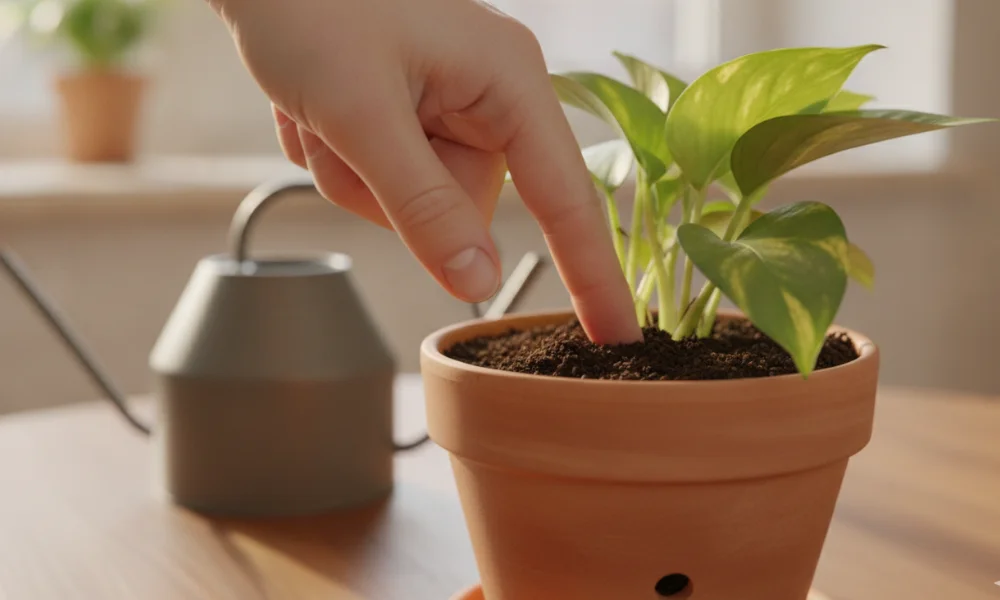
Here is where good intentions go wrong. The fastest way to kill a drought tolerant plant is to water on a strict schedule and never check the soil. So treat the table as a starting point, not a law. Sink a finger two inches into the soil. Dry means water deeply, until it runs from the drainage hole. But damp means wait.
| Plant | Summer Watering | Winter Watering | Sign It Needs Water | Overwatering Warning |
|---|---|---|---|---|
| Snake Plant | Every 2 weeks | Every 3 to 4 weeks | Leaves wrinkle or curl | Soft, yellow, mushy base |
| ZZ Plant | Every 2 to 3 weeks | Once a month | Stems wrinkle, leaves droop | Yellowing stalks, mushy rhizome |
| Pothos | Weekly | Every 2 weeks | Leaves go limp and flat | Black stems, soft roots |
| Aloe Vera | Every 2 weeks | Every 3 to 4 weeks | Leaves thin and curl in | Soft, see-through leaves |
| Cast Iron Plant | Every 1 to 2 weeks | Every 3 weeks | Top soil bone dry | Yellow lower leaves |
| Rubber Plant | Every 1 to 2 weeks | Every 3 weeks | Leaves droop slightly | Yellow leaves dropping fast |
Best Indoor Plants for Beginners: How to Stop Overwatering
Beginners rarely underwater. They overwater, and they do it out of pure affection. So here are the habits that keep these plants alive.
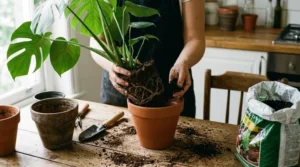
- Always use a pot with a drainage hole, because trapped water rots roots.
- Check before you pour. Finger two inches down, every time. Dry, water. Damp, wait.
- Soak, then leave it alone until the soil dries out again.
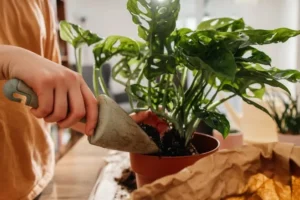
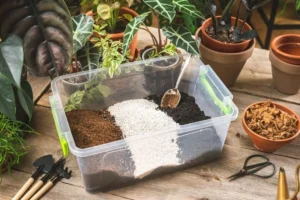
- Match the soil to the plant. A gritty cactus or succulent mix drains fast.
- Pull back in winter, since growth slows and the plants drink far less.
Get these five right, and you have headed off most houseplant trouble before it starts.
Styling Drought Tolerant Plants at Home
Tough does not have to mean plain. So once your plants settle in, this is the fun part.
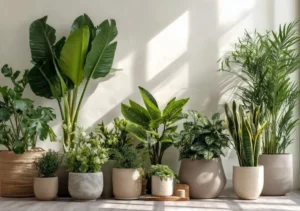
- Start by mixing heights and shapes.
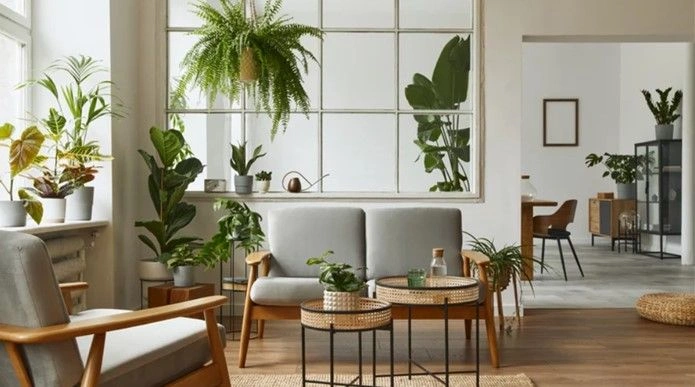
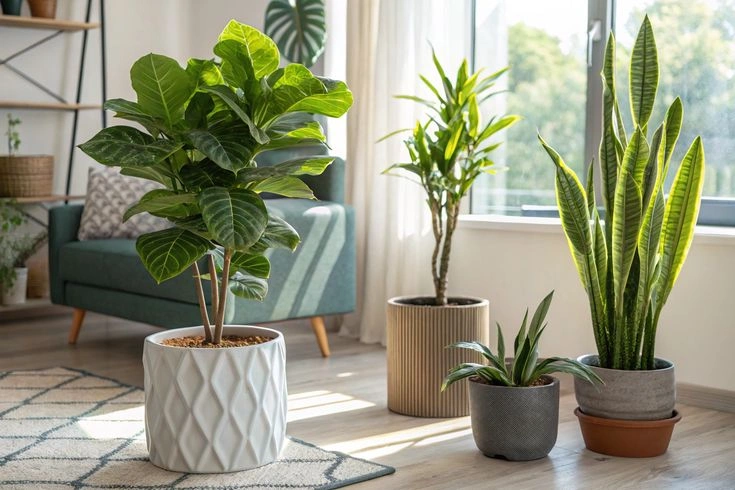
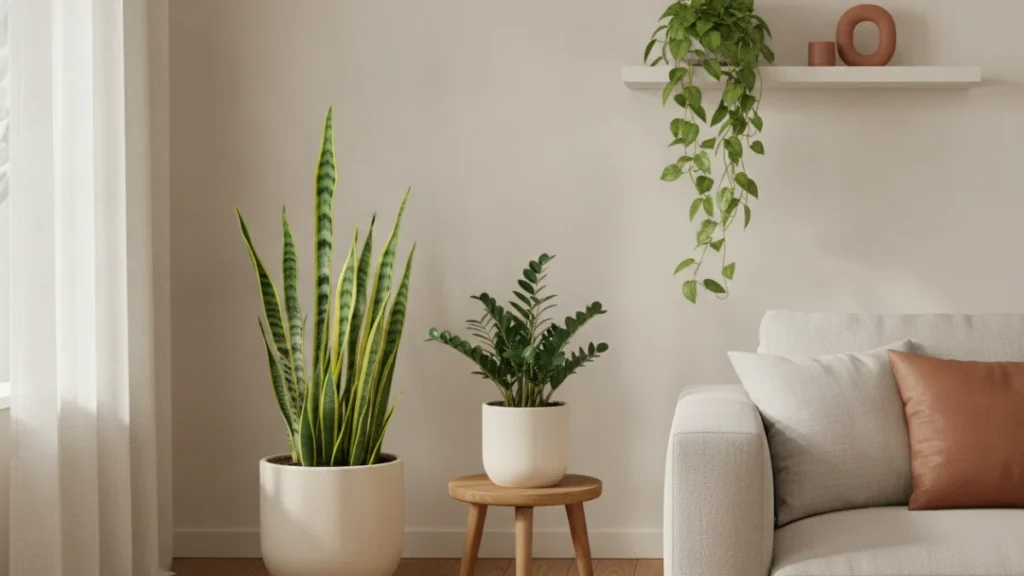
- Stand a tall snake plant next to a trailing pothos and a low cluster of succulents, and the group suddenly looks intentional.
- Then play with the pots. A woven basket warms a room, terracotta feels earthy, and smooth ceramic reads modern.
- And put each plant where it shows off. Hoya and pothos belong up high. A bold rubber plant holds down a bare corner. Tiny succulents wake up a desk.
Common Mistakes to Avoid With Drought Tolerant Plants
Even easy plants find ways to struggle, so keep an eye out for these.
- Overwatering, the number one killer, every single time.
- A pretty pot with no drainage hole, which quietly drowns the roots.
- A pot that is far too big, where extra soil stays wet and turns sour.
- Treating winter like summer, which floods a plant that wants to rest.
- Misreading the signs. Wrinkled leaves mean dry, but soft, mushy leaves mean too wet.
Final Thoughts
You do not have to hover over a watering can to fill a home with green. These drought tolerant plants carry the hard part for you, so you keep the calm, the color, and the cleaner air with barely any of the work.
So pick one forgiving plant to start, like a pothos or a snake plant, and grow your confidence from there. And when you want more easy picks, watering help, and styling ideas, come spend time at Peeacelily. We want plant care to feel simple, and a little joyful too.
Frequently Asked Questions
What is the most drought tolerant indoor plant?
The snake plant and the ZZ plant share the title. Both bank water in thick leaves or underground rhizomes, so they go two to three weeks between drinks, and longer in winter. And both handle low light, which makes them about as close as you get to a plant you can forget and still keep alive.
How often should you water drought tolerant plants?
Most want water every one to three weeks, but the calendar is not in charge. Light, pot size, and season all shift the timing. So check the soil first. Push a finger two inches down, then water only when it feels dry. After that, soak it well and let it dry out before the next round.
Are drought tolerant plants the same as low light houseplants?
Not exactly, but they overlap. Drought tolerant describes a plant that handles dry soil. Low light describes one that copes with a dim room. A few do both, like snake plants, ZZ plants, and pothos. But others, like aloe and jade, are drought tolerant and still want a bright spot.
What are the best indoor plants for beginners who forget to water?
Pothos, snake plants, ZZ plants, and cast iron plants are the best indoor plants for beginners with a short memory. They take a missed watering in stride, recover fast, and do not fuss about light. And pothos even droops as a polite reminder, then perks up within the hour once you get to it.
Do drought tolerant plants need any water at all?
Yes, they do. Drought tolerant means low and infrequent water, not no water. These plants live off stored moisture between drinks, but that store does run dry. So water deeply when the soil is dry, and they stay healthy. But ignore them for months, and even the toughest one gives up.