A plant that drops its leaves is not the same as a plant that droops. A drooping plant still has its leaves, just limp; a plant losing leaves is shedding them one by one, and every leaf on the floor is a clue. This guide is about leaves that actually fall off, in any season. Read the fallen leaf first, match it to a cause below, and fix that one thing.

First, Read the Fallen Leaf
Pick up a fallen leaf before you water, move, or repot anything. A soft, yellow, limp leaf usually means the roots have been too wet for too long. A dry, crispy leaf that crumbles means the plant dried out faster than its roots could replace the water. A green leaf that fell overnight almost always means shock: a sudden move, a cold draught, or a big temperature swing.
Where the leaves fall matters too. Old leaves at the bottom dropping one at a time, while the top keeps growing, is usually the plant shedding what it no longer needs. Leaves falling from all over, or new leaves at the top falling, means the plant is stressed now. One or two old leaves a week is normal; a handful a day is a problem.

Cause 1: Underwatering
When the soil dries out completely, the plant cannot replace the water its leaves lose, so it drops the oldest leaves first. The fallen leaves are usually dry, crispy, and brown at the edges.
Fix it by soaking, not sprinkling. Stand the pot in a basin of water for twenty minutes so the root ball rehydrates from the bottom up, then let it drain fully. After that, check the top two inches before every watering. If you are unsure how to judge it, our guide to how to tell when your plants need water walks through the finger test.
Cause 2: Overwatering and Root Rot
Overwatering is the most common cause of leaf loss indoors. The fallen leaves are soft, yellow, and limp, and the soil stays wet for days after watering. The pot feels heavy, the surface may smell sour, and the lowest leaves go first. The roots are sitting in water with no air, and they start to rot; a plant with rotting roots cannot feed its leaves.
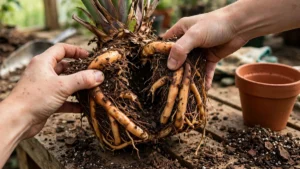
Fix it by stopping the water and giving the roots air. Let the soil dry out well before you water again, and always empty the saucer so the pot never sits in standing water. If the leaves keep falling and the soil smells bad, take the plant out, trim away any black, mushy roots, and repot into fresh, free-draining mix. Most houseplants need far less water than their owners think. Our guide to how often to water indoor plants gives a starting rhythm you can adjust to your own rooms.

Cause 3: A Change in Light
Plants adjust their leaf count to the light they get. Move a plant from a bright window to a dim corner, or from a shop to your home, and it will often drop the leaves it can no longer afford to keep. The fallen leaves are often green and healthy-looking: the plant is not sick, it is downsizing. The same thing happens in reverse when a plant is moved into much stronger sun; leaves can scorch and fall.
Fix it by moving the plant back toward the light it had, or by moving it gradually. A sudden change is what causes the drop, so give a plant a week in a halfway spot when you move it to a much brighter or darker place.
Cause 4: Temperature Swings and Draughts
A plant that drops green leaves overnight has usually been shocked. Common culprits all year round are cold air from an open window or door, hot air from a radiator or heater vent, and air conditioning blowing straight onto the leaves.
Fix it by moving the plant away from the draught or the vent, even if the spot is less pretty. Most houseplants are happiest between about 18 and 24 degrees, and they dislike sudden changes far more than a steady temperature that is slightly cool.
Cause 5: Repotting Shock
Many plants drop leaves for a week or two after being repotted. The roots were disturbed, some fine root hairs were lost, and the plant cannot take up as much water as before, so it sheds a few leaves to balance itself. This is normal, not a sign you did anything wrong.
Fix it by leaving the plant alone. Water it lightly, keep it in the same light it had before, and do not feed it until you see new growth. Do not repot again to check the roots; that only restarts the shock. If you have not repotted yet, read our guide to how to repot a plant first so the move is as gentle as possible.
Cause 6: Pests
Pests are an easy cause to miss because the damage shows up slowly. Sap-sucking insects such as spider mites, mealybugs, and scale feed on leaves and stems, weakening them until they yellow and fall. Check the undersides of the remaining leaves: fine webbing, tiny white cottony clumps, small brown bumps, or a sticky residue are all signs.
Fix it by isolating the plant from your others first, so the pests do not spread. Wash the leaves with a damp cloth, then treat with insecticidal soap or neem oil, repeating every week for at least three weeks.
Cause 7: Hungry Soil, Salt Build-Up, and Natural Ageing
A plant that has lived in the same pot for years can run out of food: the leaves turn pale yellow, starting with the older ones, and then drop. The opposite problem looks similar — fertiliser salts build up when a plant is fed too often, and the leaf tips brown and crisp before the leaf falls. And some leaf loss is simply ageing: old leaves at the bottom yellow, dry, and drop as the plant grows taller.
Fix it by feeding lightly and flushing sometimes. In the growing season, feed at half the strength on the packet, once a month at most, and skip feeding when the plant is not growing. Every few months, water the pot thoroughly so water runs out of the drainage holes, washing excess salts away. If the soil is old and exhausted, fresh potting mix at the next repot does more than any fertiliser.

When to Worry, and How to Help It Recover
Worry when the leaf loss is fast, when new leaves are falling, or when the stems go soft and the plant smells bad. Those signs point to root rot or a serious pest problem: check the roots, remove anything black and mushy, and repot into fresh mix.
Recovery is slower than the drop. A plant that has lost a third of its leaves may take six to eight weeks to look full again. Give it steady light, steady watering, and no more changes while it recovers. Do not feed a stressed plant, do not repot it again, and do not move it around looking for a better spot.