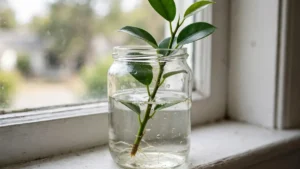
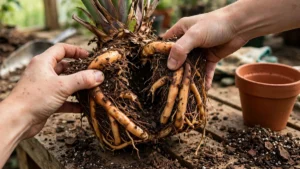
A ponytail palm does not multiply the way most houseplants do. You cannot snip a leaf, drop it in water, and watch roots appear, because a ponytail palm leaf has no growing point of its own. The real way to make a new plant is already sitting at the base of yours: the small pups, or offsets, that sprout beside the swollen trunk.
Ponytail palms grow slowly, so propagation is a slow project too. A pup taken this spring will look like a small plant by autumn, but it will take years before it develops the thick bottle-shaped base that makes the parent so recognisable. The work itself takes about twenty minutes. If you are choosing between the different forms first, our guide to the best ponytail palm varieties will help you pick the one worth multiplying.
Why Pups Are the Only Reliable Method
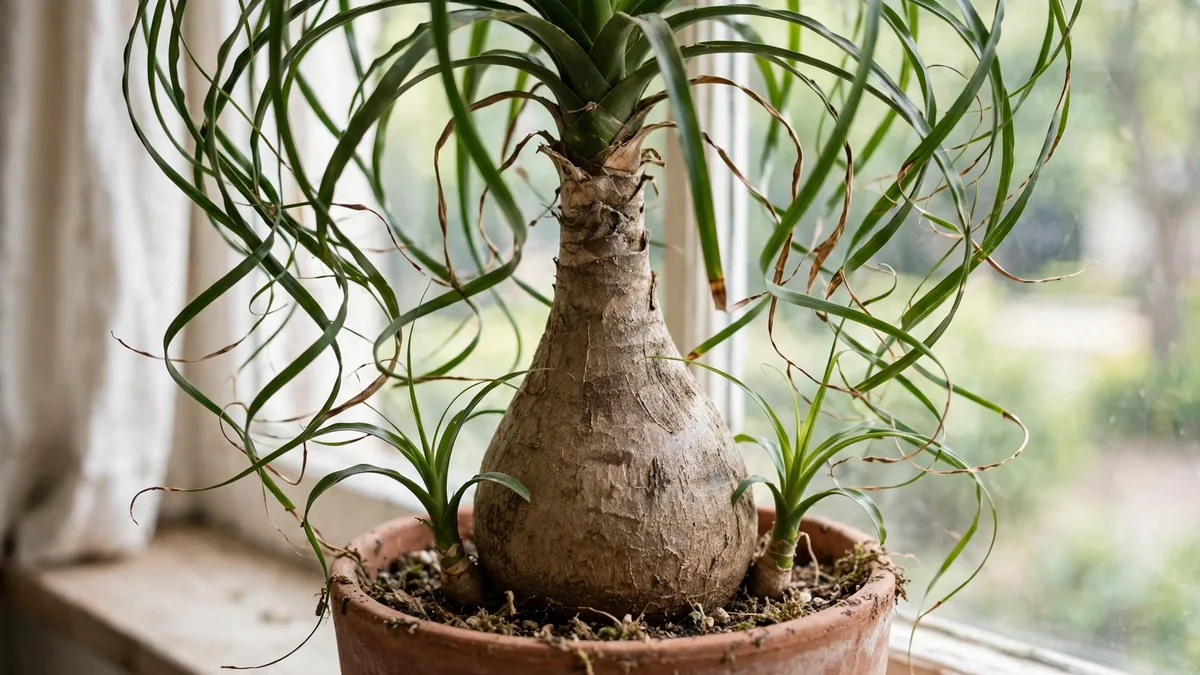
A ponytail palm, Beaucarnea recurvata, stores water in its swollen base, called a caudex, and grows from a single crown of leaves at the top. It does not branch the way a pothos does, and its leaves cannot root. The plant occasionally produces offsets at the base, usually once it is a few years old. These pups are complete little plants in waiting, and they are the only propagation method that works reliably indoors.
When to Take a Pup
Spring and early summer are the best times, when the plant is actively growing and warm light gives the pup the energy to root. A pup is ready when it is at least 8 to 10 centimetres tall, has several of its own leaves, and feels firmly attached rather than wobbly. Do not take every pup at once: removing one or two leaves the parent looking balanced, and the rest keep growing for next year.
What You Will Need
Gather everything before you start, so the pup spends as little time out of soil as possible. You need a clean, sharp knife, rubbing alcohol to sterilise the blade, a small pot with drainage holes, and a gritty mix of two parts potting soil to one part perlite and one part coarse sand. A ready-made cactus and succulent mix works well on its own.
Removing the Pup
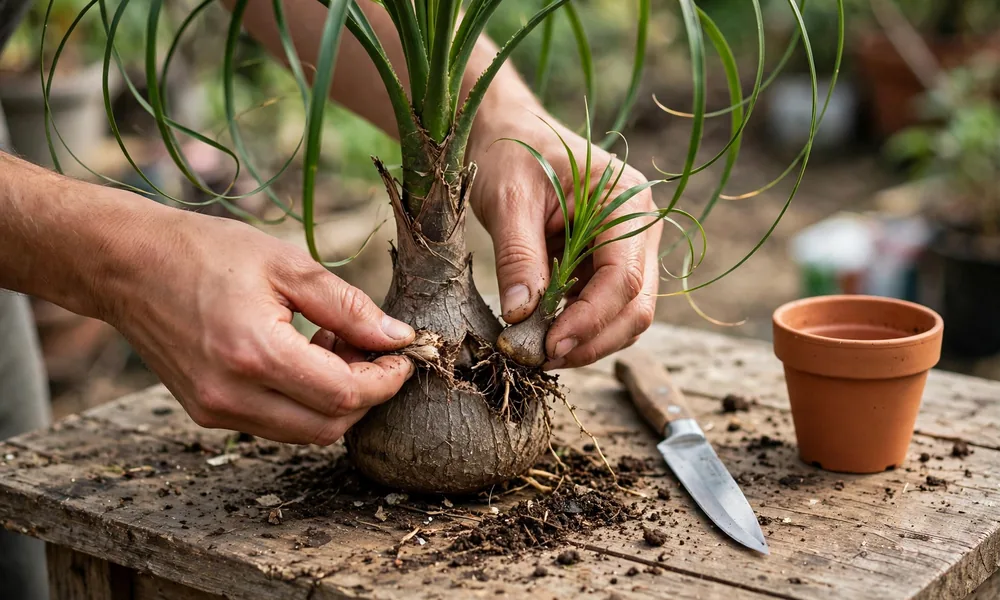
Water the parent lightly a day or two beforehand, so the soil is damp but not wet. Tip the plant out of its pot and brush the soil away from the base until you can see where the pup joins the parent. You may see a few of the pup’s own roots already reaching into the soil.
Wipe the blade with rubbing alcohol, then cut the pup away as close to the parent as you can, keeping as much of the pup’s own root with it as possible. A clean cut heals far better than a torn one, so do not yank the pup free. If the pup has no roots at all, it can still work, but it needs extra care and a longer wait, so choose a rooted pup whenever you have the choice.
Callusing and Potting the Pup
Set the pup aside in a dry, shaded spot for two to three days so the cut end dries over into a callus. This step matters more than it looks: a fresh wound planted straight into damp soil is an open invitation to rot, and rot is the most common reason ponytail palm pups fail. The callus has formed when the cut looks dry and slightly shrunken rather than wet and pale.
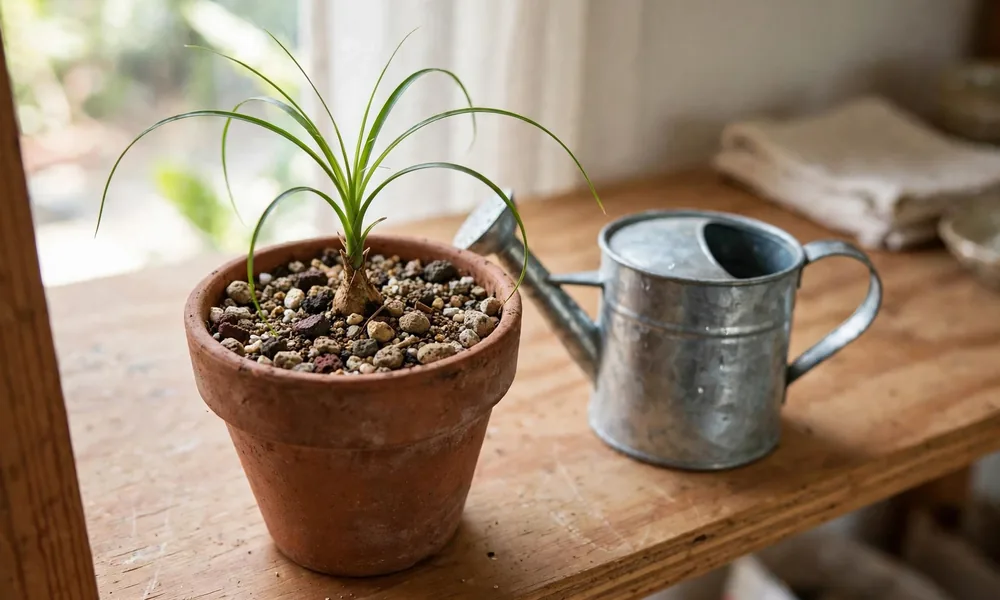
Pot the pup in the small pot, burying it just deep enough that it stands upright, with the base of its leaves just above the soil line. Planting too deep buries the growing point and invites rot, so keep it shallow. Water lightly, just enough to settle the soil. The method is close to the one in our guide on how to propagate a jade plant, where callusing and a gritty mix do the same job of keeping a slow-rooting cutting dry enough to survive.
Aftercare: Warmth, Light, and Very Little Water
Put the potted pup in bright, indirect light, a few feet from a sunny window, and keep it warm, around 20 to 25 degrees Celsius. Do not water again until the top few centimetres of soil are dry, which may take a week or more. The pup has very few roots at first, so it cannot drink much, and wet soil around a rootless base is the fastest way to lose it.
New roots usually appear within four to eight weeks. You will know they are there when the pup resists a very gentle tug, or when a fresh leaf uncurls from the centre. Once the pup is clearly growing, water it the way you would an adult ponytail palm, letting the soil dry out between waterings. As a plant built to survive dry spells, it forgives a missed watering far more easily than an extra one, as our guide to drought-tolerant plants explains.
Growing From Seed
Seed is worth trying if you enjoy a long project or cannot find a pup. Soak fresh seed in warm water for a day, then sow it thinly on damp seed compost under a clear lid, kept warm at around 24 degrees. Germination takes two to four weeks; move seedlings into individual pots once they have three or four leaves.
The Timeline and the Common Failures
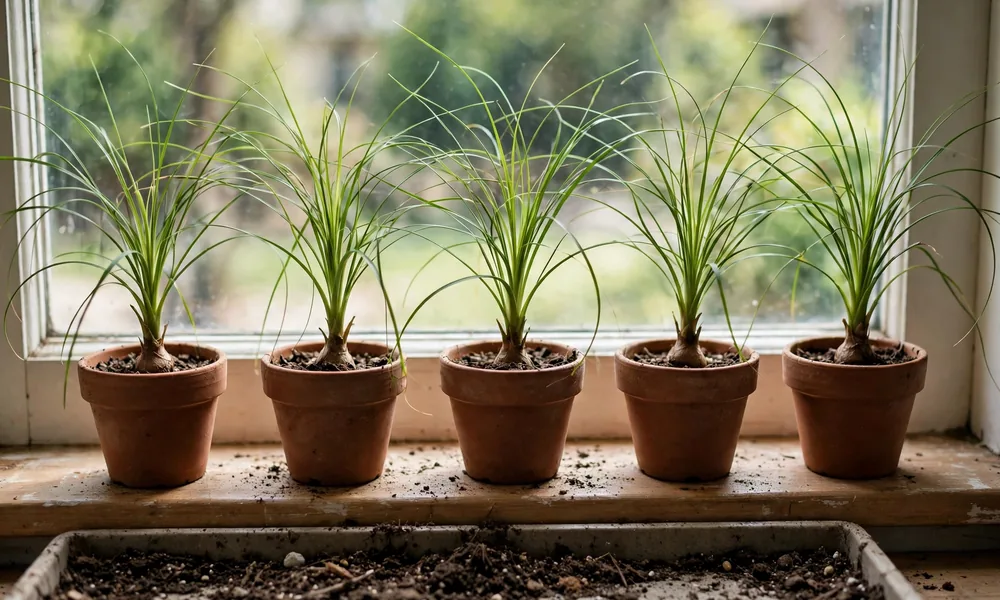
Weeks one to three are quiet: the pup sits, calluses, and does nothing visible. Weeks four to eight bring the first roots and sometimes a new leaf. By three to six months, the pup should be growing steadily, and by the end of the first year it will look like a small ponytail palm. The swollen caudex develops slowly over years, not months: a plant grown from a pup may take five years or more before its base looks properly bottle-shaped.
Most failures come down to water. A pup planted in ordinary potting soil with no drainage, watered on a schedule rather than when dry, will rot from the base upward. If the pup turns soft and brown at the base, or the leaves pull away easily, rot has set in, and it is rarely possible to save it. Start again with a fresh pup, a grittier mix, and a lighter hand on the watering can. A pup that stays green and firm is still alive and working underground, even if nothing shows for weeks; only one that turns yellow, soft, or limp has truly failed. Too little light is the other common culprit: a pup in a dark corner will sit without rooting for months, so bright, indirect light is not optional.
Propagation turns one ponytail palm into a small family, and the new plants cost nothing but time. Take the pups in spring, callus them properly, pot them shallow in gritty mix, and then leave them alone to do the slow work. In a few years, the pup you separated in twenty minutes will be the plant on your own windowsill, growing pups of its own.