A yucca that has grown tall and bare at the bottom is not a plant you have to live with or throw away. It is a plant you can multiply. One leggy stem can become several new plants, and a clump that has produced offsets at its base is already offering you free yuccas.
This guide covers the three methods that work for indoor yuccas: stem cuttings, cane sections, and offsets. Seeds are slow and unreliable indoors, so the methods below use the plant you already have and cost nothing beyond a pot and some soil.
Before You Cut: Pick the Right Plant and the Right Time
Propagate from a healthy plant. A yucca already struggling with yellow leaves or soft, rotting stems will give you cuttings that struggle too, so fix the parent plant first. If you need a refresher, our yucca plant care guide covers light, watering, and the mistakes that weaken these plants.
Spring and early summer are the best times. The plant is actively growing, days are long, and cuttings root faster in warm conditions. You can propagate in autumn or winter, but expect everything to take roughly twice as long, and keep cuttings somewhere warm.
You will need a sharp, clean knife or secateurs, a pot with drainage holes, and a free-draining mix of potting soil with roughly a third perlite or coarse sand. Yucca stems rot in soggy soil, so drainage matters more than feeding. Wash your blade before you start.
Method 1: Stem Cuttings From a Leggy Yucca
Use this method when your yucca has grown tall with bare stem below and a tuft of leaves at the top. Cut the top off and root it, and the old stump usually sprouts new shoots of its own.
Cut the stem about 15 to 20 centimetres below the lowest leaves, making a clean, straight cut. Remove the lowest few leaves so you have a bare section of stem to plant. Then leave the cutting somewhere dry and out of direct sun for three to seven days so the cut end forms a dry callus. This is the step beginners skip, and it is the one that prevents rot.

Once the cut end feels dry and slightly shrunken, push the bare stem about 5 to 8 centimetres into dry or barely damp mix. Do not water it yet. Put the pot in bright, indirect light and leave it alone for a week before watering lightly. Roots usually appear within four to eight weeks in warm weather. Check by giving the cutting a very gentle tug: resistance means roots have formed. Do not pull it out to look.
Method 2: Cane Sections for Several Plants at Once
If the bare stem is long, cut it into sections and root each one. Each section needs to be at least 10 to 15 centimetres long and should have at least one node, the faint ring or bump on the stem where a leaf once grew. Shoots emerge from these nodes, so a section without one is unlikely to grow.
Mark the top end of each section before you cut, because planting a section upside down is a common mistake. A small nick on the top end keeps the orientation clear. Let all the sections callus for several days, just as with a stem cutting.
Plant each section upright, top end up, with about a third of its length buried in dry mix. Or lay sections horizontally, half-buried, which can produce shoots from several nodes at once. Water lightly after a week, keep the pots warm and bright, and expect shoots in six to ten weeks. Some sections take longer, so do not give up on one that looks unchanged after two months if the stem still feels firm.
Method 3: Offsets, the Easiest Way of All
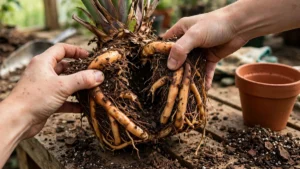
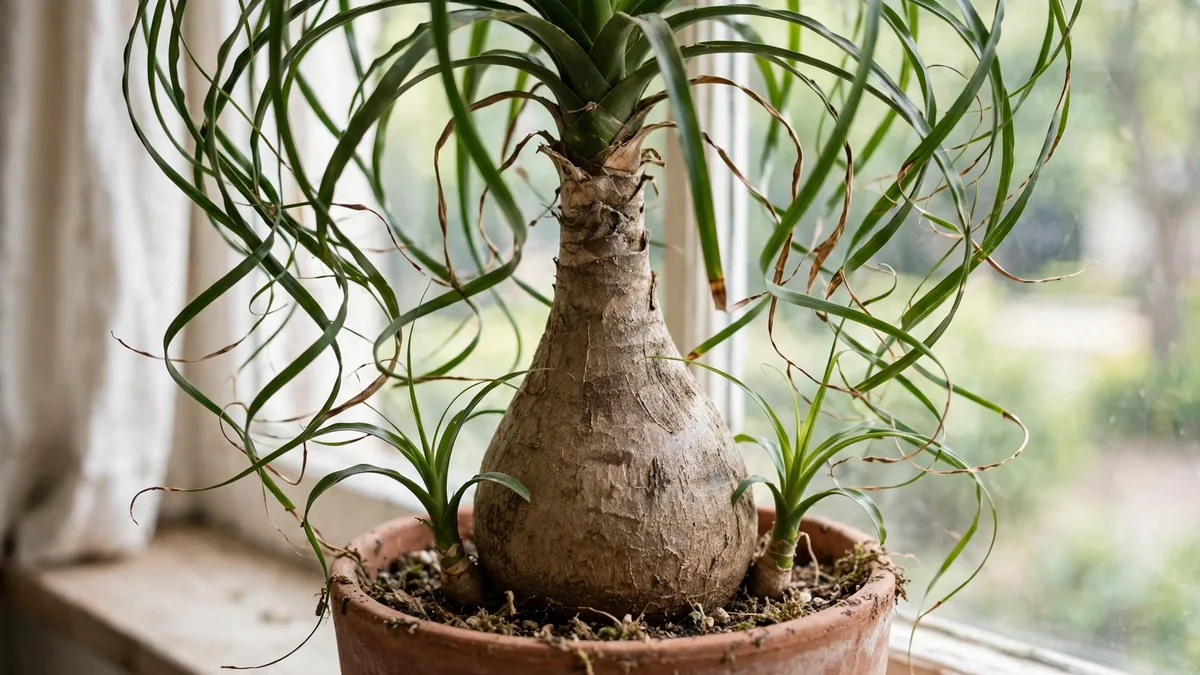
Many yuccas produce offsets, small plantlets or pups, around the base of the parent plant. These are the easiest cuttings of all because they often already have their own roots.

Wait until an offset is at least 10 centimetres tall with several of its own leaves. Then unpot the parent or scrape soil away from the base until you can see where the offset joins the main stem. Cut it away with a clean knife, keeping as many of its own roots as possible, and let the cut dry for a day or two before potting.
Pot the offset in the same free-draining mix, water it lightly, and treat it like a small adult yucca: bright light, water only when the top few centimetres of soil are dry. Offsets establish fast, often showing new growth within three to four weeks.
Rooting in Water or Soil?
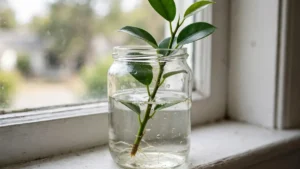
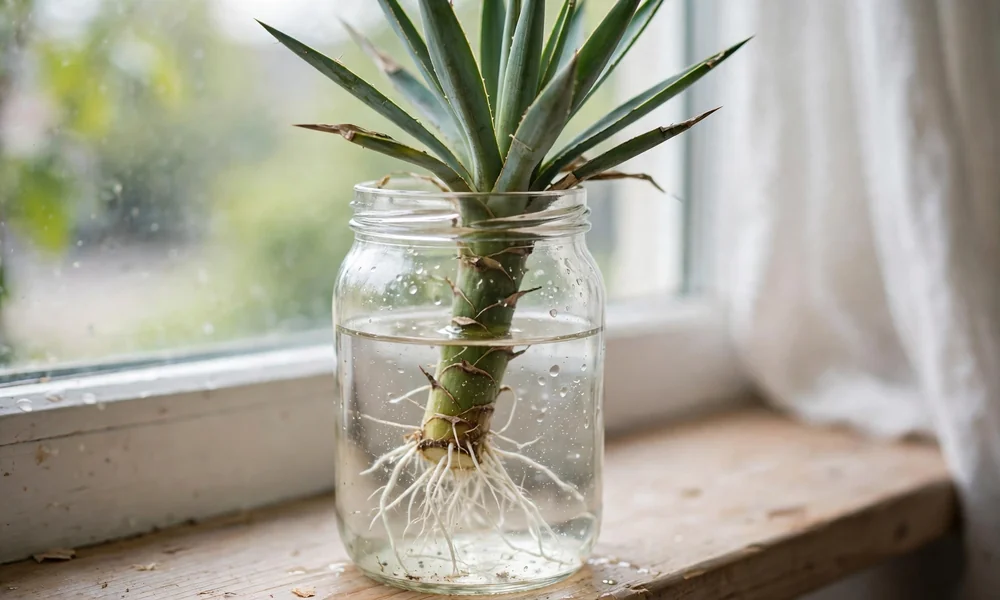
Yucca cuttings will root in water, and it is satisfying to watch the roots appear. But water-rooted yuccas often struggle when moved to soil, because roots grown in water are finer and less suited to dry mix. Soil rooting is slower to show results but gives a stronger plant.
If you do root in water, use a clean jar, keep the water level just over the cut end, change the water every few days, and move the cutting to soil once roots are 5 to 8 centimetres long. Do not wait until the jar is full of roots, which only makes the move harder.
A Realistic Timeline
Propagation rewards patience, and yucca is not a fast rooter. A rough guide for a warm spring start: the cut calluses in three to seven days, roots form in four to eight weeks, and the first new leaves appear around eight to twelve weeks. Offsets are quicker, often showing growth in three to four weeks. Cane sections are the slowest, sometimes taking ten weeks or more before a shoot appears.
Why Cuttings Fail, and How to Fix It
Rot is the most common failure. The stem turns soft, dark, and mushy at the base, usually because the cut was not callused, the soil stayed wet, or the pot had no drainage. Cut off the rotted part back to firm tissue, let it callus again properly, and start over in drier mix.
Leaves drooping or drying on a fresh cutting are normal in the first few weeks, since the cutting has no roots to take up water. Remove leaves that turn brown, but do not overwater to compensate. Never put a fresh cutting in direct sun.
If your yucca is one of the spineless or variegated types, remember that cuttings grow true to the parent, while offsets are the safest way to keep a variegated pattern. Our roundup of the best yucca varieties will help you decide which one is worth multiplying. The same callus-and-dry-soil rules apply to most succulents, so if you want more practice first, read our guide on how to propagate a succulent before you cut.
The Bottom Line
Yucca propagation comes down to three habits: cut from a healthy plant, let every cut dry into a callus before planting, and keep the soil barely damp until roots form. Stem cuttings rescue a leggy plant, cane sections turn one long stem into several, and offsets are almost free plants waiting at the base.