A money tree that has grown tall and bare at the bottom is a chance to make new plants for free. Pachira aquatica roots well from stem cuttings, so one leggy money tree can become two or three healthy ones, and the parent usually grows back bushier. This guide covers how to take a cutting, root it in water or soil, and look after the new plant until it is established.

When to Propagate a Money Tree
Spring and early summer are the best times to propagate a money tree. The plant is actively growing, days are long, and warm conditions help cuttings root in a few weeks. Winter propagation is slower and riskier, as the parent is barely growing and cold, damp soil invites rot.
The other good moment is when your money tree has outgrown its shape. A plant with a long bare stem and a tuft of leaves at the top is a perfect candidate: cut the top off and root it, and the stump will usually sprout new shoots below the cut.
What You Will Need
Money tree propagation needs very little equipment, but clean tools matter: a dirty blade spreads disease, and a blunt one crushes the stem.
- Clean, sharp pruning shears or a knife, wiped with rubbing alcohol
- A jar of room-temperature water or small pots of free-draining potting mix
- Rooting hormone powder or gel (optional, but it speeds rooting up)
- Small pots with drainage holes for potted cuttings
Pick a green, firm stem with at least two or three healthy leaf clusters, and only propagate from a healthy plant. For a refresher on the general technique, see our beginner guide to propagating indoor plants.
Taking the Cutting
Cut a healthy stem 4 to 6 inches long, making one clean cut about a quarter inch below a leaf node. The node is the small bump where a leaf joins the stem, and it is where new roots form, so at least one or two nodes must sit below the water or soil line.
Strip away the lowest leaves so that 2 to 3 inches of bare stem is exposed. Leave two or three leaf clusters at the top, and cut very large leaves in half to reduce water loss. Let the cut end dry for an hour or two so it calluses slightly; this lowers the risk of rot.
If the stem you cut came from the top of a tall plant, do not throw the parent away. The stump usually pushes out new shoots just below the cut within a few weeks.

Method 1: Rooting in Water
Water propagation is the easiest method to watch, because you can see the roots forming. Stand the cutting in a jar of room-temperature water with the nodes submerged and the leaves above the waterline, in bright, indirect light. Never use direct sun, which heats the water and encourages algae.
Change the water every four or five days to keep it fresh. Stale water turns cloudy and is the fastest route to a rotted cutting. White root nubs usually appear within two to four weeks. Once the roots are about 2 inches long, pot the cutting in fresh potting mix; do not wait much longer, as long water roots struggle to adapt to soil.
To pot it up, fill a small pot with damp, free-draining mix, lower the roots in gently, and firm the mix around the stem. Water lightly and keep the new plant in bright, indirect light.
Method 2: Rooting in Soil
Soil propagation skips the transfer step, and cuttings rooted this way often settle faster because their roots grow in soil from the start. Dip the cut end in rooting hormone, then press the cutting into a pot of damp potting mix, burying the nodes about 2 inches deep. A mix of standard houseplant potting soil with a handful of perlite works well.
Keep the mix lightly moist, not wet. Water only when the top inch feels dry, and give the pot bright, indirect light. Expect roots in three to six weeks; you will know it has rooted when the cutting resists a gentle tug and new leaves appear.
Soil cuttings root a little slower than water cuttings, but they are less likely to wilt after potting, and you never have to disturb fragile water roots.

Timeline: What to Expect
Money tree cuttings are not fast, but they are steady. In warm spring conditions, root nubs appear in water within two to four weeks, and soil cuttings show new growth in four to six weeks.
If nothing has happened after six weeks, do not give up immediately. If the stem is still firm and green, it may simply be slow, especially in cooler weather. Move it somewhere warmer and brighter and wait another two weeks. If the stem is soft, dark, or mushy at the base, the cutting has rotted and will not recover.
The Braided Trunk: What Propagation Does Not Do
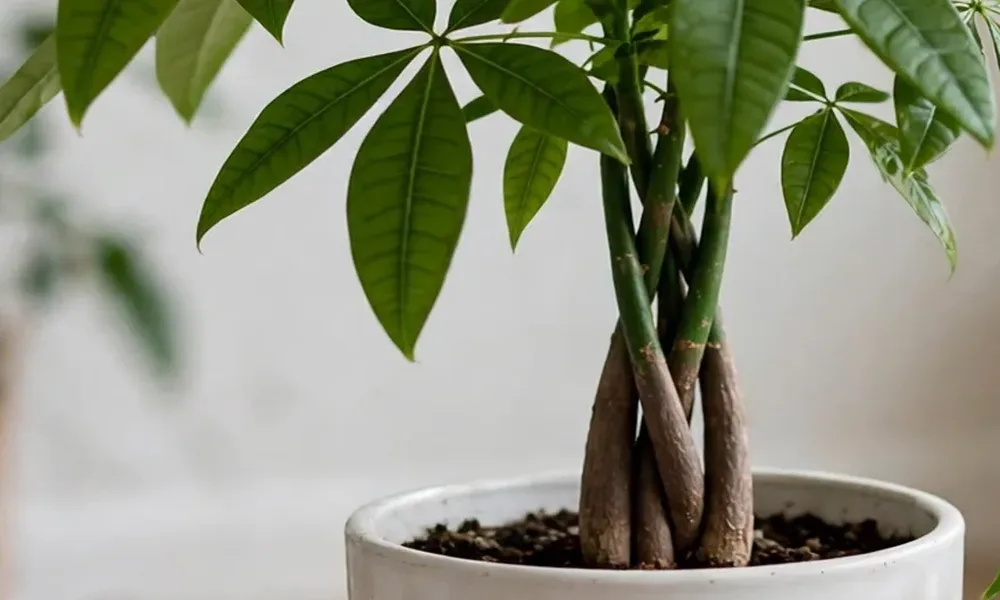
One thing a cutting will never give you is a new braided trunk. The braid on a shop-bought money tree is made when the plant is young: growers weave three to five slender stems together and tie them loosely at the top, and the stems thicken and fuse as they grow. A single cutting grows into a plant with one straight stem.
If you want another braided money tree, you need three to five cuttings rooted at the same time. Once they are established and their stems are still thin and flexible, usually after a year or so, you can plant them together in one pot and weave them loosely, tying them with a soft plant tie at the top. Do not force thick, woody stems to bend; they will snap. For more on the braid, read our guide to the money tree plant, its care, meaning and placement.
Aftercare for New Money Trees
A newly rooted cutting is still fragile. Pot it into a small container, just big enough for the root ball, with loose, well-draining potting mix. Place it in bright, indirect light and water when the top inch of soil feels dry. Do not fertilise for the first two months.
Once the plant is growing well, it follows the same routine as any money tree. Our money tree care guide covers light, watering, soil and the signs of an unhappy plant in full.
Troubleshooting: Why a Cutting Fails
Rot is the most common problem. If the stem turns soft and mushy at the base, the cutting is too wet or the water has gone stale. Cut back to firm, healthy tissue, let the end dry for a few hours, and start again in fresh water or fresh mix.
A cutting that sits unchanged for months is usually too cold or too dark. Move it somewhere warmer with brighter, indirect light. Leaves that yellow and drop are often a sign of too much water or too little light.
Money tree propagation rewards patience more than fuss. Take a healthy cutting in spring, keep it warm and bright, and in a couple of months you will have a new plant to keep or to give away.