Succulents are the plants people buy when they have killed everything else — and usually, they are right to. A succulent stores water in its thick leaves and stems, so it can go weeks without a drink and still look good on a sunny windowsill. But “hard to kill” is not the same as “impossible to kill,” and most succulents die the same way: too much water, the wrong soil, and not enough light. Get those three things right and succulent care becomes almost effortless.

What Makes a Succulent Different
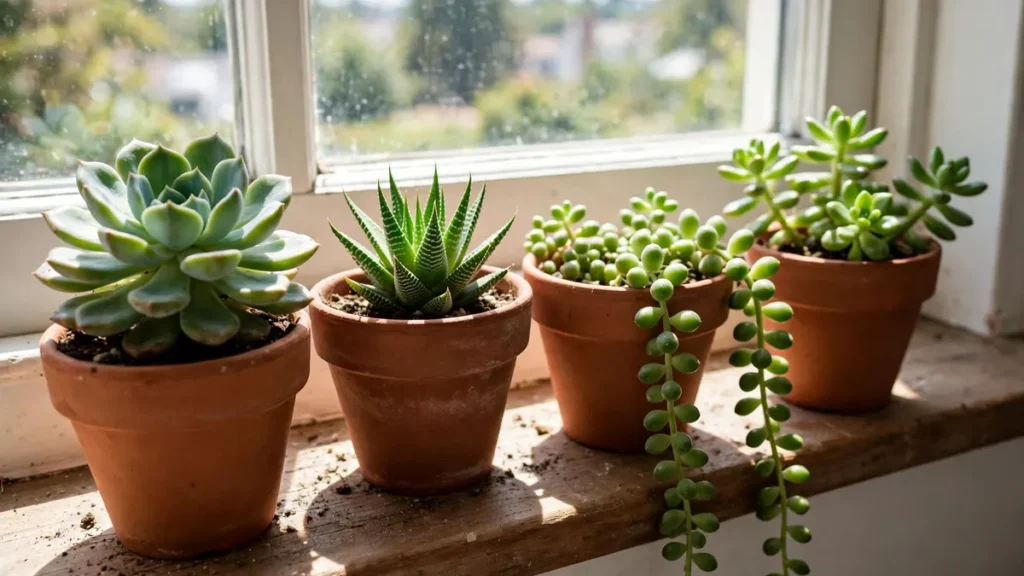
A succulent is any plant that stores water in fleshy leaves, stems, or roots. Echeveria, jade plants, haworthia, aloe, and burro’s tail are all succulents, and cacti are a spiky subgroup of the same family. That water tank is why they survive neglect — and why they want bright light, fast-draining soil, and long dry spells between waterings, as our indoor plant care guide for beginners explains for houseplants in general.
Light: Give Them the Brightest Spot You Have
Light is the one thing succulents will not compromise on. Most types need at least four to six hours of bright light a day, and many do best with a few hours of direct morning sun. A south-facing windowsill is ideal; an east-facing one works well too. A north-facing window or a dark shelf is not enough, and the plant will tell you: it stretches tall and pale, with wide gaps between the leaves, reaching for light that is not there.
That stretched growth is called etiolation, and it is the most common sign of a light-starved succulent. Move the plant closer to the window, and rotate it a quarter turn every week so it grows evenly instead of leaning. If your only windows face north, a small grow light a few inches above the plant for twelve hours a day makes a real difference.
Soil and Pots: Drainage Comes First
Regular potting soil holds too much water for succulents. They need a gritty mix that dries out fast: two parts ordinary potting soil to one part perlite and one part coarse sand or fine gravel. You can also buy a ready-made cactus and succulent mix, which works well straight from the bag.
The pot matters just as much as the soil. Always use a pot with a drainage hole — no exceptions. Pretty pots without holes kill succulents quietly, because water pools at the bottom where you cannot see it. Terracotta is the best choice for beginners: the clay is porous, so it pulls moisture out of the soil and helps it dry between waterings. If you fall in love with a pot that has no hole, use it as a cover pot and keep the plant in a plain plastic nursery pot inside it, lifting it out to water and drain.

Watering: Soak, Then Wait
The golden rule of succulent care is soak and dry. Water thoroughly until it runs out of the drainage hole, then wait until the soil is completely dry all the way through before watering again. In a bright, warm room that might mean every two weeks in summer; in winter, once a month or even less is plenty. There is no fixed schedule — the soil tells you when.
Overwatering is the number one killer of succulents. The warning signs are soft, translucent, yellowish leaves that fall off at the lightest touch, and a stem that feels mushy at the base. If you catch it early, stop watering, let the soil dry completely, and remove any mushy leaves. If the stem is rotted through, cut off the healthy top, let the cut end dry for a few days, and replant it.
Feeding and Repotting
Succulents are light feeders. A weak dose of balanced liquid fertiliser — diluted to half the strength on the label — once a month in spring and summer is plenty. Skip feeding entirely in autumn and winter, when growth slows down. Repot every two to three years in spring, choosing a pot only slightly larger than the old one — a pot that is too big holds extra soil that stays wet for too long.
Propagation: Free Plants From One Leaf
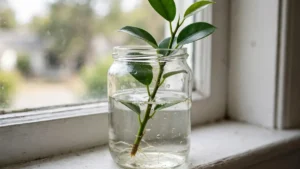
Propagation is where succulents really earn their reputation as beginner-friendly. Many types grow a whole new plant from a single leaf. Gently twist a healthy leaf off the stem — it should come away cleanly, with the base intact. Lay it on dry soil in bright, indirect light and leave it alone. In two to three weeks, tiny roots and a baby rosette appear at the leaf’s base. Mist the soil lightly every few days once roots show, and pot the new plant up when the mother leaf shrivels away. Stem cuttings work the same way, and our guide to the easiest plants to propagate for beginners covers more varieties that root just as easily.

Common Succulent Mistakes to Avoid
Most succulent problems come from a short list of mistakes, and all of them are fixable. Watering on a calendar instead of checking the soil is the biggest one — your plant does not care what day it is. Using a pot without drainage is a close second. Keeping a succulent in a dark room because it “looks nice there” is third; a plant that is stretching and losing its colour is asking for more light.
Misting is another common error. Succulents do not need misting, and wet leaves invite rot and fungal spots. They are desert plants, not tropical ones, and they are happiest in ordinary dry indoor air. A few dried lower leaves are normal — succulents naturally shed their oldest leaves as they grow. A soft, yellow, translucent leaf is not: that is overwatering, and it means the watering can stays away until the soil is dry.
Succulents Indoors and Out
Indoors, succulents suit sunny windowsills, kitchen counters near a bright window, and desks that get morning sun. Outdoors, they thrive in rock gardens, sunny containers, and hanging baskets, as long as the soil drains and the pot never sits in standing water after rain. In cold climates, bring tender succulents like echeveria and jade inside before the first frost — most cannot survive freezing temperatures.
Succulents also make excellent companions for other low-maintenance displays. A shallow dish garden of mixed succulents, or a succulent tucked into an open terrarium with cacti, looks beautiful and needs almost the same care. If you like enclosed plant displays, our terrarium care guide explains how to keep glass gardens healthy without overwatering them.

The Simple Routine That Works
Succulent care really does come down to a short routine: the brightest spot you have, gritty soil in a pot with a drainage hole, a thorough soak only when the soil is fully dry, and no food in winter. Check your plants once a week, but water only when they need it — most weeks, that will mean doing nothing at all. Give them sun, drainage, and restraint with the watering can, and they will reward you with years of slow, steady, almost effortless growth.