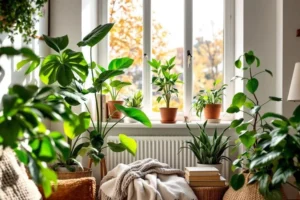
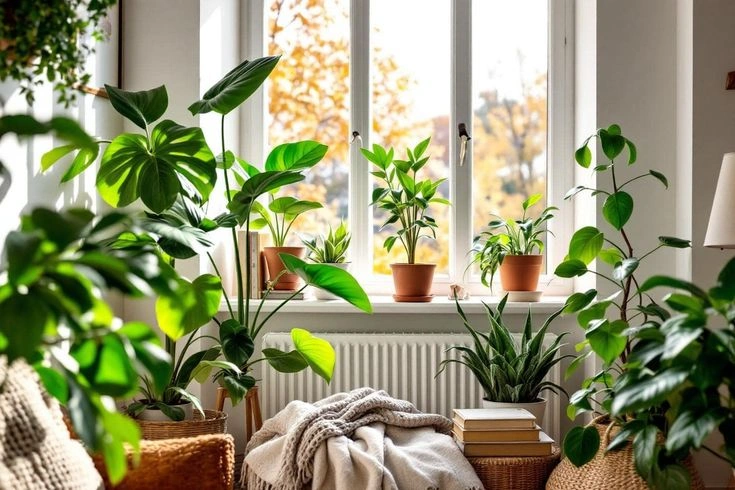
If your home feels a little too plain, you do not always need new furniture, expensive décor, or a complete makeover. Sometimes, one tall, leafy plant can change the whole mood of a room. The right Indoor Trees can add height, texture, softness, and that relaxed botanical feeling that makes a space feel more alive.
Large houseplants also help fill awkward corners, frame windows, and create a natural focal point without making the room feel overly decorated. Some varieties have broad dramatic leaves, while others bring a lighter, more tropical look.
The seven plants below are especially useful when you want your home to feel more like a private botanical retreat. They each have a different personality, so choosing one is less about finding a universally “best” plant and more about matching the plant to your room, available light, and care routine.
Key Takeaways
- Fiddle leaf fig brings dramatic, oversized foliage and an elegant vertical shape.
- Rubber plant offers glossy leaves and a polished, modern appearance.
- Bird of paradise creates a strong tropical atmosphere.
- Kentia palm gives rooms a softer, airy botanical feeling.
- Money tree adds character through its distinctive trunk and foliage.
- Umbrella tree creates a full, rounded canopy but requires pet-safety consideration.
- Dragon tree works well when you want height and a clean architectural shape.
- The right indoor tree depends on your available light, room size, care routine, and household needs.
What Makes Indoor Trees Feel So Special?
The appeal of indoor trees is their scale. Small houseplants decorate a shelf, but a tree-like houseplant can become part of the room itself.
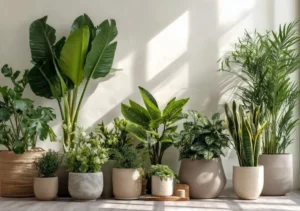
A tall plant beside a sofa can soften hard furniture lines. One placed near a bright window can create a natural frame. Even an empty corner can become intentional when a leafy plant fills it.
Many indoor trees also work beautifully with simple interiors because their foliage becomes the decoration. You can keep the surrounding furniture minimal and let the plant provide the visual interest.
The important thing is to choose a plant that suits the conditions you actually have. Indoor palms, for example, generally prefer bright filtered light, while some types such as kentia palms can tolerate relatively low-light conditions.
1. Fiddle Leaf Fig
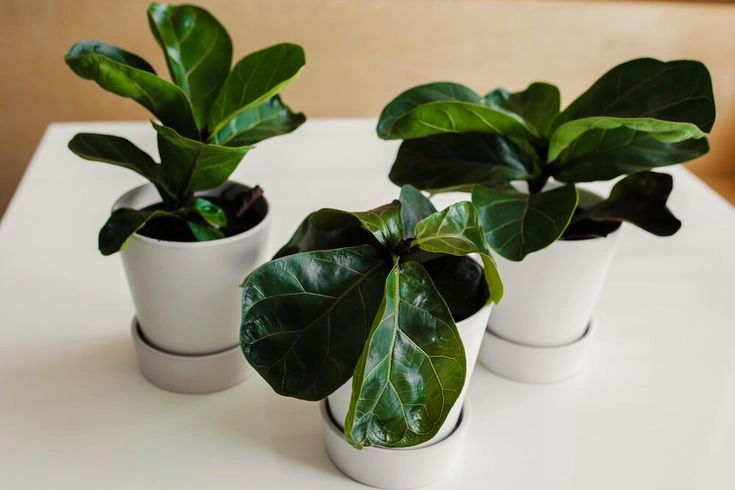
Few houseplants create a statement quite like the fiddle leaf fig. Its large, violin-shaped leaves instantly give a room a more sophisticated and architectural appearance.
It works particularly well in living rooms, reading corners, and bright bedrooms where its height can be appreciated without competing with too many other decorative elements.
Why It Looks Like a Botanical Retreat
The leaves are the main attraction. Their large size gives the plant a lush appearance, while the upright growth habit creates height without taking up an enormous amount of floor space.
Place it in a bright position with plenty of indirect light and avoid constantly moving it around. A fiddle leaf fig generally prefers consistency, so finding a suitable spot and allowing it to settle can make plant care much easier.
2. Rubber Plant

The rubber plant is a great choice when you want something bold without making the room feel wild. Its thick, glossy leaves give it a polished appearance, and mature plants can develop into impressive indoor trees.
Why It Works in Modern Homes
Rubber plants look especially good beside neutral furniture, wooden surfaces, and simple décor. Their broad leaves provide contrast against straight architectural lines, making an otherwise plain corner feel deliberately styled.
If you want a large plant but do not want a complicated-looking jungle effect, this is an easy direction to explore. Give it suitable bright, indirect light and avoid keeping its soil constantly saturated.
3. Bird of Paradise

Want your living room to feel like a tropical escape? The bird of paradise is one of the easiest choices for creating that atmosphere.
Its large leaves have a dramatic, tropical character that instantly changes the visual energy of a space. A mature specimen can become a striking focal point beside a sofa or in an open corner.
Give It Room to Shine
Bird of paradise plants look better when they have breathing space. Instead of squeezing one between several smaller plants, let its large leaves become the main feature.
A bright room is usually the better setting for this type of statement plant. Rotate it occasionally so growth stays more balanced, but do not treat rotation as a substitute for adequate light.
4. Kentia Palm
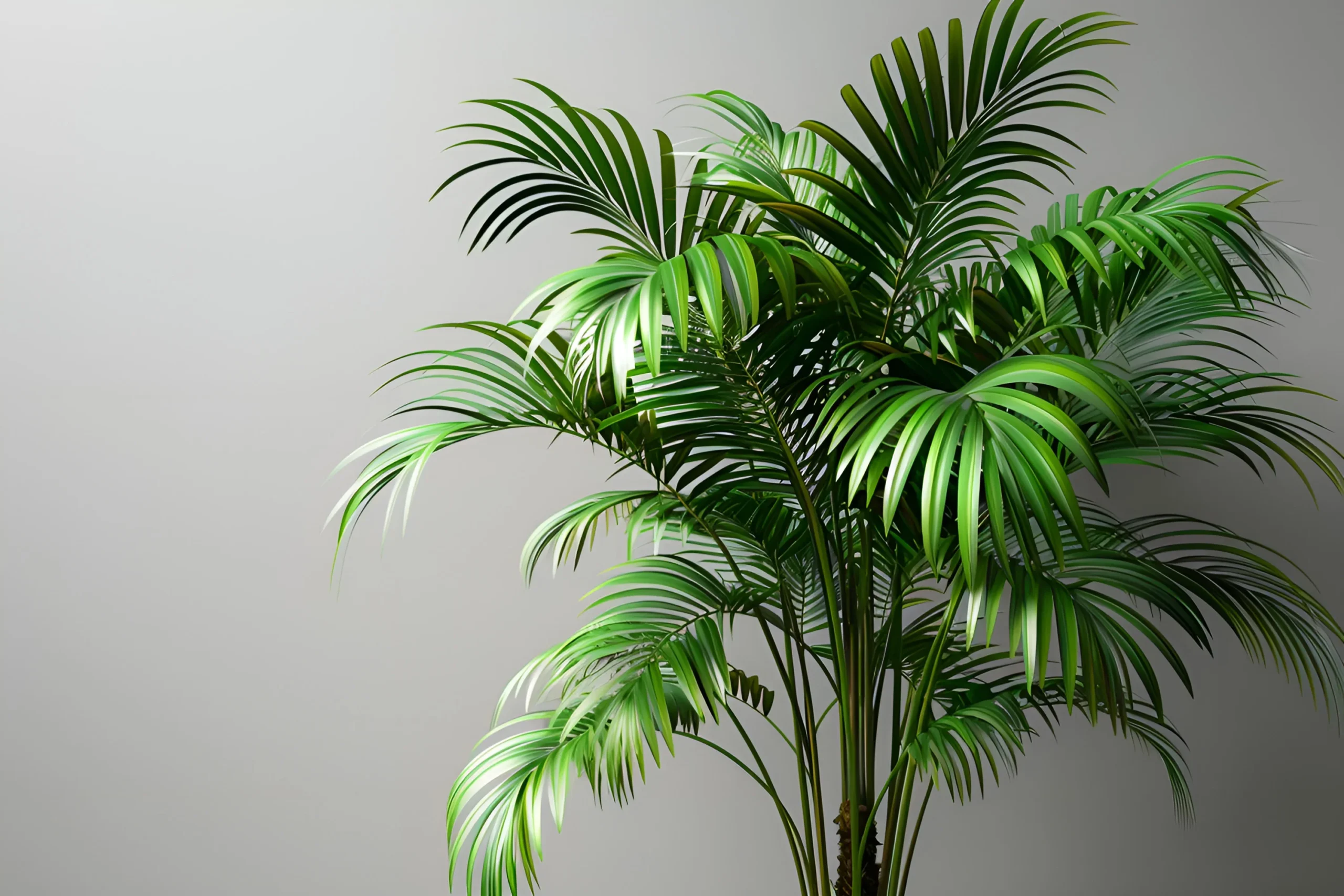
For a softer and more relaxed botanical look, the kentia palm is hard to overlook. Its long, arching fronds bring movement into a room without creating the heavy visual effect of extremely broad leaves.
The RHS notes that kentia palms are among the palms that can be relatively easy to grow indoors and can tolerate fairly low light compared with some other palm species.
The Perfect Relaxed Corner Plant
A kentia palm can work beautifully beside a lounge chair, near a doorway, or in a larger empty corner. Its narrow fronds create height while keeping the overall appearance airy.
It is also a useful option if you want tropical character without making your home look like a dense greenhouse.
5. Money Tree
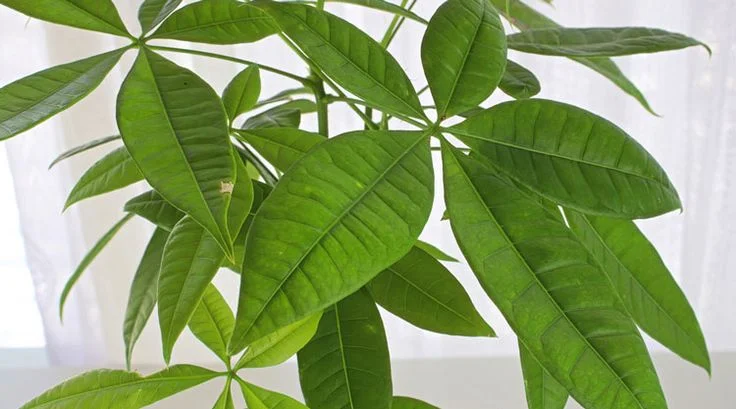
The money tree, commonly known as Pachira aquatica, brings a completely different look to an indoor collection. Its braided trunk and attractive foliage make it feel more like a small decorative tree than a conventional houseplant.
A Tree With Character
The trunk gives this plant much of its personality. Instead of relying only on large leaves, it combines an interesting structure with a leafy canopy.
It can work nicely in living rooms, home offices, and bright corners where you want something that looks decorative even from a distance. Let the growing conditions guide watering rather than following a rigid calendar, because indoor environments can dry at different rates.
6. Umbrella Tree
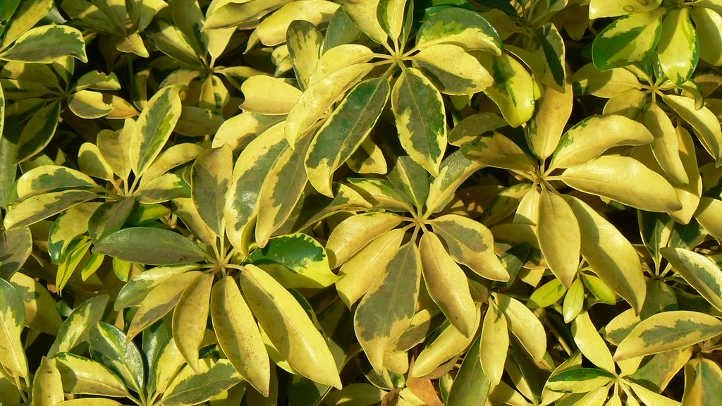
The umbrella tree, or Schefflera, has a distinctive leafy structure that can make a room feel fuller without requiring a massive plant.
Its leaves form clusters that create a rounded canopy, giving the plant a naturally decorative silhouette.
A Lush Look Without Overcomplicating the Room
An umbrella tree can be particularly useful when you want greenery to soften a modern interior. Its foliage provides plenty of texture, while its overall shape remains relatively clean.
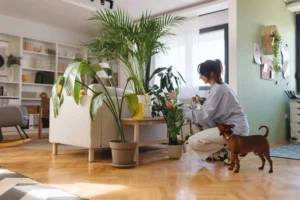
There is one important consideration for homes with pets: the ASPCA lists Schefflera as toxic to both dogs and cats and notes that ingestion can cause oral irritation and other symptoms.
If pets regularly chew plants, check plant safety before bringing this one home.
7. Dragon Tree
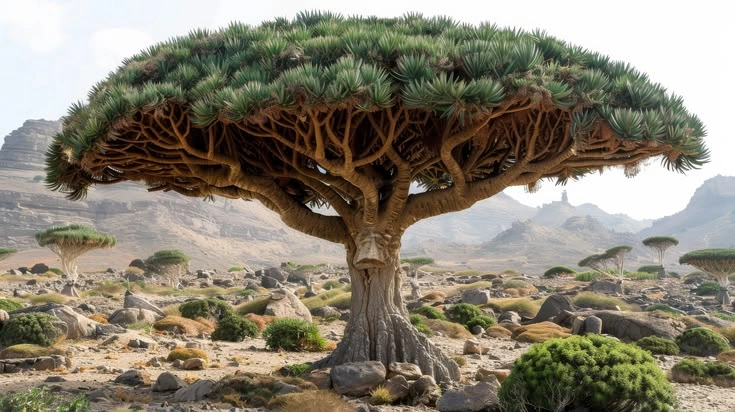
Dragon tree, commonly referring to Dracaena varieties, is another strong option for creating height. Its long, narrow leaves give it a more vertical appearance than plants with broad foliage.
Why It Looks So Clean
The dragon tree fits particularly well into contemporary spaces because its shape is naturally architectural. It can fill a narrow corner without visually overwhelming the room.
This makes it useful for apartments and smaller living areas where floor space matters. However, pet owners should check the exact variety before buying. ASPCA listings identify several Dracaena plants as toxic to dogs and cats.
How to Style Indoor Trees Like a Botanical Retreat
The secret is not simply buying seven large plants and placing them around the room. That can quickly make a space feel crowded.
Instead, think about height, spacing, and contrast.
Put one taller plant in a visually empty corner and allow the surrounding area to remain relatively open. Pair broad-leaf plants with finer foliage so every plant does not compete for attention.
Planters also matter. A simple ceramic, stone-look, woven, or matte planter can change how the same plant feels in a room. Choose containers that complement your existing furniture rather than trying to make every planter identical.
Another simple trick is to vary heights. One large indoor tree can anchor the room, while a smaller plant on a side table or shelf can create a gradual transition.
How to Keep Indoor Trees Looking Healthy
Beautiful indoor trees are not maintenance-free, but their care becomes much easier when you pay attention to what the plant is actually telling you.
Check the soil before watering instead of automatically watering on a fixed schedule. Look at the leaves regularly for discoloration, dryness, pests, or sudden changes in growth.
Light is equally important. A plant placed in a beautiful corner will not stay beautiful if that location does not provide the conditions it needs.
Also give large plants enough space. Crowded leaves have less room to develop naturally, and constantly brushing against furniture or walls can damage foliage.
Most importantly, resist the temptation to change everything at once. If a plant looks healthy, stable conditions are often preferable to frequent rearranging.
E-E-A-T Note
This guide focuses on practical indoor-plant selection rather than promising that one plant will work in every home. Plant-care recommendations should always be matched to the specific species, growing conditions, and environment. The plant characteristics and pet-safety information have been cross-checked against established horticultural and animal-safety sources, including RHS and ASPCA guidance.
For more plant inspiration and practical home greenery ideas, Peeacelily can help you explore ways to make indoor spaces feel naturally greener without turning them into cluttered plant collections.
FAQs
Which indoor tree is easiest for beginners?
Kentia palm, rubber plant, and some Dracaena varieties can be approachable choices, but “easy” depends on the light and conditions in your home. A plant that suits your room usually requires less troubleshooting than one placed somewhere unsuitable.
How many indoor trees should I have in one room?
There is no fixed number. Start with one statement plant and see how the room feels. A single large tree can have more visual impact than several plants packed together.
What is the best indoor tree for a small room?
Dragon tree can work well where floor space is limited because its growth habit is relatively vertical. A smaller rubber plant can also provide substantial foliage without requiring an enormous footprint.
Can indoor trees survive in low light?
Some can tolerate lower-light conditions better than others, but low light does not mean no light. Kentia palm is one example that can tolerate fairly low light compared with many other palms.
Are indoor trees safe for pets?
Not automatically. Some popular choices, including Schefflera and several Dracaena varieties, are listed as toxic to dogs or cats by the ASPCA. Always check the exact plant before bringing it into a pet-accessible room.
How can I make an indoor tree look more expensive?
Give it space, use a well-proportioned planter, and place it where its natural shape can be seen clearly. Good positioning often makes a bigger difference than buying an expensive plant or adding excessive décor.