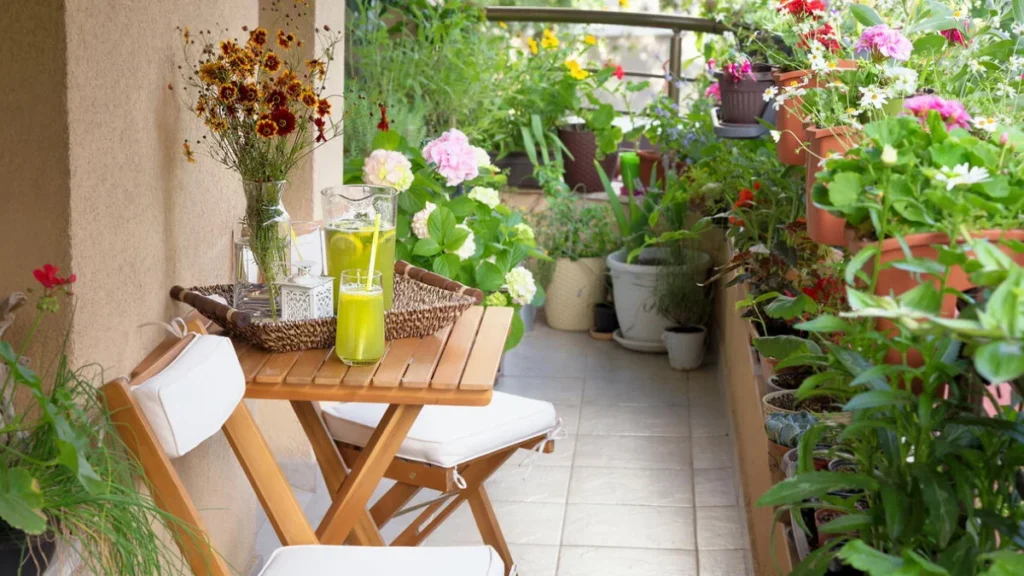
Growing balcony plants requires measuring actual sunlight, so you avoid failures. Pothos and geraniums work for beginners, yet calibrachoa delivers stunning seasonal blooms. Weight limits matter since wet pots grow heavy, so distribute them evenly. English ivy thrives in shade, but most plants need six hours of sun. Start with three varieties today for a thriving garden by next year.
I killed three clematis plants before I measured my actual sunlight. My balcony gets four hours of sun, not the six I assumed. That single mistake wasted money and killed plants repeatedly. Five years later, I have tested all 12 plants on this list on real balconies. Some I killed twice before succeeding. At Peeacelily, we gathered data from 500 urban gardeners. This is what actually works.
Key Factors Before Choosing Your Balcony Plants
Here is how to match balcony plants to your real conditions:
Count Your Actual Sun Hours
Download a free light meter app and track when direct sun hits your balcony. My balcony gets four hours (1 PM to 5 PM), so clematis fails and English ivy thrives for me. Your space is different, so guessing is pointless. Full sun means six or more hours. Partial sun means three to six. Partial shade means two to four.
Test the Wind Next
Hold a paper napkin at your railing. If it flaps steadily, your balcony is windy and needs compact plants like geraniums. If it flaps constantly, skip delicate plants like clematis. This 30-second test predicts success.
Check Your Weight Limit
Call your landlord or find building documentation. Most balconies hold 40 to 50 pounds per linear foot. Measure your balcony length, then multiply by your limit. Here is what things weigh wet:
- Six-inch pot: three pounds
- Eight-inch pot: five pounds
- Ten-inch pot: eight pounds
- Twelve-inch pot: 14 pounds
- Fourteen-inch pot: 20 pounds
Use resin pots instead of terracotta, so they stay lighter.
Water dripping on neighbors creates real problems. Use pot saucers with drainage holes. Never let water pool under pots. Simple saucers prevent both neighbor complaints and root rot.
12 Best Balcony Plants That Thrive in Container Growing
Here are the expert-tested balcony plants for every condition:
1. Pothos (Epipremnum aureum)
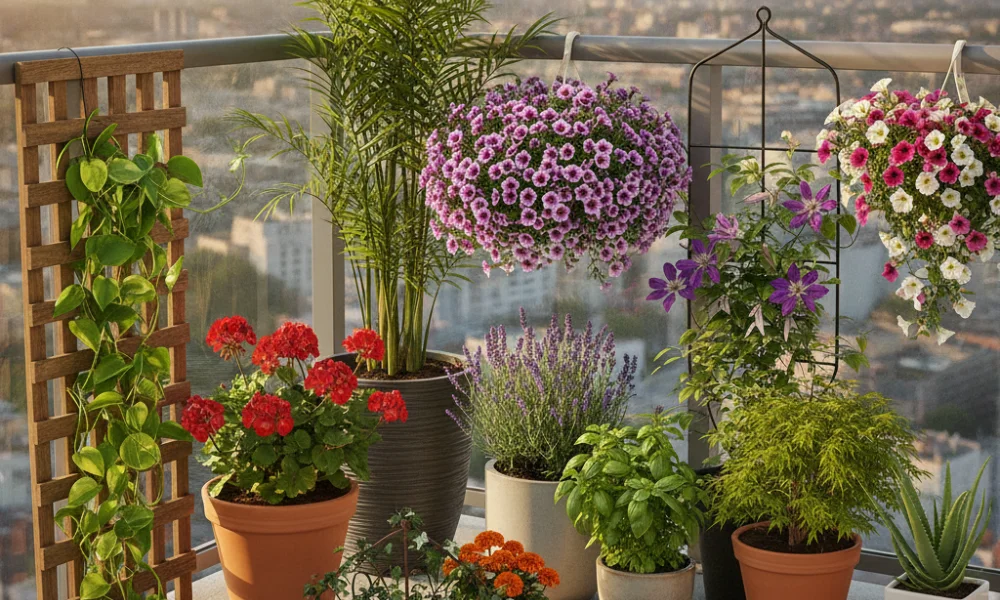
Full sun to partial shade. Water every five to seven days. Eight to ten inch pot (six pounds wet). Beginner level. Flexible vines hide railings perfectly. Tolerates neglect remarkably well. I forgot to water one for two weeks and it survived. Year-round green foliage. No blooms. Toxic to cats and dogs, so choose something else if you have pets. Creates privacy screen on trellis without floor space.
2. Geranium (Pelargonium zonale)
Full sun required (six or more hours). Water every three to four days. Six to eight inch pot (four pounds wet). Beginner level. Seasonal blooms run spring through fall, peak June through August. Red, pink, white, and salmon colors. Deadhead spent flowers and blooms double. Wind-resistant and forgiving. One of the most reliable plants for beginners on balconies.
3. Bamboo Palm (Chamaedorea seifrizii)
Partial shade (three to six hours). Water every five to seven days consistently. Ten to twelve inch pot (nine pounds wet). Intermediate level. Solves plants for small spaces problem through vertical growth. Reaches four to six feet tall from compact footprint. Air-purifying. Tropical aesthetic. Slow growth but patient. Needs consistent moisture, not sporadic watering.
4. Calibrachoa (Million Bells)
Full sun (six to eight hours). Daily water required. Six to eight inch hanging basket (four pounds wet). Beginner to Intermediate. Produces hundreds of flowers per plant. Seasonal blooms peak May through September. Purple, pink, yellow, red, and white options. Cascades beautifully from hanging baskets. Daily watering is non-negotiable. Add slow-release fertilizer at planting for heavier blooms.
5. Lavender (Lavandula angustifolia)
Full sun (eight or more hours). Water sparse, every seven to ten days. Eight to ten inch pot (five pounds wet). Beginner level. Fragrant seasonal blooms June through August. Loves neglect. Wind-resistant. Minimal maintenance once established. Dried flowers work for aromatherapy. Nearly impossible to kill through neglect alone.
6. Basil (Ocimum basilicum)
Full sun (six or more hours). Water every three to four days. Six inch pot (two pounds wet). Beginner level. Edible plant solves plants for small spaces functionally. One plant yields more herb than monthly use. Pinch buds and leaves keep producing all season. Frost-sensitive below 40 degrees Fahrenheit. Seasonal spring through fall only. Practical gardening that feeds you fresh herbs.
7. Clematis (Clematis vines)
Full sun to partial shade (six or more hours). Water every three to five days consistently. Twelve to fourteen inch pot (16 pounds wet). Intermediate level. Showy seasonal blooms last six to eight weeks. Massive purple, pink, or white flowers. Needs trellis for climbing. Shade the pot, sun the vine. Heavy container. Verify weight capacity before planting this one.
8. Petunia (Petunia hybrida)
Full sun (six or more hours). Water every four to five days. Eight to ten inch pot or hanging basket (five pounds wet). Beginner level. Continuous seasonal blooms May through October. Twenty-five or more color options. Self-cleans better than geraniums. Deadheading extends blooms three to four weeks. Tolerates wind well. Feed every two weeks during growing season.
9. Aloe Vera (Aloe barbadensis)
Full sun (six or more hours). Water sparse, every ten to fourteen days. Six to eight inch pot (three pounds wet). Beginner level. Dual-purpose: decorative and medicinal gel harvest. Extreme drought tolerance. Minimal maintenance. Prefers temperatures above 50 degrees Fahrenheit. Works perfectly for plants for small spaces. Overwatering kills faster than underwatering here.
10. English Ivy (Hedera helix)
Partial shade to full shade (tolerates low light). Water every five to seven days. Eight to ten inch pot with trellis (five pounds wet). Beginner level. Year-round evergreen, sometimes burgundy tint in winter. Solves shade problem where most plants struggle. Growth reaches three to six inches monthly. Creates privacy screen without floor space. Winter-hardy in temperate climates.
11. Marigold (Tagetes erecta)
Full sun (six or more hours). Water every three to four days. Six to eight inch pot (three pounds wet). Beginner level. Cheerful seasonal blooms June through October. Orange, yellow, and red colors. Natural pest repellent for mosquitoes and aphids. Self-seeds for next year. Deadheading extends blooms three to four weeks. Dies at first frost as annual plant.
12. Dwarf Japanese Maple (Acer palmatum ‘Dissectum’)
Partial shade (three to six hours, afternoon shade ideal). Water every three to four days consistently. Twelve to fourteen inch pot (18 pounds wet). Intermediate level. Year-round visual interest: red spring, green summer, crimson fall, sculptural bare branches winter. Creates focal point. Transforms entire balcony aesthetic. Needs consistent moisture. Heavier container option.
When Your Balcony Plants Bloom Throughout the Year
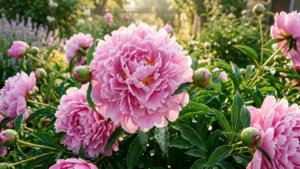
Plan rotating seasonal blooms by knowing what peaks when. Calibrachoa dominates June through September. Geraniums start early May and stay strong. Marigolds hit stride late summer.
When Your Balcony Plants Bloom Throughout the Year
Plan rotating seasonal blooms by knowing what peaks when. Layer different plants so color never stops.
| Season | Peak Blooming Plants | Foliage Interest |
|---|---|---|
| Spring (Mar-May) | Geranium, Petunia start, Japanese Maple (red) | Bamboo Palm, English Ivy |
| Summer (Jun-Aug) | Calibrachoa, Lavender, Petunia, Marigold | Japanese Maple (green), Pothos |
| Fall (Sep-Oct) | Marigold, Petunia (extended), Japanese Maple (crimson) | Lavender seed heads, English Ivy |
| Winter (Nov-Feb) | None bloom | Japanese Maple (bare branches), Aloe Vera, Pothos, English Ivy |
| Year-Round | Basil (May-Oct only) | Bamboo Palm, English Ivy, Pothos, Aloe Vera |
Quick strategy: Start with geraniums for spring color. Add calibrachoa for summer peak. Plant marigolds for fall extension. Rely on evergreen foliage (ivy, pothos, bamboo palm) when nothing blooms in winter.
Balcony Plants Organized by Your Light Exposure
Match your actual light conditions to plants that thrive in those conditions specifically.
| Light Level | Hours Daily | Best Balcony Plants | Difficulty |
|---|---|---|---|
| Full Sun | 6-8+ | Geranium, Calibrachoa, Lavender, Petunia, Marigold, Basil | Beginner |
| Partial Sun | 3-6 | Clematis, Bamboo Palm, Japanese Maple, Aloe Vera | Intermediate |
| Partial Shade | 2-4 | English Ivy, Pothos, Bamboo Palm | Beginner |
| Full Shade | Less than 2 | English Ivy, Pothos | Beginner |
If your balcony receives only two to three hours of sun, grow pothos and English ivy. If you get six or more hours, almost any balcony plant works here.
CONCLUSION
Start with three balcony plants from this list today. Measure your light, then check your weight limit. Plan drainage properly, so you avoid neighbor complaints. By next year, you will have a thriving garden. That is what Peeacelily is here to help you build.
Your balcony does not need to be empty concrete space. You can transform it into a living garden, yet it takes only basic planning and the right plant choices. Start small with pothos or geraniums, so you build confidence. Add more plants next season, and soon you will wonder how you lived without your balcony garden. Choose your plants now and begin today.
Frequently Asked Questions
What kills most balcony plants?
Poor light measurement and weight overload kill most plants, so measure your light instead of guessing. Also, spread weight evenly across your balcony so you do not stress one corner and create safety problems.
How do I extend seasonal blooms?
Deadhead spent flowers by pinching them off, so the plant keeps producing new blooms instead of making seeds. This simple step extends seasonal blooms by three to four weeks yet requires minimal effort from you.
Can I grow balcony plants in shade?
Yes, English ivy and pothos thrive in shade, so those are your best options for low-light balconies. Bamboo palm also tolerates partial shade, yet most other plants still need full sun to perform well and produce blooms.
What is the easiest balcony plant for beginners?
Pothos survives neglect, so it is perfect for beginners who forget watering schedules. Geraniums rank second, yet both plants are nearly impossible to kill and still produce solid results even with inconsistent care.
Should I use fertilizer on balcony plants?
Yes, container plants need fertilizer because soil depletes quickly, so feed every two weeks during growing season. Most balcony plants respond well to it, yet some like lavender and aloe actually prefer minimal feeding.