A schefflera that has grown tall and leggy is not a problem to fix — it is raw material for new plants. One healthy umbrella tree can give you several cuttings, and most of them will root if you take them at the right time and keep them warm and humid. This guide covers the three methods that actually work for schefflera: stem cuttings in water, stem cuttings in soil, and air layering for the thickest stems.

When to Propagate a Schefflera
Late spring and early summer are the best times to propagate a schefflera. The plant is pushing out new growth, daylight is long, and a cutting taken in May can be a rooted, potted plant by late summer. Warmth matters more than the calendar: cuttings root fastest when the room stays above 20°C.
The other good moment is when your plant outgrows its space. A dwarf umbrella tree with a bare lower stem and a tuft of leaves at the top is a perfect candidate — cut the top off and root it, and the old stem will usually sprout new shoots below the cut. Only propagate from a healthy plant. A stressed parent gives weak cuttings that are far more likely to rot than to root, so feed and water the parent well for a few weeks first if it looks tired.
What You Will Need
Propagation needs very little equipment, but clean tools matter: a dirty blade spreads disease, and a blunt one crushes the stem instead of slicing it.
Method 1: Stem Cuttings in Water
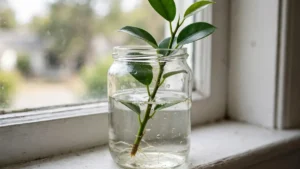
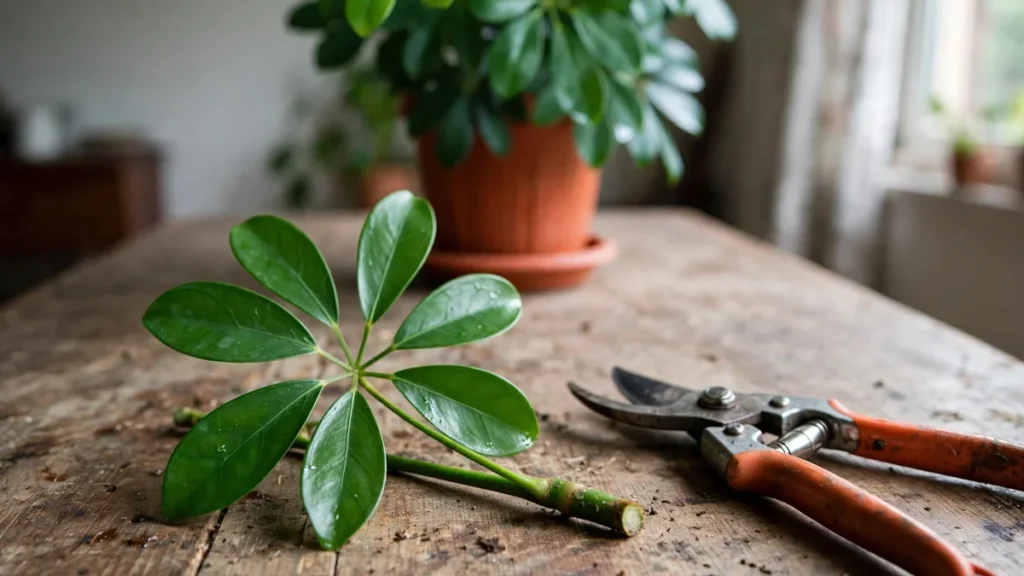
Water propagation is the easiest way to start, and the most satisfying, because you can watch the roots grow. Choose a healthy stem about 15 centimetres long with at least two sets of leaflets. Cut just below a leaf node — the slightly swollen ring on the stem where leaves join — because roots form most readily there. Strip off the lowest leaflets so no leaves sit under the water, where they would rot.
Stand the cutting in a jar of room-temperature water so the lowest node is submerged, and put the jar in bright, indirect light. Change the water every few days to keep it fresh. You should see small white roots in two to four weeks. Wait until the roots are at least 5 centimetres long before potting up; roots that are too short struggle in soil, while roots left in water for months grow weak and water-adapted.

Method 2: Stem Cuttings in Soil
Soil cuttings take a little more patience but skip the shock of moving from water to soil, so the finished plant is often stronger. Take a cutting the same way — 15 centimetres, cut below a node, lower leaflets removed — and dip the cut end in rooting hormone if you have it. Push the cutting about 5 centimetres into a small pot of moist, free-draining mix, half potting soil and half perlite, and firm it gently so it stands upright.
Water lightly, then cover the pot with a clear plastic bag propped up on sticks so it does not touch the leaves. This keeps the air humid while the cutting has no roots to drink with. Put it in bright, indirect light and check the soil every few days: it should stay lightly moist, never soggy. Roots usually form in four to eight weeks. Test by tugging very gently — resistance means roots have formed. Once new leaves appear, remove the bag gradually over a week so the young plant hardens off to normal room air.
Method 3: Air Layering a Thick Stem
Air layering is the best option for a tall, woody schefflera whose stems are too thick for a normal cutting. It roots the stem while it is still attached to the parent, so the cutting keeps getting water and food the whole time. Pick a healthy stem and make a shallow upward cut about a third of the way through it, just below a leaf node. Wedge the cut open with a small piece of toothpick or a pinch of sphagnum moss so it cannot heal shut.
Pack a generous handful of damp sphagnum moss around the cut, wrap it in cling film, and tie both ends with string so the moss stays moist. Check it every week or two and mist the moss if it dries out. In six to ten weeks you should see roots pressing against the film. Once the moss is full of roots, cut the stem just below the rooted section and pot it up like a normal plant. The stump left behind will usually sprout new shoots within a few weeks.

Water vs Soil: Which Should You Choose?
Water is faster to start and lets you see progress, which makes it the best choice for a first attempt. Soil gives you a stronger plant in the end, because the roots grow in the medium they will live in and never have to adapt. Air layering is the slowest method, but it is the most reliable for thick, woody stems.
A practical approach is to take two cuttings and try one in water and one in soil. If one fails, the other usually succeeds. Our guide to propagating indoor plants from cuttings covers the shared rules on timing, node placement and aftercare, and our water propagation guide covers the jars, water changes and potting-up step in detail.
Aftercare for New Plants
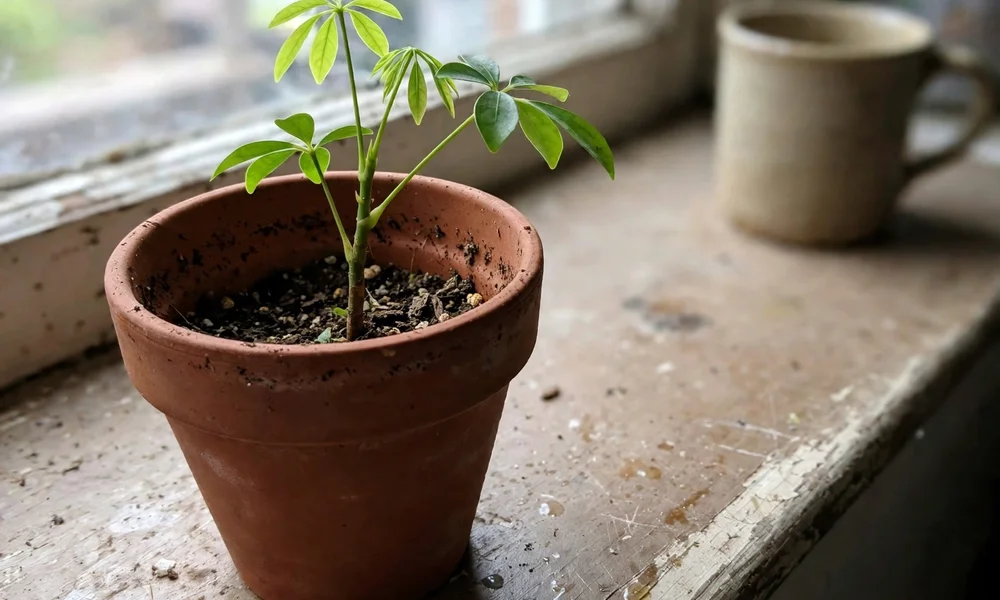
A newly potted schefflera cutting is still fragile. Keep it in bright, indirect light for the first month — direct sun will scorch leaves that grew in shade or water. Water when the top 2 centimetres of soil feel dry, and hold off feeding for six to eight weeks until the roots are established. Do not repot again for at least a few months; the plant needs time to fill its first pot before it is moved.
Variegated scheffleras need extra light to keep their cream or gold markings, so give a variegated cutting the brightest indirect spot you have. If new leaves come through plain green, move it closer to the window. If you are still deciding which type to grow, our schefflera varieties roundup compares the twelve most common forms, from the classic umbrella tree to the compact variegated types.
Why Cuttings Fail (and How to Fix It)
Rot is the most common failure, and it almost always means the cutting was too wet or the water was stale. Cut away any black, mushy stem back to firm green tissue, let the cut end dry for an hour, and start again in fresh water or drier mix. A cutting that wilts usually needs more humidity — cover it with a bag and move it out of direct sun.
A cutting that sits for months without rooting is usually too cold or was taken from old, woody growth. Try again in late spring with a younger, greener stem, and keep the pot somewhere warm. Do not give up on a cutting too soon: schefflera is a slow rooter, and eight weeks without visible roots is normal in soil. Patience, warmth and clean water solve most propagation problems.