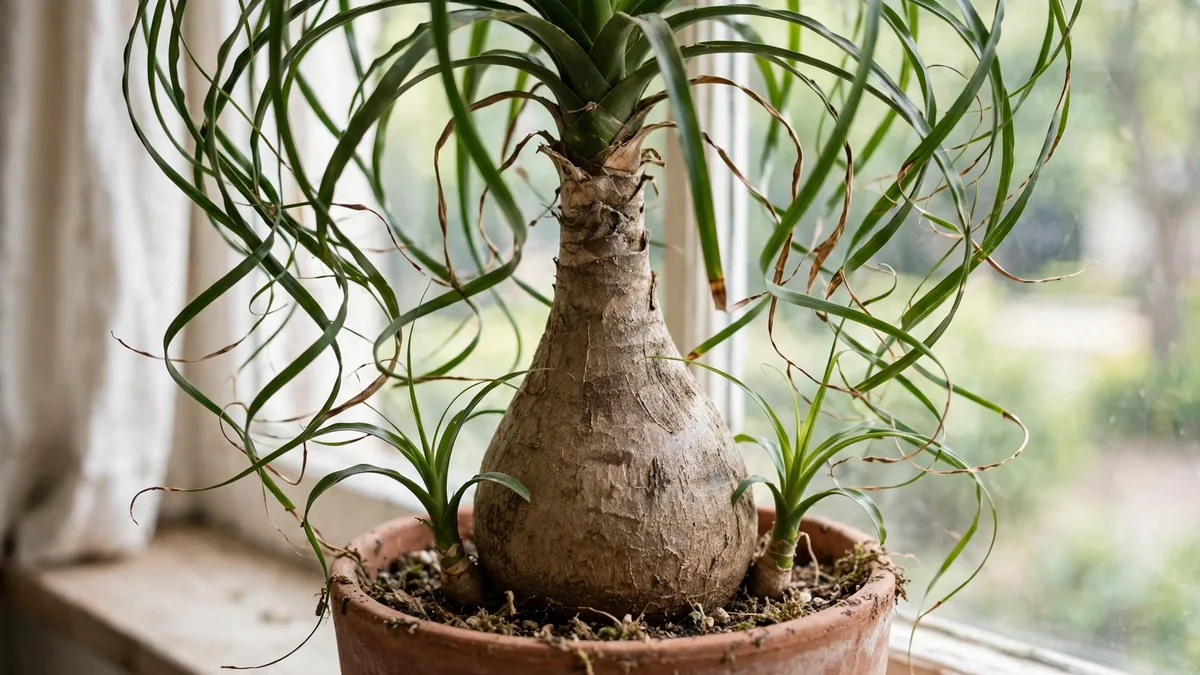
Most people meet the ponytail palm as a single plant: a fat, bottle-shaped trunk topped with a wild fountain of curly green leaves. But that familiar houseplant is only one version of the story. The Beaucarnea family holds several species, and growers have shaped them into just as many forms, from stiff upright types that look almost architectural to tiny tabletop plants that fit on a bookshelf. All of them share the same easy-going nature and the same swollen base that stores water. What changes is the shape of the leaves, the size of the trunk, and the space each one needs. Here are twelve ponytail palm varieties worth growing, from the classic to the rare.
The species worth knowing
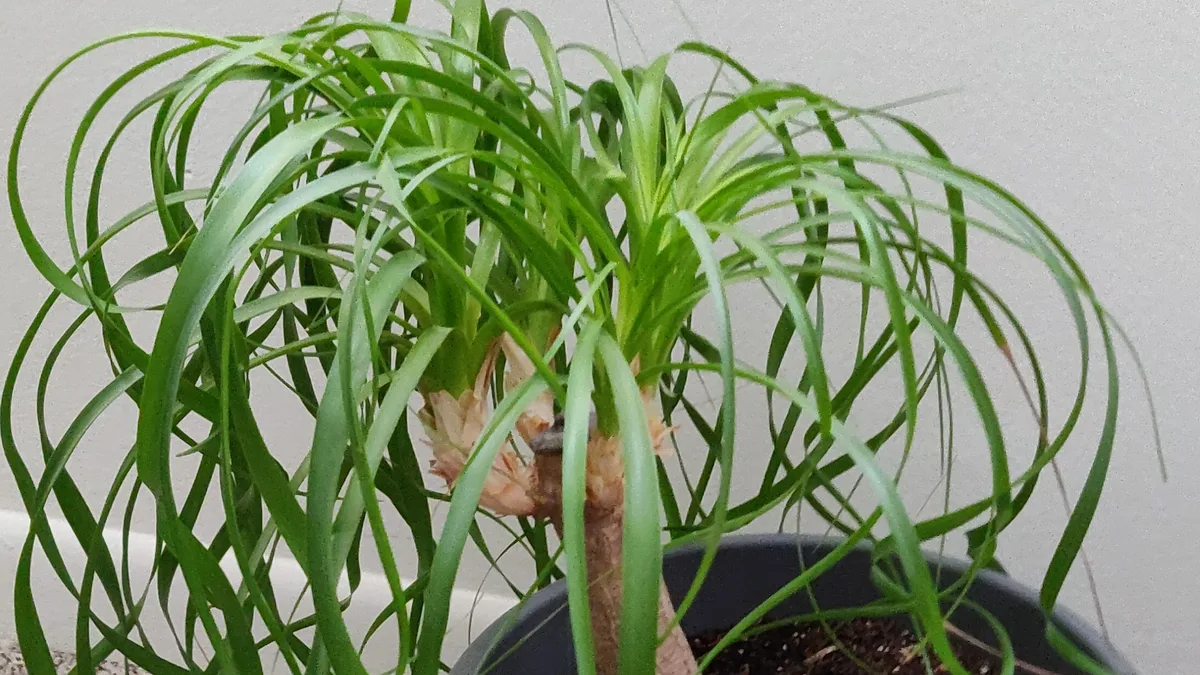
1. Classic Ponytail Palm (Beaucarnea recurvata). The one in nearly every plant shop, and still the best place to start. Its trunk swells into a round, bottle-like base, and its long leaves curl and cascade like a ponytail, hence the name. Indoors it usually reaches 90 centimetres to 1.2 metres, though it grows slowly and can live for decades. The leaves are soft, narrow, and slightly rough along the edges. Give it the brightest spot you have and it will stay compact and full.
2. Mexican Ponytail Palm (Beaucarnea stricta). The stricter, more upright cousin. Its leaves stand straighter and stiffer than the classic type, with a grey-green colour and a more formal, spiky silhouette. The trunk is often greyer and more deeply cracked, and the whole plant reads as tougher and more sculptural. It suits a modern room or a sunny corner where the classic type might look too soft and floppy.
3. Red Ponytail Palm (Beaucarnea guatemalensis). The showiest of the species, with leaves that carry a reddish or pinkish tinge along their edges, strongest in bright light. The leaf tips often blush red as they age, which makes the whole crown look warmer than the plain green types. It grows a little faster than the classic ponytail palm and can get tall, so it needs a room where it has space to spread its crown.
4. Slender Ponytail (Beaucarnea gracilis). A finer, more delicate plant in every way. The trunk stays slimmer, the leaves are thinner and more grass-like, and the crown looks airier than the classic type. It is a good pick for a smaller room or a narrow shelf, because it gives you the ponytail palm look without the heavy bottle base. It is less common in shops, so finding one feels like a small win.
5. Goldman’s Ponytail (Beaucarnea goldmanii). The big one. In warm climates this species grows into a proper small tree, several metres tall, with a thick trunk and a wide crown. As a houseplant it stays smaller, but it still grows faster and larger than the classic type, so it suits someone with a bright conservatory or a large living room. Its leaves are broader and its presence is bolder than the other species.
6. Soft-Leaf Ponytail (Beaucarnea pliabilis). The gentlest of the group, with leaves that are softer, smoother, and more flexible than the classic type. They arch and flop rather than standing stiff, which gives the plant a relaxed, flowing look. It is one of the easiest to live with if you have children or pets brushing past it, because the leaf edges are far less rough. It stays a medium size indoors.

Shapes and forms to look for
7. Dwarf Tabletop Ponytail. Not a separate species, but a young classic ponytail palm grown small in a 10 to 15 centimetre pot. The trunk is a neat round bulb, the leaves are short and curly, and the whole plant fits on a desk or a windowsill. It grows very slowly at this size, so it keeps its shape for years. It is the best version to buy if you want to try the plant before committing to a floor-sized one.
8. Multi-Headed Ponytail. A mature plant that has branched, or been pruned, into two or more crowns from one trunk. Each head carries its own fountain of leaves, so the plant looks fuller and more tree-like than a single-crown plant. Multi-headed plants cost more because they take years to develop, but they are the most impressive ponytail palms you can buy for a living room.
9. Braided Ponytail Palm. Three young plants with their trunks braided together while still flexible, then grown on as one. The woven trunk looks striking, and the three crowns at the top make a full, balanced shape. Braided plants need a little more attention than single plants, because the three stems share one pot and compete for water, but the effect is worth it as a statement piece.
10. Bonsai Ponytail Palm. A classic ponytail palm trained as a bonsai, with a short, fat trunk and a carefully shaped crown in a shallow pot. The swollen base already looks like a miniature tree trunk, which is why this plant takes to bonsai styling so well. It grows slowly, needs only occasional shaping, and makes a fine gift for someone who likes small, sculptural plants.
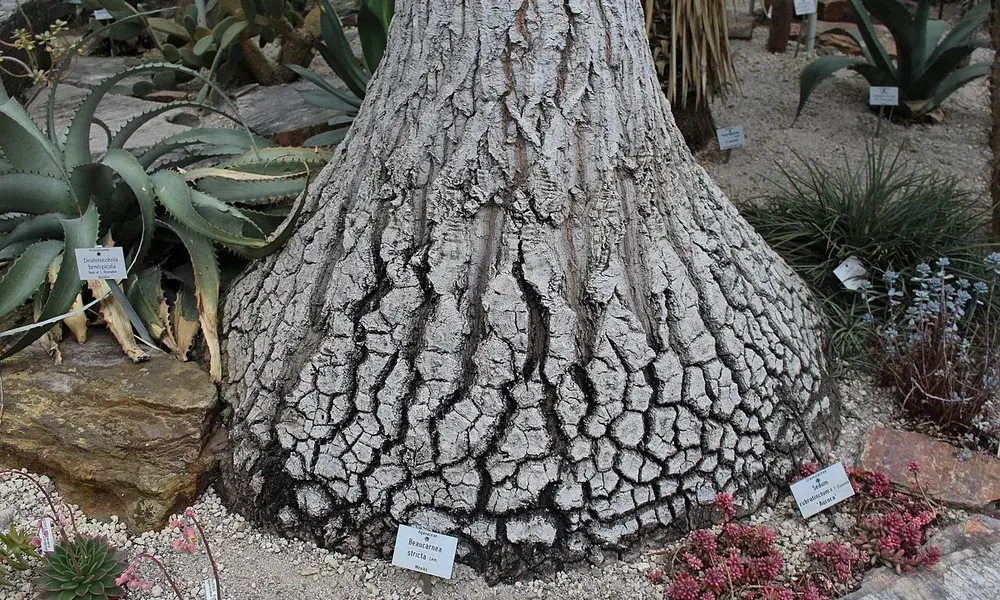
11. Landscape Ponytail Palm. The same classic species, grown outdoors in a warm climate until it becomes a small tree. Outdoors it can reach 4 to 6 metres, with a trunk as thick as a person’s waist and a crown you can stand under. Indoors you will never see this size, but it is useful to know what the plant is capable of, because it explains why even a potted one likes a big pot and a bright window as it ages.
12. Rare Beaucarnea (Beaucarnea sanctomariana). A seldom-seen species from Mexico with narrower, darker leaves and a slimmer trunk than the classic type. You will rarely find it in a garden centre; it turns up in specialist collections and botanical gardens. It grows slowly and stays neat, which makes it a good collector’s plant if you already own the common types and want something different.

Which one should you choose?
If you want one plant and no fuss, buy the classic Beaucarnea recurvata — it is the most forgiving and the easiest to find. Pick the Mexican type if you like stiff, architectural shapes, the red type if you want colour, and the dwarf tabletop form if you are short on space. The multi-headed and braided forms are the ones to buy when you want a centrepiece rather than a background plant. Whatever you choose, remember what all of them have in common: they store water in that swollen base, so they cope with dry air and missed waterings better than most houseplants. That is why they sit so comfortably on lists of drought tolerant plants, and why they are such a safe first plant — they appear on nearly every roundup of the easiest indoor plants to take care of. Start with the classic, and once you see how little it asks of you, the rarer types start to look very tempting.