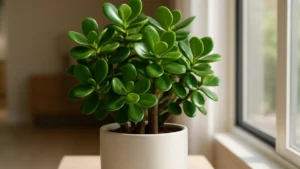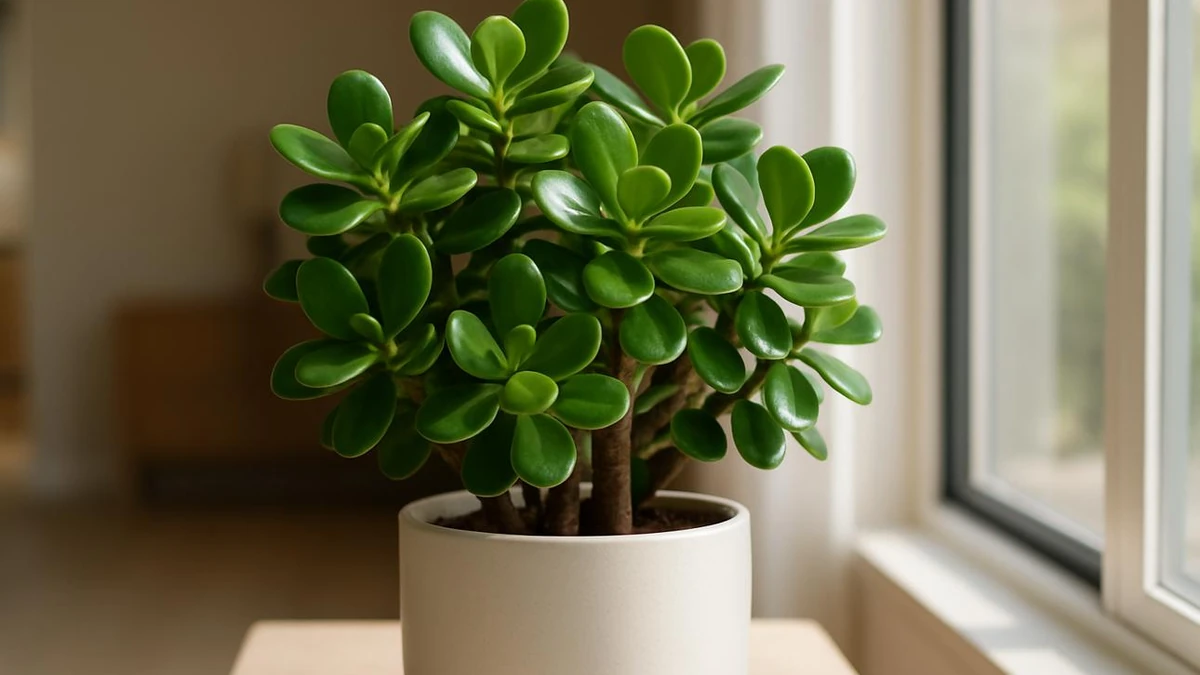
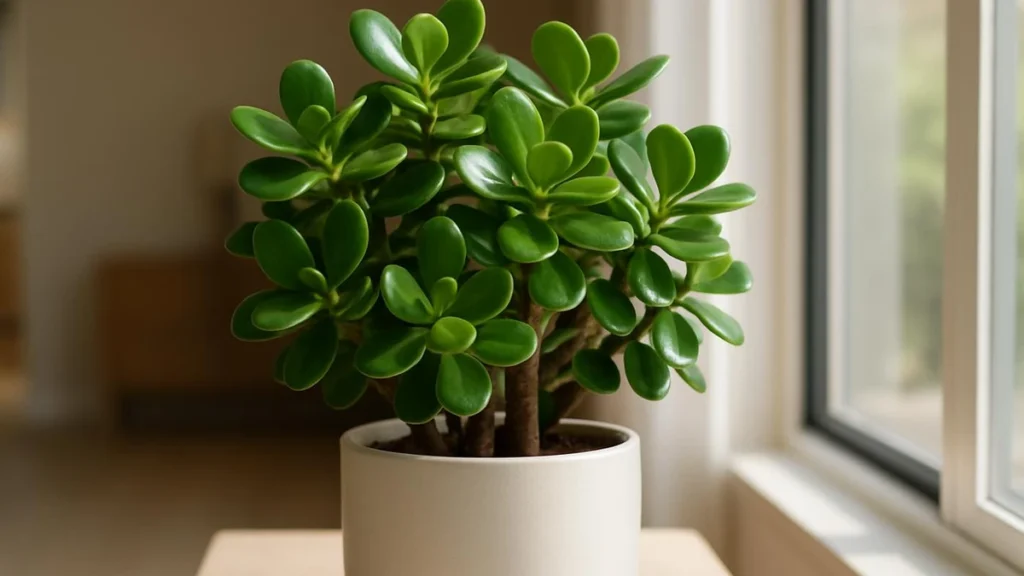
The jade plant (Crassula ovata) is a popular succulent known for its thick, fleshy leaves, sturdy stems, and low-maintenance nature. With plenty of bright light, well-draining soil, and careful watering, a jade plant can thrive indoors for many years.
Jade Plant Care at a Glance
- Light: Bright light with several hours of gentle direct sunlight
- Water: Water thoroughly when the soil has dried out
- Soil: Well-draining cactus or succulent mix
- Temperature: Around 65–75°F (18–24°C) during the growing season
- Humidity: Average indoor humidity is usually suitable
- Growth: Slow to moderate
- Toxicity: Toxic to cats and dogs if ingested
How Much Light Does a Jade Plant Need?
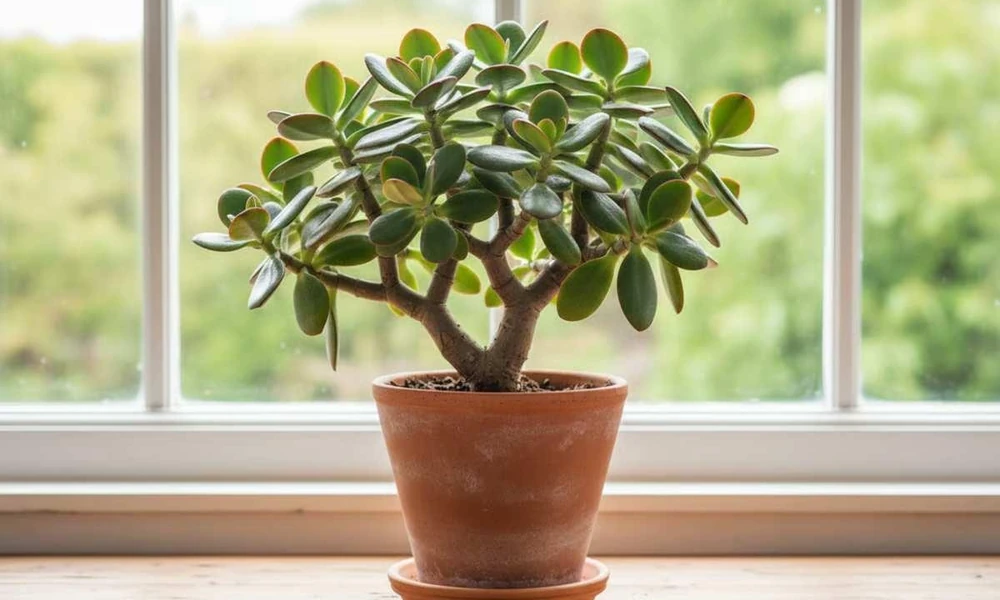
Jade plants grow best in bright light. A sunny south- or west-facing window can work well indoors, depending on the intensity of the sunlight and your climate.
Aim to provide several hours of direct sunlight each day when possible. If your plant has been growing in a dim location, introduce stronger sunlight gradually to prevent leaf scorch.
Insufficient light can cause elongated stems, widely spaced leaves, and weak growth. If the plant begins leaning toward a window, rotate the pot occasionally to encourage more balanced growth.
How Often Should You Water a Jade Plant?
Watering correctly is one of the most important parts of jade plant care. These succulents store water in their leaves and stems, so they tolerate dry soil better than consistently wet conditions.
Follow these steps:
- Check the soil with your finger or a moisture meter.
- Wait until the soil has dried out thoroughly.
- Water the soil evenly until excess water drains from the bottom.
- Empty the saucer so the pot does not sit in standing water.
Watering frequency depends on light, temperature, pot size, soil, and the season. The plant may need more frequent watering during active growth and much less during cooler, darker months.
Avoid watering on a rigid schedule. Check the soil first, and never leave the roots sitting in water.
Signs of Overwatering
Overwatering can cause more serious problems than occasional underwatering.
Common warning signs include:
- Yellowing or translucent leaves
- Soft, mushy stems
- Leaves falling off while the soil remains wet
- Dark, damaged roots
- An unpleasant smell coming from the soil
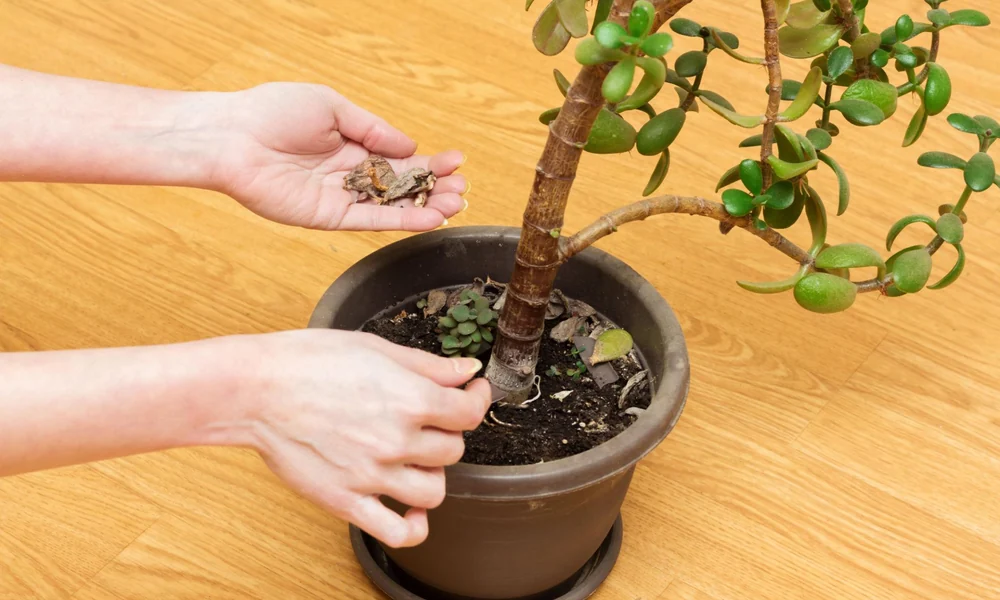
If the plant shows signs of root rot, remove it from the pot, inspect the roots, and trim away damaged sections with clean tools. Repot it in fresh, well-draining soil if necessary.
Signs of Underwatering
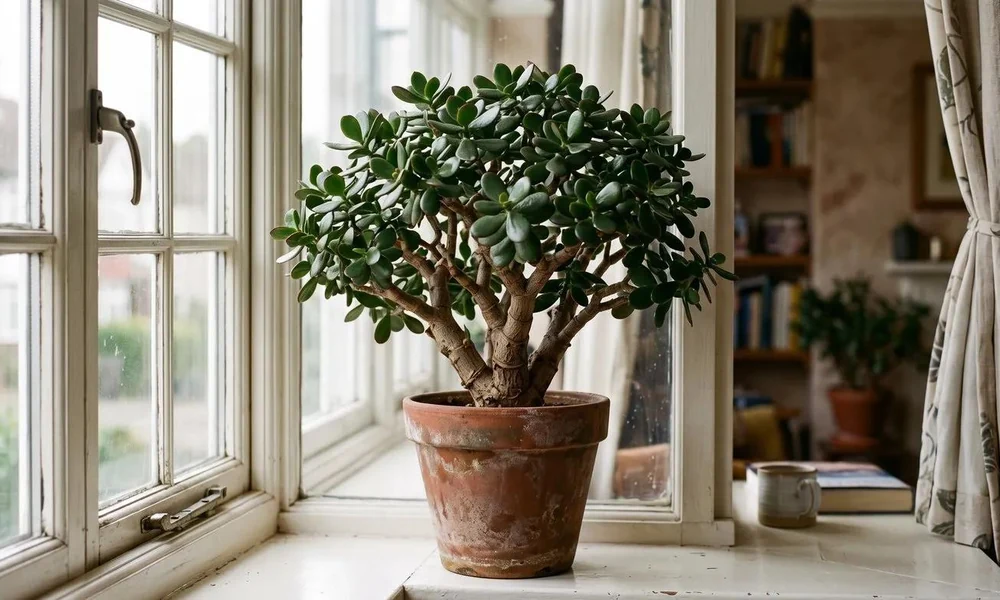
A thirsty jade plant may develop wrinkled, thinner leaves or show signs of shriveling. If the soil is completely dry and the leaves have lost their firmness, water the plant thoroughly and allow the excess water to drain.
Best Soil for a Jade Plant
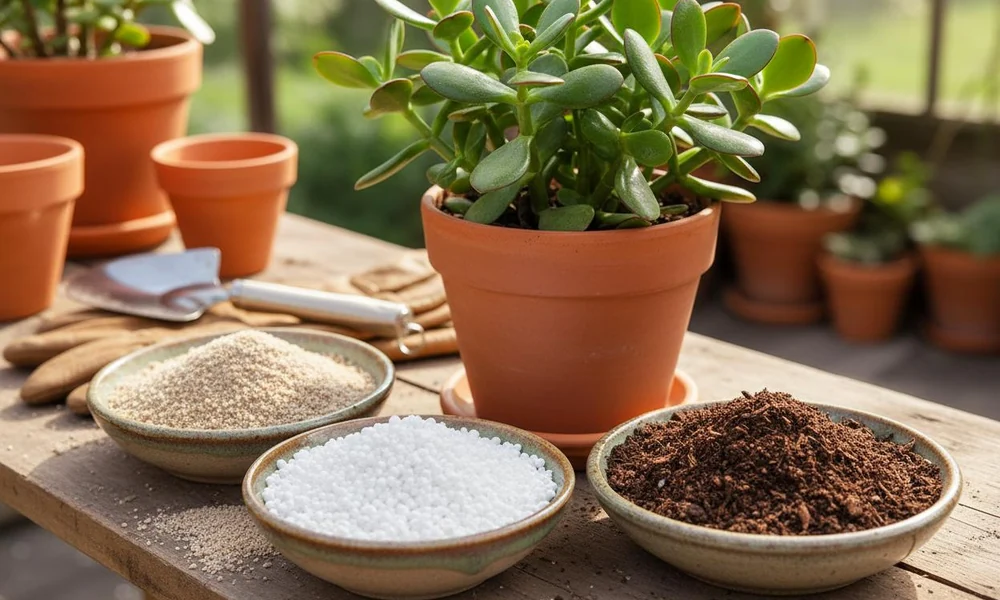
Jade plants need best soil that drains quickly and allows air to reach the roots. Ordinary garden soil or a dense potting mix can hold too much moisture.
A suitable option is a commercial cactus and succulent mix. You can also improve drainage by mixing regular potting soil with materials such as pumice or perlite.
Choose a pot with drainage holes. Terracotta pots are useful because their porous sides allow moisture to evaporate more readily than many plastic containers.
Avoid oversized pots, which can hold excess soil moisture around the roots.
What Temperature and Humidity Do Jade Plants Prefer?
Jade plants generally do well in normal indoor temperatures. Keep them away from cold drafts, freezing conditions, and sudden temperature changes.
Average household humidity is usually adequate. They do not need frequent misting, and misting the leaves does not replace proper watering.
If you keep a jade plant outdoors during warm weather, bring it inside before temperatures approach freezing. Protect it from heavy rain and abrupt changes in sunlight.
Should You Fertilize a Jade Plant?
Jade plants are not heavy feeders. During active growth in spring and summer, you can apply a balanced fertilizer formulated for houseplants or succulents at the label’s recommended dilution.
Do not fertilize dry soil, a stressed plant, or a plant with suspected root damage. Avoid excessive feeding, which can contribute to weak growth and salt buildup.
During winter, when growth slows, fertilizer is generally unnecessary.
When Should You Repot a Jade Plant?
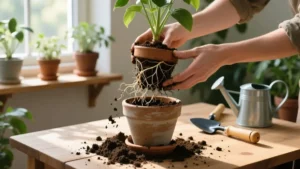
Jade plants grow slowly and do not need frequent repotting. Repot when the roots have filled the container, the soil no longer drains properly, or the plant has become unstable.
Spring is usually a convenient time to repot.
Choose a container only slightly larger than the existing one, with drainage holes. Use fresh succulent soil and handle the fleshy stems carefully because they can break.
After repotting, avoid immediately soaking the soil if the roots were damaged during the process. Give any damaged roots time to dry and recover before returning to normal watering.
How to Prune a Jade Plant
Pruning helps control the plant’s size and encourages a more compact shape. It can also remove damaged or unhealthy growth.
Use clean, sharp pruning shears to cut just above a leaf node. Remove only the amount necessary rather than cutting away a large portion of the plant at once.
The best time to prune is generally during spring or early summer, when the plant is actively growing.
If a branch becomes too heavy, selective pruning can help reduce the risk of stems breaking. Rotate the plant occasionally as well, so its growth remains balanced.
How to Propagate a Jade Plant
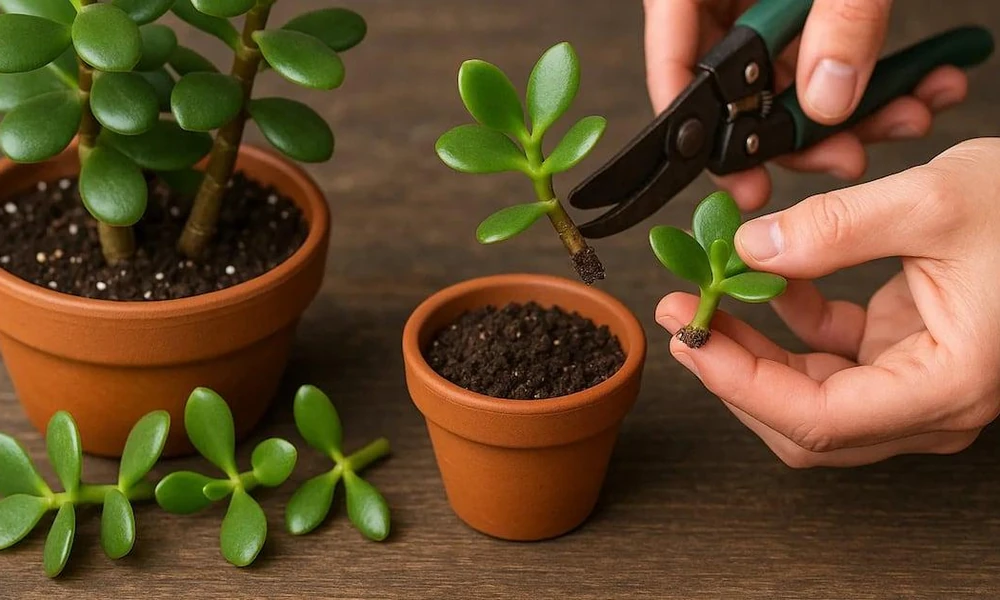
Jade plants are relatively easy to propagate from stem cuttings or healthy leaves.
Propagating From a Stem Cutting
- Cut a healthy stem using clean scissors or pruning shears.
- Allow the cut end to dry and form a callus.
- Place the cutting in a small pot filled with well-draining succulent mix.
- Keep it in bright, indirect light while roots develop.
- Water sparingly until the cutting becomes established.
Propagating From a Leaf
Choose a healthy leaf and remove it cleanly from the stem. Let the broken end dry before placing the leaf on or slightly into a suitable propagation medium.
Keep the medium lightly moist rather than waterlogged. Rooting and new growth can take time, and not every leaf cutting will succeed.
Common Jade Plant Problems
| Problem | Possible cause | What to do |
| Yellow leaves | Overwatering, poor drainage, or other stress | Check soil moisture and roots |
| Wrinkled leaves | Underwatering or damaged roots | Check the soil before watering |
| Leggy growth | Insufficient light | Gradually increase light exposure |
| Soft stems | Excess moisture or root rot | Inspect roots and improve drainage |
| Leaf drop | Sudden environmental changes or watering problems | Keep conditions more consistent |
| White residue on leaves | Mineral deposits or pests | Inspect closely and clean gently |
| Scorched patches | Sudden exposure to intense sunlight | Move to gentler light and acclimate gradually |
A single symptom does not always identify the cause. Check the soil, roots, light exposure, and recent changes in care before deciding how to treat the plant.
Is a Jade Plant Safe for Pets?
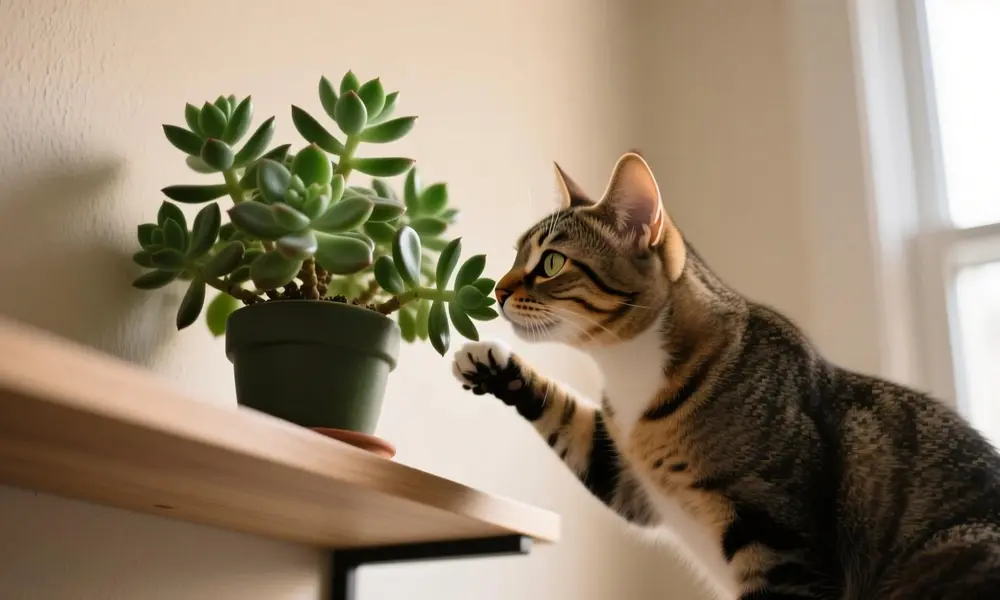
No. Jade plants are considered toxic to cats and dogs if eaten. Ingestion can cause symptoms such as vomiting, lethargy, and incoordination.
Keep the plant out of reach of pets. If a pet eats part of the plant, contact a veterinarian for guidance.
Frequently Asked Questions
Do jade plants need direct sunlight?
Jade plants benefit from bright light and can grow well with several hours of gentle direct sunlight. Introduce stronger sunlight gradually to prevent leaf scorch.
Can a jade plant grow indoors?
Yes. Jade plants are well suited to indoor growing when they receive adequate light, well-draining soil, and careful watering.
Why is my jade plant losing leaves?
Leaf loss may result from overwatering, underwatering, insufficient light, cold drafts, or sudden environmental changes. Check the soil and growing conditions before making adjustments.
How do I make my jade plant grow thicker?
Provide bright light, water appropriately, and prune leggy stems when needed. Healthy roots and steady growing conditions help support stronger stems and fuller growth.
Do jade plants flower indoors?
Mature jade plants can produce small, star-shaped flowers, but flowering indoors is uncommon. Maturity, light, seasonal conditions, and overall plant health can influence whether a plant blooms.
Are jade plants easy to care for?
Yes. Jade plants are relatively easy to maintain because they store water in their leaves and tolerate periods of dry soil. Their main requirement is avoiding consistently wet roots.