How to Repot a Plant Without Damaging the Roots: Repotting should feel like giving a plant a better home, not surgery. Yet the roots are where repotting mistakes happen. Pull too hard, tear healthy roots, bury the stem too deeply, or place a small plant in a huge pot, and the plant may struggle after the move.
The good news is that careful repotting is straightforward. The idea is simple: disturb the root ball as little as possible, remove only roots that are clearly damaged or badly congested, and give the plant fresh growing space with good drainage.
Peeacelily recommends treating the root system as the plant’s foundation. Once you know what healthy roots look like and when a plant actually needs a new pot, repotting becomes much less intimidating.
Key Takeaways
- Repot when the plant actually needs more root space or fresher growing medium.
- Spring is often the best time for routine repotting because many plants are entering active growth.
- Choose a pot only modestly larger than the current one.
- Remove the plant gently instead of pulling the stem.
- Inspect the root ball before cutting anything.
- Remove only clearly damaged roots and loosen crowded roots carefully.
- Use a suitable potting mix and a container with drainage.
- Water thoroughly after repotting, then give the plant time to settle.
- If the plant is healthy and not root-bound, refreshing the existing pot may be enough.
How Do You Know a Plant Needs Repotting?
Look for several signs rather than relying on a calendar alone.
Check the Roots
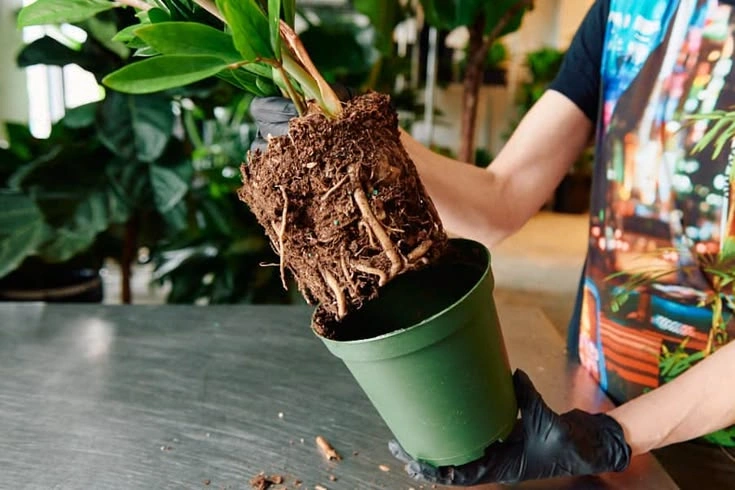
Roots growing from drainage holes are an obvious clue. When you gently remove the plant, tightly circling roots around the sides or bottom of the root ball are another strong sign that the container has become crowded.
Watch the Potting Mix
If the mix dries much faster than it used to, even when your watering routine has not changed, the plant may have become root-bound. Slower growth can also appear when roots have little room left.
Look at the Whole Plant
A plant that has become top-heavy or repeatedly needs watering may need attention, but these signs can have other causes. Light, temperature, watering habits, pests, and the plant’s normal growth pattern matter too.
That is why checking the root ball is more useful than assuming every yellow leaf means the plant needs a new pot.
How to Repot a Plant Without Damaging the Roots: When Is the Best Time to Repot?
For many houseplants, spring is the easiest time because plants are entering active growth. Fresh roots can establish in the new mix while the plant is naturally putting out new growth.
That does not mean you must wait for spring if a plant has a serious drainage problem, badly crowded roots, or damaged growing medium. The plant’s condition matters more than following a rigid date.
Repotting frequency also varies. Plant type, growth rate, container size, and potting mix all affect how quickly a plant needs attention.
Choose the Right New Pot
The pot you choose can make or break the repotting process. For many houseplants, moving up by about 1–2 inches in diameter is a practical rule. University of Illinois Extension recommends selecting a container about 1–2 inches wider than the current one, while the RHS advises that a new container should generally be no more than one-third larger.
The key point is to avoid a dramatic jump in size. A large amount of unused wet mix can stay moist around a small root system for too long, increasing the risk of root problems.
Always choose a pot with a drainage hole. If you love a decorative container without drainage, use it as an outer cover and keep the plant in a separate pot that can drain freely.
How to Remove the Plant Without Damaging the Roots
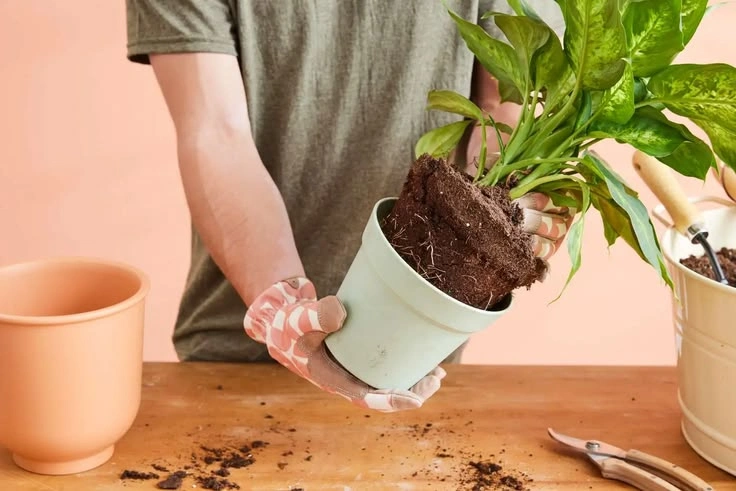
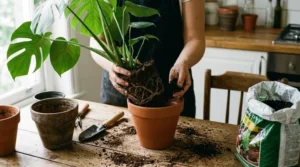
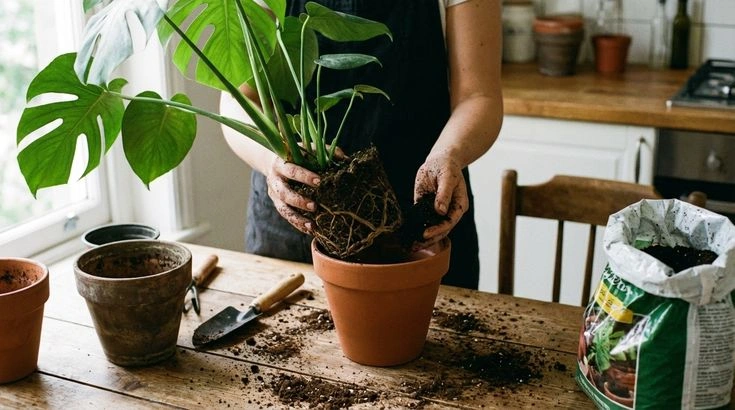
This is the moment to slow down. Do not pull the plant upward by its stem. That can place unnecessary stress on the stem and root connection. Instead, support the root ball while tipping or loosening the container.
If the plant is in a flexible plastic pot, gently squeeze the sides. For a firm container, tap around the outside while holding the plant securely. You can also lay the pot on its side and ease the root ball out.
If the plant refuses to move, stop forcing it. Roots may be gripping the drainage holes or the sides of the pot. Work around the container patiently rather than yanking the top growth.
The goal is to remove the plant with the root ball mostly intact.
Inspect the Roots Before You Touch Them
Once the plant is out, take a moment to look. Healthy roots vary by plant, so color alone is not a perfect test. In many common plants, healthy roots are firm and light-colored. Roots affected by rot may be dark, soft, limp, or have tissue that slips away from the inner root.
Do not automatically cut every root that looks brown. Some plants naturally have darker roots. Texture and condition are more useful than color by itself.
If the roots are only mildly crowded, gentle loosening is often enough. If they form a dense circle, carefully tease some of the outer roots away with your fingers.
How to Repot a Plant Without Damaging the Roots: How Much Root Should You Remove?
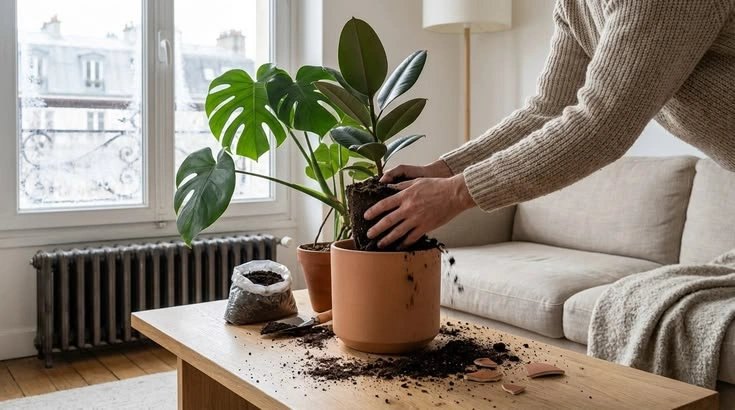
Less is usually safer. If the root ball is healthy, you may not need to cut anything. The RHS notes that light root pruning can be used when keeping a plant in the same container, while more congested root systems may require a stronger reduction.
Remove roots that are clearly dead, rotten, or badly damaged with clean, sharp tools. Avoid cutting healthy roots simply because they are visible.
For a severely root-bound plant, carefully loosening the outer layer can help roots grow into the new mix. Work gradually. The aim is to free the root system, not turn the root ball into a bare mass.
Add Fresh Potting Mix the Right Way
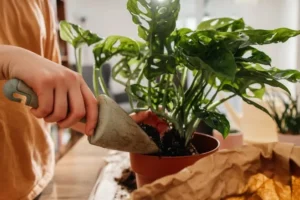
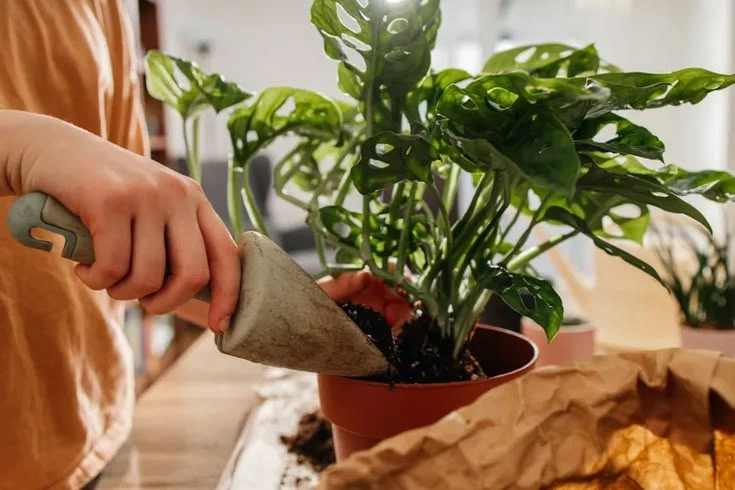
Put a layer of appropriate potting mix in the bottom of the new container.
Set the plant inside and check its height before adding more. The top of the root ball should sit at an appropriate level just below the pot rim, leaving enough space for watering. Do not bury the stem or trunk under a thick layer of fresh mix.
Add mix around the sides, working it into gaps without aggressively packing it down. You want the roots supported while still maintaining the air spaces the growing medium provides.
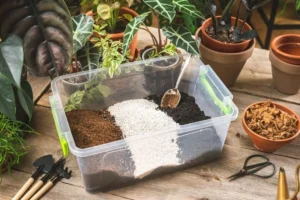
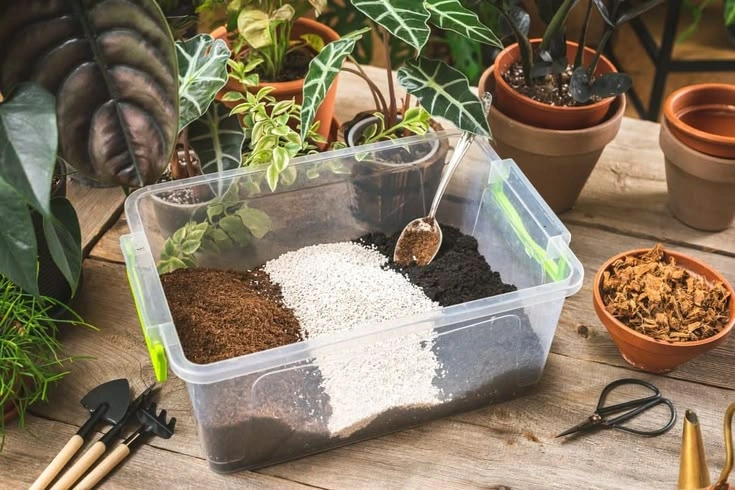
Use a mix designed for the plant. Cacti, orchids, African violets, and many other plants can have different growing-medium needs, so a generic mix is not automatically right for every species.
Water and Give the Plant Time
After repotting, water thoroughly so the fresh mix becomes evenly moist. For the first watering, water until some moisture drains from the bottom. This helps confirm that water is moving through the container rather than collecting in one area. Then let the plant settle.
Place it in the light and temperature conditions it normally prefers unless the plant’s specific care requirements say otherwise. Avoid turning the recovery period into a second major change by immediately relocating it, heavily fertilizing it, or repeatedly disturbing the roots.
A little temporary drooping can happen after repotting because the plant has experienced physical stress. Focus on steady care rather than trying to fix every small change immediately.
How to Repot a Plant Without Damaging the Roots: Common Repotting Mistakes to Avoid
Choosing a Huge Pot
Bigger is not automatically better. Excess growing medium can remain wet for too long around a small root system.
Pulling the Plant by the Stem
The stem is not a handle. Support the plant and root ball instead.
Cutting Healthy Roots
Root pruning is a tool, not a mandatory step. If the roots are healthy and only moderately crowded, leave them mostly alone.
Burying the Stem
Adding fresh mix too high around the stem or trunk can create moisture-related problems. Keep the plant at a similar depth to where it was growing.
Ignoring Drainage
A decorative pot may look perfect, but a container without a drainage path can make watering much harder to manage. Good drainage is one of the simplest protections against waterlogged roots.
FAQs
How often should I repot a houseplant?
There is no single schedule for every plant. Growth rate, species, pot size, and potting mix all matter. Check the roots and growing conditions instead of repotting automatically every year.
Should I water a plant before repotting?
It depends on the plant and the condition of the mix. A slightly drier root ball can sometimes slide from its container more easily. Avoid working with a severely waterlogged root ball unless the plant needs urgent attention.
Should I loosen the roots when repotting?
Only when they are crowded or circling tightly. Gently loosen congested outer roots, but do not aggressively tear apart a healthy root ball.
Can I reuse the same pot?
Yes. If the plant does not need more space, you can clean the container, refresh the growing medium, and return the plant to the same pot. Root pruning may be appropriate for some plants, but it should be done carefully.
Why is my plant drooping after repotting?
Repotting can temporarily stress a plant. Give it appropriate light, temperature, and water while avoiding unnecessary disturbance. If drooping continues or the roots show signs of rot, reassess the growing conditions.
Is a bigger pot always better?
No. A pot that is much larger than the root system can hold excess moisture for longer. A modest increase in pot size is generally safer for many houseplants.