Key Takeaways
- How to Dilute Liquid Fertilizer: Always start with the fertilizer manufacturer’s recommended dilution.
- Half strength means half the labeled fertilizer amount at the same water volume.
- For 10 ml per gallon, half strength is 5 ml per gallon.
- Measure fertilizer rather than guessing.
- Do not assume every liquid plant food uses the same ratio.
- Avoid overfeeding because excess nutrients can cause salt buildup and plant stress.
- Consider light, growth rate, plant type, soil, and season before setting a feeding schedule.
- Fertilizer supports healthy growth, but it cannot replace proper light, watering, drainage, and suitable soil.
Quick Answer
To dilute liquid fertilizer, first check the manufacturer’s instructions because products have different nutrient concentrations. If the label says 10 ml per gallon of water, use 10 ml of fertilizer for a full gallon.
For half-strength fertilizer, use half the labeled amount. For example, if the label recommends 10 ml per gallon, mix 5 ml per gallon.
A half-strength solution is commonly used for houseplants, particularly when beginning a feeding routine. The University of Minnesota Extension recommends half-strength fertilizer for houseplants during active growth and notes that excessive fertilizer can contribute to salt buildup.
How to Dilute Liquid Fertilizer
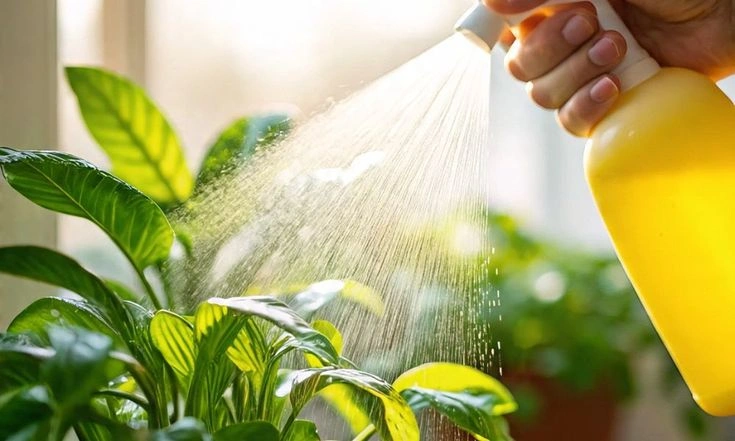
The easiest method is to treat the fertilizer label as your starting point.
Step 1: Read the Fertilizer Label
Look for instructions such as:
- 5 ml per gallon
- 10 ml per gallon
- 1 tablespoon per gallon
- 2 teaspoons per gallon
Do not assume that every liquid plant food has the same concentration. A stronger fertilizer may require much less concentrate than a weaker product.
Extension guidance also explains that different fertilizer formulations can contain very different nutrient concentrations, even when they are both sold as liquid fertilizers.
Step 2: Measure the Water
Use a clean container and measure the required amount of water.
For example, if the label says 10 ml per gallon, prepare one gallon of water before adding the fertilizer.
Step 3: Measure the Fertilizer
Use a measuring spoon, syringe, measuring cup, or the product’s dosing cap.
Accurate measuring is better than guessing, especially with concentrated products.
Step 4: Mix Thoroughly
Add the recommended fertilizer to the water and mix it well.
Once mixed, the fertilizer is distributed throughout the water. You then use the solution to water the plant according to its normal watering needs.
Fertilizer per Gallon of Water
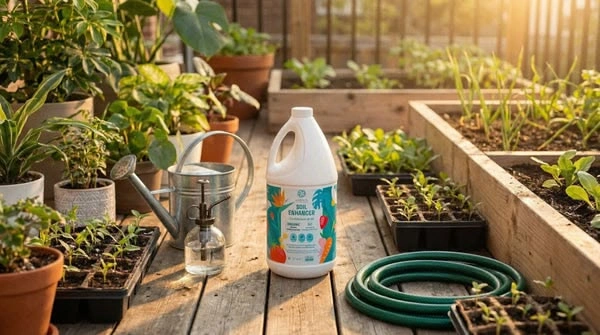
There is no universal amount of liquid fertilizer that works for every product. The correct fertilizer per gallon of water depends on the label, fertilizer concentration, plant type, and feeding schedule.
Here is a simple example:
| Label Recommendation | Full Strength | Half Strength |
|---|---|---|
| 5 ml per gallon | 5 ml | 2.5 ml |
| 10 ml per gallon | 10 ml | 5 ml |
| 15 ml per gallon | 15 ml | 7.5 ml |
| 20 ml per gallon | 20 ml | 10 ml |
| 1 tablespoon per gallon | 1 tbsp | ½ tbsp |
The important point is that half strength means half the labeled fertilizer concentration, not half the amount of water.
For example, if a product calls for 10 ml in one gallon, using 5 ml in one gallon creates a half-strength solution.
What If You Need Less Than a Gallon?
You can scale the measurement down.
Suppose the label says 10 ml per gallon:
| Water | Full Strength | Half Strength |
| 1 gallon | 10 ml | 5 ml |
| ½ gallon | 5 ml | 2.5 ml |
| 1 quart | 2.5 ml | 1.25 ml |
| 1 liter | About 2.6 ml | About 1.3 ml |
This makes it easier to prepare only the amount you actually need.
How to Make Half-Strength Fertilizer
Half-strength fertilizer is simply the manufacturer’s recommended fertilizer amount divided by two.
For example, imagine your liquid plant food says:
10 ml fertilizer + 1 gallon water
For half strength, use:
5 ml fertilizer + 1 gallon water
You can also think of it another way. If you already measured 10 ml of fertilizer, use twice as much water to reduce the concentration by half.
Some plants may benefit from a weaker feeding approach, while others have different nutritional needs. Therefore, do not automatically use half strength for every plant.
For example, University of Minnesota Extension guidance recommends half-strength fertilizer for parsley grown in containers, with different feeding intervals for indoor and outdoor plants.
How Much Fertilizer Should You Use?
The right amount depends on more than the size of your plant.
Consider these factors:
| Factor | Why It Matters |
| Fertilizer concentration | Strong formulas need smaller amounts |
| Plant type | Heavy feeders and sensitive plants have different needs |
| Growth stage | Active growth generally requires more attention to nutrition |
| Light | Plants growing strongly in good light may use nutrients differently |
| Soil | Nutrients already present in the growing medium matter |
| Season | Feeding usually changes when growth slows |
| Pot size | Container conditions affect watering and nutrient buildup |
A common beginner mistake is assuming that a bigger plant always needs more fertilizer. In reality, the fertilizer concentration and the plant’s growing conditions matter too.
For houseplants, the University of Minnesota Extension recommends starting gently with a balanced fertilizer at half strength every two to four weeks during spring growth, while noting that plants in lower light may need less frequent feeding.
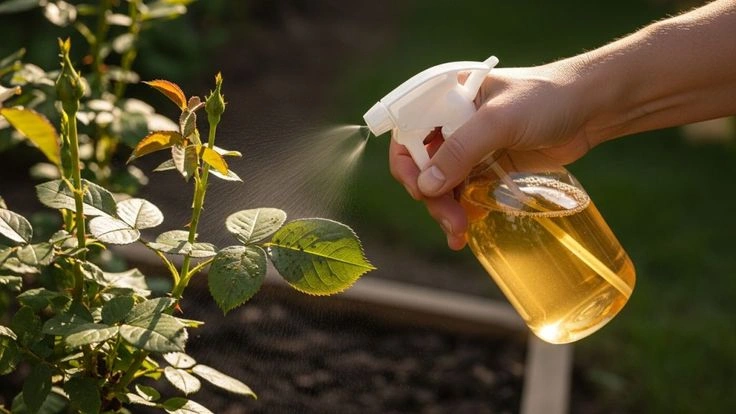
How to Apply Diluted Fertilizer
First, make sure the plant actually needs watering. Fertilizer solution should not replace good watering habits.
Water the soil evenly with the diluted fertilizer solution, allowing excess water to drain from containers that have drainage holes.
Should You Fertilize Dry Soil?
It is generally better to avoid applying a concentrated fertilizer solution to severely dry, stressed potting soil.
If the plant is extremely dry, water it appropriately first and then follow the fertilizer product’s directions for feeding. This helps you avoid treating fertilizer as a substitute for proper hydration.
What About Indoor Plants?
Indoor plants often need less fertilizer than beginners expect.
Plants receiving lower light may grow slowly, so frequent feeding can result in more nutrients than the plant can use. During periods of slow growth or dormancy, reduce or pause feeding according to the plant’s needs and fertilizer instructions.
Liquid Fertilizer Ratio Examples
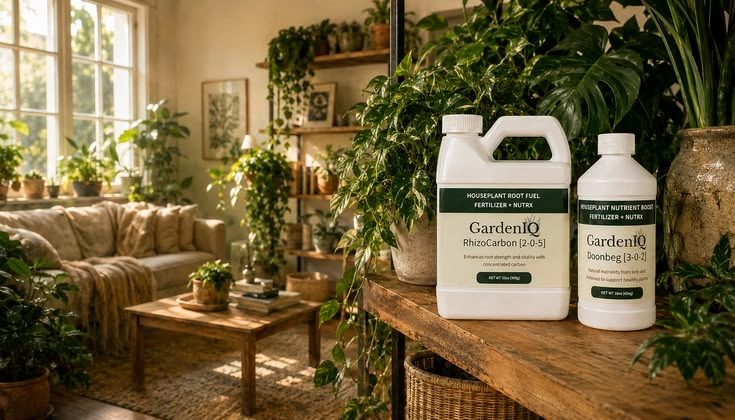
Here are some practical examples.
Example 1: 10 ml per Gallon
Label recommendation:
10 ml fertilizer + 1 gallon water
Half strength:
5 ml fertilizer + 1 gallon water
Example 2: 20 ml per Gallon
Label recommendation:
20 ml fertilizer + 1 gallon water
Half strength:
10 ml fertilizer + 1 gallon water
Example 3: 5 ml per Liter
Label recommendation:
5 ml fertilizer + 1 liter water
Half strength:
2.5 ml fertilizer + 1 liter water
The same principle works regardless of the exact product. You simply reduce the fertilizer amount while keeping the desired final water volume.
Liquid Fertilizer vs Half-Strength Fertilizer
| Feature | Label Strength | Half Strength |
| Nutrient concentration | Manufacturer’s recommended level | 50% of recommended concentration |
| Best starting point | When label calls for it | Useful for cautious feeding when appropriate |
| Risk of overfeeding | Higher if misused | Lower concentration |
| Suitable for every plant? | No | No |
| Main advantage | Provides intended labeled concentration | Gentler nutrient delivery |
Half strength is not automatically better. A plant that requires a specific feeding rate may perform poorly if it consistently receives too little nutrition.
Common Mistakes
Using the Same Ratio for Every Fertilizer
Different products contain different concentrations. Always check the label.
Adding Extra Fertilizer for Faster Growth
More fertilizer does not automatically mean faster or healthier growth. Excess nutrients can damage roots and contribute to salt accumulation in the growing medium.
Guessing Measurements
A small measuring tool is much more reliable than estimating with a bottle cap.
Fertilizing Every Time You Water
Some products are designed for frequent dilute feeding, while others are intended for less frequent applications. Follow the product instructions and the needs of the plant.
Water-soluble fertilizer programs can vary considerably, which is why professional horticultural guidance emphasizes concentration and application rate rather than using one universal recipe.
Ignoring the Plant’s Growth
If a plant is barely growing because of low light, cold temperatures, or another problem, adding more fertilizer may not solve the real issue.
Applying Too Much to a Small Pot
Container plants have limited growing media. Repeated fertilizer applications can allow soluble salts to accumulate, especially when watering and drainage are poor.
How to Tell If You May Be Overfertilizing
Possible warning signs include:
- Brown or scorched leaf edges
- White crust on the surface of potting soil
- Sudden leaf damage after feeding
- Poor or stunted growth
- Root stress
- Wilting despite adequate moisture
These symptoms can have other causes, so do not diagnose fertilizer damage from one symptom alone.
If you suspect fertilizer buildup, review your feeding routine and consider appropriate flushing or repotting based on the plant and growing medium. Avoid immediately adding more fertilizer.
Expert Tips for Better Results
Start conservatively when you are unfamiliar with a fertilizer. However, do not permanently reduce the dose without considering the plant’s requirements.
Keep a simple record of when you fertilize and what concentration you use. This makes it easier to spot problems and avoid accidental overfeeding.
Also, remember that fertilizer cannot compensate for poor light, unhealthy roots, incorrect watering, or unsuitable soil. Good plant care works as a complete system.
For indoor plant care basics, you can also explore Peeacelily’s Plant Care guides and its guide to low-maintenance indoor plants.
Frequently Asked Questions
How much liquid fertilizer should I use per gallon of water?
Use the amount stated on your fertilizer label. For example, if the label says 10 ml per gallon, use 10 ml for a full-strength solution.
What is half-strength fertilizer?
Half-strength fertilizer contains half the fertilizer concentration recommended on the product label. If the label says 10 ml per gallon, half-strength is 5 ml per gallon.
Can I use liquid fertilizer on houseplants?
Yes, many liquid fertilizers are formulated for houseplants. However, check the label to make sure the product is suitable for your plant.
Should I dilute liquid fertilizer?
Most concentrated liquid fertilizers need to be diluted before application. Follow the manufacturer’s instructions because some ready-to-use products are already diluted.
Can too much liquid fertilizer hurt plants?
Yes. Excess fertilizer can contribute to salt buildup and may damage roots or foliage. University of Minnesota Extension specifically warns that too much fertilizer can cause salt buildup in houseplant soil.
Is half-strength fertilizer safe for all plants?
No. Half-strength is a concentration choice, not a universal rule. Different plants and fertilizer products have different requirements.
Can I use liquid fertilizer every time I water?
Only if the product instructions and plant requirements support that schedule. Some dilute feeding programs use frequent applications, while other products are intended for less frequent feeding.
What happens if I accidentally add too much fertilizer?
Do not add more fertilizer. If the concentration was significantly higher than recommended, assess the plant and growing medium and consider appropriate corrective watering based on the container’s drainage and the product instructions.
Is 1 teaspoon of fertilizer per gallon always correct?
No. There is no universal teaspoon-per-gallon rule. The correct amount depends on the fertilizer formulation and its label directions.
Conclusion
Learning how to dilute liquid fertilizer for plants is mostly about getting one thing right: the concentration.
Check the label, measure carefully, and use half strength when it makes sense for the plant and situation. Above all, avoid the temptation to add extra fertilizer because more nutrients do not automatically produce better growth.
When feeding is combined with appropriate light, watering, drainage, and healthy growing media, liquid plant food can become a simple and useful part of a consistent plant-care routine.