Create a self-sustaining mini ecosystem with a DIY bottle garden using recycled glass containers, drainage layers, activated charcoal, and humidity-loving plants. This guide explains how to build, balance, and maintain a thriving terrarium that recycles its own moisture, requiring minimal watering. Perfect for beginners, apartment dwellers, and anyone seeking a low-maintenance way to bring nature indoors.
Key Takeaways
- Create a self-sustaining mini ecosystem
- Recycle glass containers creatively
- Closed terrariums need minimal watering
- Layer materials for healthy drainage
- Activated charcoal prevents odors and mold
- Choose humidity-loving miniature plants
- Bright indirect light works best
- Avoid direct sunlight exposure
- Monitor condensation for balance
- Prune plants for long-term health
- Low-maintenance indoor gardening solution
- Perfect blend of nature and décor
Introduction
There will always be something immensely gratifying about having an entire jungle in the palm of your hand, self sustaining. For that lush slice of nature you can fold into your living room without hours of daily upkeep, construct a mini glass eco-system the ideal project this afternoon. Recycle your old glassware into an indulgently alive center-piece that basically looks after itself with this bottle garden DIY.
A bottle garden DIY project, a DIY terrarium, or a glass terrarium is actually surprisingly easy to make. In essence, all you really need is a clear glass vessel, some specific substrates to promote drainage and maintain healthy soils, as well as small scale humidity-loving plants that will live in small spaces. Once sealed, the water recirculates through evaporation and condensation so you hardly ever need to lift a finger.
This guide provides in-depth information on how to plan, construct and care for your mini glass paradise using easily sourced materials and expert tips from us at Peeacelily.
So why choose a bottle instead of just a normal pot?
Some standard potted plants are decent plants but they rely on you entirely for life. You often come back to droopy leaves and dry soil after a week of forgetting to water them. But a closed glass vessel used in a bottle garden DIY is an entire different animal because it creates its own mini-climate.
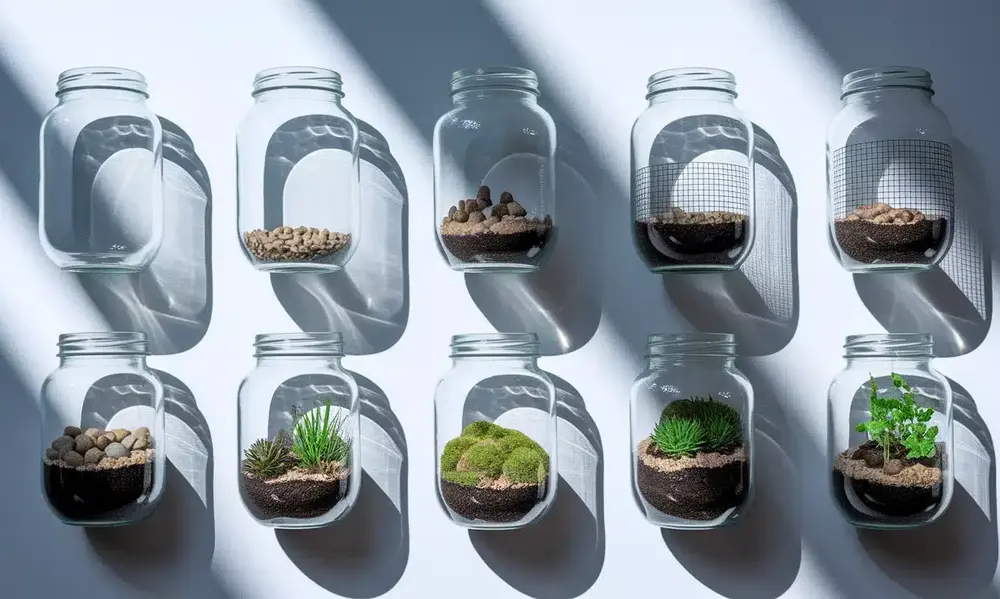
If you trap moisture in a glass container, the roots take up water from the soil, and the leaves lose it through transpiration into the air that fills the container until it condenses on the inner walls of a glass. This condensation then rolls back down into the soil, allowing for a never-ending self-irrigating rain cycle.
For city people, working adults, or anyone struggling to keep a simple houseplant alive, building a DIY terrarium makes all the diffrence! It blocks dry indoor air, traps high humidity and makes a protected environment where delicate tropical plants can really thrive—almost like a self-contained plant propagation station.
Establishing Work Area / Materials
It always helps to sometimes put your supplies together before getting your hands dirty. Selecting the right vessel is half of this fun, and you don’t need to purchase expensive crystalware & figures to begin your bottle garden DIY.
An old apple juice jug, a carboy from the vintage section of your local hardware store, simply a large mason jar or an empty glass or plastic wine bottle can work. In fact, many people use this exact setup as a unique plant propagation station before transitioning to fully grown setups. But make sure the glass is crystal clear; colored glass filters out important wavelengths of light needed by your plants for photosynthesis.
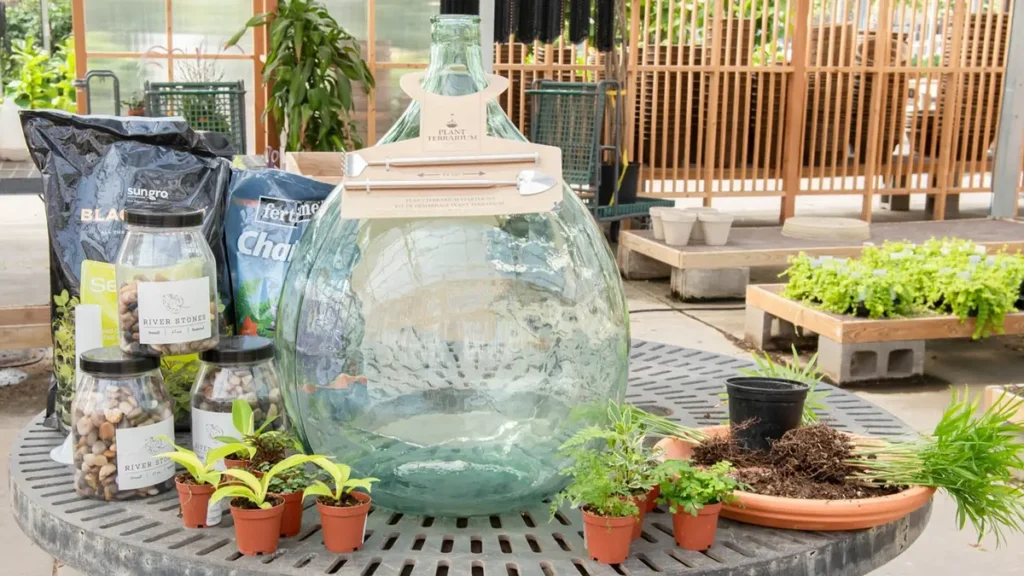
To make a truly resilient bottle garden DIY ecosystem, you will need to layer your materials carefully. Here is a quick breakdown of what to prepare for your DIY terrarium:
| Material | Purpose in the Ecosystem | Selection Tip |
| Glass Vessel | Houses the ecosystem and traps humidity. | Must be clear glass with a sealable lid or cork. Ideal for a plant propagation station. |
| Drainage Pebbles | Creates a basin for excess water so roots don’t rot. | Small pea gravel or decorative river stones work best for a DIY terrarium. |
| Activated Charcoal | Filters the water and eliminates foul odors. | Use horticultural charcoal, not barbecue briquettes. |
| Sphagnum Moss | Acts as a barrier to keep soil from slipping into the rocks. | Dried or live moss both work well as a divider layer in a bottle garden DIY. |
| Potting Mix | Provides nutrients and anchoring for the plant roots. | Lightweight, sterile peat or coco coir-based soil. |
| Miniature Plants | The living stars of your miniature glass world. | Choose slow-growing varieties that love high moisture. |
Step-by-Step Guide to Building Your Bottle Garden DIY
Creating your mini ecosystem is a multilayer process. Because a bottle garden DIY vessel often has a narrow neck, you can not just reach inside the bottle to dig holes. While in theory most things go together quite well for a DIY terrarium, you’ll have to throw a little ingenuity into the mix as well and make sure everything is perfectly positioned using some makeshift tools such as tweezers or perhaps even chopstic.
Creating the False Bottom
When a glass bottle is not equipped with drainage strikes on its bottom, all the water that you put inside will collect along at the very base of it. The water sitting in this stagnant pool is the soil level, and if your plants roots sit right there (submerged) they will drown quickly, in less than two weeks time.
To avoid this, fill the bottom of your clean bottle with about one to two inches of small pebbles or gravel. It allows the excess water to accumulate in a more safe manner, away from the sensitive roots which creates what is called a “false bottom” in your DIY terrarium.
Adding the Purification Layer
Following that is a magical ingredient of any long-lasting DIY terrarium or plant propagation station: activated charcoal. Springleht a very thin, even layer of horticultural charcoal directly on top of your pebbles.
Since a closed glass container is a bedroom for bacteria and mold, this step is vital for a successful bottle garden DIY. Activated charcoal is essentially a natural water filter, clinging to toxins and neutralizing chemicals (think moldy, sour air inside your bottle smells like dirt)!!
Laying Down the Soil Barrier
You should also put a thin barrier over the charcoal, this way your potting soil will not sifting down into your clean drainage stones.
You can use a tiny piece of screen stretched over the plant, or daub a layer of dried sphagnum moss soaked in water and pressed flat. This ensures that your bottle garden DIY layers remain beautifully defined and the soil doesn’t turn into a muddy puddle at the bottom of the bottle.
Funneling the Potting Soil
Using your paper funnel or rolled up cardboard, carefully fill the bottle with your potting soil. Try for a depth of about 2 — three inches, decided by your container.
You want enough soil to cover the entire root balls of your plants, but not so much that it will occupy over a third of the height of the whole bottle. Using a long stick, or small homemade tamper, lightly compact the soil surface so your DIY terrarium greenery has a flat canvas to rest on.
Choosing the Optimal Plants for a Sealed Glass Vessel
Not all plants are made for tropical, high humidity living within the confines of a bottle of glass. If you were to plant a dryland succulent or cactus in a sealed glass jar, the excess moisture would rot it within days. You will look for slow-growing, compact ones that were used to grow apace on the wet floor of some timber dialogue, or pieces you have nurtured beforehand in a plant propagation station.
This is a thoughtfully-curated list of varieties that adore the very environment you make for them in a bottle garden DIY:
-
Fittonia (Nerve Plants): True classics for any DIY terrarium glass jar. They remain relatively small, thrive in high humidity and sport stunning pink, red or bright white veins that create an eye-popping contrast to dark green moss.
-
Polka Dot Plants (Hypoestes phyllostachya): These are a good choice too and they make good additions with splashes of pink and white leaves, providing an instant contrast to the rest of your arrangement.
-
Miniature ferns: Such as the Lemon Button Fern or the Button fern, stay low and offer a beautiful feathery texture that imitates an expansive canopy of trees across your home.
-
Creeping Fig (Ficus pumila): A small little creeper that will cause delight to the inner walls of your glass bottle, filling out the vertical space slowly.
-
Cushion Moss and Java Moss: These best behave as a refreshing green carpet in a bottle garden DIY, concealing any undecorated soil and holding the moisture of dirt incessantly.
While you will need a long chopstick to punch small planting holes in your soil while arranging your plants, you can also transfer fresh root cuttings straight from a plant propagation station. With your extended tweezers, carefully drop your plants through the mouth of the bottle and direct their roots down into the holes; then lightly pat down the soil around them to keep them secured in place.
Balancing and Tuning Your Microclimate
Peeacelily’s research says your DIY terrarium is actually all put together once your plants are safely in their new home, but it just requires a little initial fine-tuning to get that ecosystem perfectly calibrated.
Lightly mist the interior with a spray bottle of water. You will not want to saturate the container; you want the soil to be as damp as a sponge that has been wringed out and never piled high with moist mud. Use a long cotton swab to wipe down any puppy paw print-style smudgings on the inside of the glass, then cap the bottle with its lid or cork.
Chose a space for your completed bottle garden DIY product where it can get lots of bright indirect sunlight. A windowsill facing north or east is generally what they like.F
Watch this space over the next few days as till now. Every morning, you will find a light mist of condensation forming on the inside of glass, this will gradually clear as the day progresses and temperatures equalise.
If the windows of your DIY terrarium are fogged up all day long, and you can see big drops of water, constantly dripping down, your system is too wet. Just take the lid off for a few hours to allow some of that excess moisture to evaporate, and put it back on again. If you never see any condensation at all, however, remove the lid and pour in a measly tablespoon of water to get the rain cycle going.
Long-Term Maintenance and Troubleshooting
The established garden boasts stunningly low-maintenance glass, a wonderful perk of all your hard work over the years. But low maintenance does not mean no maintenance at all for your bottle garden DIY. A regular inspection (every few weeks) will help keep your little ecosystem alive and well for years.
Your plants, of course, continue to grow and find their way up against the glass walls or they will out-compete the ones next to them. When this happens inside your DIY terrarium, just insert a pair of long curved scissors through the neck of the bottle and snip any overgrown leaves or lanky stems. (These trimmings can sometimes even be recycled back into a separate plant propagation station!) Use your tweezers to get the pruned leaves out of your bottle so that it does not rest on the wet soil and rot.
As soon as you detect a yellow or wilting leaf in the bottle, take it out immediately. Rotting plants can also attract mold spores in an environment with excessive humidity.
Do not worry if a few spots of fuzzy white mold do appear on your soil or plants. All you have to do is wipe it off with a q-tip that has been soaked in some diluted neem oil or antifungal solution, leave the cork off for 1 day to lower humidity just a bit and allow air to flow around.
Conclusion
Tackling a bottle garden DIY is a beautifully rewarding project that blends art, science, and home decor into one simple package. By carefully layering your drainage stones, charcoal, and soil, and picking the right humidity-loving plants, you create a self-sustaining world that brings a touch of nature indoors with almost zero hassle.
Whether you place it on a workspace desk, use it alongside a plant propagation station on a living room shelf, or gift it to a friend, a DIY terrarium is a captivating reminder of just how resilient and adaptive nature can be. Gather a unique bottle, select your favorite tiny greens, and start building your own gorgeous green escape today. Visit peeacelily for more!
Frequently Asked Questions
How often should I water a sealed bottle garden DIY?
Most sealed bottle gardens need very little water. Once balanced, your DIY terrarium may only require watering a few times per year. If the soil appears light brown and dry, add a light mist.
Can I use regular garden soil for a DIY terrarium?
No. Garden soil is too dense and may contain pests, fungi, and weed seeds. Use a sterile indoor potting mix for the best results in your bottle garden DIY.
What if my plants grow too tall for the glass container?
Simply trim the tops with long tools. Regular pruning keeps plants compact, encourages fuller growth, and keeps your DIY terrarium looking its best.
Can I use this setup as a plant propagation station?
Yes! A bottle garden DIY vessel environment acts as an excellent plant propagation station because the high humidity promotes rapid root growth for tropical cuttings before they are transplanted elsewhere.
Do plants in a bottle garden need fertilizer?
Usually not. Potting mix provides enough nutrients for a year or more. If plants look weak after several years, use a diluted liquid fertilizer at quarter strength during spring.