A lounge area is not a living room. It is a corner with a job: one small patch of floor where you sit down properly, put your feet up, and do nothing useful for half an hour. It might be the end of a bedroom, a bay window, a wide landing, or a slice of open-plan space with no purpose yet. The difference between that corner and a real lounge is not size but intention: one comfortable seat, one surface, one warm light, and a reason to sit there, and it becomes the most-used spot in the house.
1. Find the Corner Before You Buy Anything
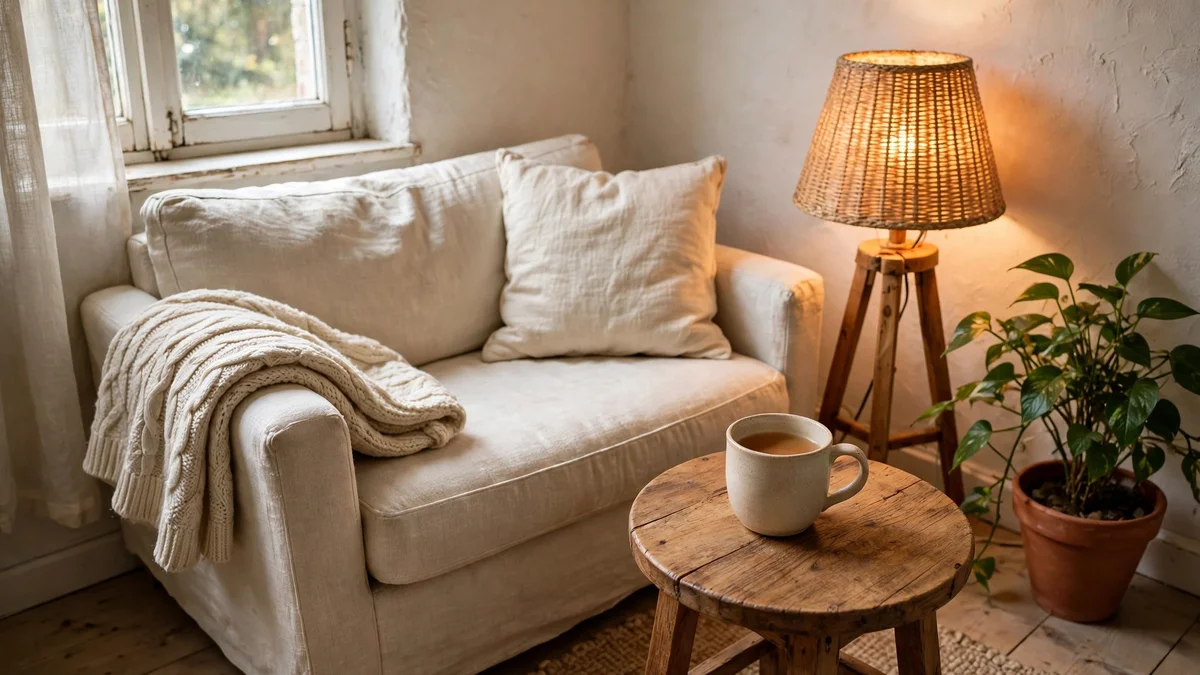
Every home has a lounge corner hiding somewhere, usually where a drying rack or a pile of things with no home sits now. Look for three things: a wall to lean against, a window or lamp nearby, and enough floor for a chair and a mug. A bay window is the classic spot, but the end of a bedroom, a wide landing, and the quiet end of an open-plan kitchen all work. Measure it with a tape, not your eyes — most corners are one to two metres wide, and the real number stops you buying a sofa that swallows it.
2. Size the Seating to the Corner, Not the Catalogue
The most common mistake in a small lounge area — and in any small space living room — is seating bought for a bigger room. A three-seater in a two-metre corner leaves no room for a table, a lamp, or your legs. A loveseat of 140 to 160 centimetres, or one generous armchair with a footstool, fits far better. Armless chairs and slim-armed loveseats save 15 to 20 centimetres a side — in a small corner, that is the difference between comfortable and cramped. Two small chairs facing each other across a tiny table can beat one sofa, turning the corner into a place for two people. Our guide to arranging living room furniture in a small space has the walkway measurements that keep a tight corner easy to move through.
3. Zone the Area Without Building Anything
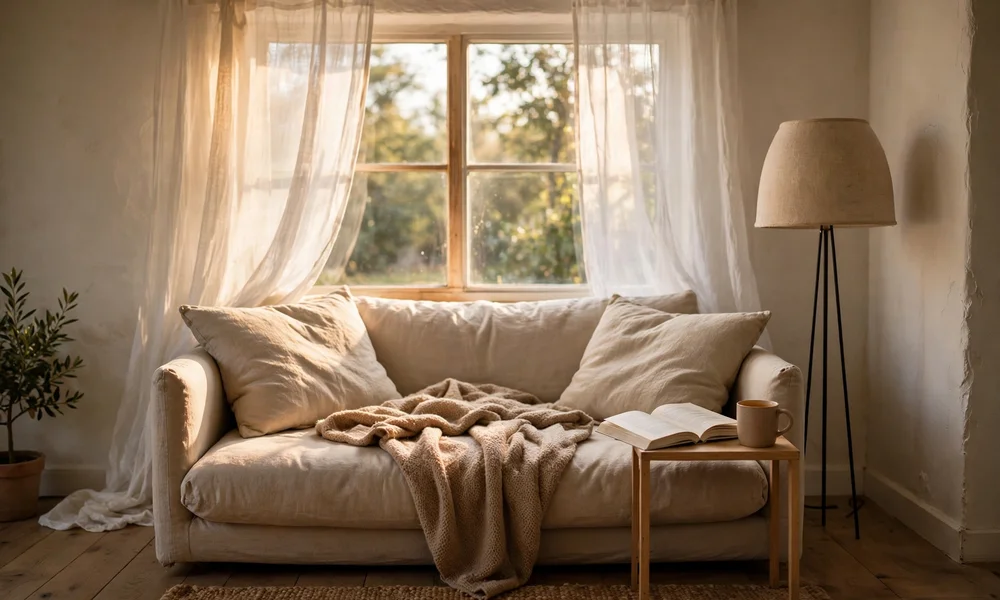
A lounge area needs a boundary, or it dissolves into the rest of the room. You do not need a wall or a screen. A rug does the job: one rug just big enough for the front legs of the seats marks the lounge as its own place. A floor lamp does the same from above, drawing a pool of light that says this patch of floor is for sitting. A narrow shelf or a single picture hung low behind the seating finishes the frame. The trick is restraint: one rug, one lamp, one picture.
4. Let Every Piece Do Two Jobs
In a lounge area of a few square metres, single-purpose furniture is a luxury you cannot afford, which is why small space furniture ideas nearly always start with double-duty pieces. A storage ottoman is the hero: footrest in the evening, coffee table with a tray on top, extra seat when a friend drops in, blanket box the rest of the time. A slim console behind the loveseat, no deeper than 25 centimetres, holds a lamp and a book without a side table. A basket beside the chair swallows throws, magazines, and the remote, so the corner tidies in ten seconds. See our guide to multifunctional furniture for small spaces for more pieces that earn their footprint twice over.
5. Layer Comfort Until It Invites You to Sit
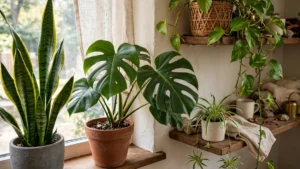
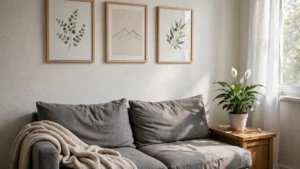
A small lounge area lives or dies on how it feels to sit in. Hard, bare, and bright is a waiting room; soft, warm, and layered is a lounge. Start with one throw draped over the chair arm, not folded in a drawer. Add two cushions in different textures, a knit and a velvet, rather than four matching ones. Put something soft underfoot, even a small rug, because bare floor makes a corner feel cold no matter how good the chair is. A single tall plant adds life without taking floor space and draws the eye upward. These layers make a whole room welcoming, and our guide to cozy living room decor ideas shows how to build them up without spending much.

6. Light It in Layers for the Evening
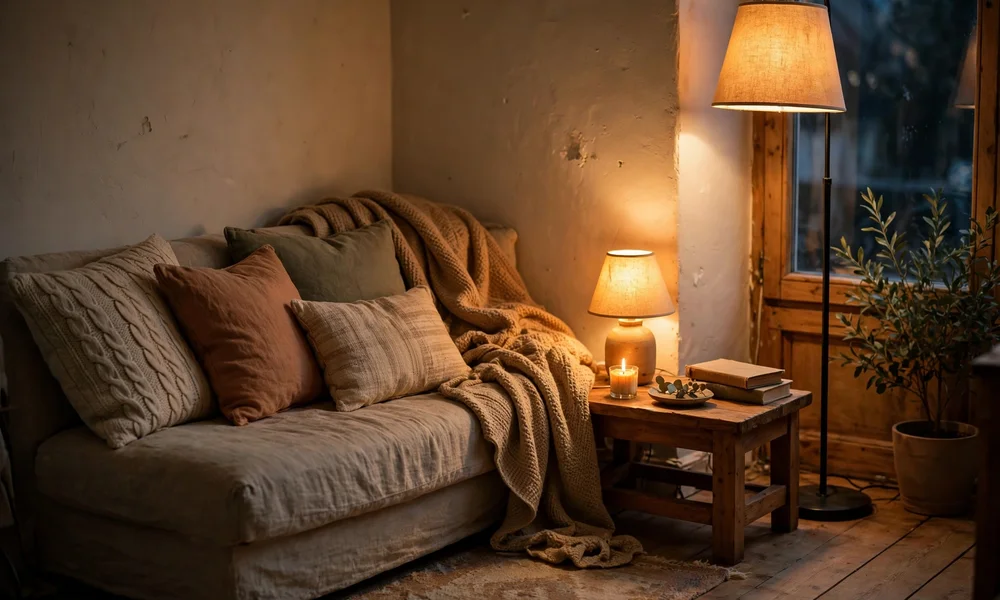
A lounge corner that only works in daylight is one you abandon at six o’clock. Give it its own light, separate from the room’s ceiling fitting. A floor lamp beside the chair is the first layer, its warm bulb turning the corner golden after dark. A small table lamp or candle on the side table is the second, lower and closer, for reading. Keep both warm white, never cool white: cool light makes a small space feel like an office. A dimmer, or a smart bulb in the floor lamp, lets you drop the light as the evening goes on.
7. Keep It Clear With One Simple Rule
Small lounge areas fail quietly: a bag lands on the chair, post lands on the table, a laundry pile moves in, and within a week the corner is a storage shelf. The fix is a rule, not a tidy-up session. Nothing lives in the lounge area except what belongs to lounging: the throw, the cushions, one book, one mug, one plant. Everything else gets a home somewhere else. Keep the side table almost empty — one tray, one book, one small plant — because a clear surface makes the whole corner look calm even when the rest of the house is not.
8. Make a Tiny Corner Feel Generous
Feeling generous is not about square metres; it is about what the eye meets. A mirror opposite the window bounces daylight back in and makes the space feel twice as wide. Furniture with visible legs shows more floor, and visible floor reads as more space. One large cushion beats three small ones, one large picture beats a cluster of small frames, and one tall plant beats five little pots: fewer, bigger things calm the eye. Keep the biggest surfaces pale — a light throw, a light rug, a light wall — and put the colour in the cushions. Leave one stretch of wall completely empty: that empty patch makes the corner breathe, and it costs nothing.
9. Give the Corner a Ritual
The last step has nothing to do with shopping. A lounge area becomes a lounge when it has a ritual: tea at four, twenty pages before bed, the Sunday crossword, the ten minutes after work when the shoes come off. Put what that ritual needs within arm’s reach — the mug on the side table, the book on the shelf, the throw on the arm — and the corner pulls you in at the same time every day. Start with the corner you already have — one seat, one light, one rug — and let the ritual do the rest.