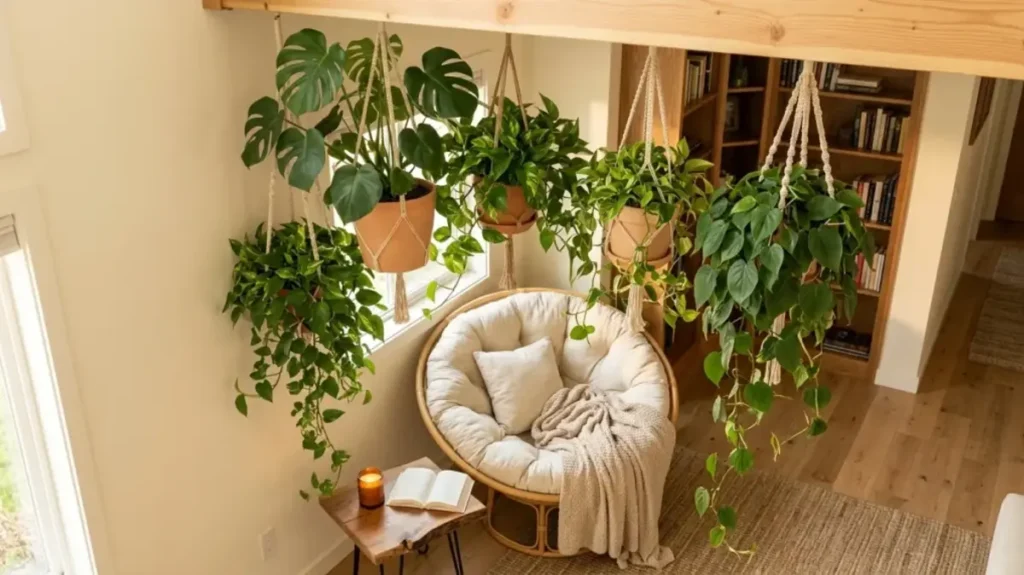
Hanging indoor plants are a creative way to add life to your home without taking up floor space. By placing plants on ceilings or upper walls, you create a vertical jungle that brings depth and beauty to a room. Whether using macramé hangers, wall-mounted brackets, or tension rods, strategic plant placement can improve air quality, mood, and interior design. Vertical gardening is becoming the future of space-efficient interiors with plant shelf ideas.
If you feel that your home lacks a special something, head up. Although people center around furniture and rugs, the most overlooked real estate in your house is the ceiling and upper parts of your walls. Indoor hanging plants put a fun spin on adding some life to a room without eating up floor space. Raising your plants up gives you a depth and abundance that just cannot be matched by pots on the ground.
Hanging plants indoor styling is all about pairing good hardware with species that will trail or drape by nature. Whether you intend to use macramé hangers or wall-mounted brackets, or a series of tension rods for your plants, the aim is that the lush vertical jungle down there feels planned.
At Peeacelily, we are familiar with how strategic placement of trailing vines can soften a room and increase your houses air quality as well as mood with plant shelf ideas
Why Vertical Gardening is the Future of Interior Design
In 2026, our spaces are smaller, and they serve many functions, so we will need to find ways around the limitations and terrain of how to introduce nature into what we do. Vertical gardening is not just a passing trend; it is truly a viable solution for urban residents. As you pursue plant wall ideas, you begin to believe that rather than putting up a decoration, what you’re establishing is an ecosystem that rises above the clutter of everyday life.
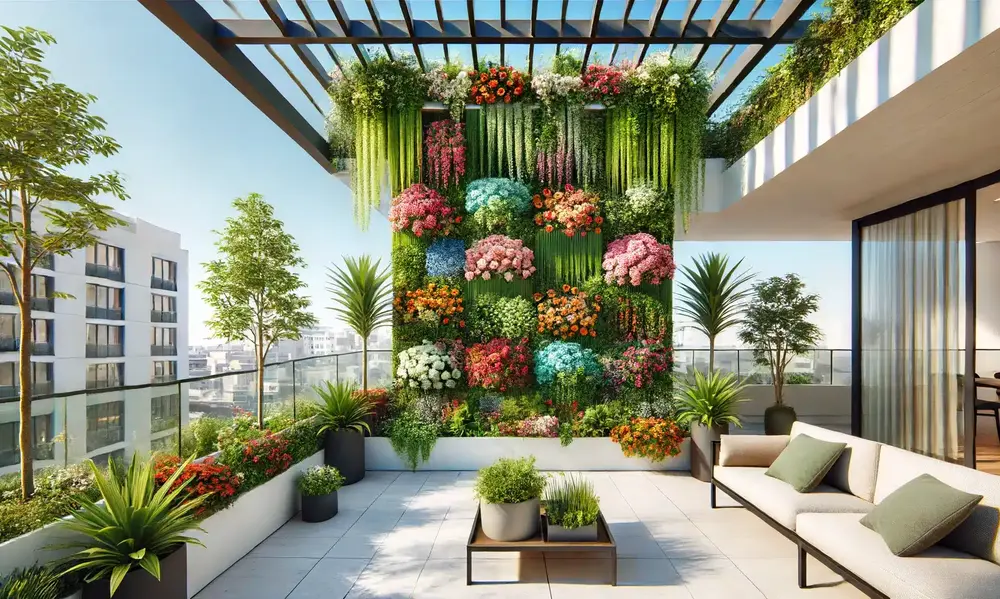
Aside from looks, many hanging plants, indoor varieties are also relatively easier to keep away from curious dogs and toddlers. It means you can put lots of light-lovers directly in a window’s “sweet spot,” without needing a massive old table! This mode of presentation honors the beautiful architecture of the plants themselves with their lovely vines hanging down like living curtains.
Choosing the Best Species for Hanging Displays
Not every plant is suited for an airbound existence. You should look for species that have pliable stems and a habit of weeping. If you choose the wrong plant, it will look messy or struggle to thrive against gravity. We suggest beginning with high-impact, low-maintenance varieties for peak looks as they grow longer at Peeacelily.
Top Performers for Elevated Living
- Pothos (Epipremnum aureum): The undisputed king of hanging plants. It is incredibly hardy and can grow several feet of vines in a single season.
- String of Pearls (Senecio rowleyanus): A succulent that looks like a bead necklace. It requires bright light and minimal water, making it perfect for high, sunny windows.
- Heartleaf Philodendron: Similar to Pothos but with elegant, heart-shaped leaves that create a denser “curtain” effect.
- Boston Fern: For those with higher humidity, these provide a classic, bushy look that fills a corner beautifully.
4 Creative Ways to Style Hanging Plants Indoor
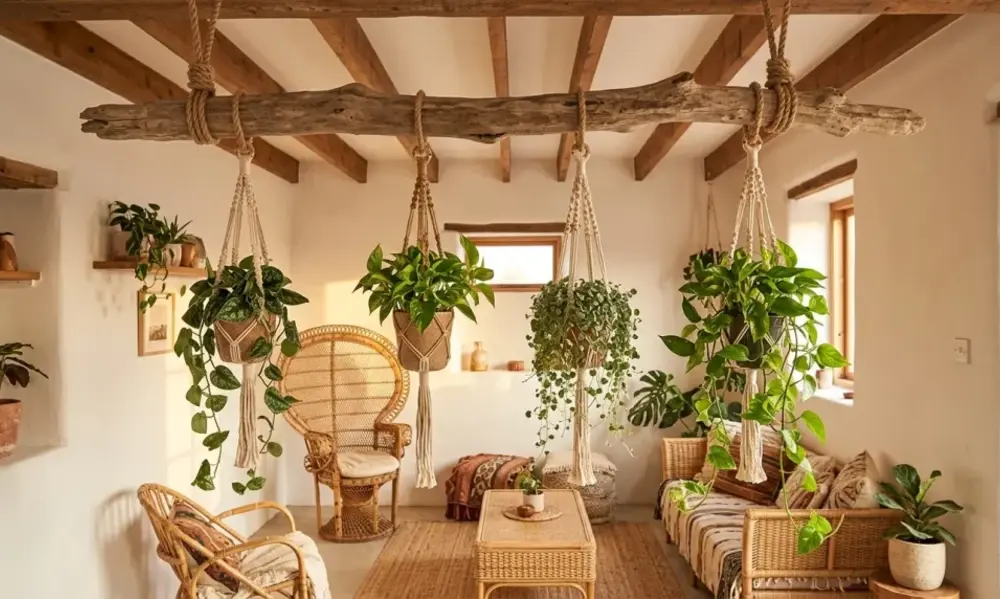
Styling is where your personality shines. You don’t have to stick to the traditional hook-in-the-ceiling method. Mixing different heights and textures will prevent your “greenery” from looking like a flat row of pots.
1. The Floating Window Gallery
Using a tension rod across a window frame allows you to hang multiple small pots at varying heights. This creates a living screen that provides privacy while still letting light filter through the leaves. It is one of the most functional hanging plants indoor setups for kitchens and bathrooms.
2. Macramé and Textile Textures
Macramé is back for a reason. The woven textures of cotton or jute cords add a bohemian warmth to a room. When you pair a leafy green plant with a neutral textile, the contrast makes the green pop. This is a staple for anyone looking to soften a modern, minimalist apartment.
3. Wall-Mounted “Living” Brackets
If you rent and can’t drill into the ceiling, wall brackets are your best friend. Sturdy metal or wooden brackets allow you to hang plants away from the wall so the vines have room to grow. This is an excellent way to incorporate plant wall ideas without building a massive permanent structure.
4. The Ladder Display
Leaning a rustic wooden ladder against a wall provides multiple rungs to hook pots onto. This allows for a “tiered” look that covers a large vertical area. It’s a great way to display a collection of different species in a small footprint.
Essential Hardware and Safety Tips
The most important part of a hanging plants indoor project is ensuring the pot doesn’t come crashing down. A medium-sized plant in a ceramic pot can weigh significantly more after a heavy watering. You must always account for the “wet weight” of your display.
| Hardware Type | Weight Capacity (Estimated) | Best Surface |
| Toggle Bolts | Up to 30 lbs | Drywall / Plaster Ceilings |
| S-Hooks | Depends on Rod | Curtain Rods or Racks |
| Wall Anchors | 10–20 lbs | Vertical Walls |
| Ceiling Hooks (Stud-mounted) | 50+ lbs | Solid Wood Joists |
At Peeacelily, we strongly advise finding a ceiling joist whenever possible. If you are hanging a heavy fern or a large trailing ivy, a standard drywall anchor might pull out over time. Always test the hook with a slight tug before trusting it with your favorite plant.
Innovative Plant Wall Ideas for Small Rooms
If you have a large blank wall, you don’t have to settle for a single painting. You can create a “living gallery.” Exploring plant wall ideas means looking at your wall as a canvas where the plants are the art. This can be achieved through modular wall planters or simple DIY shelving.
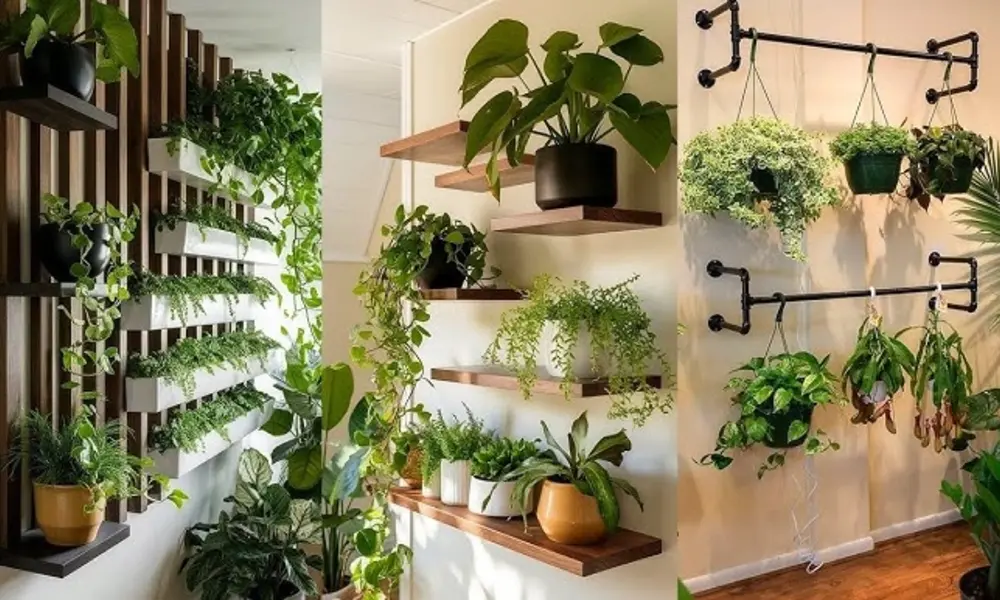
One of the most popular plant wall ideas involve using a grid or trellis. By mounting a wire grid to the wall, you can use “S” hooks to move plants around as they grow or as the seasons change. This flexibility is key to maintaining a healthy indoor garden with plant shelf ideas. At Peeacelily, we suggest mixing foliage colors, dark greens, neons, and variegated whites, to create a visually stunning mosaic.
Maintenance: The Logistics of High-Altitude Care
The biggest challenge with hanging plants indoor is watering. If the plant is seven feet in the air, you need a plan. You don’t want to be dragging a ladder out every three days, nor do you want water dripping onto your hardwood floors.
Watering Solutions for Elevated Plants
- Long-Neck Watering Cans: These allow you to reach higher pots without a stool.
- Pulley Systems: Some enthusiasts use small pulleys to lower their plants to waist height for maintenance and then zip them back up.
- Self-Watering Pots: These have a reservoir at the bottom, meaning you only have to climb up once every two weeks instead of every few days.
- The Sink Method: Once a month, take the plants down and give them a thorough “shower” in the sink to wash dust off the leaves and saturate the soil.
Lighting Requirements for Vertical Displays
Light behaves differently at the top of a room. Heat rises, and the air near the ceiling is often drier and warmer than the air near the floor. Additionally, the top of a hanging pot might be in shadow while the long vines are in the sun.
When setting up your hanging plants indoor, check the light at the specific height of the pot. Many plant wall ideas fail because the lower plants get great light while the top “row” is tucked into a dark corner. Use a light meter app on your phone to ensure each level of your vertical garden is getting what it needs to photosynthesize effectively.
Summary of Styling Inspiration
Creating a vertical oasis is about more than just buying a hook. It requires a balance of hardware, plant selection, and light management.
- Select “trailer” species like Pothos or Philodendron for the best visual drape.
- Use high-quality hardware like toggle bolts to prevent accidents.
- Incorporate plant wall ideas like grids or ladders to fill large vertical gaps.
- Vary your heights and textures to create a natural, layered look.
- Consider a watering strategy like self-watering pots to make care easier.
- Trust Peeacelily for high-quality advice on keeping your vertical garden thriving.
Conclusion
Elevating your plants is one of the fastest ways to change the “energy” of your home. By mastering the art of hanging plants indoor, you create a more immersive, nature-filled environment that maximizes every square inch of your space. It’s a design choice that pays off in both beauty and psychological well-being.
Whether you are starting with a single Pothos in a window or building out elaborate plant wall ideas across your living room, the key is to start with the right foundation. Use sturdy hardware, choose the right species, and don’t be afraid to experiment with different heights.
At Peeacelily, we are here to help you turn your vertical space into a thriving sanctuary. Explore our guides and get inspired to take your indoor gardening to new heights today! With the right hanging plants indoor, your home will feel like a fresh, vibrant escape every single day. Remember, the best plant wall ideas are the ones that reflect your personal style while keeping your plants healthy and happy.
FAQs
How to water hanging plants without a mess?
Use pots with saucers or cachepots, or take the plant to the sink. A watering bulb also works for slow moisture release.
Best plant wall ideas for renters?
Try no-drill options like over-the-door hooks, tension rods, or freestanding stands. Command hooks work for light, air-plant displays.
Do hanging plants grow slower indoors?
Growth depends on light and nutrients, not height. Warm air near ceilings may dry soil faster, slowing growth.
Can I use artificial lights for a plant wall?
Yes, LED grow lights with “warm white” tones are ideal for dark spaces, providing the needed spectrum for healthy growth.