An exterior light with an outlet solves a small problem nearly every garden has. You want light by the door, and somewhere to plug in the string lights, the hedge trimmer, or the Christmas decorations. A light with a built-in outlet puts both in one place on the wall, and once you have one by the back door, you wonder how you managed without it.
The idea is simple. The fitting lights the porch or patio, and underneath the lamp there is a weatherproof socket with a hinged cover that snaps shut when nothing is plugged in.

What Counts as an Exterior Light With an Outlet?
There are three main kinds. The most common is a wall lantern with a socket built into its base. It looks like an ordinary porch light, but under the lamp there is a covered outlet, sometimes one socket, sometimes two. These are usually hardwired, so they need an electrician to fit.
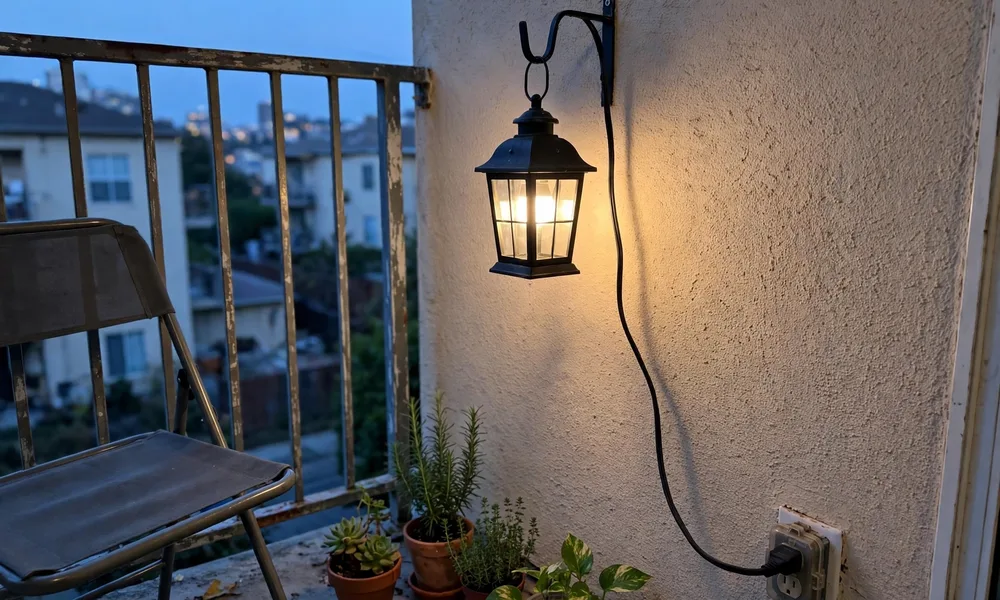
The second kind is a post light with an outlet in the base, which suits a driveway or the end of a garden path where there is no wall to mount a light on. The third is a plug-in lantern, which hangs from a bracket and runs from a cord to an existing outdoor socket. It needs no wiring, and you can move it in minutes.
What You Can Actually Plug In
The most popular use is string and festoon lights. A patio string usually needs one socket, and the light by the door is the closest one to the seating area, so the cable run is short and tidy. The same socket can power a lantern, a small water feature pump, or the transformer for garden spotlights.
Seasonal decorations are the other big use. Christmas lights and summer party lights all need power outside, and running an extension lead through a window is how cables get damaged and cold air gets in. The outlet is also the most convenient socket for garden tools: a hedge trimmer or a pressure washer works better from a socket by the back door than from one dragged across the kitchen. Keep the load light, though, and never use a socket that feels loose, cracked, or damp inside.
Where to Put Them: Porch, Patio, and Garden
The front porch is the natural first spot. A wall light with an outlet beside the door lights the step and the lock, and the socket is there for a wreath light at Christmas or a lantern on a summer evening. Mount it at eye level, about 150 to 170 centimetres above the ground, so the light falls on the step and the socket is easy to reach.
The back patio is where the outlet earns its keep. Our guide to how to style a small patio with plants shows how pots, seating, and light turn a slab into an outdoor room, and an outlet in the patio light makes that room work after dark. One socket runs the string lights over the table, and a second runs a small fountain.

Weatherproofing: The Part That Actually Matters
Look for a fitting with an IP rating of at least IP44, which means it is protected against splashing water from any direction. For a fitting that rain can hit directly, IP65 is the safer choice. The outlet cover matters just as much: a good one seals shut when empty and has a flap that closes around a plugged-in cable, so rain cannot run down the cord and into the socket.
Every outdoor socket should be protected by a GFCI, also called an RCD in some countries, which cuts the power in a fraction of a second if it detects a fault. Most modern homes already have this protection on outdoor circuits, but older houses may not, so ask an electrician to check. Test the protection every few months, and if a socket trips often, do not just keep resetting it. Keep the cover closed when the socket is not in use, and run cables so they drip away from the socket, not towards it.
Safe Installation: What You Can Do and What Needs an Electrician
Plug-in lights are a job anyone can do. Hang the bracket, plug the cord into an existing outdoor socket, and clip the cable neatly along the wall, out of the way of feet and doors.
Hardwired lights with an outlet are different, and this is where you should call an electrician. The fitting connects to the mains, the circuit needs the right protection, and the cable has to be rated for outdoor use. A professional will also check that the circuit can handle the extra load. If you are replacing an existing wall light, the wiring is already there, but turn the power off at the consumer unit first, and if the old wiring looks frayed or damp, stop and call a professional.
Renter-Friendly Options That Need No Drilling
Renters can still have exterior lights with an outlet, as long as nothing is screwed into the walls. A plug-in lantern on a freestanding hook or a clamp-on bracket gives you light and a spare socket without a single hole. Battery lanterns are even simpler: charge them indoors, hang them on a hook, and bring them in when it rains. Our guide to how to pick the right outdoor lamp for your garden covers the movable kinds, and most suit a rented patio or balcony.

Choosing the Right One and Avoiding Mistakes
Brightness and colour matter more than the shape of the fitting. A porch light of 200 to 400 lumens is plenty for a door, and a patio light of 300 to 600 lumens will light a seating area without dazzling anyone. Warm white, around 2700K to 3000K, gives the soft amber glow that suits brick, timber, and plants, while cool white looks harsh outside. Match the colour temperature to your other outdoor lights.
The most common mistake is putting the outlet where water collects: at the bottom of a wall, under a dripping gutter, or in a dip in the garden. Another is buying a light with no cover on the outlet, or a cover that does not close around a plug. Our guide to exterior wall lights explains brightness and placement in full, and the same rules apply when the fitting has a socket built in.
A Simple Plan for Your Porch, Patio, or Garden
Start with one fitting by the door you use most. A wall light with a built-in outlet beside the back door covers the patio, the path, and the garden tools in one go. Plug the string lights into it first, and see how the garden looks at dusk before you buy anything else. Keep the light warm, keep the outlet covered when it is not in use, and keep the cables short and off the ground.