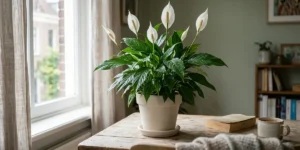
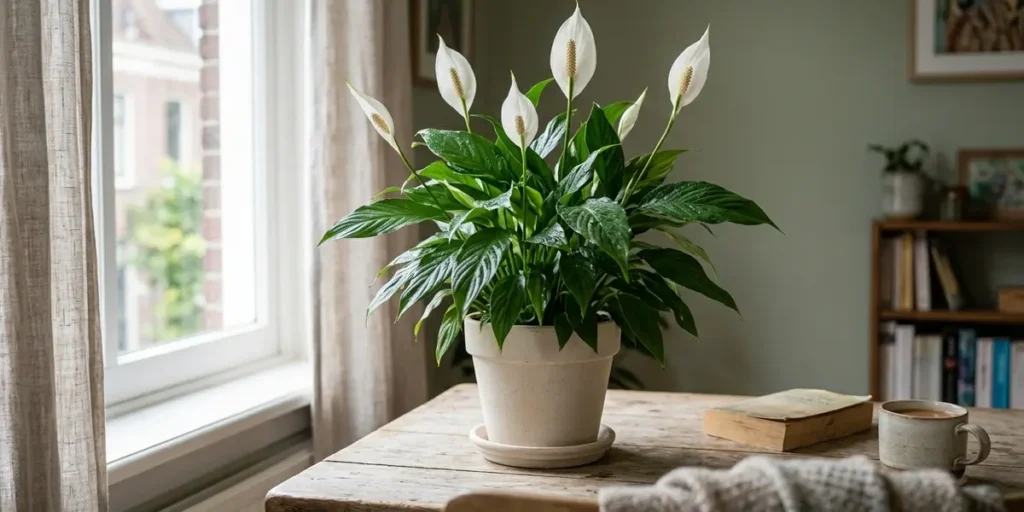
A peace lily can look perfect for two weeks after you bring it home. Then, almost overnight, its green leaves hang over the edge of the pot, and the white flowers start looking tired. If you received it as a housewarming gift or brought one home after a funeral, that change can feel especially upsetting.
Your first thought might be that the plant needs more water. You reach for the watering can, give it another drink, and wait for the leaves to stand up again. Sometimes that works. Other times, the soil is already wet, and adding more water makes the real problem worse.
Good peace lily care is not about watering every day or finding the perfect spot once and forgetting about it. It means understanding how much light the plant receives, checking its soil before watering, and noticing what its leaves are telling you.
The good news is that peace lilies are forgiving houseplants when their basic needs are met. You can keep one healthy for years without buying expensive equipment or following a complicated routine.
This guide explains how to care for a peace lily, encourage its white blooms, fix yellow leaves and brown tips, and protect cats and dogs from the plant’s toxic sap and crystals.
Peace Lily Care: Quick Facts
- Botanical name: Spathiphyllum species.
- Light: Bright, indirect light is best. Lower light can keep the plant alive, but flowering may decrease.
- Water: Check the top inch of soil and water when it feels dry. Don’t rely on a fixed weekly schedule.
- Temperature: Aim for a comfortable indoor range of around 65–80°F (18–27°C), and avoid cold drafts.
- Humidity: Average home humidity is often tolerated, although moderately humid air can help prevent dry leaf edges.
- Fertilizer: Use a balanced houseplant fertilizer sparingly during active growth.
- Repotting: Move up one pot size when roots become crowded.
- Pet safety: Peace lilies are toxic to cats and dogs because they contain insoluble calcium oxalate crystals.
How to Care for a Peace Lily
To care for a peace lily, place it in bright, indirect light and use a pot with drainage holes. Check the top inch of soil before watering, keeping the mix lightly moist rather than soggy. Maintain a comfortable indoor temperature, feed sparingly during active growth, and remove yellow leaves or spent flowers. Keep the plant out of reach of pets.
Peace Lily Light Requirements
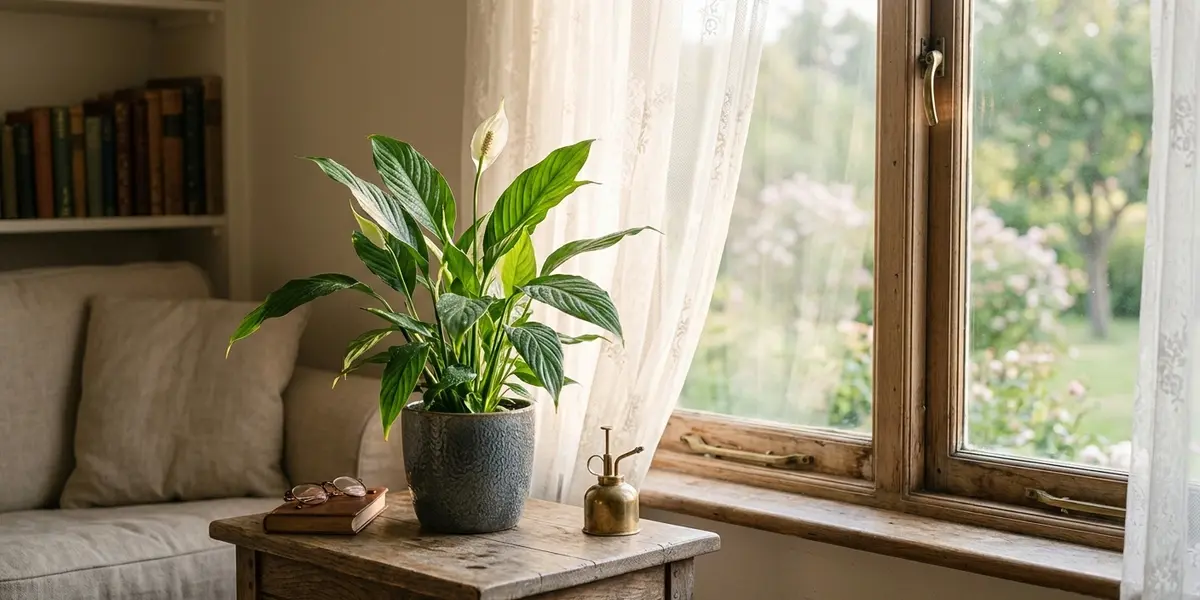
Light is one of the biggest factors affecting peace lily growth. A plant can survive in a dim corner for some time, but survival and healthy growth are not the same thing.
Peace lilies grow best in bright, indirect light. That means the room receives plenty of daylight, but the leaves aren’t exposed to strong direct sun for long periods. An east-facing window is often a useful starting point because it provides gentler morning light.
Can a peace lily grow in low light?
Yes, within limits.
Peace lilies can tolerate lower light than many flowering houseplants. That’s one reason they’re popular in homes and offices. However, a plant kept far from a window may grow slowly, produce fewer leaves, and struggle to flower.
If your peace lily has healthy green leaves but hasn’t produced a white bloom in months, check its light before changing its fertilizer.
Move it closer to a bright window if the current spot is dim. A sheer curtain can soften strong sunlight, especially near a south- or west-facing window.
Does direct sunlight burn peace lily leaves?
It can. Strong direct sunlight may leave pale, bleached, or brown patches on the foliage. Afternoon sun can be particularly harsh through an exposed window.
Don’t move a plant from a dark corner straight into intense sunlight. Increase its exposure gradually and watch how the leaves respond.
Try the hand-shadow test
Here’s a simple way to judge the light in your room:
- Hold your hand a few inches above a piece of white paper near the plant.
- Look at the shadow your hand makes.
- A fairly distinct shadow suggests stronger light; a soft, faint shadow suggests more filtered or lower light.
This isn’t a scientific light measurement, and the result changes with weather and window direction. Still, it can help you compare two locations in your home.
Practical rule: Choose the brightest comfortable spot where direct sun doesn’t scorch the leaves. If flowering matters to you, give the plant more indirect light rather than relying on a dark corner.
How Often to Water a Peace Lily
Watering is where many peace lily owners get confused. One guide says to water when the top inch is dry. Another suggests allowing half the soil to dry. Some recommend watering once a week.
These instructions aren’t necessarily describing the same growing conditions. A small plant in a warm room may dry much faster than a large plant in a cool, dim room.
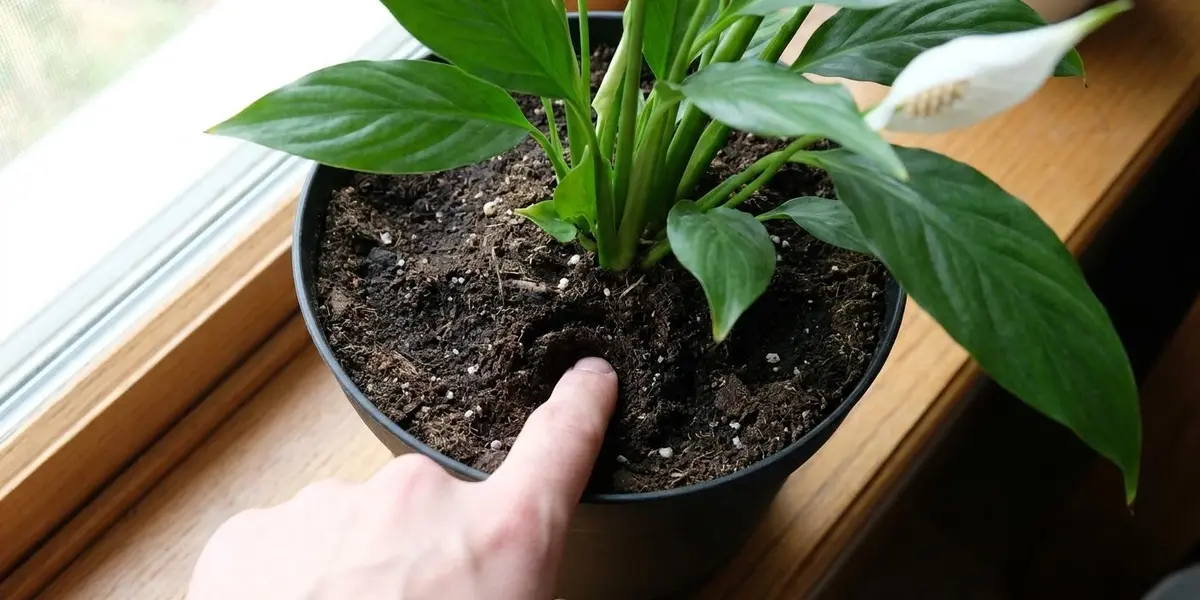
For most home growers, a useful starting point is to check the top inch of soil and water when it feels dry. Don’t wait for the entire root ball to become bone-dry, but don’t keep the soil constantly soaked either.
Three common watering rules compared
| Rule | What it means | When it helps |
|---|---|---|
| Top inch feels dry | Check the surface soil with a finger | A practical starting point for peace lilies |
| Top half of soil dries | Allow a deeper layer to dry before watering | May suit some setups, but can leave a thirsty peace lily dry for too long |
| Water once a week | Use seven days as a reminder to check | Useful as a reminder, not a guaranteed watering schedule |
Costa Farms recommends checking the top inch and keeping the soil moist but not soggy. Bloomscape also discusses watering after the top inch dries for its standard peace lily guidance, while its Domino guide describes allowing more of the soil to dry. These differences show why the condition of your actual plant and pot matters more than a calendar.
How much water does a peace lily need?
Costa Farms gives these approximate starting amounts for its peace lilies:
| Pot diameter | Approximate starting amount |
|---|---|
| 6 inches | 1 cup |
| 10 inches | 3 cups |
These amounts are useful references, not universal limits. A cup of water may be enough for one pot but leave another dry. Potting mix, root density, temperature, and drainage all affect how much water the plant needs.
For a plant in a pot with drainage holes, water slowly and check whether excess water begins to run from the bottom. If the soil is extremely dry and water runs straight down the sides, apply the water gradually so the mix has time to absorb it.
Always empty the saucer after about 10 minutes. Leaving the pot sitting in collected water can deprive roots of oxygen and encourage root problems.
Should you water more in summer or winter?
Usually, a peace lily uses water faster during warmer, brighter growing periods. In winter, growth and water use may slow because daylight is weaker and indoor conditions are cooler.
| Season | What to do |
|---|---|
| Spring and summer | Check the soil more frequently. Water when the top inch is dry. |
| Autumn | Continue checking regularly, but expect the soil to dry more slowly if light levels drop. |
| Winter | Check before watering and allow for slower drying. Don’t keep watering at the summer rate automatically. |
These are seasonal patterns, not a strict schedule. A warm room with bright windows can dry out in winter, too.
What if your peace lily suddenly droops?
Don’t automatically pour in more water.
First, touch the soil. If it feels dry, water thoroughly and allow excess water to drain. A thirsty peace lily often recovers after watering, sometimes within hours.
If the soil is already wet, stop and investigate. Constantly wet mix, damaged roots, or poor drainage can also cause drooping. Adding more water to a waterlogged plant can make the problem worse.
Best Water for Peace Lilies: Tap, Filtered or Rainwater?
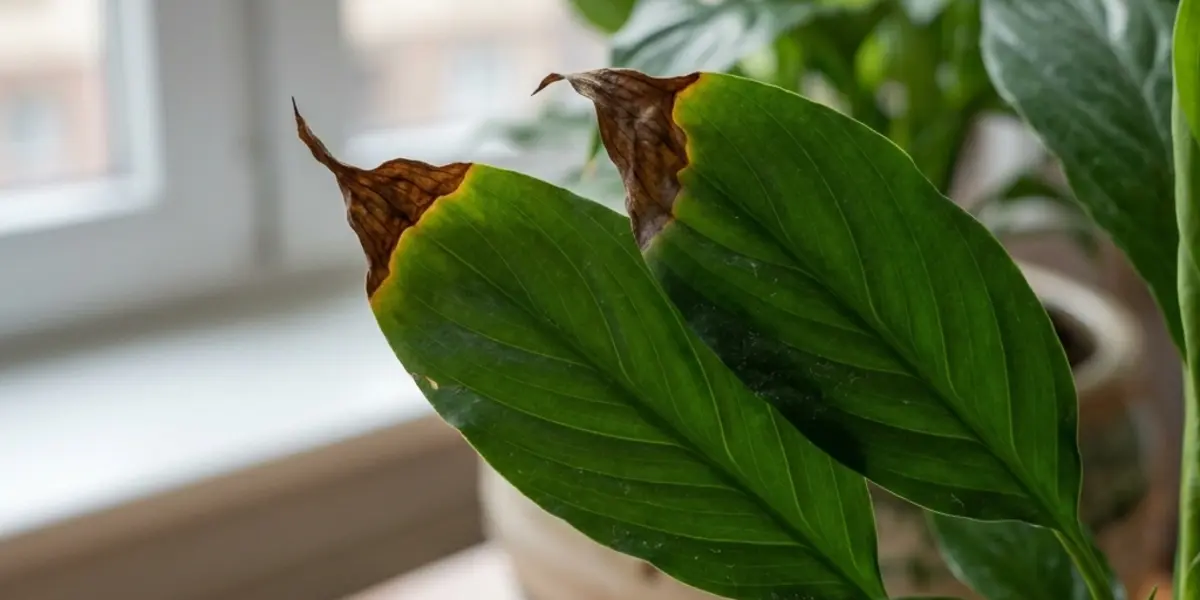
You don’t necessarily need special water to keep a peace lily alive. Tap water works for many plants in many homes. However, water quality can affect the appearance of the leaves, especially when the local supply contains substantial dissolved minerals or fluoride.
If your plant repeatedly develops brown tips despite sensible watering and good light, consider whether water quality could be contributing.
Is tap water safe for a peace lily?
Often, yes. There isn’t one rule that applies to every municipal water supply.
Some tap water contains fluoride and dissolved salts that can build up in the potting mix over time. Peace lily leaf tips may become brown or crispy when sensitive roots take up water containing certain substances or when salts accumulate around them.
Other factors, including dry air, excessive fertilizer, and inconsistent watering, can produce similar symptoms. Brown tips alone don’t prove that fluoride is the problem.
Should you use filtered or rainwater?
If water quality appears to be an issue, try room-temperature rainwater collected cleanly or filtered water from a system that actually reduces the relevant dissolved substances. Not every household filter removes fluoride, so check its specifications if that is your concern.
Avoid using water straight from a water softener unless you know it is suitable for your plant; some softening systems add sodium.
If your peace lily is growing well with tap water, there’s usually no need to change it simply because another guide recommends filtered water.
A sensible approach: Check watering, drainage, fertilizer use, and light first. If brown tips continue to appear, water quality is worth investigating rather than assuming it is the only cause.
Peace Lily Humidity and Temperature
Peace lilies are tropical plants, so they generally appreciate warmth and some humidity. The good news is that you don’t need to turn your home into a greenhouse to grow one successfully.
A comfortable indoor room is often suitable as long as the plant isn’t exposed to sudden temperature changes or very dry air.
What temperature is best for a peace lily?
A range of about 65–80°F (18–27°C) is a practical target for everyday indoor growing. Costa Farms advises keeping peace lilies above 60°F, while Bloomscape recommends average room temperatures around 60–80°F. Avoid treating a single temperature as a magic threshold; prolonged cold and sudden changes are more concerning than a brief small fluctuation.
Keep your plant away from:
- Cold drafts from frequently opened doors or windows.
- Air-conditioning vents blowing directly onto the leaves.
- Heaters and fireplaces that create hot, dry air.
- Outdoor areas where temperatures can drop sharply at night.
If the plant sits directly under an air-conditioning vent, try moving it to a more sheltered position before changing its watering routine.
Does a peace lily need 40–60% humidity?
Moderate humidity is a helpful target, especially if your home has dry air. A room humidity level around 40–60% is a reasonable range to aim for when practical, but it isn’t a strict survival requirement for every peace lily.
If the air is very dry and the leaf tips keep turning brown, a small humidifier near the plant can help. Grouping several plants together may also make the immediate area slightly more humid.
Does misting help peace lilies?
Misting is often recommended as a quick fix, but it doesn’t keep humidity elevated for long. The water evaporates, and the room’s humidity soon returns to its previous level.
You can wipe dusty leaves with a damp cloth, but don’t depend on daily misting to solve a dry-air problem. If humidity is genuinely too low, a humidifier provides more consistent control.
Best Soil, Pot and Repotting for a Peace Lily
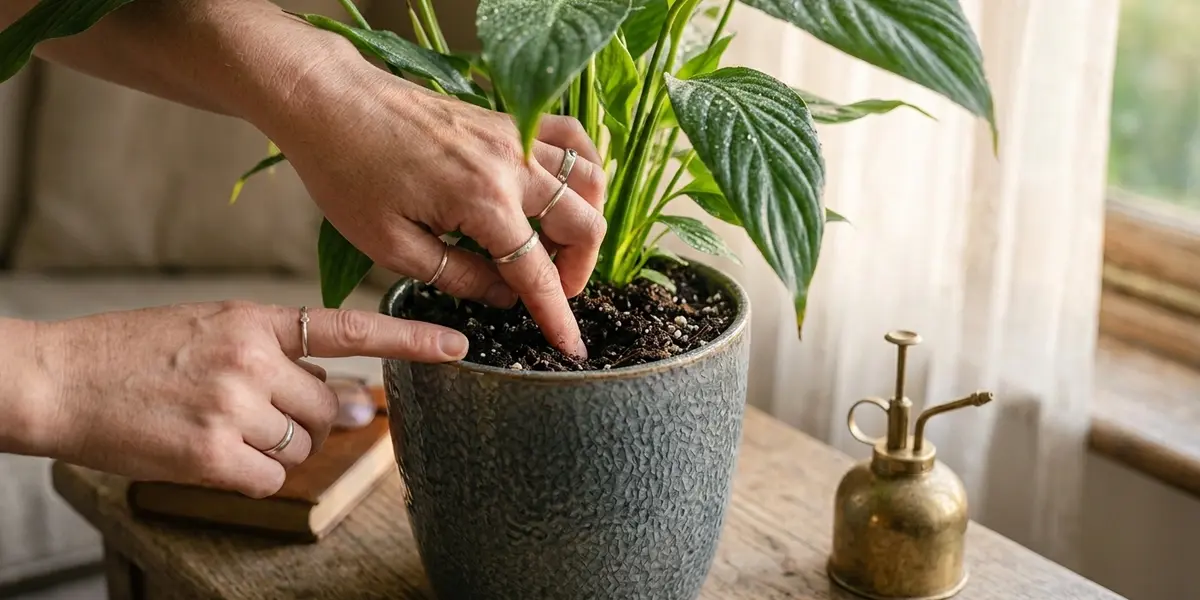
The right pot and soil make watering much easier. A peace lily likes moisture, but its roots still need oxygen. Soil that stays wet for too long can damage the root system even when the leaves appear thirsty.
What soil should you use?
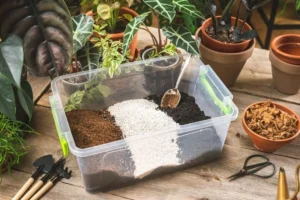
Choose a quality indoor potting mix that holds some moisture while allowing excess water to drain. A mix that becomes dense and muddy after watering is a poor choice.
You can improve a heavy commercial mix by adding a suitable aerating material, such as perlite, following the needs of the mix and your growing conditions. The aim is to maintain moisture without leaving the roots in a soggy mass.
Don’t use ordinary garden soil in a houseplant pot. It can compact in containers and may not provide the drainage and air space the roots need.
Does a peace lily pot need drainage holes?
Yes, drainage holes are strongly recommended.
A decorative pot without holes can hide standing water at the bottom. The surface may look dry while the lower soil remains saturated, which makes watering much harder to judge.
If you like a decorative outer pot, keep the plant in a nursery pot with drainage holes inside it. Remove the inner pot to water, let it drain, and empty any water collected in the outer container before returning the plant.
When should you repot a peace lily?
Repot when the roots have filled the available space or the plant dries unusually quickly because the root ball has become crowded. Roots emerging from drainage holes can be one clue, although a few visible roots alone don’t automatically mean repotting is urgent.
Choose a pot only one size larger than the current one. A huge container holds more wet soil around the roots than the plant can use, increasing the risk of overwatering.
Spring or early summer is often a convenient time because the plant can recover while actively growing.
For more help identifying crowded roots, link this section to your existing Root-Bound Plants article.
How and When to Fertilize a Peace Lily
Fertilizer can support healthy leaves and flowering, but more isn’t better. Too much fertilizer can cause salt buildup and contribute to brown leaf tips.
Use a balanced liquid houseplant fertilizer during active growth in spring and summer. Start at half the strength stated on the label unless the product specifically directs otherwise. Costa Farms recommends monthly feeding during the growing season at half strength, and Bloomscape also recommends feeding in spring and summer.
A few rules make feeding easier:
- Fertilize a plant that is actively growing, not one with badly damaged roots.
- Don’t apply extra fertilizer to force a plant to bloom.
- Avoid feeding dry, stressed roots with a strong fertilizer solution.
- Reduce or stop feeding in winter when growth slows, unless the plant is clearly growing under suitable conditions.
If you see a white crust on the soil surface or repeated crispy leaf edges, review both fertilizer use and water quality. Flush the mix with suitable water if drainage is good, and allow the pot to drain completely.
For more detailed measurements and dilution advice, link this section to your existing fertilizer-dosing article.
Why Is My Peace Lily Not Blooming?
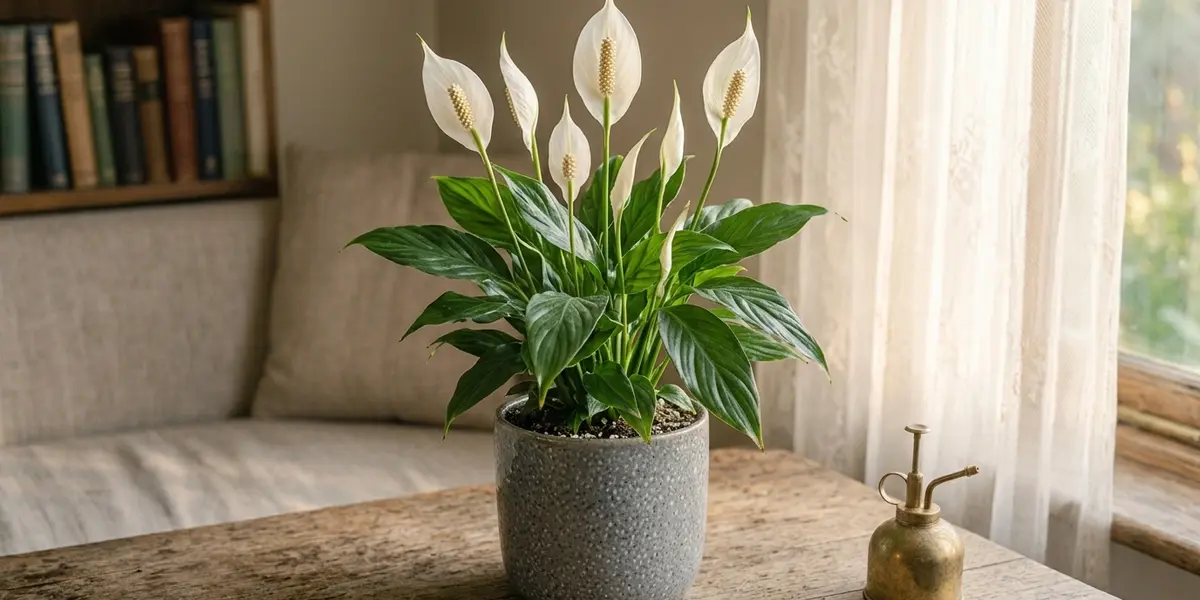
A peace lily can have beautiful green leaves and still refuse to flower. This doesn’t automatically mean the plant is unhealthy.
The first thing to check is light. Peace lilies tolerate lower light, but they generally flower more reliably when they receive bright, indirect daylight. A plant placed far from a window may survive for months without producing a bloom.
Common reasons a peace lily won’t flower
1. Not enough light. Move the plant closer to a bright window or a position with filtered daylight. Avoid strong direct sun.
2. The plant is still young. Small nursery plants may need time to mature. Flowering also depends on the cultivar and growing conditions.
3. Too much fertilizer. Excess feeding won’t force blooms and can damage roots. Follow the label rather than increasing the dose.
4. The plant is stressed. Persistent wet soil, severe dryness, cold drafts, or root crowding can slow growth and reduce flowering.
How often do peace lilies bloom?
Peace lilies can flower more than once a year under suitable growing conditions, but there is no guarantee of a particular number of blooms. Light, plant maturity, cultivar, and indoor conditions all play a part. Costa Farms notes that blooms may appear several times a year when the plant receives enough light.
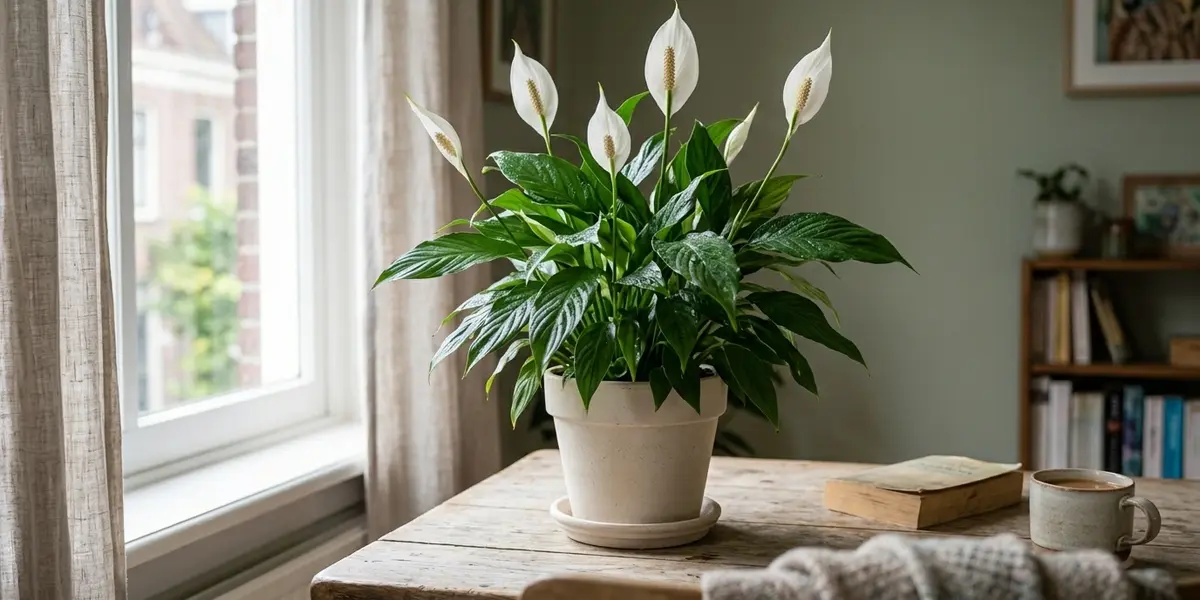
Remember that the white part commonly called the flower is technically a spathe, a modified leaf surrounding a central structure called the spadix. When the white spathe turns green or brown as it ages, that doesn’t necessarily mean the whole plant is unhealthy.
Once a bloom has faded, cut the flower stalk near its base with clean scissors. Leave healthy green leaves in place because they still help the plant grow.
Peace Lily Problems: Yellow Leaves, Brown Tips and Drooping
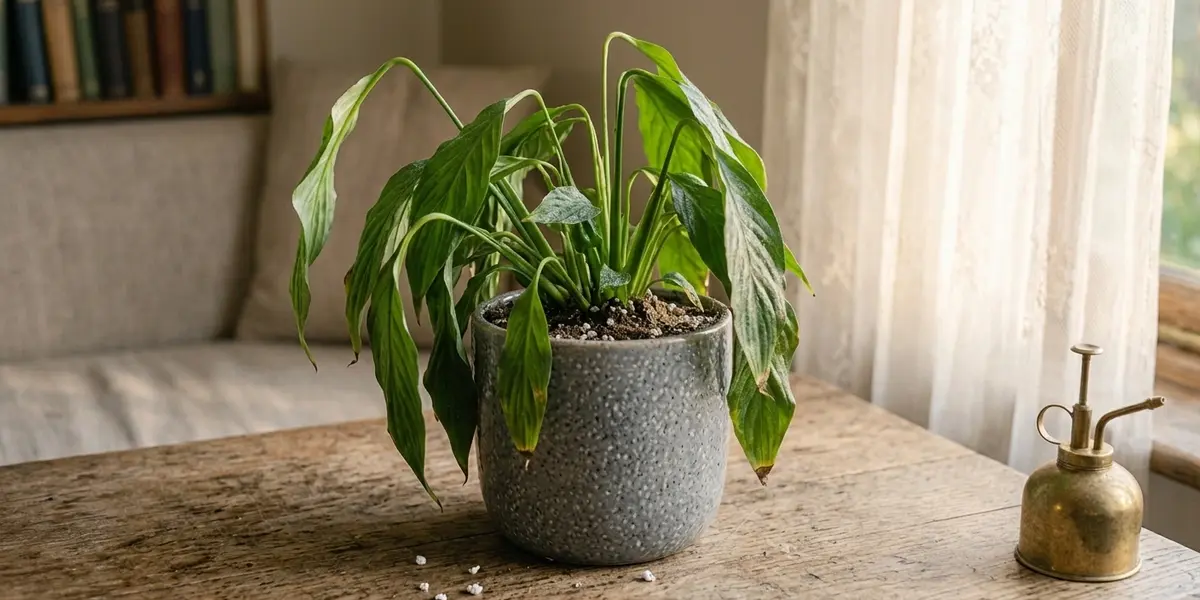
When a peace lily looks unwell, its leaves provide clues, but they don’t always identify the cause on their own. Start by checking the soil and the plant’s location before changing several things at once.
| Symptom | Possible cause | What to do first |
|---|---|---|
| Limp, drooping leaves and dry soil | Underwatering | Water thoroughly and allow excess water to drain |
| Drooping leaves and wet soil | Overwatering or root trouble | Stop watering until you assess the soil and drainage |
| Yellowing lower leaves | Natural aging, excess water, or other stress | Check whether one old leaf or many leaves are affected |
| Brown, crispy tips | Water quality, low humidity, fertilizer salts, or inconsistent watering | Review water, humidity, feeding, and soil moisture |
| Pale or scorched patches | Too much direct sunlight | Move the plant into bright, indirect light |
| Slow growth and few flowers | Insufficient light, poor growing conditions, or a young plant | Improve indirect light and check the roots and soil |
| Soft, dark roots or a sour smell from the mix | Possible root rot | Inspect the roots and remove damaged tissue if necessary |
How to fix a drooping peace lily
Check the soil before doing anything else.
If the soil is dry, water it thoroughly and let the pot drain. If the soil is wet, don’t add more water just because the leaves are limp.
If the plant remains droopy despite suitable moisture, inspect the drainage holes and consider whether the roots have been damaged. Cold air, heat, and sudden environmental changes may also contribute.
Avoid repeatedly watering a wet plant in the hope that it will recover. Roots need both moisture and air.
Why are the leaves turning yellow?
A single older leaf turning yellow can be part of normal aging. Several yellow leaves appearing together suggest that something may have changed.
Check whether the pot is staying wet, whether the plant receives enough light, and whether the roots have space to grow. Also consider recent changes in watering or fertilizer.
Remove fully yellow leaves with clean scissors, but fix the underlying problem rather than simply cutting off every damaged leaf.
Why are the tips brown?
Brown tips are especially frustrating because they can remain even after you correct the cause. Existing damaged tissue usually won’t turn green again, so judge improvement by the condition of new growth.
Review water quality, humidity, fertilizer concentration, and watering consistency. Change one likely cause at a time so you can see whether the problem improves.
For a deeper troubleshooting guide, link this section to your existing article about drooping houseplants.
Are Peace Lilies Toxic to Cats and Dogs?
Yes. Peace lilies are toxic to cats and dogs. The ASPCA lists Spathiphyllum as toxic to both and identifies insoluble calcium oxalates as the toxic principle.
When a pet chews the leaves or other parts of the plant, these crystals can irritate the mouth and digestive tract. Signs may include:
- Drooling or pawing at the mouth.
- Pain or irritation of the tongue and lips.
- Vomiting or difficulty swallowing.
- Swelling or more serious symptoms in some cases.
If your pet chews a peace lily, contact your veterinarian promptly for advice. If there is difficulty breathing or swallowing, seek urgent veterinary care. The ASPCA Animal Poison Control Center also provides guidance at (888) 426-4435; consultation fees may apply.
Peace lilies are not the same as true lilies (Lilium species), which can cause life-threatening kidney injury in cats. That distinction doesn’t make peace lilies safe to chew; it means the plants have different toxic effects.
If you have curious pets, place the plant somewhere they cannot reach, or choose a pet-safer houseplant instead.
How to Propagate a Peace Lily by Division
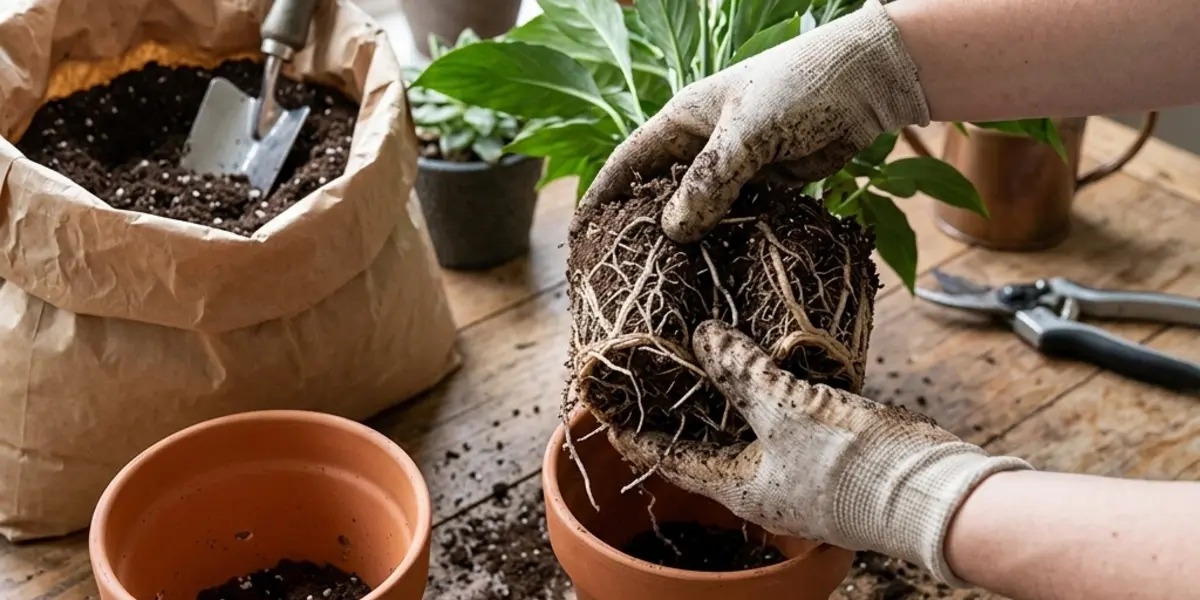
Peace lilies are generally propagated by dividing an established plant into smaller sections with their own roots. You can’t reliably grow a new peace lily by cutting off a single leaf and placing it in water.
Spring or early summer is a practical time to divide because the plant is entering an active growing period.
Step 1: Remove the plant from its pot
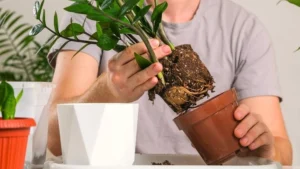
Watering lightly beforehand can make the root ball easier to handle, but don’t work with a soggy mess. Support the plant near its base and gently slide it out of the container.
Step 2: Find separate growth clumps
Look for natural groups of leaves with their own roots. Some mature peace lilies form several distinct crowns, making division easier.
Don’t split a small plant that has only one compact crown just because you want more plants.
Step 3: Separate the divisions
Gently tease apart the roots. If they are tightly connected, use a clean, sharp knife to separate the clumps while preserving as many healthy roots as possible.
Each new section needs roots and leaves to survive. Discard any clearly rotten or badly damaged root material with clean tools.
Step 4: Pot each section
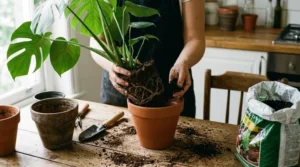
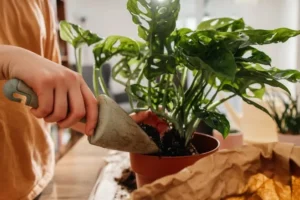
Place each division into a pot with drainage holes and fresh, well-draining houseplant mix. Choose a pot that fits the root system rather than one that leaves a large amount of extra wet soil.
Water enough to settle the mix, then allow excess water to drain.
Step 5: Give the plants time to recover
Keep the divisions in bright, indirect light and maintain steady, appropriate moisture. Avoid strong sunlight, heavy fertilizer, and repeated repotting while they recover.
Some temporary drooping can occur after division. Watch for new growth over the following weeks rather than expecting an immediate flush of new leaves.
Costa Farms also recommends division as the propagation method for peace lilies.
Peace Lily Varieties and Sizes
Not every peace lily looks the same. Some remain fairly compact, while others grow into large floor plants. If you’re buying one for a desk, shelf, or narrow room, check the cultivar and mature size rather than relying only on its appearance at the garden center.
| Variety | General appearance | What to consider |
|---|---|---|
| ‘Domino’ | Green leaves marked with cream or white variegation | Needs good indirect light to maintain attractive leaf patterning |
| ‘Mauna Loa’ | Classic green foliage and white spathes | A familiar choice for homes and offices |
| ‘Sensation’ | Very large, deeply ribbed green leaves | Needs more floor space as it matures |
| ‘Clevelandii’ | Classic green foliage with a more compact-to-medium growth habit | Check the grower’s stated size because labels can vary |
Cultivar size varies with growing conditions and the plant’s age, so treat these descriptions as general guidance rather than exact guarantees. Grower references describe ‘Domino’ as variegated and ‘Sensation’ as a large foliage type.
For most beginners, a standard green peace lily is a sensible starting point. Choose a variegated type if you prefer patterned leaves and can provide brighter indirect light. Choose a large cultivar only if you have room for it to spread.
Your Weekly Peace Lily Routine
You don’t need to spend half an hour caring for a peace lily every week. A quick five-minute check can help you catch common problems before they become serious.
1. Check the soil. Push a finger about an inch into the potting mix. If it feels dry, assess whether the plant needs watering. If it’s still moist, wait and check again later.
2. Lift the pot. With experience, you can learn the difference between a pot that is freshly watered and one that has dried considerably. Pot weight is a useful extra clue, although it doesn’t replace checking the soil.
3. Look at the leaves. Check for yellowing, crispy tips, pests, or new damage. Remove fully dead leaves with clean scissors.
4. Review the light. Make sure the plant hasn’t been pushed into a dark corner or moved into harsh direct sunlight.
5. Empty the saucer. After watering, check for standing water and remove it after about 10 minutes.
6. Look at the room. Check for cold drafts, strong air-conditioning, or dry air from a heater. Move the plant if its location has become uncomfortable.
You won’t necessarily need to water or prune every week. The purpose is to check what the plant needs, not to perform every task on a schedule.
Conclusion: Help Your Peace Lily Settle In
A peace lily received as a gift can become a lasting part of a home, but it may need a little adjustment after you bring it inside. The first droop or yellow leaf doesn’t mean you’ve failed. It means you need to look at the plant and work out what has changed.
Start with the basics: bright, indirect light, a pot with drainage holes, and soil that stays lightly moist without becoming waterlogged. Check the soil before watering, and don’t assume brown tips always mean the plant needs more humidity. Water quality, fertilizer, and other growing conditions can matter, too.
If flowers are your goal, give the plant enough indirect light and be patient. If you have cats or dogs, keep the plant out of their reach because peace lilies are toxic when chewed.
Think of the gift plant again. Instead of trying to make it perfect every day, give it a suitable spot and learn its normal growing pattern. With a simple routine and a little attention, you can enjoy its green leaves and occasional white blooms for years.
Frequently Asked Questions About Peace Lily Care
1. How often should I water a peace lily?
Check the top inch of soil and water when it feels dry. The interval may be shorter in warm, bright conditions and longer in a cool room.
2. Do peace lilies need sunlight?
They need light, but not strong direct sun. Bright, indirect daylight is best for healthy growth and flowering.
3. Why is my peace lily drooping?
Dry soil may mean the plant needs water, but wet soil can point to overwatering or root trouble. Check the soil before adding more water.
4. Why are my peace lily leaves turning yellow?
Possible causes include natural aging, overwatering, insufficient light, and root problems. Check the soil and look for whether one leaf or several are affected.
5. Why are the tips of my peace lily turning brown?
Low humidity, water quality, fertilizer salts, and inconsistent watering can all contribute. Review these factors rather than assuming one cause.
6. How long do peace lilies live?
A well-cared-for peace lily can live for many years indoors. Its lifespan depends on growing conditions, root health, and ongoing care.
7. Are peace lilies poisonous to dogs and cats?
Yes. They contain insoluble calcium oxalate crystals that can irritate the mouth and digestive tract. Keep them out of reach and contact a veterinarian if your pet chews the plant.
8. Can peace lilies live in low light?
They can tolerate lower light, but growth and flowering may decrease. A brighter spot with indirect light is usually better.
9. Should I mist a peace lily?
Misting provides only a short-lived change in humidity. If the air is very dry, a humidifier is a more consistent option.
10. When should I repot a peace lily?
Repot when roots crowd the container or the plant dries too quickly because the root ball has filled the pot. Move up only one pot size and use fresh, well-draining mix.