Key Takeaways
- How Often Should to Water Houseplants? There is no perfect watering schedule for every houseplant.
- Many common indoor plants can be checked every few days and watered when their soil reaches the appropriate dryness.
- Light, temperature, humidity, pot size, soil, drainage, and plant type all affect water needs.
- Water thoroughly when necessary rather than giving tiny amounts repeatedly.
- Always allow excess water to drain.
- Never leave most potted houseplants sitting in standing water.
- During winter, many plants need less water because growth slows.
- When in doubt, check the soil before reaching for the watering can.
Quick Answer
How often should you water houseplants?
Check your plants regularly and water when the soil has dried to the level appropriate for that particular plant. For many common houseplants, checking the top 1 to 2 inches of soil is a useful starting point.
When watering, soak the potting mix thoroughly until excess water drains from the bottom. Then empty the saucer or decorative outer pot so the roots are not left sitting in water.
The important point is simple: water according to the plant and its growing conditions, not simply according to the calendar.
Table of Contents
- How Often to Water Indoor Plants
- What Changes Your Watering Schedule?
- How Much Water Do Houseplants Need?
- A Simple Indoor Plant Watering Schedule
- Watering Different Types of Houseplants
- How to Tell When a Plant Needs Water
- Signs of Overwatering
- Signs of Underwatering
- Best Way to Water Houseplants
- Watering Houseplants in Summer and Winter
- Common Watering Mistakes
- Expert Tips for Healthier Houseplants
- Frequently Asked Questions
- Key Takeaways
- Conclusion
How Often to Water Indoor Plants
There is no universal indoor plant watering schedule because every home creates a slightly different environment.
A plant beside a sunny window may dry much faster than the same plant in a darker room. Similarly, a small terracotta pot can lose moisture faster than a larger plastic pot. Temperature, humidity, soil type, plant size, and airflow also make a difference.
As a practical starting point, use this guide:
| Plant situation | Possible watering range | What to check |
|---|---|---|
| Tropical foliage plants | About 1 to 2 times a week | Top layer of soil |
| Typical houseplants | About every 7 to 14 days | Soil moisture |
| Low light plants | Often less frequently | Soil before watering |
| Succulents and cacti | Much less frequently | Allow soil to dry well |
| Winter indoor plants | Often less frequently | Cooler temperature and slower growth |
These are starting points, not rules. A plant may need water sooner or later depending on its room and pot. Virginia Tech Extension, for example, notes that tropical houseplants may sometimes need watering once or twice a week, while cacti and succulents may need watering only once or twice a month.
What Changes Your Watering Schedule?
Plant Type
Different plants have different natural water requirements.
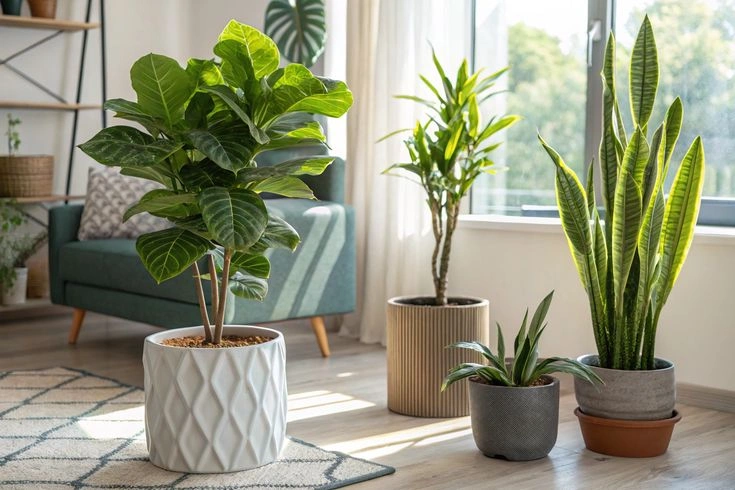
Peace lilies, ferns, and many tropical foliage plants generally prefer more consistent moisture. On the other hand, snake plants, ZZ plants, jade plants, aloe vera, and many other succulents can tolerate considerably drier soil.
For example, Peace Lily guides describe the ZZ plant as drought-tolerant because its thick stems store water, while its peace lily care guide recommends watering when the top inch of soil feels dry.
Light
Bright light usually increases water use because plants grow and lose moisture more quickly.
Therefore, a plant receiving strong indirect light may need checking more frequently than one sitting in a low light corner. However, more light does not automatically mean you should water immediately.
Always check the soil first.
Temperature and Humidity
Warm rooms can cause potting mix to dry faster, while cooler conditions usually slow water use.
Humidity matters too. Plants in dry indoor air can lose moisture more quickly, although watering the soil is still different from increasing humidity around the leaves.
Pot Size and Material
The container also affects watering frequency.
Small pots can dry quickly, while oversized pots can hold moisture for a long time. Unglazed clay pots are porous, so they generally dry faster than plastic or glazed containers.
How Much Water Do Houseplants Need?
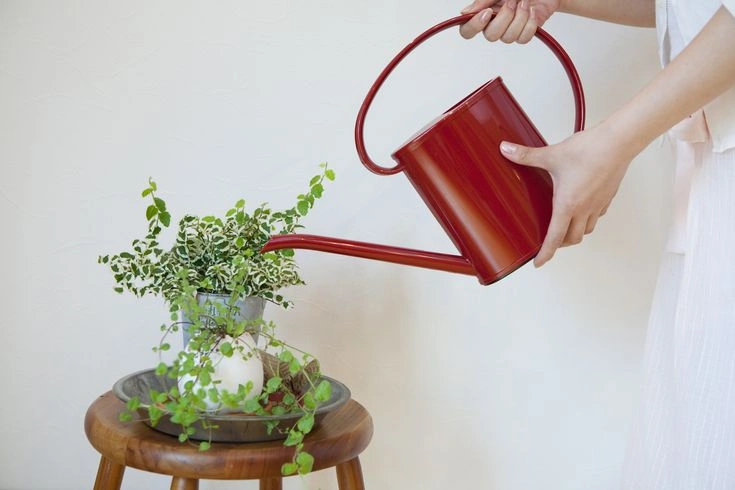
Instead of measuring a fixed number of cups for every plant, focus on thoroughly moistening the potting mix.
Pour water slowly over the soil until you see water draining from the bottom. This helps hydrate the full root zone rather than only wetting the surface. Virginia Tech recommends checking for dry areas in the potting mix and adding more water when necessary.
Afterward, let the excess drain completely.
Do not leave the pot standing in collected water. Constantly wet conditions can deprive roots of healthy air space and contribute to root problems.
A Simple Indoor Plant Watering Schedule
Instead of writing “water every Sunday” on your calendar, create a plant checking routine.
Step 1: Check the Soil
Push your finger into the soil about 1 to 2 inches, depending on the pot and plant.
If the appropriate layer feels dry, the plant may be ready for water. If it still feels wet, wait and check again later. Soil moisture is a better guide than a fixed number of days.
Step 2: Check the Pot
Lift the container if possible.
A pot that feels noticeably lighter than usual can indicate that much of the available moisture has been used. This method becomes easier once you learn the normal weight of your plant.
Step 3: Water Thoroughly
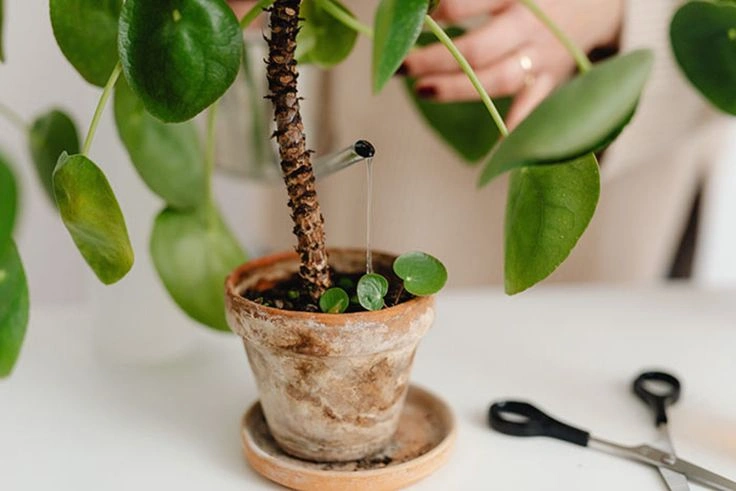
When the plant needs water, apply it slowly and evenly across the soil.
Continue until excess water comes through the drainage holes.
Step 4: Drain the Excess
Wait for the water to finish draining, then empty the saucer.
This small step can make a major difference, especially for plants that dislike constantly wet roots.
Watering Different Types of Houseplants
| Plant type | Soil preference | General approach |
| Peace Lily | Slightly moist | Water when the upper soil begins drying |
| Pothos | Moderate moisture | Allow some drying between waterings |
| Ficus | Moderate moisture | Check deeper soil before watering |
| Snake Plant | Dry between watering | Water thoroughly but infrequently |
| ZZ Plant | Dry between watering | Let soil dry well |
| Aloe Vera | Dry | Avoid frequent watering |
| Cactus | Dry | Water thoroughly, then allow substantial drying |
| Ferns | More consistent moisture | Check soil frequently |
Remember, even plants of the same type can have different needs inside different homes.
For more plant specific guidance, you can also explore Peeacelily’s [Peace Lily care guide]Peace Lily care guide, [low maintenance indoor plants guide]Low maintenance indoor plants guide, and [top indoor plants guide]Top indoor plants guide.
How to Tell When a Plant Needs Water
Your plant can give you clues, but visual symptoms should not be your only test.
Common signs of underwatering include:
- Dry potting soil
- Drooping or wilting leaves
- Crispy brown leaf edges
- Leaves becoming dull
- A noticeably lightweight pot
The RHS recommends checking the growing medium because wilting can sometimes have other causes.
If the soil is dry several centimeters below the surface, watering is more likely to be appropriate.
Signs of Overwatering
Overwatering does not always mean you gave too much water in one session. It can also mean watering again before the potting mix has had enough time to dry.
Possible signs include:
- Yellowing leaves
- Persistent wet soil
- Leaves dropping
- Soft or unhealthy roots
- A musty smell from the potting mix
- Water remaining in the saucer
The confusing part is that both overwatering and underwatering can cause wilting. Therefore, check the soil before adding more water.
Best Way to Water Houseplants
For most potted houseplants, watering from the top is simple and effective.
Pour room temperature water directly onto the potting mix rather than repeatedly sprinkling only the surface. Water until it drains through the bottom, then allow the pot to drain fully.
Bottom watering can also work for suitable plants. Place the pot in a small amount of water and allow moisture to move upward through the drainage holes. Remove it once the soil has absorbed enough moisture and allow excess water to drain.
However, whichever method you use, the goal is the same: hydrate the root zone without leaving it permanently waterlogged.
Watering Houseplants in Summer and Winter
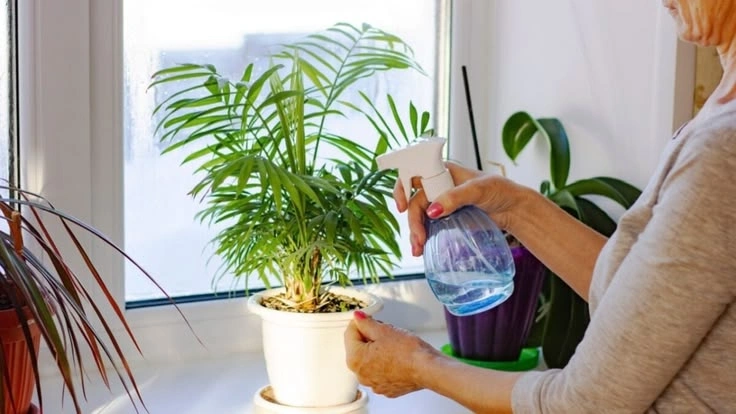
Your indoor watering routine often changes throughout the year.
Summer
During warmer months, plants may grow faster and use water more quickly. Bright windows, warm rooms, and dry air can also increase the rate at which soil dries.
Consequently, check your plants more often during hot weather.
Winter
Winter usually brings lower light and slower growth indoors, so many plants use less water.
That means watering on the same schedule as summer can increase the risk of overwatering. The RHS specifically advises reducing watering when light levels and temperatures are lower.
For homes with strong heating or very dry indoor air, however, individual plants may still dry faster than expected. Therefore, check rather than assume.
Common Watering Mistakes
Watering Every Week Automatically
A weekly routine sounds convenient, but it can be wrong for both thirsty and drought tolerant plants.
Instead, keep the weekly reminder for checking plants rather than automatically watering them.
Giving Small Amounts Too Often
A quick splash may wet the surface while leaving deeper areas dry.
When the plant actually needs water, thorough watering is generally better than frequent small amounts.
Ignoring Drainage
A decorative pot without a drainage hole can make watering much harder.
Whenever possible, use an inner pot with drainage holes and allow excess water to escape.
Following the Same Routine for Every Plant
Your fern and cactus should not necessarily receive the same treatment.
Learn the basic preference of each plant and then adjust according to the conditions in your home.
Confusing Wilting With Underwatering
A wilted plant is not automatically thirsty.
Check the soil first. Adding more water to an already saturated pot can make the problem worse.
Expert Tips for Healthier Houseplants
Check before you water. Soil moisture should guide your decision.
Water deeply when needed. Aim to moisten the root zone instead of only the surface.
Use drainage holes. They give excess water somewhere to escape.
Empty saucers. Do not let roots sit in collected water.
Watch seasonal changes. Summer and winter can produce very different watering needs.
Consider the pot. Terracotta, plastic, pot size, and drainage all influence how quickly soil dries.
Keep a simple plant log. If you have many plants, record when you checked the soil and what you noticed. Over time, you will learn the pattern of each plant.
Do not depend completely on moisture meters. A finger test, pot weight, plant behavior, and knowledge of the species can work together to give you a better picture.
Frequently Asked Questions
How often should I water houseplants?
There is no single correct schedule. Many common houseplants may need water around every 7 to 14 days, but conditions can change that significantly. Check the soil before watering.
Is it better to water plants in the morning or evening?
Morning is a convenient choice because the plant has the day ahead to use water and the pot has time to drain. However, for indoor plants, soil moisture and proper drainage matter more than following a strict time of day.
How do I know if my indoor plant needs water?
Check the soil with your finger. If the appropriate depth feels dry, the plant may need watering. Also consider the plant’s species, pot size, light, temperature, and recent watering.
How much water should I give my houseplant?
Give enough water to thoroughly moisten the potting mix and allow some water to drain from the bottom. Then empty the saucer.
Should I water houseplants in winter?
Yes, but many plants need less water during winter because growth and water use often slow down. Check the soil instead of continuing a summer schedule.
Can overwatering cause yellow leaves?
Yes. Excess moisture can contribute to yellowing and other problems, although yellow leaves can have several causes. Always check the soil and growing conditions before changing your watering routine.
Do small pots need more frequent watering?
They often do because they contain less potting mix and can dry faster. However, the plant, soil, light, temperature, and pot material also matter.
Should I use tap water for houseplants?
Water quality varies by location. Some plants are sensitive to salts or certain minerals, while others tolerate ordinary tap water well. If you notice recurring problems, check your local water quality and the specific needs of your plant.
Houseplant Watering Checklist
-
Check the soil before watering
-
Identify your plant’s moisture preference
-
Consider light and room temperature
-
Check whether the pot has drainage holes
-
Water thoroughly when the plant needs it
-
Let excess water drain away
-
Empty the saucer
-
Reduce watering when conditions become cooler or darker
-
Check drought-tolerant plants less frequently
-
Avoid using a fixed schedule for every plant
Conclusion
So, how often should you water houseplants? The best answer is not “every seven days” or “twice a week.” Instead, water when the plant’s soil has reached the right level of dryness for that species.
Start by checking the soil, then consider the plant, pot, light, temperature, and humidity. After a few weeks, you will begin to recognize how quickly each plant dries out.
Most importantly, do not treat every plant in your home the same. A peace lily, pothos, snake plant, and cactus can have very different watering needs.
For more practical indoor gardening advice, explore Peeacelily’s guides on [low maintenance indoor plants]Low Maintenance Indoor Plants, [Ficus plant care]Ficus Plant Care, and [indoor plants]Top Indoor Plants & Popular Houseplants.
When you stop watering by the calendar and start paying attention to the soil and the plant, houseplant care becomes much easier.