
Key Takeaways
- What does NPK mean? NPK means nitrogen, phosphorus, and potassium.
- The numbers appear in the order N-P-K.
- The first number represents nitrogen.
- The second represents phosphate as P₂O₅.
- The third represents potash as K₂O.
- Higher numbers mean a more concentrated fertilizer, not necessarily a better fertilizer.
- A balanced fertilizer is not automatically right for every plant.
- Soil testing can help you determine what nutrients your garden actually needs.
- Avoid adding nutrients simply because a fertilizer promises faster or bigger growth.
- Always follow the fertilizer product’s application directions.
Quick Answer
NPK means nitrogen (N), phosphorus (P), and potassium (K).
The three numbers on a fertilizer label show the percentage by weight of these nutrients in the product, in the order N-P-K.
For example, a 10-10-10 fertilizer contains:
| Number | Nutrient | What it mainly supports |
|---|---|---|
| 10 | Nitrogen (N) | Leaves and green growth |
| 10 | Phosphorus (P) | Roots, flowers, fruits, and seeds |
| 10 | Potassium (K) | Overall strength and stress tolerance |
The higher a number is, the more concentrated that nutrient is in the fertilizer.
What Does NPK Stand For?
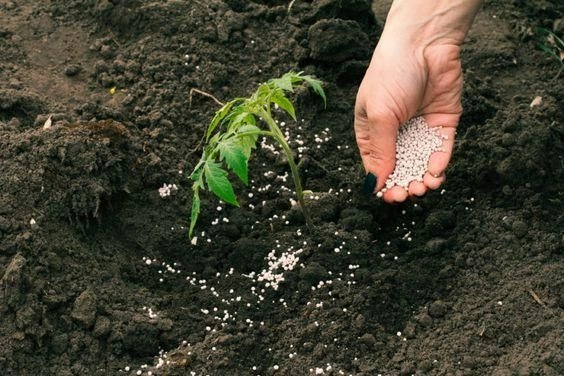
NPK is short for nitrogen, phosphorus, and potassium, which are the three primary plant macronutrients.
Plants need several essential nutrients, but nitrogen, phosphorus, and potassium are required in relatively large amounts. They each perform different jobs, so having the right balance matters more than simply choosing the fertilizer with the biggest numbers.
Nitrogen (N)
Nitrogen is strongly associated with leafy, green growth. It is important for developing leaves and stems and is especially useful when plants are actively producing vegetative growth.
When a plant does not have enough nitrogen, older leaves can become pale or yellow and overall growth may slow.
However, more nitrogen is not always better. Too much can encourage excessive leafy growth and, depending on the plant and growing stage, may interfere with flowering or fruit production.
Phosphorus (P)
Phosphorus plays an important role in root development and reproductive growth, including flowering, fruiting, and seed production.
The phosphorus number on fertilizer labels is conventionally expressed as P₂O₅, rather than as elemental phosphorus. This is why it is more accurate to think of the middle number as the fertilizer’s phosphate-related analysis rather than assuming it represents pure phosphorus.
Adding extra phosphorus without a need is not necessarily helpful. If your soil already contains enough phosphorus, additional applications can be wasteful and may contribute to environmental problems.
Potassium (K)
Potassium supports many plant processes and helps plants maintain overall vigor and resilience.
It is also associated with water regulation, hardiness, and the plant’s ability to cope with environmental stresses.
Like phosphorus, potassium is shown on fertilizer labels using a conventional oxide form, K₂O, commonly called potash.
What Do the Three Numbers on Fertilizer Mean?

The three numbers always follow the same basic order:
N → P → K
So, if a fertilizer says 20-5-10, you can read it as:
- 20% nitrogen
- 5% phosphate expressed as P₂O₅
- 10% potash expressed as K₂O
These percentages are based on the weight of the fertilizer product.
That means a 10-pound bag of a 20-5-10 fertilizer provides 2 pounds of nitrogen by weight. The phosphorus and potassium figures use the conventional fertilizer-label system described above.
What Does 10-10-10 Mean?
A 10-10-10 fertilizer is commonly described as a balanced fertilizer because all three numbers are the same.
It does not mean that every plant needs 10-10-10. Instead, it simply tells you that the product has equal labeled percentages of N, P₂O₅, and K₂O.
For comparison, 20-20-20 has twice the concentration of each of those labeled nutrients compared with 10-10-10.
What Does 5-10-5 Mean?
A 5-10-5 fertilizer has less nitrogen than phosphorus and less potassium than phosphorus.
In simple terms, the middle number is the largest, so phosphorus is the dominant nutrient analysis in the product.
Still, that does not automatically make it a better choice for flowering plants. The correct fertilizer depends on the plant, soil, growing conditions, and nutrient requirements.
NPK Ratio Explained
People often use the phrase NPK ratio when talking about fertilizer numbers.
For example, 10-20-10 has a relative ratio of 1:2:1.
That means the labeled nutrient proportions are:
| Fertilizer | Relative N-P-K ratio | Main characteristic |
| 10-10-10 | 1:1:1 | Balanced |
| 10-20-10 | 1:2:1 | Higher phosphorus proportion |
| 20-5-10 | 4:1:2 | Higher nitrogen proportion |
| 5-10-10 | 1:2:2 | Lower nitrogen proportion |
Remember, the ratio describes the proportions, while the actual numbers describe the concentration in the fertilizer.
This distinction matters. For example, 10-10-10 and 20-20-20 have the same 1:1:1 ratio, but 20-20-20 is more concentrated.
How to Read a Fertilizer Label

Reading fertilizer numbers is easier when you follow the label from left to right.
Step 1: Find the NPK numbers
Look for three numbers separated by dashes, such as 12-4-8.
Step 2: Read them as N-P-K
The first is nitrogen, the second is phosphate expressed as P₂O₅, and the third is potash expressed as K₂O.
Step 3: Check the application instructions
The NPK numbers alone do not tell you how much fertilizer to apply.
Always check the product label for application rates, because different products can have different concentrations, release speeds, and intended uses.
Step 4: Consider your soil
A soil test can show whether your garden already contains enough phosphorus and potassium and can help guide fertilizer decisions.
NPK Fertilizer Examples
Here are some simple examples to make fertilizer numbers easier to understand.
| NPK | What it tells you |
| 10-10-10 | Equal labeled N, P₂O₅, and K₂O percentages |
| 20-5-10 | Higher nitrogen concentration |
| 5-10-10 | Lower nitrogen with higher P and K proportions |
| 0-10-10 | No labeled nitrogen |
| 10-0-10 | No labeled phosphorus |
| 10-10-0 | No labeled potassium |
A zero does not mean the fertilizer is bad. It simply means that nutrient is not included in the labeled NPK analysis.
Is a Higher NPK Number Better?
No.
A fertilizer with higher numbers is more concentrated, but that does not mean it is automatically better for your plants.
For example, a plant that needs only a modest amount of nitrogen may not benefit from a very high-nitrogen fertilizer. Applying too much fertilizer can damage plants, waste money, and contribute to environmental problems.
Therefore, focus on what your plants and soil need, rather than choosing the largest numbers on the shelf.
How to Choose the Right NPK Fertilizer
The best starting point is a soil test.
A soil test can provide information about nutrient levels, pH, organic matter, and other characteristics. It can then help you decide whether fertilizer is necessary and what type may be appropriate.
For leafy plants
Plants grown mainly for their leaves may have greater nitrogen needs during active growth.
However, the exact requirement varies by plant, soil, and growing conditions.
For flowering and fruiting plants
Flower and fruit production depends on several factors, not phosphorus alone. Plant variety, light, temperature, water, soil health, and overall nutrition all matter.
Therefore, do not automatically use a high-phosphorus fertilizer simply because a plant is flowering.
For lawns
Lawns often have significant nitrogen needs because healthy grass produces substantial leaf growth. However, fertilizer programs should still be based on grass type, soil conditions, season, and local recommendations.
For houseplants
Houseplants can have very different nutrient requirements. A mild, complete fertilizer may be suitable for some plants, while others require a more specialized approach.
Always follow the product directions and consider the plant’s growing stage.
NPK vs Organic Fertilizer
NPK numbers do not tell you whether a fertilizer is organic or synthetic.
Both types can supply nitrogen, phosphorus, and potassium. What differs is the source, formulation, nutrient concentration, and how quickly nutrients become available.
Organic fertilizers often have lower nutrient concentrations than many manufactured fertilizers, although this varies widely between products.
So, rather than choosing fertilizer based only on the word “organic,” compare the actual label, ingredients, application instructions, and nutrient requirements.
Why Soil Testing Matters Before Fertilizing
It can be tempting to assume that plants will grow better if you simply add more fertilizer.
In reality, soil may already contain enough of a particular nutrient. University of Minnesota Extension recommends soil testing to determine existing nutrient levels and make more informed fertilizer decisions.
This is especially important for phosphorus.
Repeatedly adding phosphorus when soil already contains enough can contribute to nutrient buildup and water-quality problems.
Therefore, a soil test can save both fertilizer and unnecessary applications.
Common NPK Fertilizer Mistakes
Choosing the highest numbers
More concentrated fertilizer is not automatically better.
Assuming every plant needs 10-10-10
A balanced fertilizer is not universally appropriate. Different plants and soils have different needs.
Adding phosphorus just because a plant is flowering
Flowering does not automatically mean the soil needs extra phosphorus.
Ignoring the fertilizer label
The NPK numbers tell you nutrient concentration, but the label also provides important application instructions.
Fertilizing without checking the soil
If your soil already has adequate nutrients, additional fertilizer may provide little benefit.
Applying too much
Over-fertilization can damage plants and may create environmental problems.
A Simple NPK Checklist
Before buying or applying fertilizer, ask:
- What plant am I feeding?
- What nutrients does it actually need?
- Have I tested my soil?
- What are the NPK numbers?
- Is phosphorus already sufficient?
- What does the product label recommend?
- How often should it be applied?
- Could I be adding more nutrients than necessary?
This simple approach can prevent many common fertilizer mistakes.
Frequently Asked Questions
What does NPK stand for in fertilizer?
NPK stands for nitrogen, phosphorus, and potassium. These are the three primary plant macronutrients shown on most fertilizer labels.
What does 10-10-10 fertilizer mean?
10-10-10 means the fertilizer contains 10% nitrogen, 10% phosphate expressed as P₂O₅, and 10% potash expressed as K₂O by weight under the conventional fertilizer-label system.
What does the first number on fertilizer mean?
The first number represents the percentage of nitrogen by weight.
What does the second number mean?
The second number represents phosphate, conventionally expressed as P₂O₅ on fertilizer labels.
What does the third number mean?
The third number represents potash, conventionally expressed as K₂O.
Is higher NPK better?
No. Higher numbers generally indicate greater nutrient concentration, but the right fertilizer depends on your plant and soil.
Should I use NPK fertilizer on every plant?
Not necessarily. Some plants may need little or no additional fertilizer, while others have specific nutrient requirements. A soil test can help you make a better decision.
Can too much NPK fertilizer hurt plants?
Yes. Over-fertilizing can damage plants and contribute to environmental problems.
Conclusion
So, what does NPK mean on fertilizer? It is a simple labeling system that helps you understand the three primary nutrients supplied by a fertilizer: nitrogen, phosphorus, and potassium.
Once you know that the numbers are read as N-P-K, labels such as 10-10-10 or 20-5-10 become much easier to understand. However, choosing fertilizer should go beyond the numbers.
Your plant type, soil condition, growing stage, and existing nutrient levels all matter. Most importantly, avoid the idea that more fertilizer automatically means better growth.
Instead, use the NPK label as a starting point, check your soil when appropriate, and follow the product directions. With that approach, you can feed your plants more carefully while avoiding unnecessary fertilizer use.
Helpful Resources
For deeper guidance on soil testing and fertilizer selection, University of Minnesota Extension provides detailed resources on soil nutrients, fertilizer labels, and soil testing.