Most home accessories are bought on impulse: you like a vase in the shop, bring it home, and somehow it looks wrong — too small for the table, too busy next to everything else, or just lost in the room. The problem is rarely taste. Designers choose by scale first, then grouping, then texture, and only then by what they like the look of.
This guide works room by room, because accessories do different jobs in different places. A living room needs a focal point, a bedroom needs calm, and an entry needs to work hard in very little space. Once you know the job, the choosing gets much easier, and you stop buying things that end up in a cupboard.
Start With Scale, Not Style
Scale is the single most common reason accessories fail. A tiny vase on a long console looks lost, and an oversized lamp crowds a small bedside table. Before you buy anything, measure the surface it will sit on. A good rule is that a group of accessories should fill about two-thirds of the surface length, leaving breathing room at the edges.
Height matters just as much. Accessories should relate to what is above and beside them. A vase on a coffee table can be tall and sculptural because there is open air above it; the same vase on a shelf under a low ceiling will look cramped. As a rough guide, the tallest object in a group should be about one and a half times the height of the next tallest. That step down is what makes a group look deliberate instead of random.
Group in Threes, at Three Heights
Group accessories in odd numbers, usually threes: odd groups look natural, even groups look like a shop display. The trick is to vary the heights so the group forms a loose triangle: one tall piece, one medium piece and one low piece. A tall vase with branches, a stack of two books and a low candle is the classic trio, and it works on almost any flat surface in the house.
Leave space between groups. Two groups on one long surface need a gap between them, or they blur into one crowded line. A hand’s width of empty surface is enough. The same idea works vertically: styling floating shelves so they look designed, not dumped on follows the same rule, with breathing room doing half the work.
Finally, step back to the doorway after you arrange a group. If your eye lands on one thing first and wanders calmly across the rest, you are done. If your eye jumps around, remove one piece: almost every over-styled surface improves when something is taken away.

Living Room: One Statement, Then Support
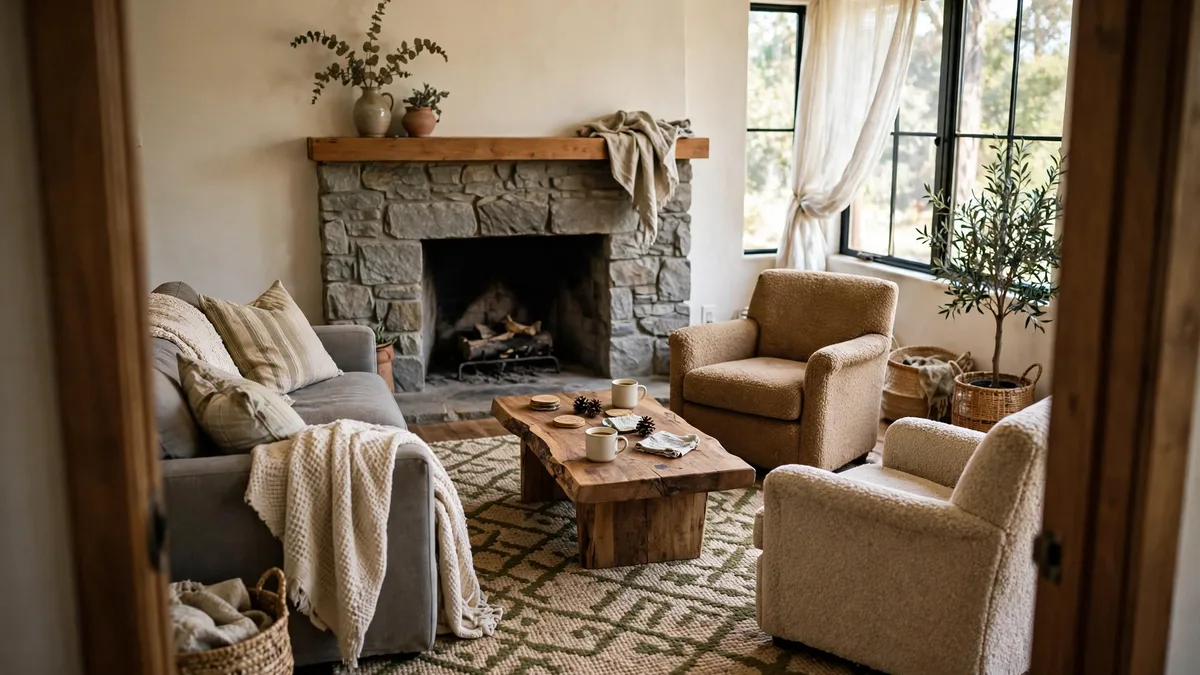
The living room is where people buy the most accessories and need the fewest. Pick one statement piece per zone: one for the coffee table, one for the console or mantel, one for a shelf. If you want one piece with real presence, choosing a home decor sculpture is worth the thought, because a single solid object can carry a whole surface. Everything else in that zone should support it, not compete with it.
On a console, go bigger: a large vase, art above it, and one low object to anchor the base. Small objects scattered across a long console disappear; two or three confident pieces read far better.
Bedroom: Calm Over Clever
Bedroom accessories have a different job: they should help you switch off. That means fewer pieces, softer textures and nothing that demands attention. A bedside table needs only three things: light, something to read or write with, and one small personal object. A ceramic lamp, a stack of two books and a tiny plant is plenty.
Keep the palette quiet. Bedroom accessories work best when they repeat two or three colours already in the bedding, so the room feels settled rather than decorated. A linen throw, a woven basket for spare blankets and a framed print in a plain wood frame will do more than a dozen small ornaments. Watch the heights too: a bedside lamp should be roughly the same height as the headboard, or a little taller, so the light falls where you read.

Entry: A Small Space With a Hard Job
The entry is the smallest room in the house and the one that has to work hardest, so every accessory here must earn its place twice: once for looks, once for use.
Start with a tray. A single ceramic or wooden tray on the console corrals keys, sunglasses and post into one tidy group, and it turns clutter into an arrangement. Add one tall piece beside it, a vase with fresh greenery or a small lamp, and hang a mirror above to bounce light back into what is often the darkest corner of the house.
Use the floor as well. A woven basket under the console holds scarves, dog leads or reusable bags, and it adds the texture a narrow wooden table on its own lacks. Keep the wall simple: one mirror or one framed print. A mirror, a tray and a basket feels finished; six small objects on one small table feels like a jumble sale.

Texture and Colour: The Three-Material Rule
Texture is what stops a room full of accessories from looking flat. A room where everything is smooth ceramic and glass feels cold, even if the colours are warm. Mix materials deliberately: wood, woven fibre and ceramic works in any home. Limit yourself to three main materials per surface and repeat them around the room, so separate groups feel like they belong to the same home.
Colour follows the same discipline. Pick one main colour for your accessories, one supporting colour and one small accent, and repeat them. A sage green vase, a terracotta candle and brass details will tie a living room together; the same three colours scattered across ten different objects will not. When in doubt, take one colour away. Gallery wall accessories work the same way: one frame colour as the main, at most one accent, and the whole wall suddenly looks intentional.
Spend Where It Shows, and Shop Your Home First
Home accessories do not need a big budget, but they do need a spending order. Put your money into the pieces people see first and touch most: the coffee table group, the entry console, the lamp you switch on every evening. Small fillers can be cheap, thrifted or handmade, because nobody studies them up close.
Before you buy anything new, shop your home first. A vase too small for the mantel might be perfect on a bedside table, and a basket from the bathroom might be exactly what the entry needs. Moving things around costs nothing and often solves the problem you were about to spend money on.
When you do buy, go slowly and buy one piece per trip. A room styled in a single afternoon always looks like a single afternoon. A room built one considered piece at a time looks collected, and far less ends up in a cupboard. That is the real secret of choosing home accessories: scale first, grouping second, texture third, and patience throughout.