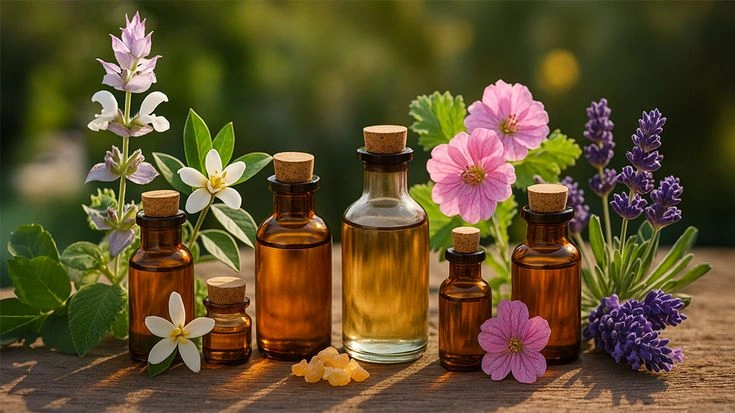
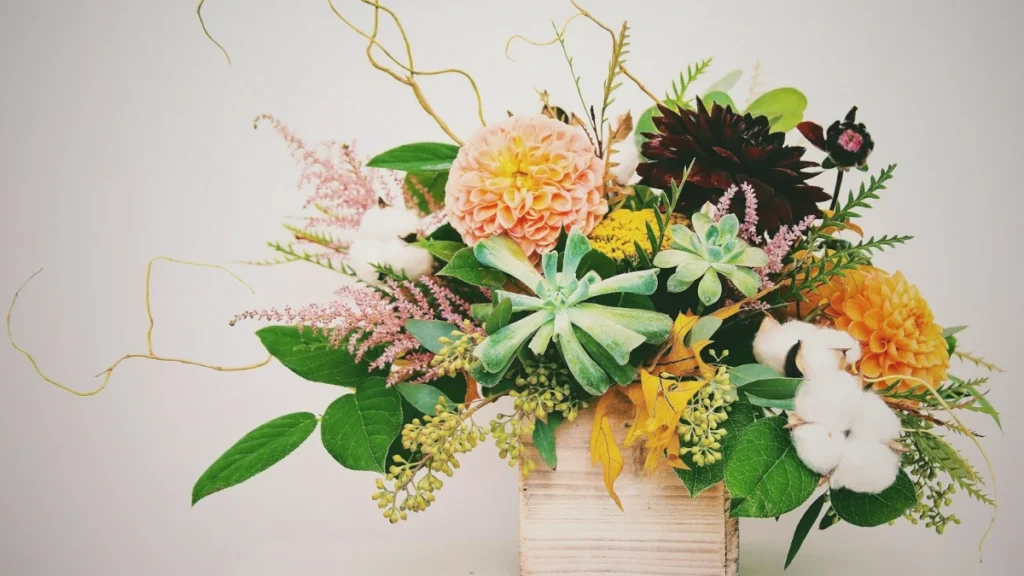
At Peeacelily, we believe one good flower arrangement can change the whole mood of a room. A jar of tulips by the kettle. A low bowl of dahlias in the middle of the dinner table. The flowers carry the room, and the space feels different the second they go down.
You do not need a florist’s training for any of this. You need a few solid ideas, the right blooms for the time of year, and a bit of cut flower care so they actually last.
Key Takeaways
- A strong flower arrangement balances one focal flower, a few supporting blooms, some greenery, and a little airy filler.
- Seasonal blooms cost less and last longer, so buy whatever is growing right now.
- Odd numbers and grouped colors look far more natural than stems spaced out in a ring.
- A few minutes of cut flower care, with angled cuts, clean water, and flower food, can add days of vase life.
What Makes a Flower Arrangement Look Effortlessly Elegant
Most arrangements that look wrong fail for the same reason. Every stem sits at the same height, in the same spot, in a vase that works against the flowers. Sort out the structure, and most of the problem disappears.
Good arrangements work in layers. You build from the bottom up, the sturdiest stems first and the most delicate ones last. Texture also counts for more than rare or pricey flowers. A rough ranunculus beside a smooth tulip and a thin, wispy sweet pea reads as deliberate, even when every stem came from the grocery store.
Two rules do most of the work:
- Use odd numbers. Three or five of one bloom always looks more natural than four.
- Group your colors. A few of the same flower bunched in small pockets looks modern. One stem of this and one stem of that, dotted evenly, looks like a gas-station bouquet.
The Easy Arrangement Formula (Focal, Filler, Foliage)
We call it the 3-Layer Method, and it rarely lets a beginner down.
| Layer | Role in the arrangement | Example blooms / materials | When to place it |
|---|---|---|---|
| Foliage / greenery | Builds structure and a hidden grid | Eucalyptus, ruscus, ferns | First |
| Focal flower | The star that catches the eye | Peony, rose, dahlia, lily | Second |
| Supporting blooms | Add volume and color | Ranunculus, tulips, carnations | Third |
| Filler / floaters | Bring movement and an airy finish | Baby’s breath, sweet pea, wax flower | Last |
Begin with foliage to set the grid. Drop in your focal flowers next. Pack the gaps with supporting blooms, then add filler that tips over the rim at the end. That is the whole method.
Seasonal Flower Arrangement Ideas to Inspire You All Year
Here is something most florists know and most shoppers do not. Flowers in season are fresher, cheaper, and tougher, because they have not been flown halfway around the planet to reach your kitchen. So the smartest arrangements simply follow the calendar, and the saving shows up on the receipt.
Spring Flower Arrangement Ideas
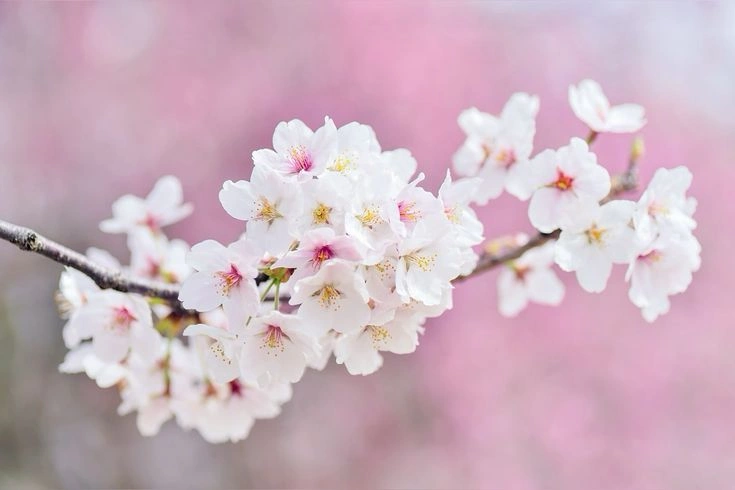
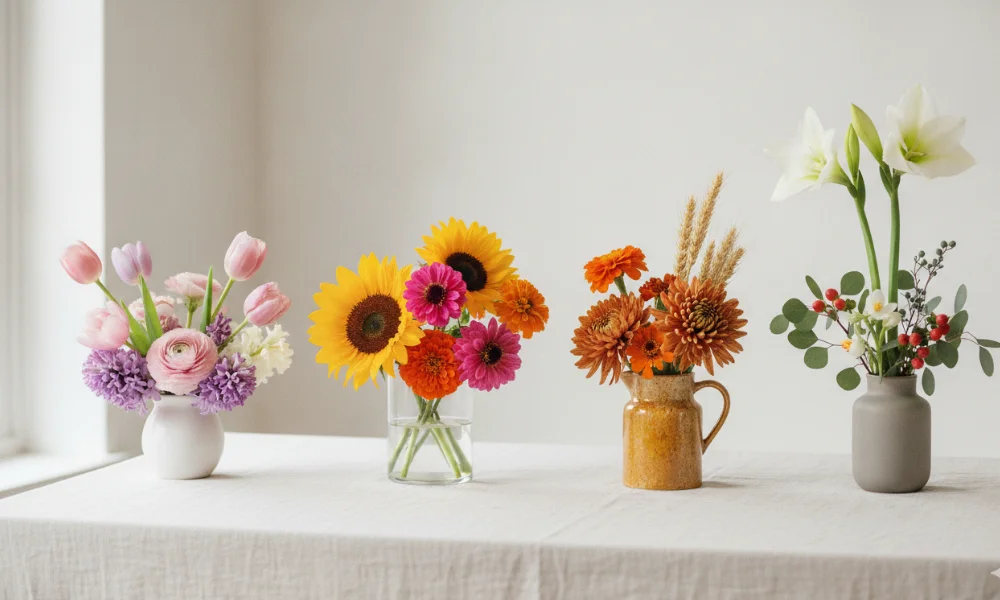
Spring is loose and a little untidy, in the best way. Picture tulips that keep leaning toward the window, ranunculus with those tissue-thin petals, plus hyacinth and muscari for scent. Keep the palette gentle, with blush, soft butter yellow, and pale lavender. A shallow ceramic bowl crowded with tulips and a couple of flowering branches looks like the garden has only just woken up.
Summer Flower Arrangement Ideas
Summer asks for color, and plenty of it. Sunflowers, dahlias, zinnias, and cosmos all hit their peak now. So go big, and let it look a little wild. A tall pitcher crammed with sunflowers and some trailing greenery does the job, and so does a loud mix of orange dahlias and hot-pink zinnias. Summer is the one time of year when more really is more.
Fall Flower Arrangement Ideas
Fall swaps the brights for warmth and texture. Chrysanthemums, marigolds, celosia, and amaranthus bring in rust, amber, and deep red. Dried grasses and seed pods hand you that dry, harvest crackle. A copper jug of mums with a few stems of dried wheat on a bare wooden table is about as autumn as it gets, and it will sit happily for weeks.
Winter Arrangement Ideas
Winter turns quiet and elegant. Amaryllis and paperwhites do the heavy lifting, then evergreen, eucalyptus, berries, and the occasional hellebore round it out. Keep to white, deep green, and silver for something calm and frosty. Or bring in red berries and pine if you want a little holiday warmth.
| Season | Signature seasonal blooms | Color palette | Mood |
|---|---|---|---|
| Spring | Tulip, ranunculus, daffodil, hyacinth | Blush, lavender, butter yellow | Fresh and light |
| Summer | Sunflower, dahlia, zinnia, cosmos | Coral, gold, hot pink | Bold and abundant |
| Fall | Chrysanthemum, marigold, dried wheat | Rust, amber, deep red | Warm and textural |
| Winter | Amaryllis, paperwhite, evergreen, berry | White, forest green, silver | Cozy and festive |
Flower Arrangement Styles for Every Room and Mood
The season decides the flowers. The style decides the feeling. One bunch of blooms can read gallery-modern or English-cottage, and the only real difference is the container and how tightly or loosely you pack it.
Modern and Minimalist Arrangement Ideas
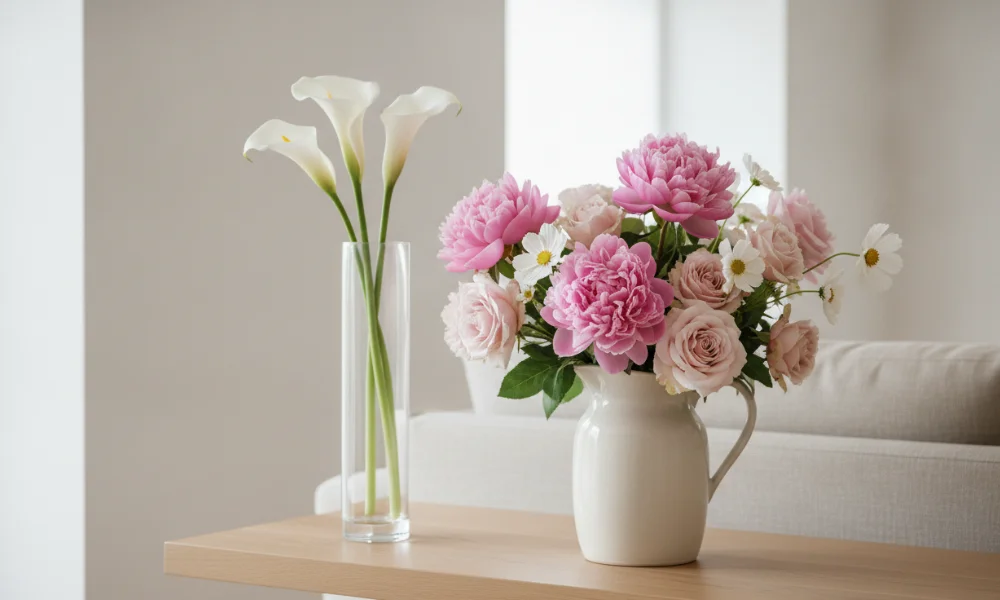
Restraint is the entire idea here. Choose one kind of flower and let it carry the show, with three calla lilies in a tall cylinder, a single spray of orchids, or a small bunch of anemones in a bud vase. Leave a lot of empty space and keep the lines sharp. The look owes a lot to Japanese ikebana, where the gaps matter as much as the stems themselves. It suits an office, an entryway, or any spot where clutter feels out of place.
Wild Garden-Style Arrangement Ideas
This is the I just wandered out and cut these look, and it takes a surprising amount of planning to pull off. Mix the heights, let a few stems sprawl, and tuck in trailing pieces like jasmine vine or clematis. Roses, cosmos, herbs, and seed heads all sit well together. The effect is soft and romantic, and it looks wonderful running down a dining or living room table.
Flower Arrangement Ideas for Calm and Wellbeing
Flowers do more than fill a corner. Looking after them slows you down, and gentle scents like lavender, stock, and freesia really do make a room feel calmer. So in a bedroom, stay with one or two muted colors and soft, rounded shapes, like peonies, garden roses, and ranunculus. Leave out anything spiky or loud, and give the arrangement a bit of room to breathe.
| Style | Best vessel | Go-to blooms | Best room |
|---|---|---|---|
| Modern minimalist | Sleek cylinder or bud vase | Calla, orchid, anemone | Office, entryway |
| Garden-style | Wide ceramic or pitcher | Roses, cosmos, herbs | Living, dining |
| Rustic farmhouse | Mason jar or enamel jug | Sunflower, daisy, wildflower | Kitchen |
| Romantic | Footed bowl or urn | Peony, garden rose, ranunculus | Bedroom |
Flower Arrangement Ideas for Every Occasion
A handful of ideas you can copy tonight, whatever is sitting in the bucket:
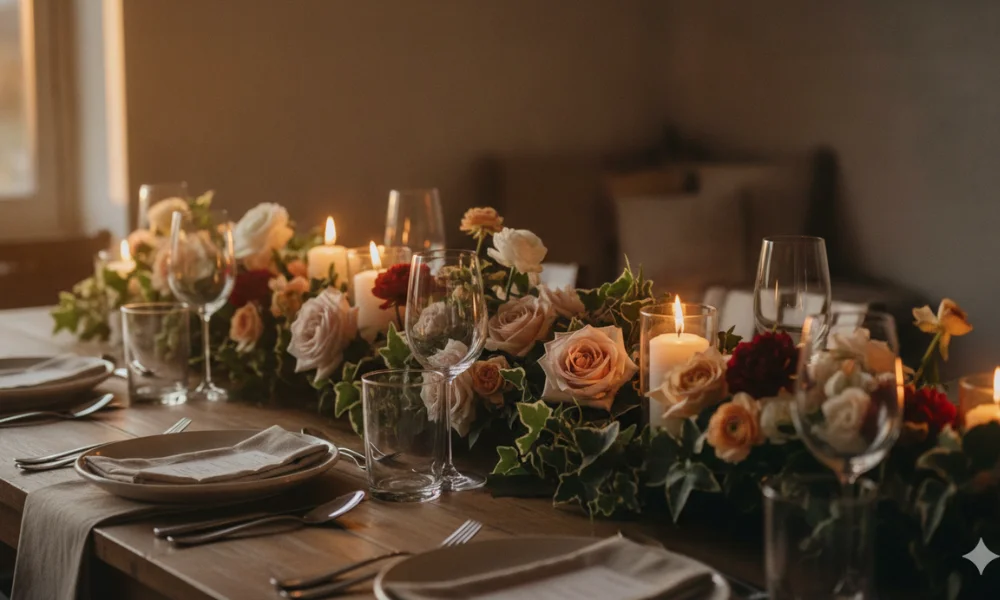
- Dinner party: Keep it low. Anything taller than eye level gets in the way of conversation. A long, shallow run of flowers down the center of the table works without fail.
- A gift bouquet: Tie it in a loose spiral so it keeps its shape in the hand, then wrap it in plain kraft paper. It costs next to nothing and looks like it came from a shop.
- Everyday kitchen jar: Five stems of one cheap flower, such as daisies, carnations, or alstroemeria, in a jam jar. Plain beats fussy on a worktop.
- Holidays: Follow the season. Amaryllis and pine through December, then tulips and bare branches for the first spring gatherings.
- Hostess gift: Bring the flowers already sitting in their own vase, so the host is not rummaging through cupboards in the middle of the party.
Cut Flower Care
This is the stage where most arrangements quietly give up. The flowers are perfectly good. The care is the missing piece. A few minutes of cut flower care can double how long a vase lasts, and the reasoning behind it is not complicated.
The moment you cut a stem, air works its way into the thin channels that draw water upward. That trapped air is the reason flowers wilt even when the vase is full. So you cut them again, and you do it properly.
Cut Flower Care Before You Arrange
Work through this short list before a single stem goes in:
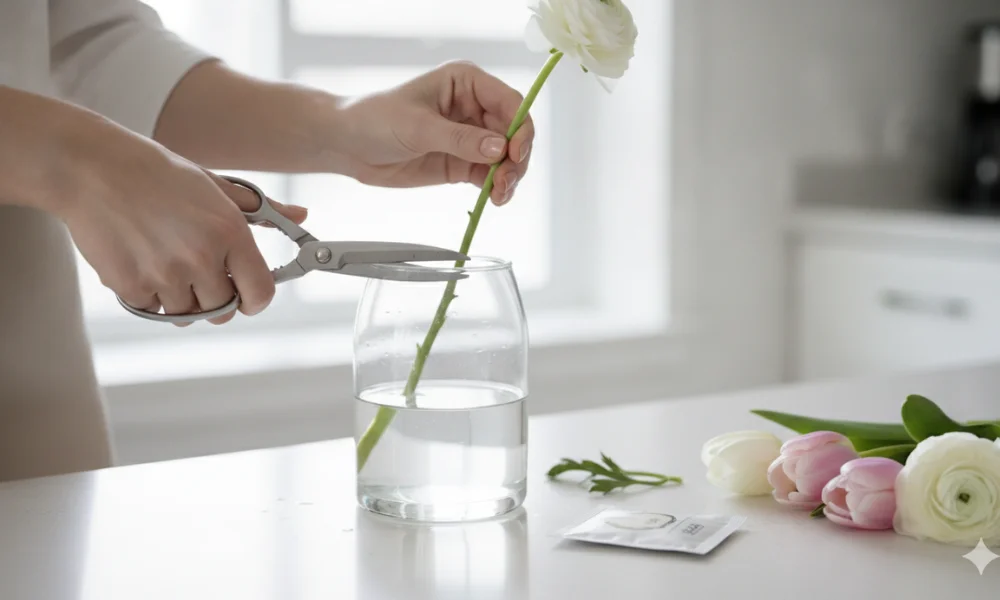
- Cut the stems at a 45-degree angle. It opens up more surface for drinking, and it keeps the cut end from sitting flat and sealed against the base of the vase.
- Strip off every leaf that would sit under the water. Submerged leaves rot quickly and feed the bacteria that block the stems.
- Start with a clean vase and cool water. A dirty vase shortens vase life all on its own.
- Add the flower food. That small sachet is not a marketing trick. It holds sugar to feed the bloom, a mild acid to help water climb the stem, and a little biocide to keep bacteria down.
- Re-cut and change the water every two days. A fresh cut and fresh water set the clock back to the start.
One trick the pros use and most people skip: daffodils leak a sap that poisons the flowers around them. So stand them on their own in water for a few hours first, then move them into the main arrangement. It also pays to keep the vase well away from the fruit bowl, since ripening fruit gives off ethylene gas, and that gas ages cut flowers fast.
| Step | What to do | Why it works | Extra vase life |
|---|---|---|---|
| Trim stems | Cut at 45° under water | More water uptake, no air lock | +2–3 days |
| Strip leaves | Remove anything below the waterline | Stops bacterial rot | +1–2 days |
| Feed the water | Add flower food, or sugar with a drop of bleach | Nutrients plus bacteria control | +2–4 days |
| Refresh | Change water every two days | Keeps stems clear and drinking | +2–3 days |
| Place it well | Away from sun, heat vents, and fruit | Slows wilting | +1–2 days |
Choosing the Right Vase for Your Flower Arrangement
The vase sets the shape before you place a single stem. Go too tall and narrow, and the flowers stand stiff and awkward. Go too wide and shallow, and they sag over the edges. For most arrangements, an opening of 3.5 to 4 inches is the sweet spot, wide enough to let the stems fan out and tight enough to hold them upright.
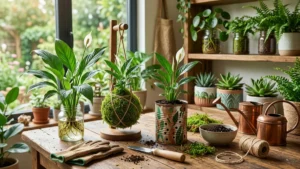
Match the container to the style as well. A smooth cylinder looks modern. A ceramic pitcher or a mason jar leans farmhouse. And there is no need to buy anything new for it. A thrift-store jug, an old tin, even an upcycled bottle will do the job. The flowers are the main event. The vase only sets the stage.
Final Thoughts
A lovely flower arrangement has nothing to do with money or training. It comes down to choosing the right blooms for the season, leaning on one simple layering formula, and giving the flowers the care they need to keep going.
So start small. Pick up a few stems of whatever is in bloom this week, stand them in a jar, and notice what you are drawn to. Your eye gets a little sharper every time you do it.
At Peeacelily, we care about helping your home bloom right through the year. Once your first arrangement comes together, take a look at our seasonal blooms guide and our flower care tips for whatever you want to try next.
Frequently Asked Questions
What are the three basic types of flower arrangement?
Most arrangements come down to three shapes: rounded, which is a full, even dome; linear, which is tall and sparse, in the ikebana spirit; and cascading, where the flowers tumble down over the lip of the vase. Once you settle on the shape you want, picking the flowers becomes much simpler.
How do you make a flower arrangement look professional?
Build it in layers, with foliage first, then the focal flowers, then the filler. Stick to odd numbers, group the colors into small clusters, and vary the heights. A vase that suits the flowers, plus a few stems that dip below the rim, takes care of the rest.
What flowers last longest in a vase?
Carnations, chrysanthemums, and alstroemeria are the real stayers, often going two to three weeks. Lilies and orchids hold up well too. Tulips and peonies do not last as long, usually five to seven days, but they earn their place.
What seasonal blooms work best for arrangements?
Buy whatever is in season where you happen to live. Tulips and ranunculus in spring, dahlias and sunflowers in summer, mums in fall, and amaryllis in winter. Seasonal blooms arrive fresher, cost less, and outlast imported stems.
How long does a flower arrangement last?
With proper cut flower care, most mixed arrangements run five to ten days. Change the water often, trim the stems again, and keep the vase out of direct sun and away from fruit, and you will stretch it even further.
What is the easiest arrangement for a beginner?
A single-variety jar. Five to seven stems of one flower in a small vase looks intentional and is almost impossible to get wrong. Begin there, then add a second flower once it starts to feel natural.