Ordering a plant online feels a little like sending for a houseguest you have never met. A living thing is packed into a dark box, handed to a courier, and driven across the country before it lands on your doorstep. Most of the time it arrives perfectly well, a little thirsty and a little squashed, but alive and ready to grow. Knowing how plant nursery plants are shipped, what good packaging looks like, and what to check the moment the box arrives makes the difference between a plant that settles in happily and one that never really recovers.
How Plants Travel in the Post
A plant in transit is a plant without light, without fresh air, and without anyone to water it. Most plant nursery plants spend between one and five days in a box, depending on how far they travel. During that time they sit in darkness, so growth pauses and leaves may pale slightly. That is normal, and colour usually returns within a week or two of good light at home.
Temperature is the bigger worry. A box left in a hot van or a cold depot can stress a tropical plant far more than darkness ever will. This is why many nurseries pause shipping during very hot or very cold spells, or add insulation and warmth packs in winter.
What Good Packaging Looks Like
You can tell a lot about a nursery from the box it sends. Good packaging is not fancy, but it is thoughtful, and every layer has a job to do.
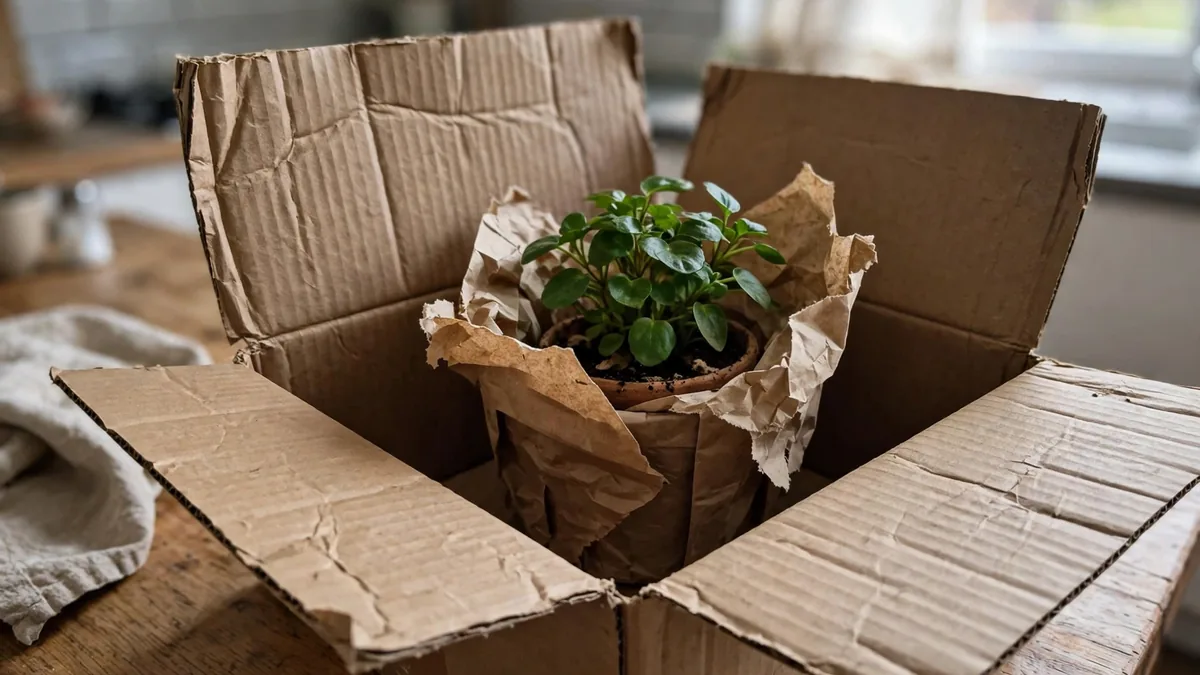
The pot should be secured, not just sitting in the box. Nurseries often tape the pot to the base, wedge it with cardboard, or use a fitted insert so it cannot tip over. The soil surface is usually covered with paper or a wrap so it stays in the pot even if the box is turned on its side.
The leaves should be protected but not crushed. Soft paper, tissue, or a loose sleeve around the foliage stops leaves rubbing against the cardboard and each other. The plant should still have some room to breathe inside its wrapping. A plant jammed so tightly that stems are bent double has been packed by someone in a hurry.

There should be cushioning around the plant, not just under it. Shredded paper, crumpled kraft paper, or air cushions fill the empty space so the plant cannot shift. The box itself should be the right size: a box much bigger than the plant lets it rattle around, while a box too small crushes it. A heat pack in cold weather, or insulation lining in the box, is another sign of care rather than a cause for worry.
Opening the Box: Take It Slowly
When the box arrives, resist the urge to tear it open. Cut the tape carefully with scissors, keeping the blade away from the plant inside. Lift the plant out by its pot, never by pulling on its stems or leaves, and set it down somewhere out of direct sun while you look it over.
Remove the wrapping gently, layer by layer. If a leaf is stuck to damp paper, wet the paper slightly rather than tugging the leaf free.
The Arrival Check: Leaves, Stems, Soil and Roots
Once the plant is unwrapped, give it a proper check before you put it in its new home. This takes five minutes and tells you almost everything you need to know about how it travelled.
Start with the leaves. A few yellow or bruised lower leaves after shipping are common and not a reason to worry. Look instead for the overall picture: are most leaves firm and green, or are large areas black, mushy, or dried out? Check under a few leaves too, since pests and damage often hide there.
Next, check the stems. They should feel firm, not soft or bendy at the base. A stem that has snapped in transit will not heal, but you can trim it cleanly and the plant will usually branch from below the cut. Check the soil as well: push a finger in to see whether it is damp, dry, or soaking wet. If soil has spilled out of the pot, top it up gently with a little fresh potting mix.

If you can see roots through the drainage holes, look at their colour. Healthy roots are pale and firm; dark, slimy roots suggest the plant sat wet for too long.
Helping Your Plant Settle In
The first two weeks after arrival are a settling-in period, and the kindest thing you can do is very little. Place the plant in bright, indirect light, away from radiators, cold draughts, and strong midday sun. Water it only if the soil is dry when you push a finger a couple of centimetres in, and let excess water drain away rather than leaving the pot sitting in a saucer of water.

Do not repot straight away. A plant that has just travelled needs to adjust to your light, temperature, and humidity before it copes with a new pot as well. Give it at least two weeks, and longer if it still looks stressed. The same goes for fertiliser: feeding a stressed plant does not help it recover, and it can burn damaged roots. If you are new to this and want a simple routine for the first month, your first indoor plant guide walks through the first thirty days step by step.
When to Contact the Seller
Most arrival problems are small and fix themselves, but some are worth raising with the nursery. A plant that arrives with a broken main stem, severe cold damage, or widespread rot has not survived the journey, and a good seller will want to know. The same applies if the plant you received is clearly not the plant you ordered, or if it arrives bare-root when the listing said it would arrive potted.
Contact the seller promptly, usually within a day or two of delivery, and send the photos you took on arrival. Explain what you found simply and ask what they suggest. A seller who responds helpfully and offers a replacement or a refund is one worth ordering from again. If you are weighing a rare or expensive plant and want to know how to judge a seller before you buy, our guide to buying rare plants covers the checks that matter most, from honest photos to clear return policies.
A Plant That Travels Well Grows Well
Ordering plants online works best when you know what to expect: a few days in the dark, a box that should hold the pot still and cushion the leaves, and a plant that needs a gentle first week rather than a rescue mission. Check the packaging, check the plant, take your photos, and then give it light, water only when the soil is dry, and time. If you want a fuller refresher on the basics once it has settled, indoor plant care for beginners explains light, water, soil, and humidity in plain terms. The plant that arrives a little tired today is very often the plant thriving on your windowsill by next month.