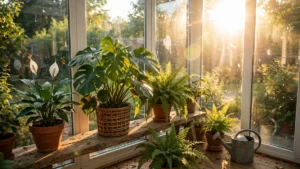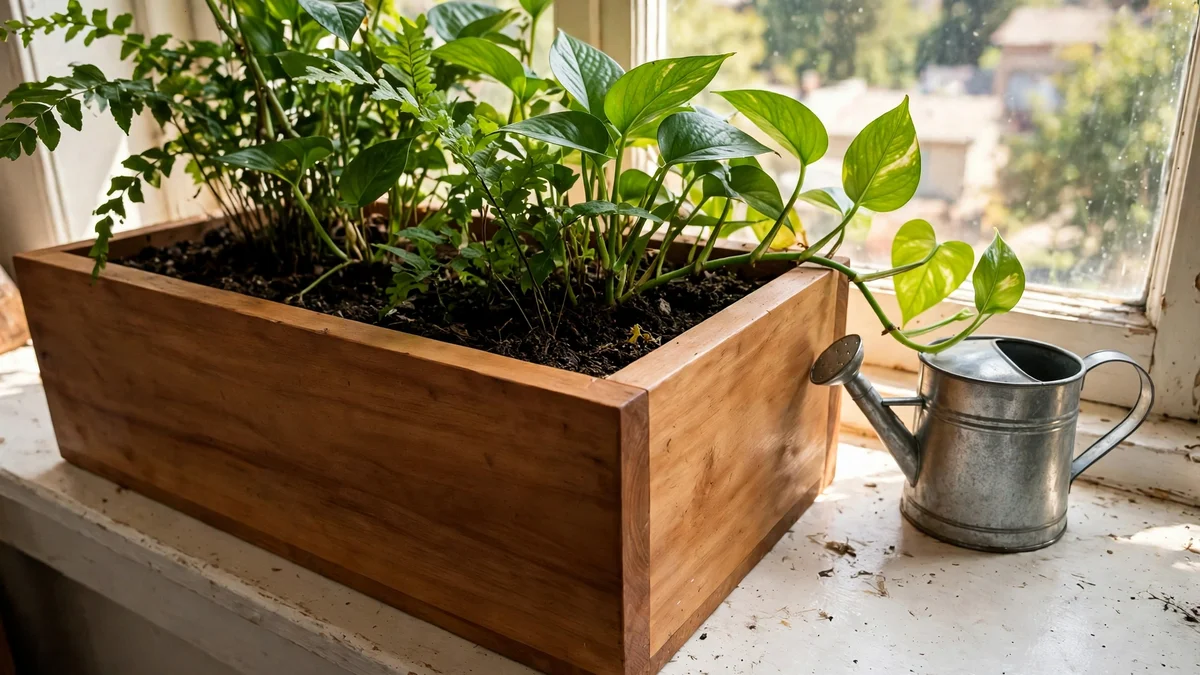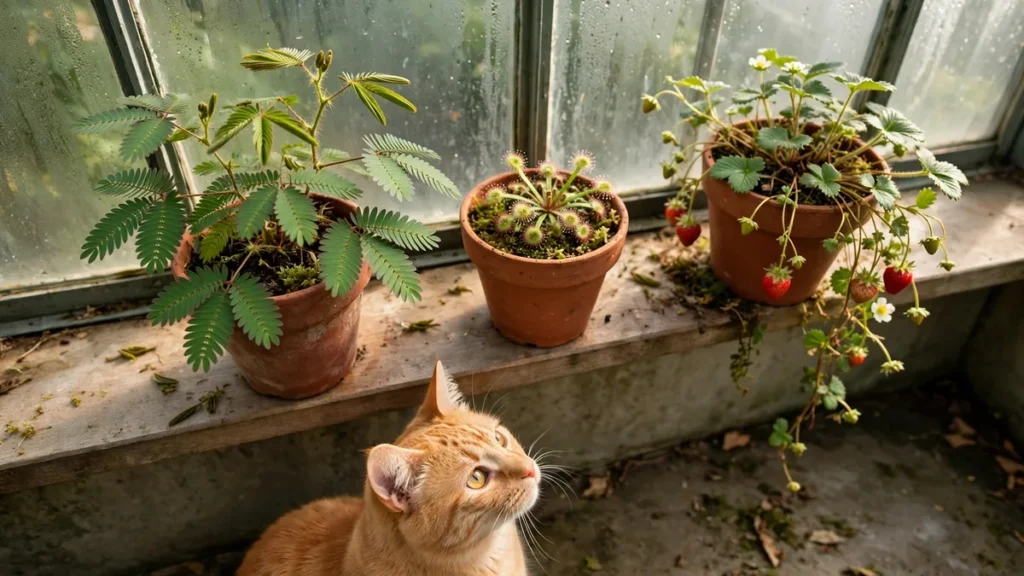
Pet-Safe plants for a greenhouse window have to pass a double test that most houseplants never face. The glass gives them the brightest light in the house, air that swings from steamy to chilly, and condensation that drips onto the sill, while a cat or dog wanders the greenhouse floor below. The seven plants below clear both bars at once: each one is widely listed as non-toxic to cats and dogs, and each one genuinely likes bright, humid glass instead of merely tolerating it.
Use heavy terracotta or ceramic pots that a tail cannot tip off the sill, keep every pot a hand’s width back from the edge, and wipe the glass often so the plants get full light through winter. Check the botanical name on the label before you buy, and never use slug pellets, sprays, or fertiliser spikes where a pet can reach them. Our guide to the best pet-safe plants for a greenhouse covers the room as a whole, while the seven below are the ones that suit the window itself.

What a Greenhouse Window Asks of a Plant
A greenhouse window is bright, warm, and damp, with drips, draughts, and a sharp drop in temperature overnight. The plants that last there are the ones that love humidity, forgive wet leaves, and want strong light without scorching in the midday sun. Shade lovers bleach and sulk, desert plants rot in the damp, and anything that needs dry air will spot and fail. Pick for the window you have, not the one you wish you had, and start with two or three pots before you fill the whole sill.
1. Sensitive Plant
Sensitive plant, or Mimosa pudica, is the living trick for the sunniest end of the sill. Its feathery leaves fold shut when a finger or a cat’s whisker brushes them, then open again within minutes, which makes it the most entertaining plant a pet household can own. It is listed as non-toxic to cats and dogs, so that curiosity is harmless. Give it the brightest spot you have, keep the soil lightly moist, and mist it on dry days. It grows fast, flowers with small pink pom-poms, and is easy to start again from seed each spring.
2. Sundew
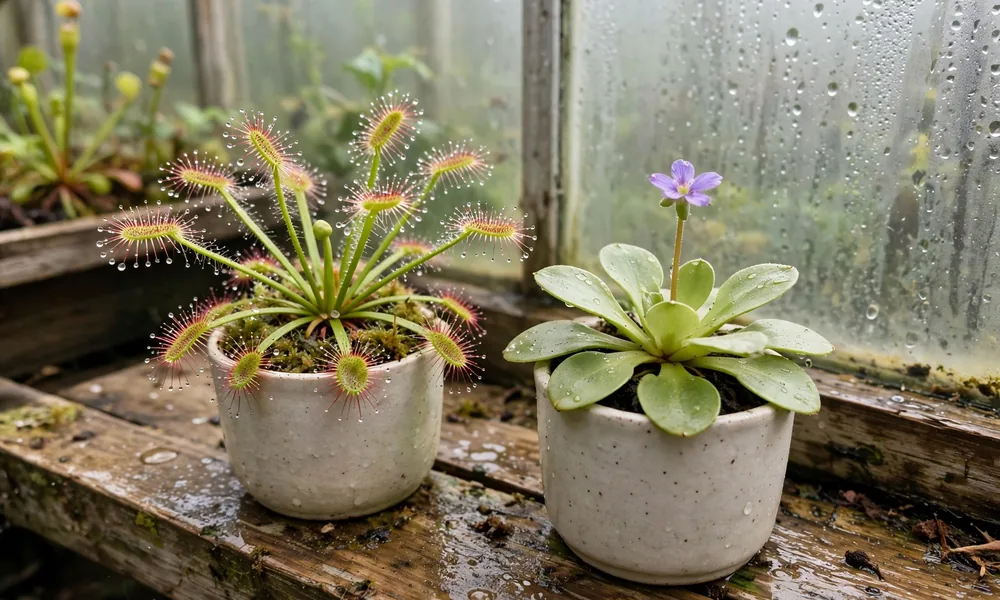
Sundew is the jewel of a damp greenhouse window. Its rosettes of leaves are tipped with glistening, sticky tentacles that catch the tiny flies a greenhouse always attracts, and the plant is listed as non-toxic to cats and dogs. It wants bright light, even some direct sun, and soil that stays wet, so stand the pot in a shallow saucer of rainwater or distilled water and never use tap water or ordinary fertiliser. A small pot on the sill is all it needs, and its ruby droplets catch the light like dew every morning.
3. Butterwort
Butterwort is the quieter carnivore for the same wet sill, and the one that flowers best. Its flat rosette of pale green, slightly sticky leaves traps tiny gnats, then sends up a slim stalk topped with a violet flower that looks far too delicate for a fly catcher. It is listed as non-toxic to pets, and it is more forgiving than a sundew, tolerating a little drying between waterings. Give it bright, indirect light, a pot of lime-free, free-draining compost, and rainwater when you can. It earns its place by keeping the fungus gnats down.
4. Dwarf Pomegranate
Dwarf pomegranate is the small fruiting shrub for the wide end of the window, where it can grow into a proper little tree in a pot. Its glossy leaves, bright orange-red flowers, and miniature round fruit look spectacular against the glass, and pomegranate is listed as non-toxic to cats and dogs. It wants the sunniest spot you have and a heavy pot, because it grows top-heavy as it fruits. Water when the top of the soil dries, prune lightly in late winter to keep it compact, and expect flowers from summer into autumn.
5. Alpine Strawberry
Alpine strawberry is the sweetest reason to keep a pot on a greenhouse window. This compact, runner-free cousin of the garden strawberry trails gently over the pot edge, flowers white all summer, and ripens tiny, intensely flavoured red berries that pets can safely sniff and even share. It loves bright light and humid air, which is exactly what the glass provides. Grow it in rich, free-draining compost, water when the soil surface dries, and pick the berries as they redden, because they are gone quickly once a cat notices them.

6. Dwarf Blueberry
Dwarf blueberry is the second fruiting pick for the sunny sill, and the one that brings autumn colour too. Compact varieties stay under knee height in a pot, carry white spring flowers, and ripen sweet berries that are safe for dogs and cats to nibble. It needs acid, ericaceous compost and rainwater rather than tap water, plus the brightest light the window offers. Water generously in summer, keep the pot from drying out while the fruit swells, and watch the leaves turn scarlet in autumn before they drop for winter.
7. Heliconia
Heliconia, the lobster claw, is the bold tropical for the warmest, brightest window you have. Its huge paddle leaves and hanging chains of orange and red bracts turn a plain pane of glass into a jungle corner, and heliconia is listed as non-toxic to cats and dogs. It wants heat, humidity, and strong light, so it thrives where a draughty houseplant would fail. Give it a large, heavy pot, rich compost, and regular water, and mist the leaves on hot days. In a heated greenhouse it will flower for months at a time.

Start with the two or three that match your window best, and let the sill earn the rest. A bright, steamy greenhouse window can still be a safe room for pets when the plants are chosen for it, and the best plants for a greenhouse window list is worth a look if you want more bright-light options beyond the pet-safe set. For a shadier, roof-lit room, our guide to the best pet-safe plants for a conservatory covers the softer light of a glass roof.