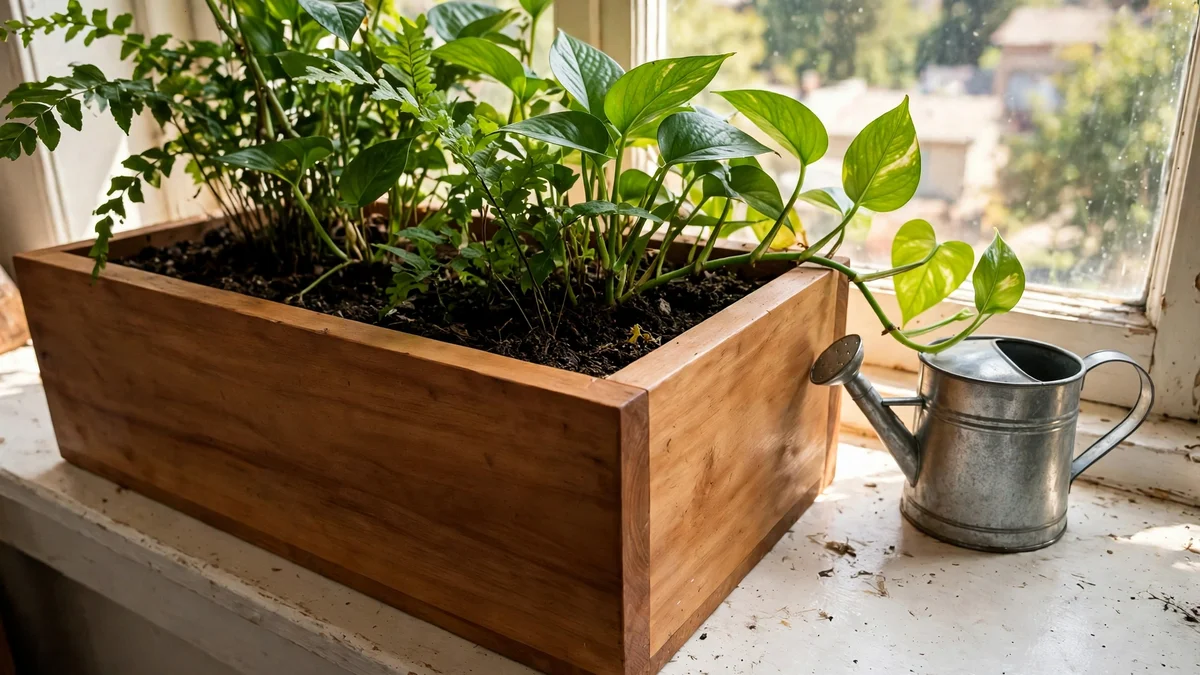
Twenty years ago, a friend gave me a small pothos for my birthday, and I had no idea what I was doing. Year sixteen taught me to wait, year seventeen to respect the seasons, year eighteen to look at the room around the plants, and year nineteen to feed one, cut one back hard, write things down, and watch the radiators. Year twenty has been different again. It was the year I bought nothing, the year the snake plant flowered for the first time, the year the cuttings left home, and the year I taught someone else to pot a cutting of her own.

The Year I Bought Nothing
The first lesson began in January, with a rule I made almost as a joke: no new plants this year. Not one. No cuttings from friends, no rescue plants, no seeds ordered in a moment of enthusiasm. Twenty years of collecting had filled every windowsill and shelf, and I wanted to find out what would happen if the collection simply stayed the size it was.
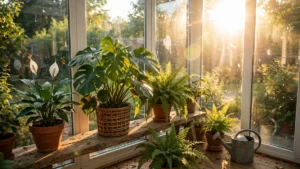
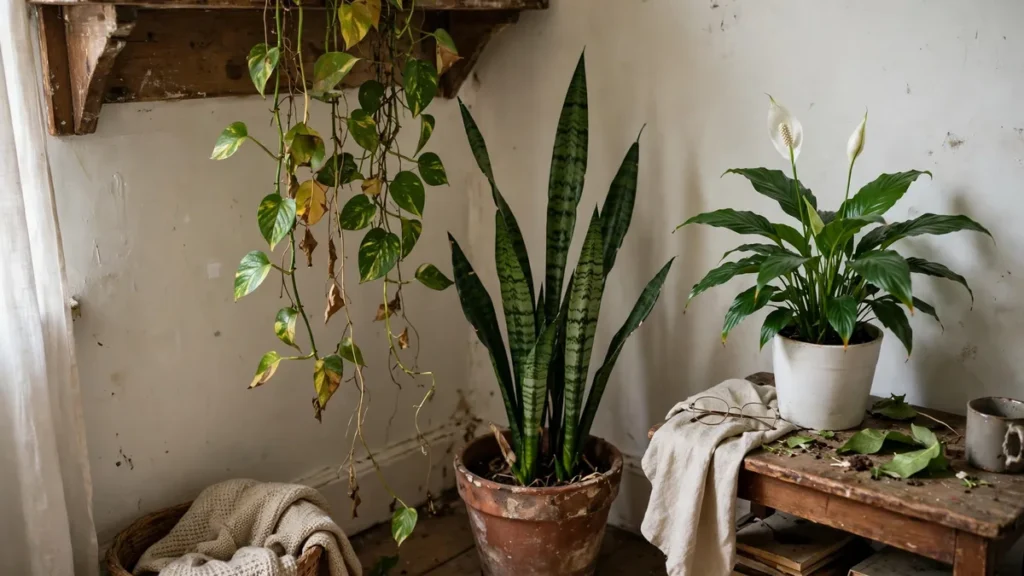
What happened, at first, was restlessness. I caught myself browsing plant shops out of habit in February and had to put the phone down. By spring, though, something better had happened. Without a new plant to fuss over, I started really seeing the ones I already had. The peace lily, which I had been watering on autopilot for years, got its leaves wiped properly, and it flowered better than it had in years. Our guide on how to care for a peace lily covers the everyday care, but the lesson is about attention. A new plant is exciting because it is new. An old plant is only exciting if you look at it properly, and I had stopped looking.
By autumn the house felt calmer. Year twenty taught me that after twenty years of adding, the most useful thing I could do was stop adding. The collection got better, because everything in it finally had room and attention.
The Flower That Took Twenty Years
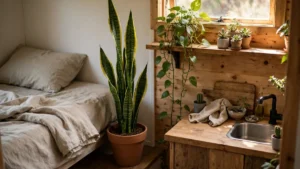
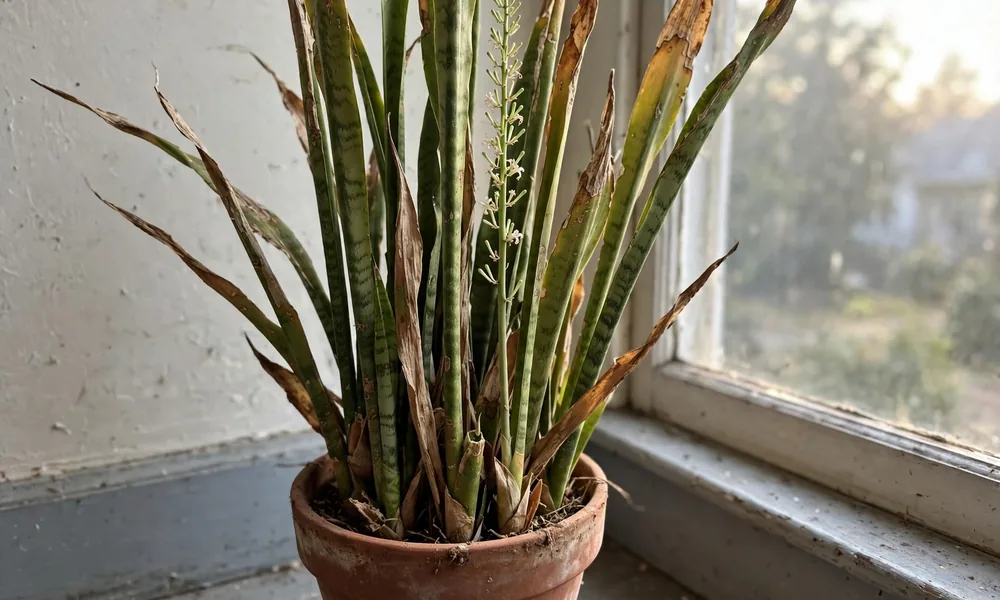
The second lesson arrived in late spring, and it arrived quietly. The snake plant on the landing has been with me for most of these twenty years. It is not a pretty plant any more. Its outer leaves are weathered and brown at the tips, scarred by two decades of winters, moves, and my own early mistakes.
Then one morning I noticed a thin pale stalk rising from the centre, with tiny white buds along it. The snake plant was flowering. In twenty years it had never done it once. It had not flowered because I had done something clever. It had flowered because I had done nothing at all for a very long time, and the plant was old enough to be ready. Our guide on how to care for a snake plant indoors covers the practical side, but the lesson is about a patience I had never practised before: this one was something the plant did, on its own schedule, after twenty years of waiting.
The flowers were small and plain, and lasted only a week or so. Year twenty taught me that some rewards only arrive after a very long time, and that a battered old plant can still surprise you. Not every plant needs improving. Some just need to be left to get on with it.
The Cuttings Left Home
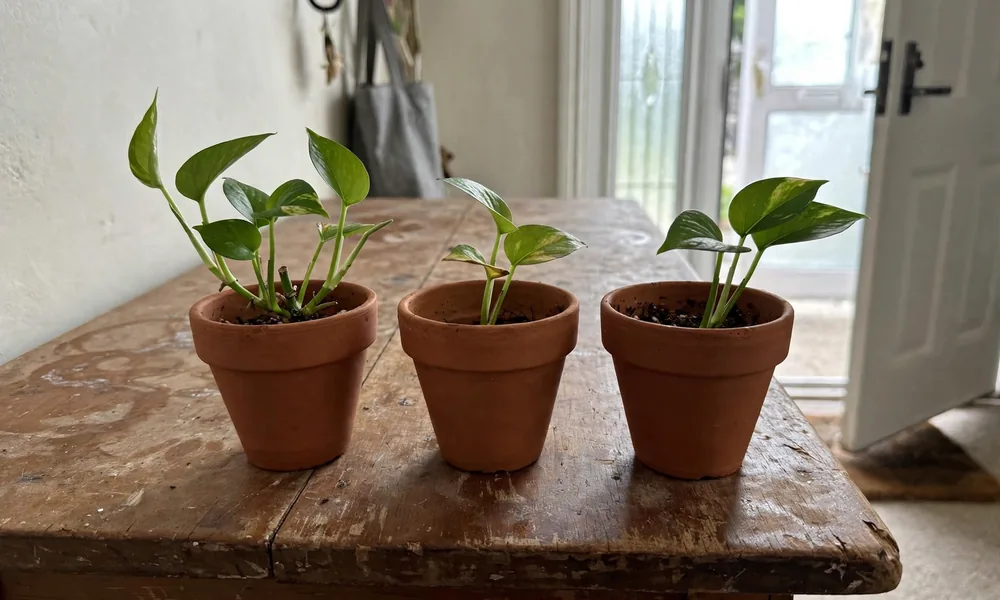
The third lesson grew out of last year, though it took this year to finish. When I cut the original pothos back hard in year nineteen, the cuttings rooted in water on the kitchen sill in a fortnight. I potted them up, meaning to keep one or two and find homes for the rest. Then life carried on, and the little pots sat on the hall table for months, growing into small plants of their own.
This year I finally did something about them. I gave them away. One went to the neighbour across the road, one to a friend who had just moved into her first flat, and one to my niece, who had been asking about the big trailing pothos every time she visited. Our guide on how to propagate a pothos shows how one stem becomes a new plant, but the lesson is not about the propagating. It is about the giving away. For nineteen years I had thought of the collection as something that only grew, in one direction. Giving plants away felt, at first, like the collection was shrinking.
It was not shrinking. It was spreading. The pothos that started all of this now lives in four houses, not one. Year twenty taught me that a plant you give away is not a plant you have lost. It is a plant that has gone on to a second life, and the collection is bigger for it, not smaller.
Teaching Someone Else
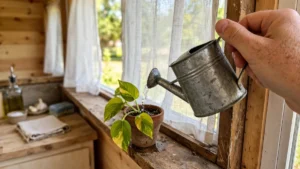
The last lesson is the one that made the whole year feel like a milestone rather than just another year. My neighbour’s daughter, who is ten, had been watching me pot up the cuttings and asked if she could have one of her own. Not a finished plant, she said. She wanted to pot it herself. So one Saturday afternoon we did it together on the kitchen table: a small cutting, a little terracotta pot, a pile of soil, and a watering can that was almost as big as she was.
She pressed the soil down gently, watered it slowly, and then asked the question every new plant person asks: how long before it grows? I told her it grows when it grows. She came back the next week, and the cutting had put out a new leaf. Her face was the same face I must have worn twenty years ago, the first time the pothos grew.
Year twenty taught me that twenty years of keeping plants is only really worth something if it goes somewhere next. I spent nineteen years learning how to keep plants alive. In year twenty, I learned how to pass them on.

What Year Twenty Really Taught Me
If year eighteen taught me to look at the room and year nineteen taught me to try the obvious thing I had always skipped, then year twenty taught me to stop, to wait, and to let go. I bought nothing and saw my plants properly. I left the snake plant alone and it flowered after twenty years. I gave the cuttings away and the collection grew bigger by getting smaller. And I taught a ten-year-old to pot her first cutting, and watched it all start again in someone else’s hands.
Twenty years on, I keep them the way you keep anything that has been with you a long time: by knowing when to stop adding, by waiting for the slow rewards, by letting some of them go, and by handing the rest on. The pothos that started all of this is still trailing from the same shelf, older and longer than ever. The difference is that now it lives in four houses, and a ten-year-old down the road is waiting for her cutting to grow. That is what a twentieth year is for.