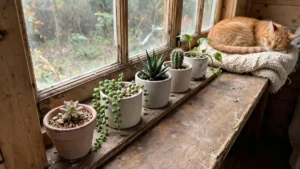
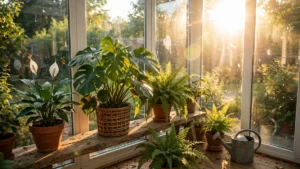
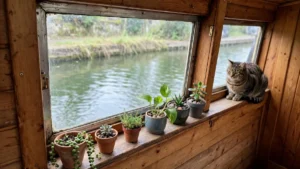
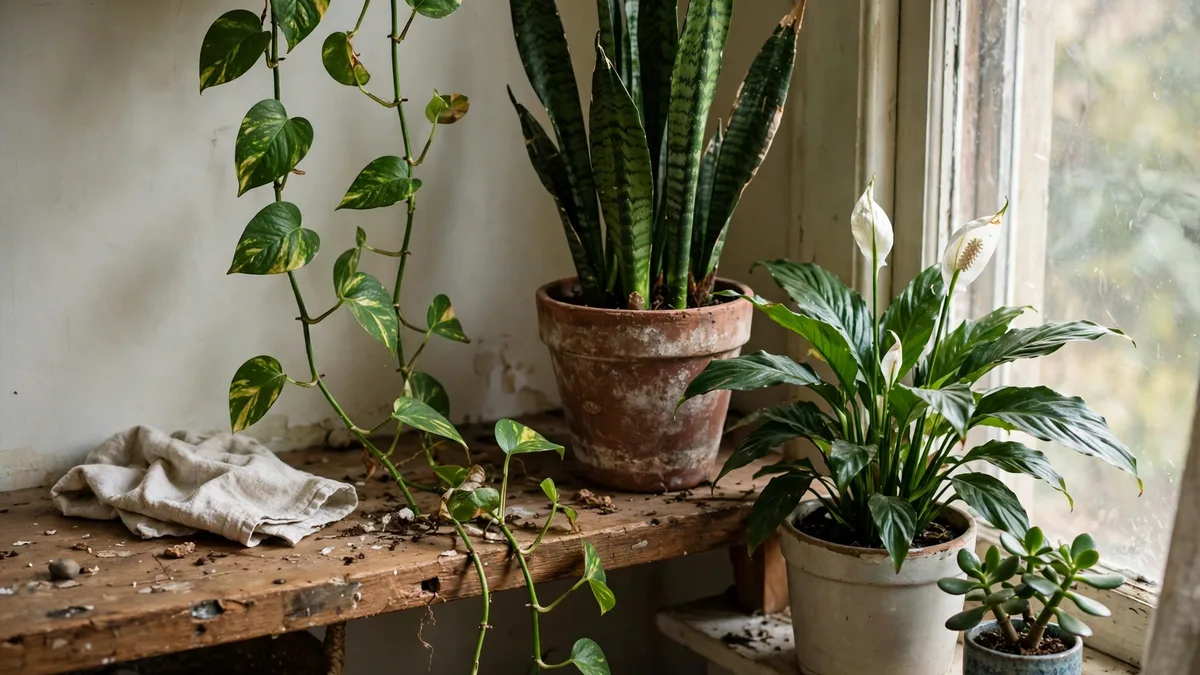
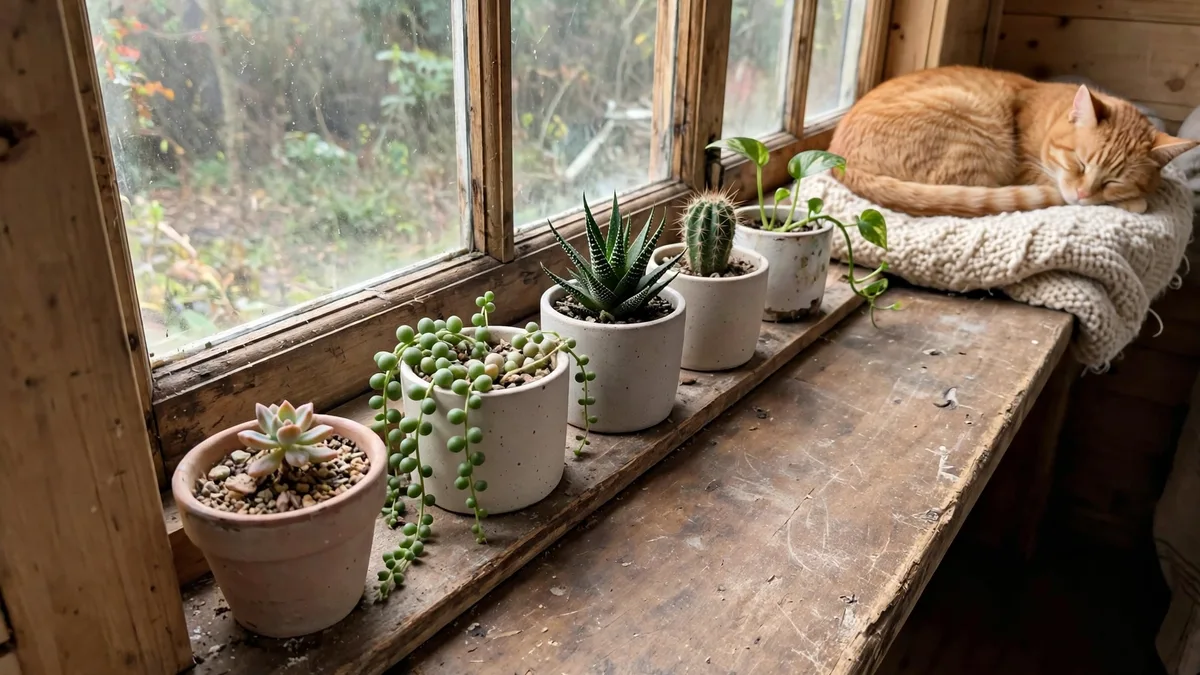
A greenhouse is not a room with plants in it. It is a working glass building where the sun is stronger, the air is damper, the floor is often gravel, and the temperature can swing widely in a single day. When a cat or a dog wanders in with you, that changes the plant list twice over: every leaf at nose height has to be safe to chew, and every pot has to survive a wagging tail or a cat landing on the bench. This guide picks seven plants that pass both tests — non-toxic to cats and dogs, and happy in real greenhouse heat, humidity, and bright light.

What Makes a Greenhouse Different for Pets
A conservatory is a room in the house; a greenhouse is a building of its own, and that matters. There are no chairs to hide behind and no curtains to soften the sun, and the floor is built to get wet and dirty. Pets treat it as a garden room: dogs sniff along the benches and lie down in the sunniest patch of gravel, cats climb to the warmest shelf and chew whatever dangles at face height. So put the trailing plants high, where a cat can look but not grab a mouthful of leaves. Use heavy ceramic or stone pots on the floor, because a light plastic pot tips the first time a dog brushes past it. Keep a clear sunny patch of floor empty on purpose, so your pet lies there instead of in the plants. Our guide to why I only grow plants in my greenhouse explains the working-building mindset behind all of this: the greenhouse is for growing, not for sitting, and the layout should serve the plants first.
1. Spider Plant
The spider plant is the easiest safe bet for a greenhouse. It is non-toxic to cats and dogs, it loves bright light, and it forgives the fast-drying soil that comes with glass and sun. Hang it from a hook or set it on a high bench so the striped leaves arch down out of easy reach — cats love to bat at the dangling plantlets, and the plant survives the attention. Water when the top of the soil dries, and snip off the little plantlets to pot up on the bench.
2. Ponytail Palm
A ponytail palm looks like a small tree with a fountain of thin leaves, and it is one of the toughest sun-lovers you can put in a greenhouse. It is non-toxic to pets, it stores water in its swollen base, and it likes the heat that builds under glass on a summer afternoon. Give it the brightest bench, a heavy pot it cannot be knocked over in, and gritty, free-draining soil. Water deeply, then let it dry out fully before watering again.

3. Hoya, or Wax Plant
Hoya is a trailing plant made for a greenhouse shelf. It is non-toxic to cats and dogs, it loves warm, bright conditions, and its thick, waxy leaves hold water through hot days. Train it along a high shelf or let it trail from a hanging basket fixed well above head height, so the leaves stay out of a pet’s reach while the plant still gets the light it wants. It likes to stay a little pot-bound and hates sitting in wet soil, so water sparingly in winter.
4. African Violet
African violets are the bench plant for the damper, shadier side of the greenhouse. They are non-toxic to pets, they flower for months, and they love the humidity that gathers around grouped plants and wet gravel. Keep them on a low bench out of direct midday sun, which scorches their soft leaves, and water from below so water never sits on the leaves. A small, heavy pot suits them: they stay compact, they do not trail into a dog’s path, and a pet nosing at the flowers does them no harm.
5. Pilea Peperomioides
Pilea, the Chinese money plant, is a neat, round-leaved plant that suits a greenhouse bench perfectly. It is non-toxic to cats and dogs, it likes bright light without the fiercest midday beam, and it stays compact enough for a crowded bench. Turn it every week or two so it grows evenly instead of leaning toward the glass. It makes baby plants around its base, which you can lift off and pot up — ideal greenhouse propagation practice.

6. Swedish Ivy
Swedish ivy is a soft, trailing plant that fills a greenhouse shelf fast, and it is non-toxic to pets. It likes bright light and the humid air of a glasshouse, and it forgives a missed watering better than most trailing plants. Hang it high or set it on the top shelf, where the stems can trail down without landing at nose height. Pinch the tips back in spring to keep it bushy instead of leggy.
7. Staghorn Fern
A staghorn fern is the showpiece for a greenhouse wall. Mounted on a board and hung high, it is completely out of a pet’s reach, and it is non-toxic anyway if a leaf ever drifts down. It loves the humidity of a greenhouse and the bright, filtered light under glass, and it needs no pot at all — just a board, some moss, and a regular soak or mist. Hang it where the morning sun hits it and the roof vent keeps the air moving.

Setting Up the Shared Space
Arrange the greenhouse in zones and the pets will mostly look after themselves. Put the tall, heavy plants — the ponytail palm and the staghorn fern — at the back and up high, where they get the most light and the least traffic. Keep the bench plants, the African violets and pilea, grouped together in the middle, where they share humidity and are easy to water. Leave the sunniest patch of gravel floor clear, with a water bowl in the shade, so your dog or cat has a place of its own. The pet-safe conservatory list is a useful comparison, because a glass roof room and a greenhouse behave differently: our guide to pet-safe conservatory plants covers the room where the light falls from above and people sit among the plants. If you are starting from scratch, our guide to building a DIY indoor greenhouse covers benches, vents, and glazing before you buy a single plant.
Your Pet-Safe Greenhouse Shortlist
Start with three: a spider plant hung high, a ponytail palm in a heavy floor pot, and an African violet on the damp bench. Watch them for a month. If the spider plant stays green and the violet keeps flowering, the light, water, and ventilation are right, and you can add the hoya, pilea, Swedish ivy, and staghorn fern next. If a plant scorches, move it back from the glass; if it sulks, move it closer to the vent. Before you buy, check the botanical name on the label — non-toxic does not mean a pet should eat a whole plant, and a safe plant in the wrong spot is still a stressed plant.