Christmas flowers do something no bauble can: they make a room smell alive in midwinter. The trouble is that a bunch bought on the first of December is usually tired by the second week, and a bunch bought on Christmas Eve is gone before New Year. The fix is not buying more flowers. It is choosing the right Christmas flowers, arranging them for the room they will live in, and caring for them in a way that stretches their life across the whole holiday period.
This is about cut flowers in vases and bowls, not the potted plants on the windowsill. If you want living plants that stay green into January, our guide to Christmas plants covers the best ones. What follows is for the flowers you cut, buy by the bunch, and arrange yourself.
Christmas Flowers That Last, and the Ones That Do Not
Not every festive-looking flower survives a heated living room. The ones that do share the same traits: thick stems, sturdy petals, and buds that open slowly over days rather than all at once.
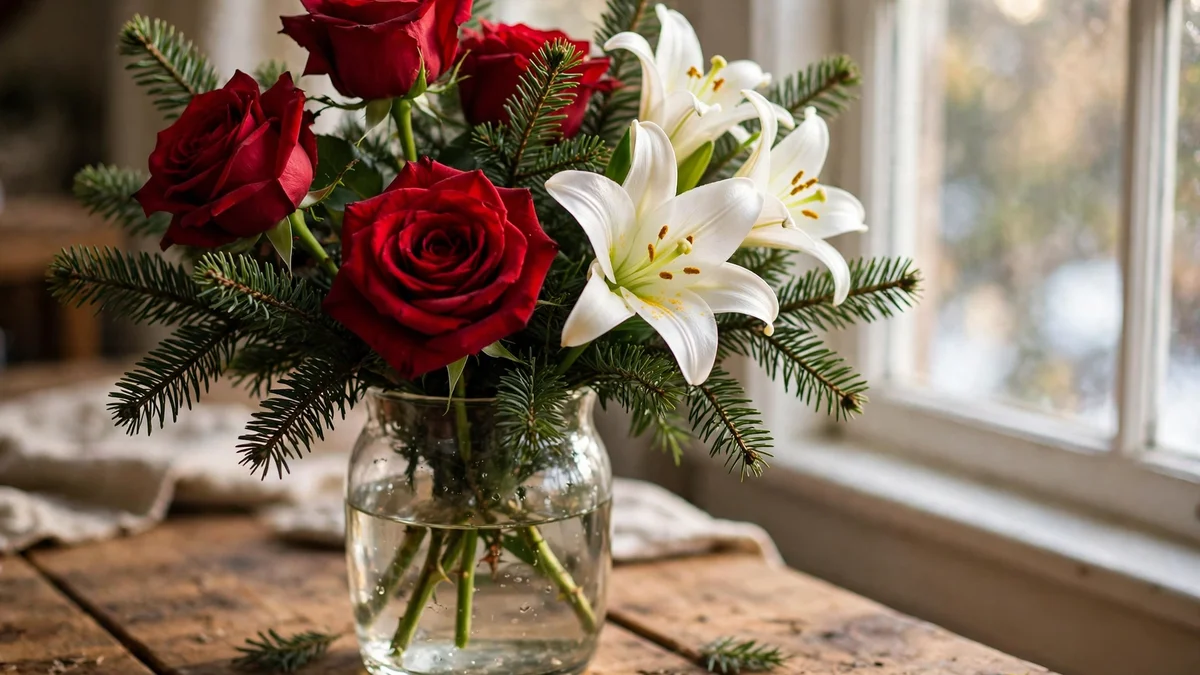
Red roses are the obvious choice and still the best one. They hold their shape for ten days or more in a cool room, and a bunch bought with tight buds will open gradually. White lilies are the second pillar: one stem carries several buds that open one after another, giving you a week of fresh-looking flowers from a single purchase. Snip out the pollen stamens as each bud opens and the petals stay clean and white. Amaryllis stems, sold cut in December, are the showpiece — a tall stem topped with trumpet flowers in red or white that lasts two weeks.
Carnations and chrysanthemums are the workhorses. Neither is glamorous on its own, but both last two weeks or longer, come in exactly the Christmas shades you need — deep red, white, and cream — and cost far less than roses, so you can afford to fill an arrangement properly. A few sprigs of holly with berries and some fir or cedar tucked between the blooms give the arrangement its Christmas character and cost almost nothing. Holly berries are poisonous if eaten, so keep berry-heavy arrangements out of reach of small children and pets.
The flowers to avoid for a long-lasting Christmas arrangement are the pretty but short-lived ones. Tulips keep growing in the vase and flop within days, paperwhites fade fast and their scent can overwhelm a dining room, and most garden roses cut in winter are already tired before you buy them.
Three Christmas Flower Arrangements for Different Rooms
One arrangement does not suit every room. Build for the spot, not for the photograph.
1. The Red-and-White Vase for the Hallway
The hallway arrangement is the first thing guests see, so it should be tall and simple. Use a slim vase, five or six red roses, three white lily stems, and a few fir sprigs at the back for height. Cut the roses a little shorter than the lilies so the lilies rise above them, and let the fir frame the whole thing. This is a two-minute arrangement that looks expensive because the colour scheme does all the work. If you are new to building a vase arrangement from scratch, our step-by-step guide to how to arrange flowers in a vase for beginners walks through the vase choice, stem preparation, and layering that make a simple bunch look florist-made.

2. The Low Bowl of Blooms for the Dining Table
A dining table arrangement must sit low enough that guests can see each other over it. Use a wide, shallow bowl, a small block of soaked floral foam or a tape grid across the rim, and short stems: red carnations, white chrysanthemums, a few roses cut short, and holly sprigs tucked between them. Keep every bloom below eye level when seated. This is where Christmas flowers differ from the evergreen-and-candle centrepieces many tables already have — the flowers are the display, not a garnish around candles, so skip scented candles beside it and let the blooms carry the table. A bowl like this uses fewer stems than a tall vase and still looks generous, because the flowers sit close together and spill slightly over the rim.
3. The Big Statement Arrangement for the Living Room
The living room can take the arrangement the other rooms cannot: a large, generous display on a sideboard or console. Start with a wide jug or a low bucket-style vase, build a base of fir and cedar, then add amaryllis stems as the tallest points, red roses in the middle, and white carnations to fill the gaps. Stand back and check it from the doorway, not just from arm’s length — a living room arrangement is viewed from across the room, so it needs bolder colour and taller stems than a table arrangement. For more design ideas to adapt, our flower arrangement ideas for beginners include fifteen simple designs, several of which work beautifully with Christmas colours swapped in.

How to Keep Christmas Flower Arrangements Fresh All Through the Holidays
Freshness is a schedule, not a trick. A Christmas arrangement lives longest when you buy in stages. Buy the hardy base — carnations, chrysanthemums, evergreen — in the first week of December. Buy roses and lilies a few days before the main celebrations. Buy amaryllis stems last, since they open fast and steal the show the moment they do.
Cut every stem at a 45-degree angle before it goes in the vase, and strip off any leaves that would sit below the waterline. Leaves in water rot within days and feed the bacteria that cloud the water and block the stems. Change the water every two days, rinse the vase, and re-trim the stems by a centimetre each time. A spoonful of flower food, or a homemade mix of sugar, lemon juice, and a drop of bleach, keeps the water clear and feeds the blooms.
Where the arrangement sits matters as much as how you cut it. Heated rooms are the enemy: keep arrangements away from radiators, fireplaces, and sunny windowsills, and move the vase to a cool room overnight if you can. A vase that spends its nights in a cool hallway will outlast one that sits beside a fire by a week. Pull out any flower the moment it wilts — one rotting bloom spoils the water for the rest — and replace it with a fresh stem from the next bunch you buy, so the arrangement refreshes itself through the season instead of fading all at once.

One Last Tip: Let the Season Do the Choosing
The best Christmas flower arrangements look like they belong to December, not like a summer bouquet dressed up with a ribbon. Red and white with deep green is the classic scheme for a reason — it reads as Christmas from across the room, and every flower on the tough list above comes in those shades. Buy the hardy flowers early, add the showy ones late, keep the water fresh and the vase cool, and your Christmas flowers will still look good when the last guest leaves — which is more than most decorations manage.