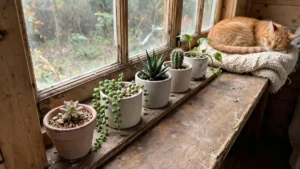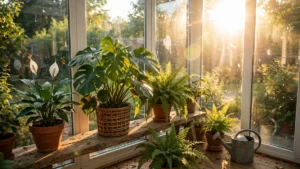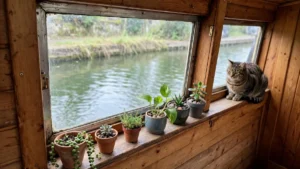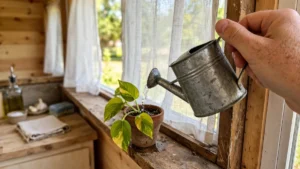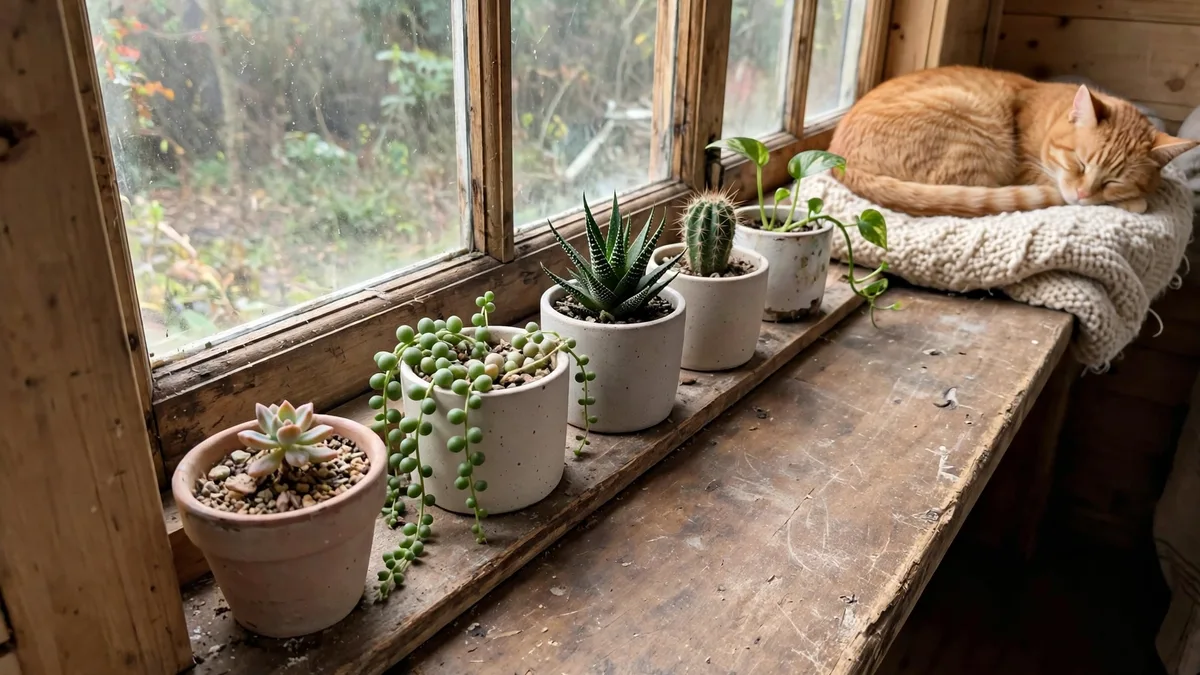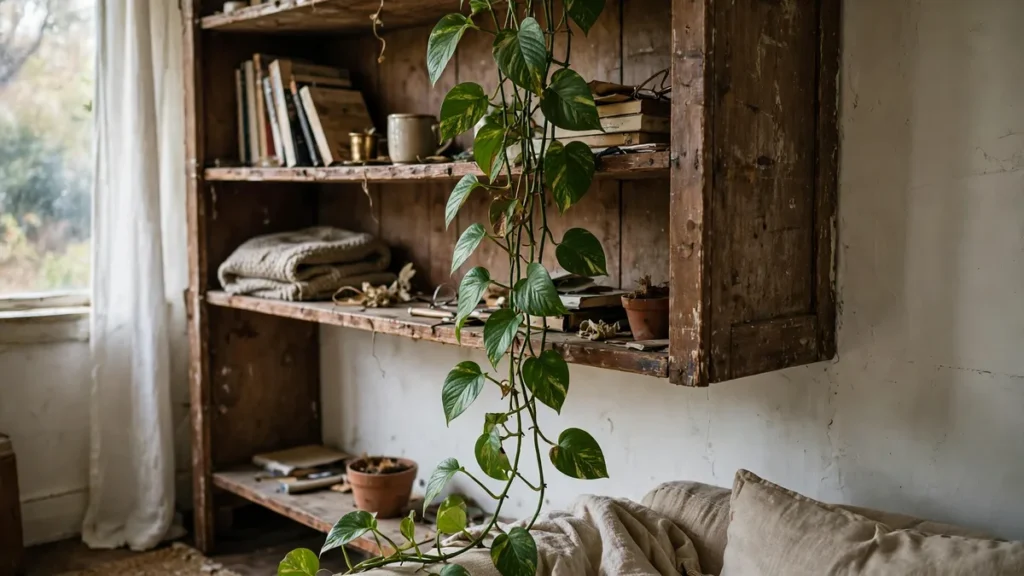
Eighteen years ago, a friend gave me a small pothos for my birthday, and I had no idea what I was doing. Year sixteen taught me to wait, and year seventeen to respect the seasons. Year eighteen has been different again. It was the year the light moved, the year a pot cracked, the year I lost a plant I had kept for a decade, and the year I learned to lift a pot before I watered it. Four lessons, and none of them came from a plant doing something new. They came from the house, and from me, noticing what had changed around the plants.
The Light Moved
The first lesson arrived slowly, which is why it took me so long to see it. The peace lily in the east window had been there for years, and it had always flowered in spring. This year it did not. It was not unwell, just flowerless, and for months I could not work out why.
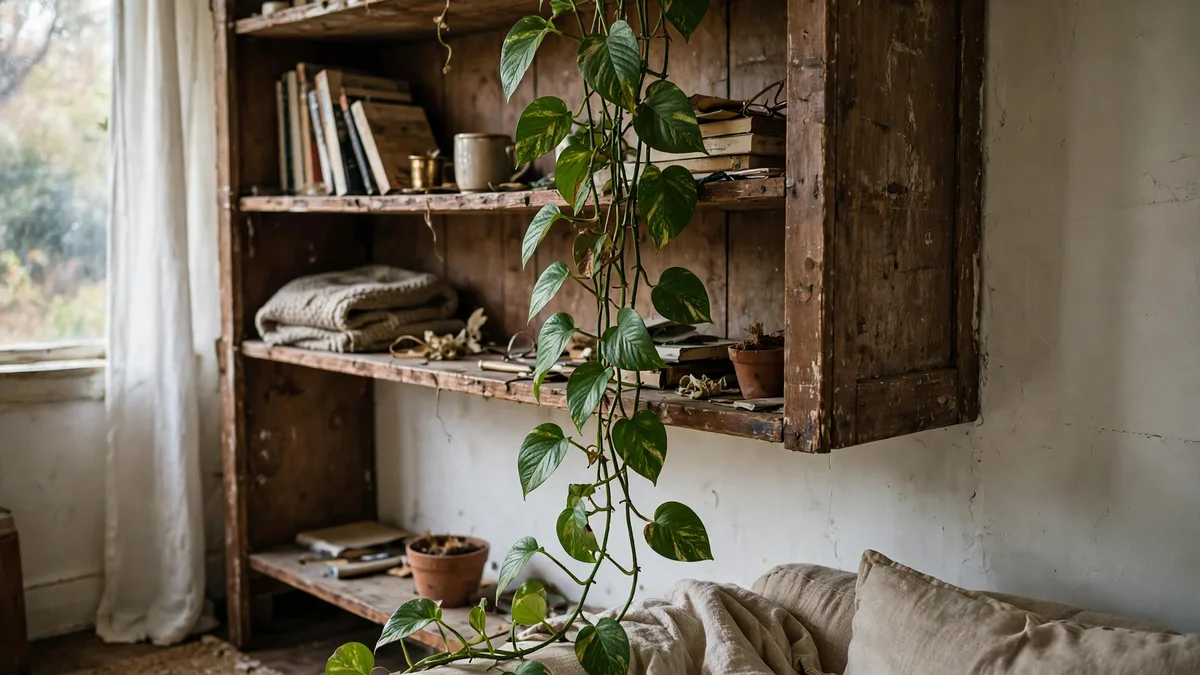
Then one morning in June I stood at the window and looked out instead of in. The tree in the neighbour’s garden, the one that was a sapling when the peace lily first arrived, had grown tall enough to shade the whole window by mid-morning. The light the peace lily had lived in for a decade was gone, and it had gone so gradually that neither of us had noticed it leaving. Our guide on how to care for a peace lily covers the practical side, but the lesson here is not about the plant. It is about the room. I had spent eighteen years thinking of the windows as fixed things, as if light were a feature of the house. It is not. Trees grow, and the light in a room changes year by year. I moved the bookshelf a foot to the left, into the strip of sun that still reaches the wall. It flowered in August. Year eighteen taught me that a plant’s home is not only the pot it sits in. It is the whole room, and the room does not stay still.
The Pot That Cracked
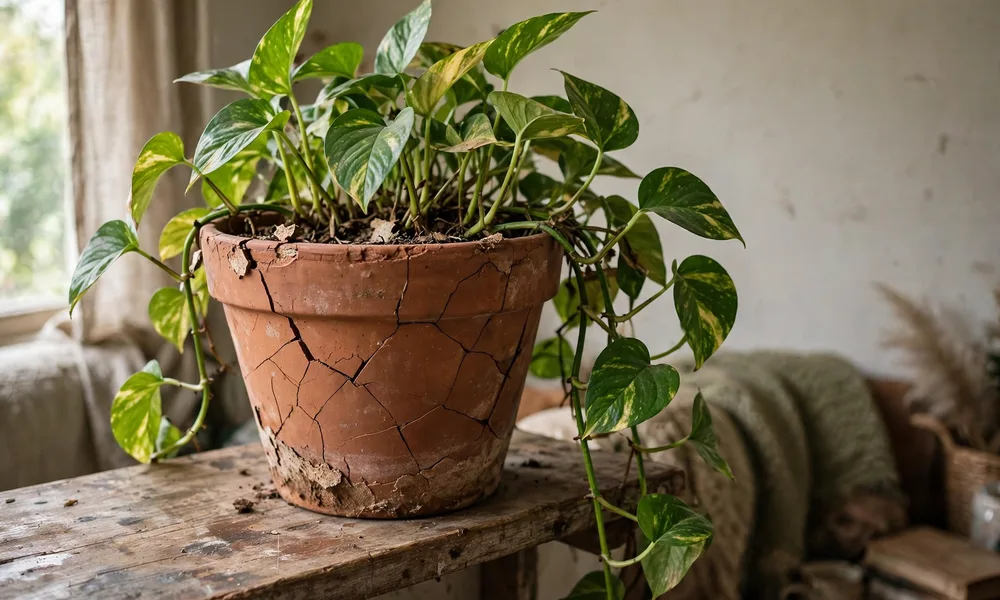
The second lesson came from the original pothos itself, or rather from the pot it has lived in for longer than I can remember. One Sunday in March I found a thin crack running down the side of its terracotta pot, from the rim to halfway down. It had probably been there for months. My first thought was to repot it at once. A cracked pot is a broken pot, and a broken pot needs replacing.
Instead I left it. The crack was not leaking soil, the plant was not suffering, and the pot had held this pothos through eighteen years of growth. The crack is still there, a dark line down the side of the pot, and the pothos is still growing over the rim as if nothing happened. Year eighteen taught me that the things holding the plants age too. I have always thought of pots as permanent, as the fixed part of the arrangement while the plants change. They are not. Terracotta weathers, and the shelf the pothos trails from is more worn than it was. A cracked pot is not a failure. It is a record of how long something has been doing its job.
The One I Lost
The third lesson is the hardest one to write, because it is the first time in years that a plant of mine has died. The spider plant on the kitchen sill had been with me for a decade. It was never the one visitors asked about, but it was always there, throwing out plantlets every summer, and I had stopped really seeing it. Over the winter it began to fade. The leaves went pale at the tips, then brown, then limp. By February it was gone.
I do not know what killed it. That is the part that stays with me. After eighteen years I expect to know why a plant fails, and this time I do not. Perhaps it was simply old, or the kitchen had grown colder than I realised. I left the empty pot on the sill for months, because throwing it away felt like pretending the plant had never been there. I even looked at our round-up of the best indoor plants for low light, wondering what could take its place, and closed the page. Year eighteen taught me that losing a plant after all this time is not a failure of care. It is part of keeping plants for eighteen years. Some of them will outlive their season, and no amount of experience stops that. The empty pot is not a mistake to fix. It is a space where a plant lived for ten years, and it deserves to stay empty until something belongs there.

Lifting the Pot
The last lesson is the smallest one, and it is the only one that changed how I water. For eighteen years I watered on a rhythm I could feel in my hands: the peace lily when the top of the soil looked dry, the pothos when I remembered, the snake plant almost never. But this year, after the spider plant died without explaining itself, I started to wonder how much of that rhythm was habit and how much was knowledge. So I started lifting the pots.
It sounds like nothing, and it is nothing, but it changed everything. A pot that needs water is light in a way you can feel at once. A pot that does not need water is heavy, and no amount of looking at the surface will tell you that. I lift the peace lily before I water it now, and half the time I put the can down again, because the pot is heavier than it looks. Our guide on how often to water indoor plants covers the practical side, but the lesson is that after eighteen years I was still watering partly by guesswork. Year eighteen taught me that the hands know things the eyes do not. Lifting a pot takes two seconds, and it tells the truth every time.

What Year Eighteen Really Taught Me
If year sixteen taught me to wait and year seventeen taught me to respect the seasons, then year eighteen taught me to look at everything around the plants, not only at the plants themselves. The light in the room had changed without asking me. The pot holding the oldest plant in the house had cracked. A plant I had kept for ten years died, and I could not say why. And a habit I had trusted for eighteen years turned out to be guesswork, fixed by lifting a pot for two seconds.
Eighteen years on, I keep them the way you keep anything that has been with you a long time: by noticing the room as well as the plant, by letting a cracked pot keep working, by leaving an empty space empty, and by trusting my hands as much as my eyes. The collection is smaller by one plant, and a little more honest about what I do not know. That feels like progress.