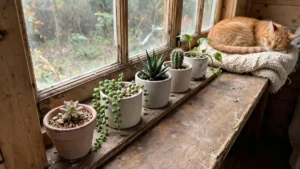
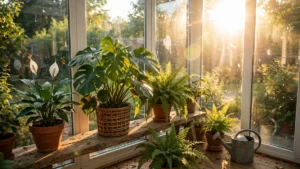
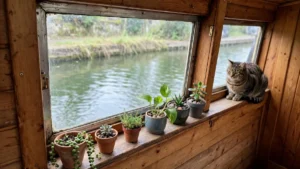
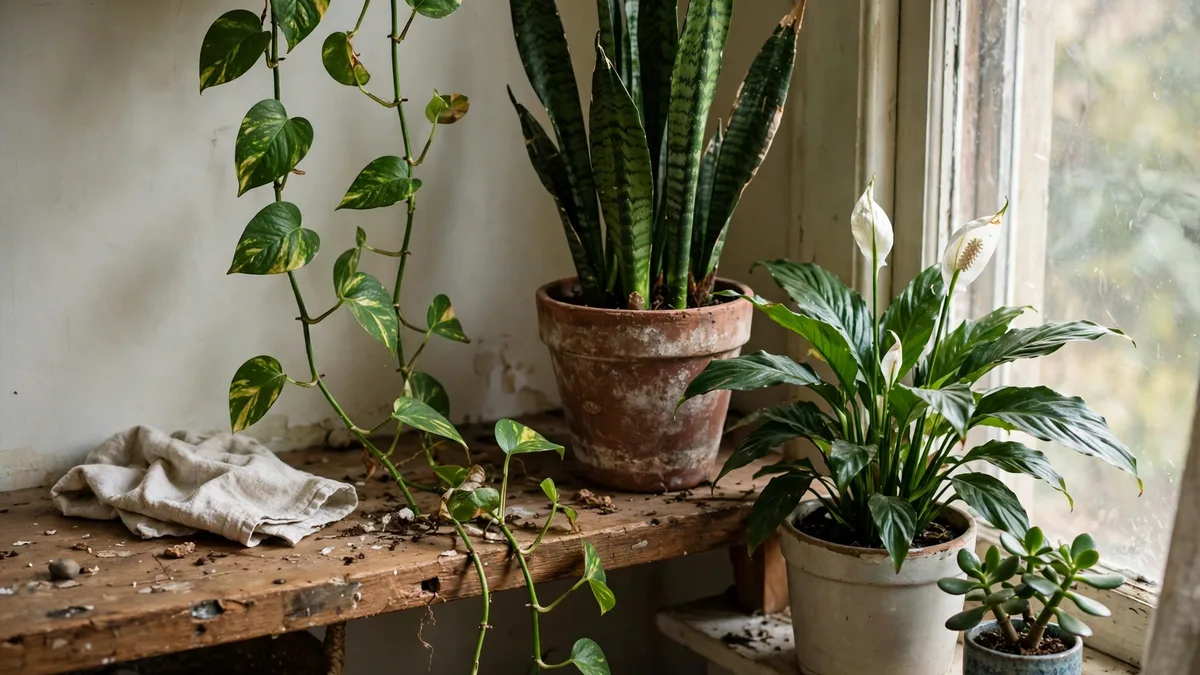
A tiny house window is a small stage with a big job. The sill is rarely wider than a paperback, the glass sits close to the cooking steam and the sleeping loft, and a cat or a dog is never more than a few steps away from any pot. A plant here has to stay compact, sit safely in a light pot that will not slide off a narrow ledge, and be harmless if a curious pet takes a nibble. The seven below pass all three tests at once. Every one is widely listed as non-toxic to cats and dogs, and each one genuinely suits a small, bright window instead of merely tolerating it. For the rest of the house, our roundup of the best pet-safe plants for a tiny house covers the floor and shelf picks, while this list stays at the glass.
What a Tiny House Window Asks of a Pet-Safe Plant
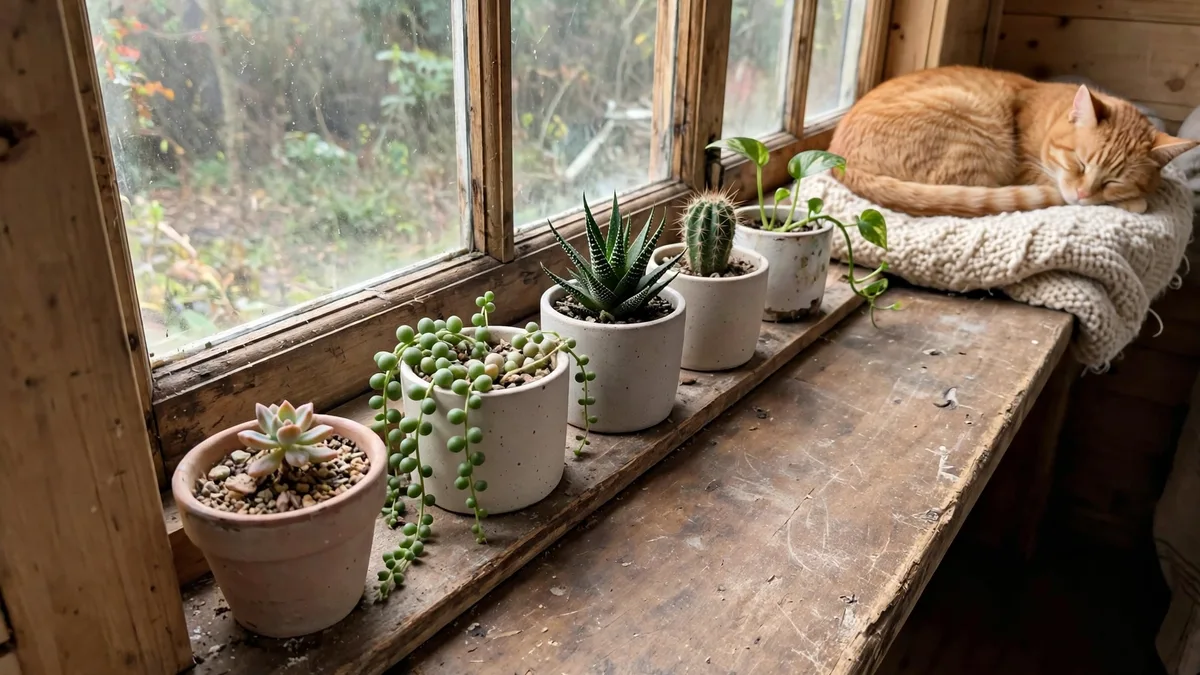
Before you buy, watch your window for a day. Most tiny house windows face one direction and catch either a hard blast of morning or afternoon sun or a soft, all-day glow, and there is rarely a curtain to soften it, so the winners below tolerate both bright patches and dull hours. Weight matters more than usual: a heavy pot can tip a narrow sill, so use small, light pots with a non-slip mat underneath, and keep the pot low and wide rather than tall and tippy. Water little and often, because small pots dry fast in a warm room, and keep every pot a hand’s width back from the edge so a tail cannot sweep it off. If you want the version of this sill without the pet-safe rule, our best plants for a tiny house window list covers the wider picks. Check the botanical name on the label before you buy, and never use slug pellets or sprays where a pet can reach them.
1. Thanksgiving Cactus
Thanksgiving cactus, or Schlumbergera truncata, is the flowering pick for the sunniest end of the sill. Its flat, segmented stems end in bright pink and red flowers in late autumn, just when the rest of the house is going quiet for winter. It is listed as non-toxic to cats and dogs, and its soft, spineless stems are safe for a pet to brush past. Give it bright, indirect light, water when the top of the soil dries, and keep it in a small pot, since it flowers best when slightly snug. Let it rest cool and a little dry after flowering and it will come back fuller next year.
2. Jewel Orchid
Jewel orchid, or Ludisia discolor, is the foliage jewel for a soft-light stretch of the sill. It is grown for its leaves rather than its flowers: deep green and velvety, veined in glowing pink, like a tiny patterned rug. It is listed as non-toxic to cats and dogs. It stays low and compact in a small pot, likes gentle light rather than direct sun, and wants its soil lightly moist, never soggy. A small white flower spike in winter is a bonus, but the leaves are the show all year. Keep it away from cold draughts off the glass on frosty nights.

3. Persian Violet
Persian violet, or Exacum affine, is the small flowering plant for the brightest spot on the sill. Its neat mound of glossy green leaves carries a cloud of tiny blue-violet flowers with yellow centres for months at a time, and it rarely grows taller than a hand’s width. It is listed as non-toxic to cats and dogs. Give it the sunniest place you have, keep the soil evenly moist, and snip off faded flowers to keep new ones coming. It is short-lived by nature, so enjoy it for a season and start a fresh pot when it fades.
4. Shrimp Plant
Shrimp plant, or Justicia brandegeeana, is the character plant for the middle of the sill. Its arching chains of pink, shrimp-shaped bracts last for months, with small white flowers peeking out between them, and it brings a warm colour no plain green plant can match. It is listed as non-toxic to cats and dogs. It likes bright, indirect light and regular watering, and a light pinch of the tips keeps it bushy instead of leggy. In a small pot it stays a neat, upright plant that never blocks the view out of the window.

5. Split Rock
Split rock, or Pleiospilos nelii, is the smallest succulent on this list and the toughest. It is little more than two fat, grey-green leaves split down the middle like a stone cracked open, and a single plant fits in a pot no bigger than a teacup. It is listed as non-toxic to cats and dogs. Give it the brightest spot on the sill, use very gritty soil, and water only a few times a year, since it stores everything it needs in its leaves. In late summer it can open a large yellow daisy flower that dwarfs the plant itself.
6. Baby Toes
Baby toes, or Fenestraria rhopalophylla, is the tiny succulent for the sunniest corner of the sill. Its clusters of small, finger-like leaves end in clear, window-like tips that let light deep into the plant, which is exactly what it wants from a bright window. It is listed as non-toxic to cats and dogs. Give it full sun, very free-draining soil, and water sparingly, letting the pot dry out fully between waterings. It spreads slowly into a small clump, so one little pot can fill a narrow ledge without ever crowding the glass.

7. Metallic Palm
Metallic palm, or Chamaedorea metallica, is the small tree for the end of the sill. Its broad, undivided leaves have a blue-green metallic sheen that catches the light, and it grows slowly into a neat, upright plant that suits a tiny house far better than a tall palm ever could. It is listed as non-toxic to cats and dogs. Give it soft, indirect light, keep the soil lightly moist, and wipe the leaves now and then, since cooking steam and dust settle quickly in a small space. One plant anchors the whole sill.
Putting the Tiny-House Window Together
Start with two or three pots and live with them for a month before you fill the sill. Put the sun lovers at the brightest end and the soft-light plants a little back from the glass, and leave a gap at one end where a cat can sit and watch the world without knocking anything over. Heavy, low pots on a non-slip mat, saucers under every pot, and a quick weekly wipe of the glass will keep the whole arrangement safe and bright. For a longer, lower sill on the water, our best pet-safe plants for a narrowboat window list uses the same safety rules in a different room. Seven small, safe plants are plenty for one tiny window.