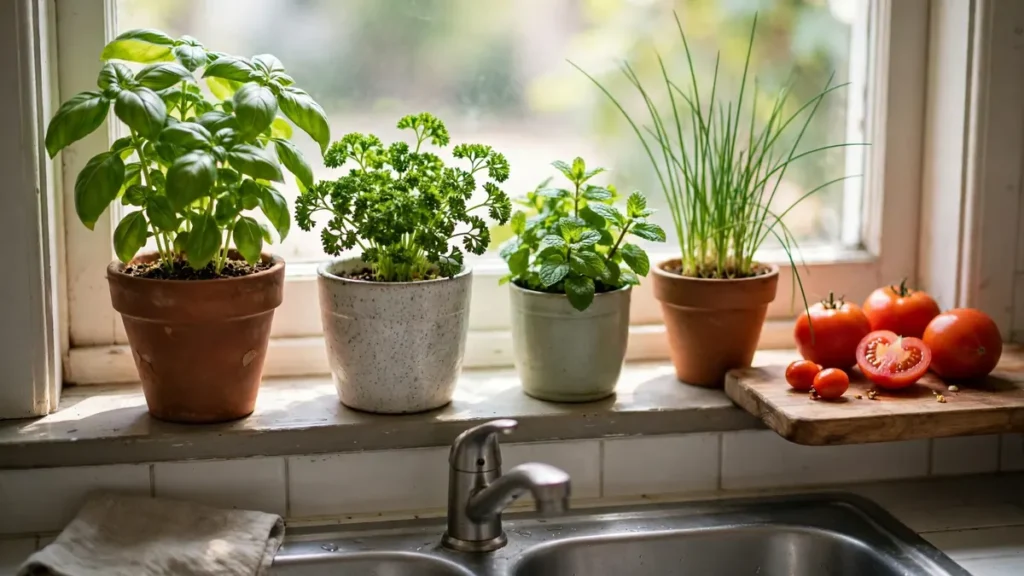
A kitchen herb garden is not a display. It is a working corner of the room where you cook: basil within reach of the pasta pot, parsley beside the chopping board, mint by the kettle. When the setup matches how you actually cook, the herbs get used, watered and noticed. When it is only decorative, they quietly dry out behind the fruit bowl.

What to Grow for Cooking
Start with what you cook most, not with the prettiest plant in the shop. If you make pasta and salads, basil and flat-leaf parsley will be used several times a week. If you roast chicken and potatoes, rosemary and thyme are the workhorses. If you drink tea or cook Southeast Asian dishes, mint earns its pot. Pick five or six herbs at most for a first kitchen garden. A crowded shelf of ten half-used pots is harder to water and easier to ignore than a small set you reach for daily.
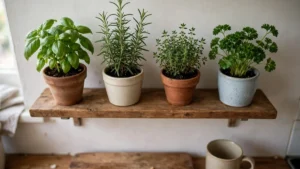
A useful first set is basil, parsley, chives, mint, rosemary and thyme. Basil and parsley are soft, leafy and fast-growing, so they like regular water and frequent picking. Chives are forgiving and bounce back quickly after a trim. Mint is vigorous and best kept in its own pot, because it will crowd out neighbours if it shares one. Rosemary and thyme are woody and slower: they prefer less water, more sun and soil that drains freely. Group the thirsty soft herbs together and the dry-loving woody herbs together, rather than treating every pot the same.
Where to Put It in the Kitchen
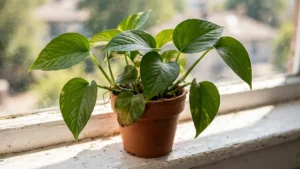
Light comes first, counter space second. Most cooking herbs want four to six hours of bright light a day, and the brightest kitchen spot is usually the windowsill above the sink or a south- or west-facing window. Basil, rosemary and thyme want that sunny sill; parsley, chives and mint cope with a bright counter a metre from the window. Pale, stretched stems mean a plant needs more light.

If the windowsill is narrow, use the counter next to it rather than a dark corner across the room. A small wooden tray under two or three pots keeps the counter tidy, catches drips and lets you lift the whole group to wipe underneath. Keep the tray within arm’s reach of where you chop and season food. Herbs stored by the back door or on top of a tall cupboard are out of sight and out of use, however sunny that spot looks on paper.
A wall rail is the best fix for a small kitchen with no spare counter. A short rail with hooks beside the stove holds three or four small pots without taking any worktop. Keep it on the side wall, not directly above the hob, where heat and steam scorch leaves. Leave a little air around each pot: herbs packed tightly stay damp, and damp, still air invites mould.
Pots, Soil and Drainage
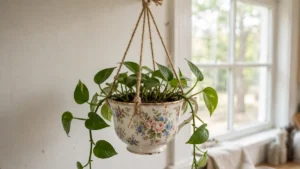
Every herb pot needs a drainage hole. Without one, water sits at the bottom, roots rot, and the plant collapses even though the top of the soil looks fine. If you love a pretty pot with no hole, use it as an outer cover and keep the plant in a plain plastic pot inside it. Lift the inner pot out to water, let it drain, then set it back.
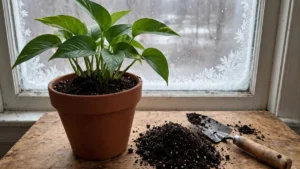
Use a free-draining potting mix rather than heavy garden soil, which compacts and stays wet. A handful of perlite or grit helps rosemary and thyme in particular. For more on containers, see our container gardening for beginners guide. Repot a shop-bought herb if the roots are tight: go one pot size up and water it in well.
The Kitchen Watering Routine
Water by checking the soil, not by the calendar. Push a finger a couple of centimetres into the compost. If it feels dry at that depth, water thoroughly until a little runs from the drainage hole, then empty the saucer so the pot is not sitting in water. If it still feels damp, wait another day. In a warm kitchen in summer that may mean watering soft herbs every two or three days; in winter it may be once a week.

Tie watering to something you already do: water while the kettle boils, or while dinner is on the stove. Keep a small jug by the sink so the job takes seconds. If watering needs differ by plant type, our indoor plant watering schedule by plant type is a useful check.
Two kitchen habits kill more herbs than drought. The first is watering a little every day, which keeps the surface wet and the roots shallow. The second is letting pots sit in saucers full of water after a big watering, which is the fastest route to root rot. Water deeply, then let the soil dry a little between waterings, and your herbs will grow stronger roots and better flavour.
Harvesting While You Cook
Picking herbs is pruning, and regular picking keeps plants bushy instead of leggy. Snip basil from the top of a stem just above a pair of leaves and it will branch into two new stems. Cut chives near the base and they regrow from the centre. Take parsley from the outer stems first, leaving the young centre to keep growing. Never strip a small plant bare in one meal: take a third at most, and let it recover for a few days.
Keeping the Garden Alive
Most kitchen herb failures have a kitchen cause. Heat from the oven or hob dries pots fast and scorches nearby leaves, so keep pots a short distance from direct heat. Steam from a boiling pot is not the same as watering: it wets the leaves while the soil stays dry, so check the compost rather than assuming a steamy kitchen means watered plants. Cooking splashes can coat leaves, so give the plant a gentle rinse under the tap now and then.

Feed lightly: a weak liquid feed once a month in spring and summer is enough, and too much fertiliser makes pale growth with less flavour. In autumn and winter, water less, stop feeding, and move pots to the brightest spot. If a plant looks tired after months of picking, replace it: herbs are a crop, not furniture.
For ideas on growing more food in the same small footprint, see best vegetables to grow in containers for varieties that share the same pots, soil and sunny spots as your herbs. A weekly routine ties it all together: check the soil on two set days, pick what you need while you cook, pinch off any flowers, and turn each pot a quarter-turn so it grows evenly towards the light. Five minutes, twice a week, is enough.
Start small, put the pots where you cook, and let the cooking do the reminding. A kitchen herb garden that fits your meals will be watered, picked and enjoyed. One that only fits a photograph will not last the month.