Repotting is a shock for a plant at the best of times. Repotting in winter is a double shock: the roots have just been disturbed, and the plant has to recover in short days, cold windowsills, and dry heated air, when it is barely growing. Most of the damage happens in the first two weeks, when owners try to help too much.
This guide is only about that aftercare window: the first hours, the first week, and the first month after a winter repot, and how to tell a plant sulking normally from a plant in real trouble.

The First 48 Hours: Settle, Then Leave It Alone
A freshly repotted plant needs one thing above all else: stillness. Its roots have been handled, some fine root hairs have broken, and the plant cannot drink properly until new ones grow. In winter, that regrowth is slow.
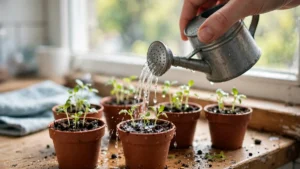
Water lightly right after repotting, just enough to settle the fresh mix around the roots. Fresh mix holds moisture well, and a plant in a bigger pot dries out far more slowly than it did in its old, root-bound one.
Then pick one spot and leave the plant there. Do not keep moving it to check on it or rotate it daily. For the first week, the best care is almost no care at all.
Watering After a Winter Repot: Less Than You Think
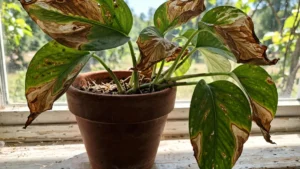
Overwatering is the single biggest killer of winter-repotted plants. The plant looks thirsty — leaves droop, the top of the soil looks dry — so you water. But the droop is usually transplant shock, not thirst, and the soil a few centimetres down is often still damp.
For the first two to three weeks, water only when the soil is dry at depth. Push a finger two inches into the mix, and if it feels damp at that depth, walk away, however dry the surface looks. In a cool room, a freshly repotted plant may go two weeks or more between waterings. Our guide to watering plants in winter without overwatering explains the finger test in more detail, and the same rules apply here — only more strictly, because the roots are damaged.

Light: Bright, But Off the Cold Glass
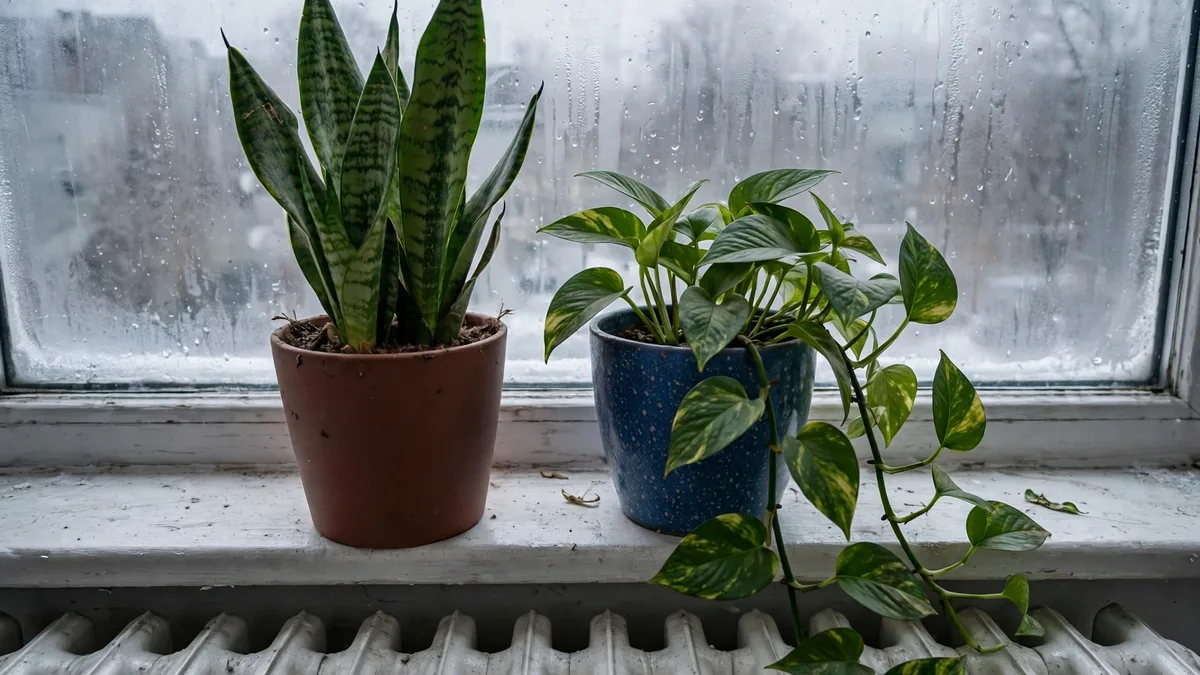
A plant recovering from a repot needs light to rebuild its roots, and winter gives it the least light of the year. Put it in the brightest spot you have — usually right by the brightest window — but keep the leaves off the glass itself. Glass is cold in winter, and a leaf pressed against it can chill and blacken overnight.
Do not put a freshly repotted plant under a strong grow light on full power or in direct midday sun. The roots cannot supply enough water yet to match what bright light demands from the leaves, and the plant will wilt or scorch. Bright, indirect light is the sweet spot.
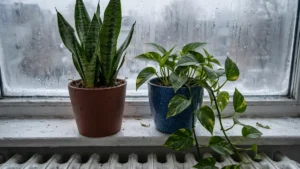
Watch the temperature too. Most houseplants sulk below about 15°C, and a plant on a cold windowsill feels that drop all night. If the sill gets cold after dark, pull the pot back a few centimetres, or stand it on a cork mat. Keep it away from radiators — hot, dry air dries the leaves faster than damaged roots can replace the moisture.
What Not to Do: No Feeding, No Pruning, No Second Repot
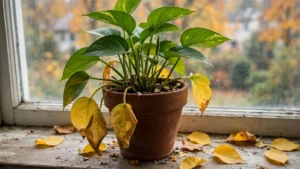
The most common mistake after a winter repot is trying to speed recovery up. Fertiliser is the worst offender: a plant that is not actively growing cannot use it, and fertiliser salts can burn the raw, damaged roots. Do not feed at all until you see clear new growth, which in winter may not come until spring. That is normal. A few lower leaves yellowing and dropping is the plant shedding what it cannot support while its roots recover — take off only leaves that are fully dead and dry.
And do not repot again. If the pot looks too big or the soil looks wrong, leave it. A second repot in winter is a second shock on top of the first, and it is far more likely to finish the plant off than the imperfect first pot is. Fix soil or pot problems in spring, when the plant can grow out of them.

Normal Sulk vs Real Trouble
Almost every plant looks worse before it looks better after a winter repot. The skill is knowing which symptoms are the normal sulk and which mean you need to act.
| What you see | Normal sulk — wait it out | Real trouble — act now |
|---|---|---|
| A few lower leaves yellow and drop | Normal — shedding what it cannot support | Leaves yellowing from the top down, or all at once |
| Leaves droop for a few days | Normal — roots cannot drink properly yet | Stems go soft or mushy at the base |
| No new growth for weeks | Normal — growth pauses in winter anyway | New leaves come out small, pale, or deformed |
| Soil stays damp longer than usual | Normal — fresh mix and a bigger pot hold moisture | A musty smell, or black, slimy roots |
If you find black, slimy roots or a musty smell from the soil, the plant is rotting. Take it out of the pot, cut away the black roots with clean scissors, repot into fresh, dry mix, and water very sparingly. Our guide to why plant roots turn black walks through the rescue step by step. Do this only when you are sure it is rot — digging a sulking plant up to check its roots is itself a shock.
The First Month, Week by Week
Week one is about stillness: light watering, one bright spot, and no feeding, pruning, or moving. Expect some drooping and a dropped leaf or two. In week two, keep the same routine and resist watering just because the surface looks dry. By week three, the plant should stop getting worse. That plateau is the first sign of recovery.
By week four, look for the real sign that the roots have re-established: the plant holds its leaves up firmly, and the soil starts drying out at a normal pace again, because the roots are drinking. Some tropicals may show a tiny new leaf by now. If yours does, you can try one half-strength feed — but only if the plant is clearly growing. Our guide to caring for a monstera in winter has notes if your repotted plant is a tropical that hates the cold.

When to Worry — and When to Wait
A winter repot is a test of patience more than skill. Most plants that look rough in the first fortnight recover by spring, as long as they were not overwatered or fed in the meantime. The plant is not failing because it is not growing in January — almost nothing grows in January.
If it is still declining after three weeks, the problem is usually water, not the repot itself. Let the soil dry out properly and move the plant to a brighter, warmer spot. Otherwise, wait. A plant that survives winter in a new pot with its roots intact will usually repay the patience with a strong flush of growth when the light returns.