A plant that looked perfect in spring can turn brown in the first real heat. Summer is the hardest season for many houseplants: stronger sun through the glass, hotter and drier air, soil that dries out in a day, and fertiliser salts concentrating as pots dry fast. Brown is different from yellow. Yellow leaves are stressed but still alive; brown tissue is dead, and it will not turn green again. The pattern tells you which summer change caused it, so match the pattern first.
First, Read the Brown
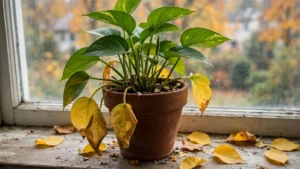
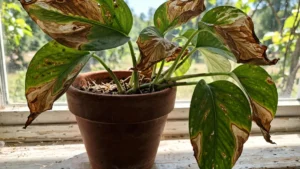
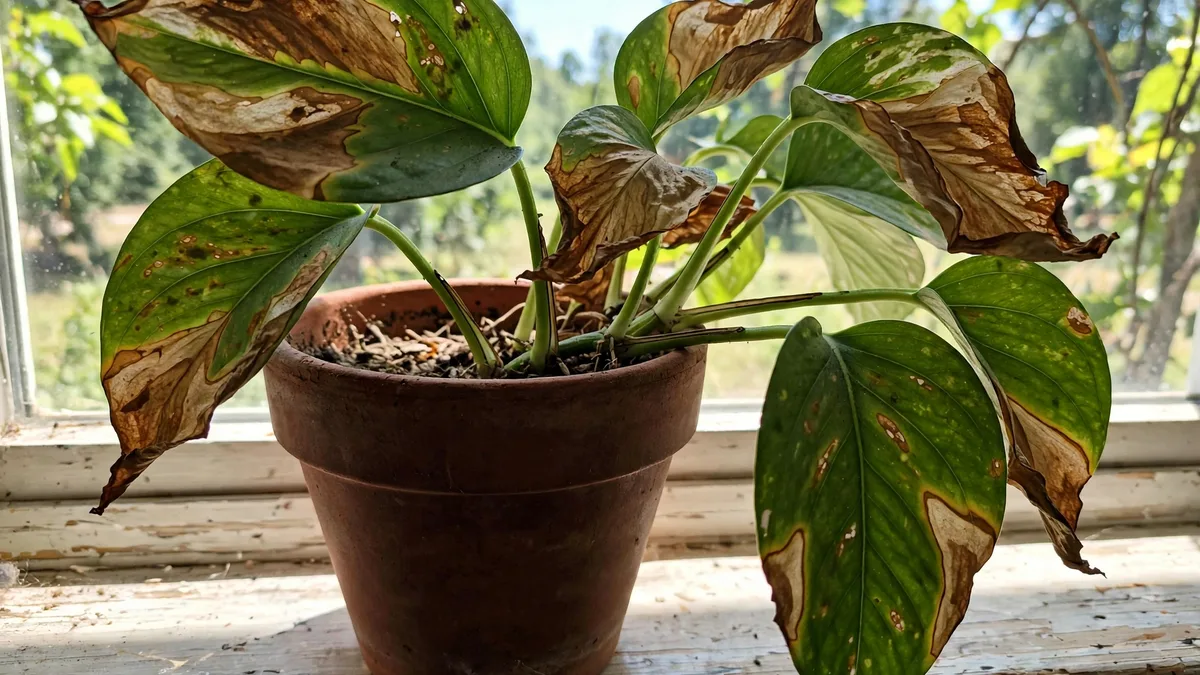
Look at where the brown starts and how it feels. Brown patches in the middle of a leaf, only on the side facing the window, point to sun scorch. Brown, dry edges creeping in from the margins of many leaves at once point to underwatering or salt burn. A whole leaf turning brown and papery after a heatwave points to heat. Brown that appears a few days after feeding, often with a white crust on the soil, points to fertiliser burn. Note what changed just before the browning: a move, a heatwave, a watering gap, or a recent feed.
| Cause | What the brown looks like | Where it appears | Fix first |
|---|---|---|---|
| Sun scorch | Dry, pale brown patches, papery to the touch | Mid-leaf, only on the window side | Pull back from the window or add a sheer curtain |
| Heat stress | Whole leaves brown and papery, often limp first | Oldest leaves first, all over the plant | Move to a cooler spot, water in the morning |
| Underwatering | Brown, crispy edges spreading inward | Leaf margins, many leaves at once | Deep soak for 20 to 30 minutes, then check soil daily |
| Salt and fertiliser burn | Brown tips and edges, sometimes a white crust on the soil | Leaf tips and edges, days after feeding | Flush the soil with plain water, stop feeding |
1. Sun Scorch: Brown Patches on the Sunny Side
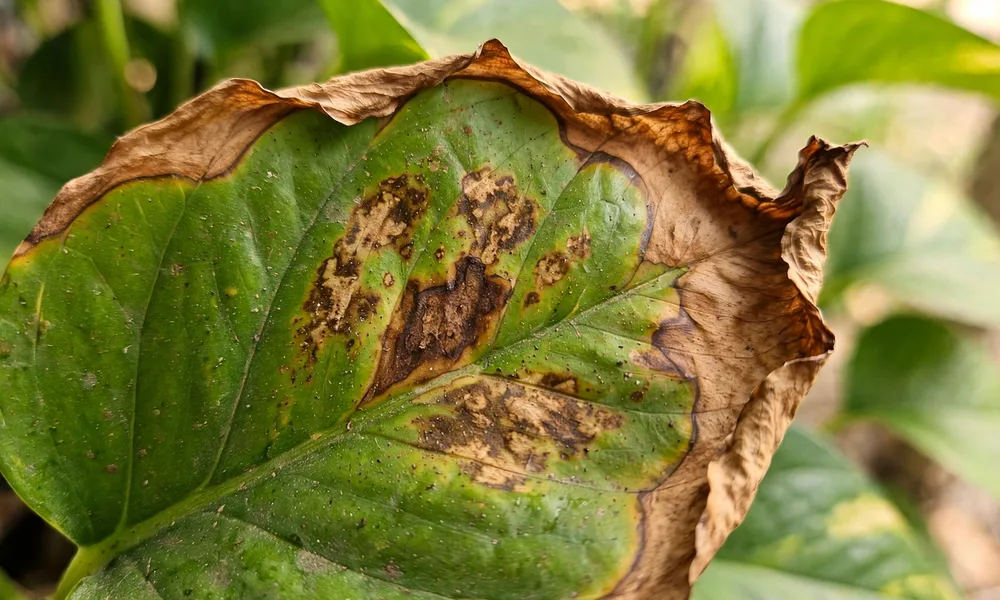
Summer sun through a window is far stronger than spring sun, and a plant that was happy in that spot in April can scorch by July. Scorched leaves develop dry, pale or tan-brown patches in the middle of the leaf, while the shaded side stays green. If the brown stops exactly where the shadow starts, it is scorch.
Move the plant back from the window or behind a sheer curtain, so it gets bright light without direct sun on its leaves. Scorched tissue will not turn green again, so trim the worst leaves off once the plant has settled.
2. Heat Stress: Whole Leaves Browning in a Heatwave
Heat is not the same as direct sun. A plant can sit out of direct light and still suffer in a heatwave, because the whole room gets hot. A room can pass 30 degrees on a hot day. In that heat, the plant loses water from its leaves faster than its roots can replace it. The oldest leaves go first, turning limp, then brown and papery across the whole leaf rather than in patches.
Move the plant to the coolest bright spot you have, away from the hottest window, and water it thoroughly in the morning, when it can take the water up before the afternoon heat. Heat-sensitive plants suffer most, so if you grow one, our guide to how to care for a calathea in summer covers the extra care they need in hot weather.
3. Underwatering in the Heat: Crispy Brown Edges
In a heatwave, a plant in a small or terracotta pot can dry out completely in a day or two, and the damage shows at the leaf edges first. The margins turn brown and crispy, then the brown creeps inward, and the leaf feels dry and papery. The soil pulls away from the sides of the pot, and a finger pushed a few centimetres in finds nothing but dust.
The fix is a deep soak, not a dribble. Set the pot in a basin of water for twenty to thirty minutes so the whole root ball wets through, then let it drain completely. After that, check the soil daily during hot spells, and water before it dries out fully rather than on a fixed schedule. For a fuller summer routine, read our guide to how to water plants in summer.

4. Salt and Fertiliser Burn: Brown Tips After Feeding
Summer is the growing season, so it is when people feed their plants, and that is exactly when feeding burn happens. Fertiliser is concentrated salt, and in summer the problem gets worse: pots dry out fast, the water evaporates, and the salts are left behind around the roots. A full-strength feed given to a plant that is already stressed by heat can burn the fine root hairs, so the leaf tips brown and crisp within days.
Look for the timing and the crust. Browning that starts a few days after a feed, on many leaves at once, with a white crust on the soil surface or the rim of the pot, points to salt burn rather than sun or drought. If you suspect it, flush the soil: water thoroughly with plain water until plenty runs from the drainage holes, let it drain, and repeat once. Then stop feeding until the plant is growing well again. When you do feed, use half the strength on the label, and only feed a plant that is actively growing and properly watered.
What to Cut and What to Leave
Brown tissue is dead and will not recover, but that does not mean every damaged leaf should come off at once. A leaf that is more than half green is still feeding the plant, so leave it, or trim only the brown edge with clean scissors, following the leaf’s natural shape and leaving a thin brown margin so you do not cut into living tissue. A leaf that is fully brown, dry and crisp has nothing left to give, so cut it off at the base of its stem.
Do not strip the plant bare. Removing too many leaves at once in summer leaves the plant with too little green to recover, and the shock can be worse than the damage. Take the worst leaves first and wait a week before taking more.

What to Do First, and When to Worry
Start with the soil. If it is bone dry, soak the plant; if it is still wet, stop watering and check the drainage. Browning only on the window side points to scorch; browning on the edges of many leaves points to water or salt; whole leaves browning after a heatwave points to heat. Fix the cause first, trim the worst damage, and then watch the new growth. New leaves coming through green and clean mean the plant is recovering, even while the old leaves still look rough.
Most plants with brown summer leaves recover well, as long as some living tissue remains. Worry when every leaf is brown, the stems have gone brown and soft too, and no new shoots are pushing up. If you are trying to work out whether a bare, brown plant is finished or just struggling, our guide on how to tell if a plant is dead or dormant walks through the checks that settle it.