Narrowboat living gives you a home that is seventy feet long and barely seven feet wide, and that shape decides everything about how plants should be styled inside it. There is no spare corner to fill and no wide sill to load up. What you have instead is a long, low run of windows, a strip of wood along each side, and a view of the canal that changes every time you move the mooring. Styled with that shape in mind, two or three plants can make the whole boat feel like a home. Styled against it, they become clutter that slides off a shelf at the first lock.
This guide is about the look of it — where plants sit, how they are grouped, and which shapes suit life on the cut — rather than the watering and temperature routine. For that side of things, see our guide to how to care for a plant in a narrowboat.

Work With the Long, Low Line
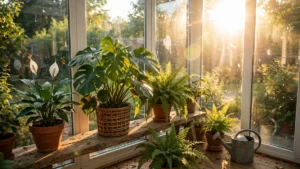
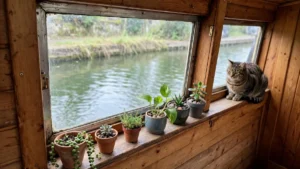
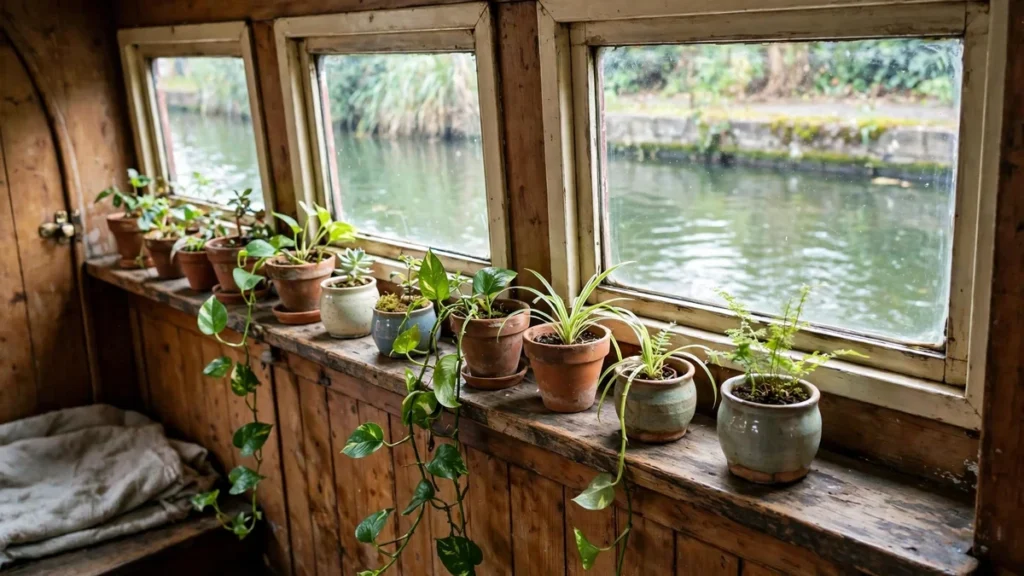
A narrowboat is a corridor with windows, so the best plant displays run along its length instead of across it. A line of small pots in matching terracotta, spaced with gaps between them, draws the eye down the boat and makes the saloon feel longer and calmer.
Keep everything low. The windows on a narrowboat are small and set low, and the light comes in sideways rather than from above. A tall, upright plant on the sill blocks the glass and throws the seating area into shade. A low fern, a small trailing plant, or a squat succulent stays below the top of the window and lets the light pour in over it. Leave the middle of the best window clear altogether — the canal outside is the picture, and the plants should frame it, not fill it.
Pick One Focal Point, Not Five
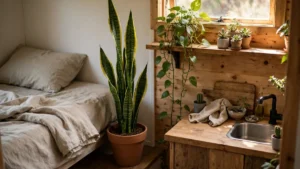
Every good display has one hero. On a narrowboat that is usually one medium plant on the saloon sill, or one trailing plant above the seating area. Everything else plays a supporting role. A full pothos spilling from a shelf, a snake plant in a plain pot at the end of the galley, or a small fern on the ledge above the dinette can each carry the room on their own.
Resist the urge to fill every surface. Two pots on a sill with a gap between them look styled; four crammed edge to edge look crowded, and on a boat that is only a few feet wide, crowded turns into clutter fast. The same rule applies to the stern and the bow. One plant at the back doors, where the light is good and the view is open, does more than three squeezed around the stove.
Let Trailing Plants Do the Work
Trailing plants are the narrowboat’s best friend. The boat has far more vertical wood than floor, and a plant that spills down a wall uses space that would otherwise sit empty. Hang one pothos from a ceiling hook near the saloon, or set it on a high shelf and let the vines run along the panelling.
Keep the trails tidy, though. Train the longest stems along a shelf edge or a picture rail, and trim anything that dangles into a walkway. A trailing plant should look placed, not escaped.

Secure Every Pot for Cruising
A narrowboat moves, and that is what separates its styling from a boathouse or a cottage. The boat rocks when another boat passes, bumps through locks, and heels a little on a windy stretch. A pot that looks lovely on a still mooring can be on the floor within minutes of casting off. For the waterside-building version of this look, see our guide to how to style plants in a boathouse, where nothing ever moves — but aboard, every display needs a plan for cruising.
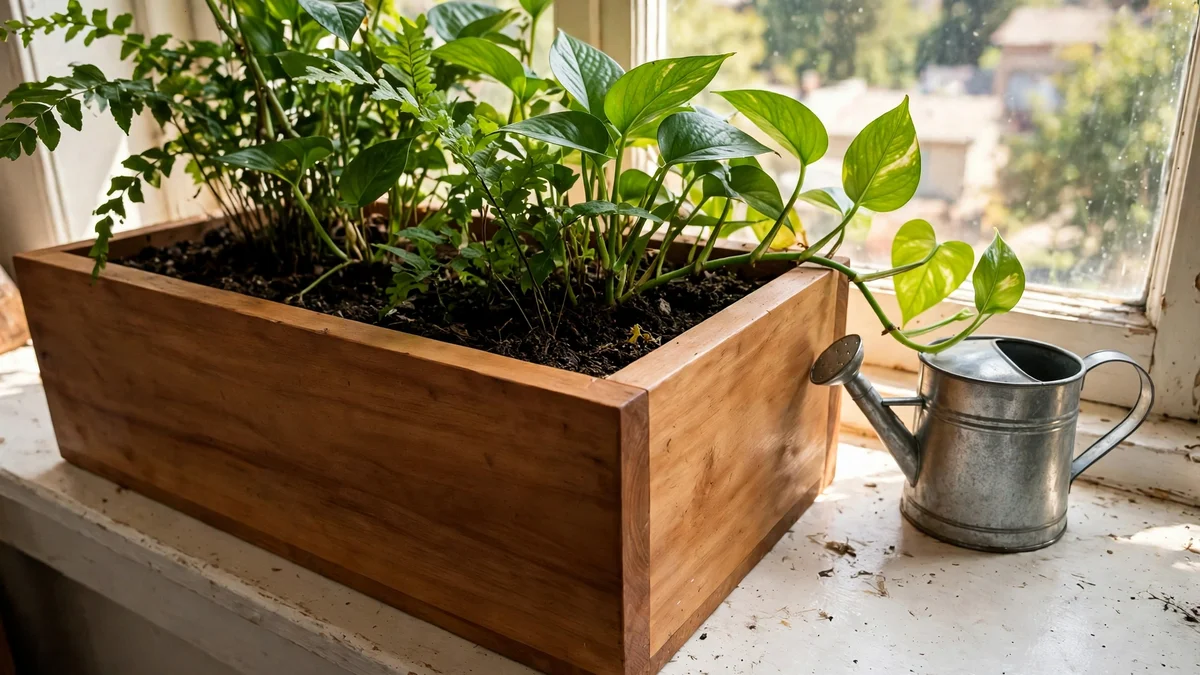
Heavy pots help. Terracotta and ceramic sit steadier than light plastic, and a wide, low pot is harder to tip than a tall, narrow one. Sit each pot on a non-slip mat, or set a group inside a shallow wooden crate or tray with a lip, so they travel as one unit instead of sliding separately.
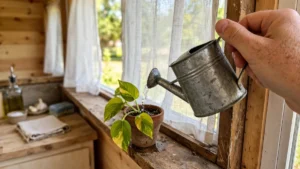
Keep pots a hand’s width back from the edge of any surface — enough to survive most bumps, and it keeps leaves away from cold, condensation-wet glass. Anything on a high shelf needs a lip or a rail in front of it, and anything hanging needs a hook screwed into solid wood, not a stick-on pad.
Match the Boat, Not the Garden Centre
A narrowboat already has a palette: warm wood, brass, painted steel, and the greens and blues of the canal outside. The plants should sit inside that palette. Terracotta, woven baskets, wooden crates, and plain glazed pots all belong here. Glossy plastic and bright novelty planters fight the wood and look out of place within a week.
Repeat one pot style along the length of the boat. Three matching terracotta pots, each holding a different leaf shape, give the saloon a calm, pulled-together feel. Mix the plants, not the pots: a spiky snake plant, a soft fern, and a trailing pothos in identical pots look like a collection.

Style for the Light You Actually Have
Light on a narrowboat changes with the mooring. One week you are in open sun beside a field, the next you are tucked under overhanging trees or in the shadow of a high brick bridge. Before you buy anything, spend a few days noticing where the light actually falls inside the boat. The brightest spot is usually the saloon windows on the sunny side, and that is where your main display belongs.
Style around that one bright zone instead of scattering plants through the whole boat. A single well-lit sill with two or three pots looks deliberate and green; the same three plants spread across dim corners look like leftovers. A sheer curtain softens harsh midday sun and stops leaves scorching when the boat turns into the sun at a mooring.
The same one-bright-zone idea works in any small moving home. If you also travel by road, our guide to how to style plants in a motorhome uses the same trick around the dinette window.
Small-Space Tricks That Earn Their Place
Use the height of the boat. A small shelf above the seating, a ledge over the bed, or a hook by the back doors can hold a plant without costing any floor or worktop at all. A single small succulent on a shelf above the dinette adds green at eye level exactly where you sit to eat.
Double up functions. A crate of herbs on the galley worktop is both a display and the cooking supply. A trailing plant above the seating softens the wood and hides a plain stretch of panelling.
Finally, leave room to live. The boat is a home first and a display second. Two or three well-placed plants, in pots that match the boat and secured for the locks ahead, will do more than a dozen squeezed onto every ledge. Start with one sill, one trailing plant, and one heavy pot — and let the canal do the rest.