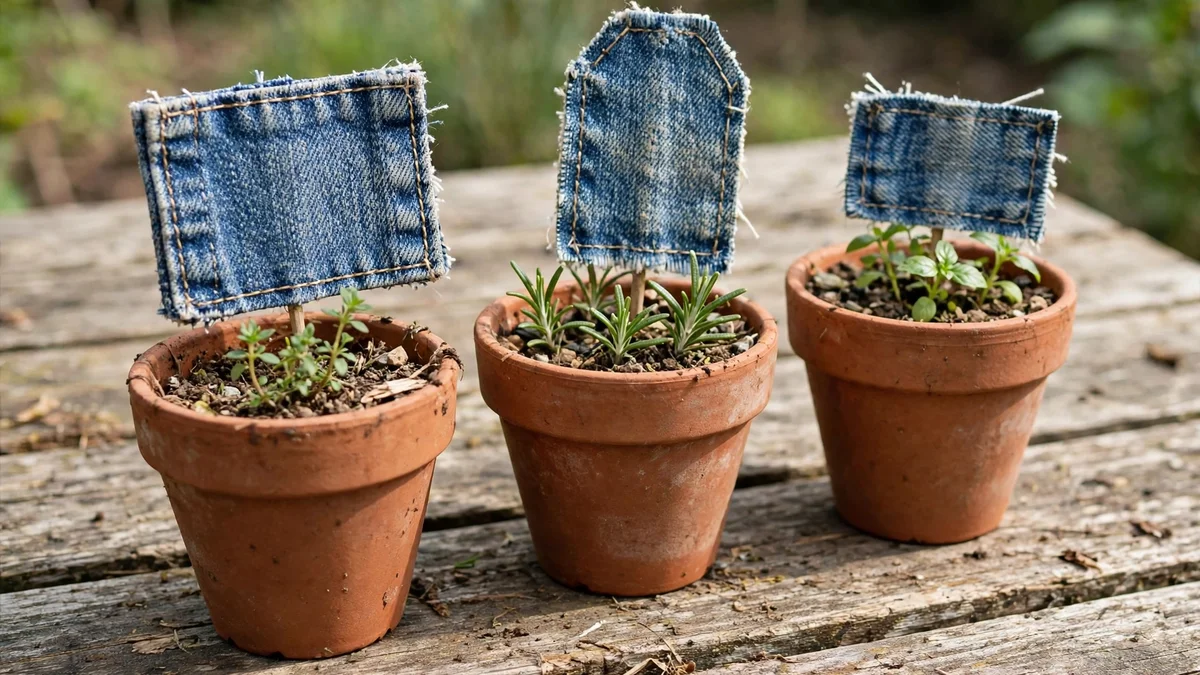
Denim is the toughest fabric in the rag bag, and that is exactly what makes it a brilliant plant label. An old pair of jeans is woven cotton twill, built to survive years of wear, and once it is cut into tags it keeps that strength in the garden. Unlike paper labels that dissolve in the first rain, denim holds its shape, takes paint and pen well, and softens rather than falls apart. It is also free: most households have a pair of jeans too worn, too short, or too stained to wear again, and one leg alone yields a dozen labels.
Choosing the Right Jeans
Not every pair of jeans makes a good label. The best candidates are 100 percent cotton denim, the kind found in older or cheaper jeans, because pure cotton takes fabric paint and pen evenly and frays into soft, even threads. Stretch denim, which contains elastane, works too, but it frays less neatly and can curl at the edges when wet. Very thin fashion denim is too flimsy for outdoor beds; save it for indoor pots.
What You Need
Gather your materials before you cut anything: one leg from an old pair of jeans, sharp fabric scissors, a pencil or chalk marker, and a paper template cut from card. For lettering, choose white or pale fabric paint and a fine brush, or a permanent fabric pen in white or black. For sealing, you need clear outdoor fabric sealant or waterproofing spray. For mounting, you need bamboo skewers or short wooden stakes, a hole punch or an awl, and twine or jute string. A sewing needle and strong thread are optional but useful for the stitched edge that stops fraying.
Cutting the Shapes
Start with a paper template. Draw a tag, a rectangle, or a small house shape on card and cut it out. A tag shape suits herb pots, a wide rectangle suits vegetable rows, and a small square suits seed trays. Keep every label the same size within one bed, about 7 to 9 cm long, so the bed reads as a set rather than a jumble.
Pin the template to a flat part of the denim leg and cut around it with long, smooth scissor strokes. Short snips leave a ragged edge that frays unevenly. Denim is thick, so cut one layer at a time and keep your scissors sharp; blunt scissors will crush the weave instead of cutting it. Cut two layers for every label if you want a stiffer result: glue the two layers together with fabric glue, wrong sides facing, and let them dry flat under a book.

Now decide how the edge should look. You have two honest choices, and both work. For a neat edge, stitch around the label about 5 mm from the cut, using a running stitch in a contrasting thread — cream or gold thread looks wonderful against blue denim and echoes the topstitching on the original jeans. For a fringed edge, pull out the loose weft threads along each side with your fingers until you have a fringe about 5 mm deep, then stitch a line just above the fringe to stop it travelling further. The fringe is the denim-only trick: no other label material in this series frays into something you actually want to keep.
Writing the Name
Denim is dark, so pale lettering is the rule. White fabric paint shows up best on mid and dark blue denim, and a fine brush gives you more control than a pen on the rough woven surface. Practice the name on a scrap first: denim weave drinks paint, so the first stroke can look thin and the second stroke is what makes the letter solid. Two thin coats, dried between coats, beat one thick coat that cracks when the label bends.

Sealing Against Rain
Denim is cotton, and cotton absorbs water. An unsealed denim label will survive a shower, but a wet season will soften it, fade the paint, and eventually rot the fibres. Sealing is not optional for outdoor labels, and it is the step that turns a craft project into a garden tool.
Let the paint dry for a full day first — fabric paint that feels dry to the touch is often still damp underneath, and sealant trapped over damp paint will cloud. Then spray or brush on two coats of clear outdoor fabric sealant, letting each coat dry completely. Pay attention to the edges and the back, where water creeps in first. A waterproofing spray made for canvas and outdoor fabric works well and stays flexible, which matters because a stiff label snaps in wind while a flexible one bends.
Attaching to Pots and Stakes
A denim label needs a mount, because the fabric alone will not stand up in soil. The simplest mount is a bamboo skewer: punch a hole near the top of the label with an awl, thread twine through it, and tie the label to the skewer with a bow. The bow matters — a knot you cannot undo means you cannot move the label when you rotate the bed, and gardeners always rotate the bed.
Do not push the denim itself into the soil. Buried cotton rots in weeks, and the label will snap off at the soil line. Keep the fabric above the soil and let the stake do the buried work. At the end of the season, untie the labels, wash them gently by hand, and store them flat in a dry box. A sealed denim label that is stored dry will last two or three seasons, and the frayed edge only gets softer and better looking with age. That is the real case for denim over every other material in the DIY plant labels and garden markers guide: it is the one label that improves as it weathers, instead of simply surviving.

Denim Labels at a Glance
Denim labels suit gardeners who already have old jeans and like a label with a bit of character. They are tougher than felt labels, which is why the felt plant labels guide recommends wool felt for softness while denim wins on hard wear, and they are cheaper than the leather plant labels, which need specialist tools to cut and stamp. Denim’s weakness is water: it must be sealed, and it will never outlast stone or tile in a wet climate. Its strength is that it costs nothing, cuts with ordinary scissors, and turns a pair of jeans headed for the bin into a full season of garden markers.
Start with one leg of one old pair of jeans, make four or five labels, and put them in the pots you look at every day. If the lettering is still crisp after a month of rain, you have your method — and a reason to keep every worn-out pair of jeans from now on.