A plant that looked perfect in spring can turn yellow within a week of the first real heat. Summer is the hardest season for many houseplants: stronger light, hotter and drier air, faster-drying soil, and pests breeding fast. The pattern tells you which change is behind it.
Most summer yellowing is fixable, but the wrong fix makes it worse: watering a scorched plant or feeding a heat-stressed one adds a second problem. Match the pattern below and change one thing at a time.

First, Read the Pattern
A few pale lower leaves on an otherwise healthy plant in midsummer are often just the plant shedding old growth. That is normal and needs no fix.
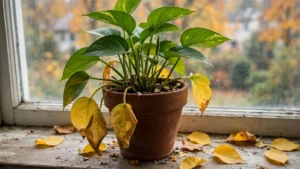
A real problem looks different: yellowing that spreads across many leaves in a few days, yellow leaves on new growth, leaves that yellow then turn brown and crispy, or yellowing that starts on the window side. Note what changed just before: a move, a heatwave, a holiday watering gap, or a recent feed.
1. Heat Stress
Most houseplants are happiest between about 18 and 26 degrees, but a room can pass 30 degrees on a hot day, and a plant in a sunlit window can be several degrees hotter still. In that heat, the plant loses water from its leaves faster than its roots can replace it, and the oldest leaves yellow first.
Heat-stressed leaves usually turn a washed-out yellow all over and feel limp rather than crispy, and the plant often wilts in the afternoon. Move it away from the hottest window and water it thoroughly in the morning. Do not repot or feed a heat-stressed plant; both add stress while it is already struggling.
2. Sun Scorch
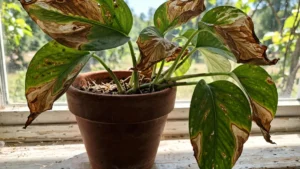
Summer sun through a window is far stronger than spring sun, and a plant that was happy in that spot in April can scorch by July. Scorched leaves are bleached and patchy, often white or pale yellow mid-leaf, with dry brown edges. Only the leaves facing the glass are affected, and the shaded side stays green.
Move the plant back from the window or behind a sheer curtain. Scorched leaves will not turn green again, so trim the worst of them off. To give a plant more sun in summer, move it gradually over a week or two, never in one jump.

3. Overwatering in Summer Humidity
Summer feels like the season to water more, and for many plants that is true. But humid summer air slows evaporation, so a pot can stay wet far longer than you expect. Water on a fixed schedule without checking the soil, and the roots can sit in soggy soil for days, starved of air, while leaves yellow in bunches.
The warning signs are several yellow leaves at once, a plant that wilts even though the soil is wet, and soil still damp several centimetres down a week after watering. Always check before you water; only water when the top few centimetres feel dry. For a fuller routine, read our guide to how to water plants in summer. Make sure the pot drains freely.
4. Underwatering in the Heat
The opposite mistake is just as common. In a heatwave, a plant in a small or terracotta pot can dry out completely in a day or two. Underwatered leaves yellow from the edges inward, turn brown and crispy, and feel dry and papery, while the soil pulls away from the sides of the pot.
The fix is a deep soak, not a dribble. Set the pot in a basin of water for twenty to thirty minutes, then let it drain completely. After that, check the soil daily during hot spells. Small pots, hanging baskets, and terracotta dry out fastest, so check those first.

5. Summer Feeding Burn
Summer is the growing season, so it is when people feed their plants, and that is exactly when feeding burn happens. Fertiliser salts build up in dry soil, and when the plant is already stressed by heat, a full-strength feed can scorch the roots. The leaves yellow, often with brown tips and edges, within days.
If you suspect feeding burn, flush the soil: water thoroughly until water runs from the drainage holes, let it drain, and repeat once. Then stop feeding until the plant is growing well again. When you do feed, use half the strength on the label, and only feed a plant that is actively growing and properly watered.
6. Pests That Peak in Summer
Warm, dry summer air is ideal breeding weather for spider mites, aphids, and thrips, and they all cause yellowing. Spider mites are the classic summer pest: look for fine webbing under the leaves and a stippled, dusty yellow look on the surface. Aphids cluster on soft new growth, and thrips leave silvery streaks. Pest yellowing is usually speckled or mottled.
Check leaf undersides and joints every week in summer, and act at the first sign. Wash the plant with a strong spray of water, wipe the leaves, and isolate it from your other plants. Heat-sensitive plants such as calatheas are especially prone to summer pest flare-ups, so if you grow one, our guide to how to care for a calathea in summer covers the extra care they need.
Summer Yellow Leaves at a Glance
| Cause | What the leaves look like | Fix first |
|---|---|---|
| Heat stress | Washed-out yellow all over, limp | Move to a cooler spot, water in the morning |
| Sun scorch | Bleached pale patches, brown edges, sunny side only | Pull back from the window or add a sheer curtain |
| Overwatering in humidity | Many leaves yellow at once, soil stays wet | Stop watering, check soil first, improve drainage |
| Underwatering in heat | Yellow from edges inward, crispy tips, dry soil | Deep soak for 20 to 30 minutes, then check soil daily |
| Feeding burn | Yellow leaves with brown tips soon after feeding | Flush the soil, stop feeding until the plant recovers |
| Summer pests | Speckled yellow, webbing or insects under leaves | Wash the leaves, isolate the plant, check weekly |
What to Do First
Check the soil first: if it is bone dry, soak the plant; if it is still wet, stop watering and check the drainage. Yellowing on the window side points to scorch; yellowing all over points to heat or water. Check the leaf undersides for webbing and tiny insects. A completely yellow leaf will not turn green again, so remove it once it comes away easily and watch the new growth instead.

When to Worry
Most summer yellowing is a warning, not an emergency. Worry when yellowing spreads fast across the whole plant, when new leaves come through yellow or stunted, or when the plant wilts despite wet soil, which can mean the roots are damaged. Healthy roots are firm and pale, while rotting roots are soft, dark, and smell unpleasant. If you find rot, trim the soft roots away and repot into fresh, free-draining mix.
Yellowing that looks like brown, dying leaf tips rather than a summer pattern may be a different problem, and our guide to why plant leaves turn brown can help you tell them apart. Usually, though, the plant wants a cooler spot, a steadier drink, or a break from feeding.