The kitchen is the hardest room in the house for dried flowers, and one of the most rewarding. Fresh flowers wilt here within days, while dried flowers need no water, never drop petals into the soup, and can look lovely for a year or more. The catch is that steam, cooking grease, and heat from the hob all change the rules, so the flowers need to go in the right spots and be the right stems.
Why the Kitchen Plays by Different Rules
A kitchen does three things to dried flowers that no other room does. Steam from pans and kettles sends damp air upward, and dried petals that keep getting damp go limp and can grow mould. Cooking grease settles on flower heads as a sticky film that dust clings to. Heat from the hob and oven makes dry stems brittle if they sit too close.
So the best spots are away from the cooking zone: high up, on a shelf, by a window, or at the far end of the worktop. Keep them away from the hob and the sink.
Which Stems Survive a Kitchen
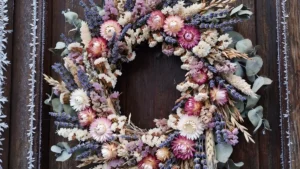
Kitchen stems need two qualities: they should hold their shape in warm, steamy air, and they should not shed. A stem that drops petals is a nuisance anywhere, but above a worktop it is a real problem. Lavender is the safest starting point — it holds its purple and scent for months and sheds very little. Wheat and other dried grasses add height without dropping petals. Statice and strawflowers keep their colour for a year or more and have tough, papery petals that do not crumble.
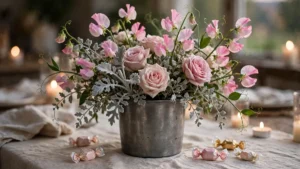
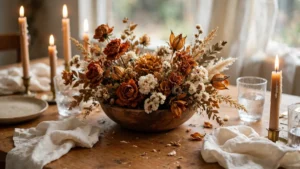
Dried roses bring depth, but choose deep red or burgundy rather than pale pink, which fades toward beige. Eucalyptus adds a silvery green, though it sheds small leaves, so keep it away from food areas. Our guide to the best flowers to dry for dried arrangements covers which varieties hold their colour and shape longest. Avoid the shedders: baby’s breath drops tiny buds everywhere, hydrangeas crumble when touched, and fluffy seed heads drift onto worktops.
Above the Cabinets: The Kitchen’s Best Spot
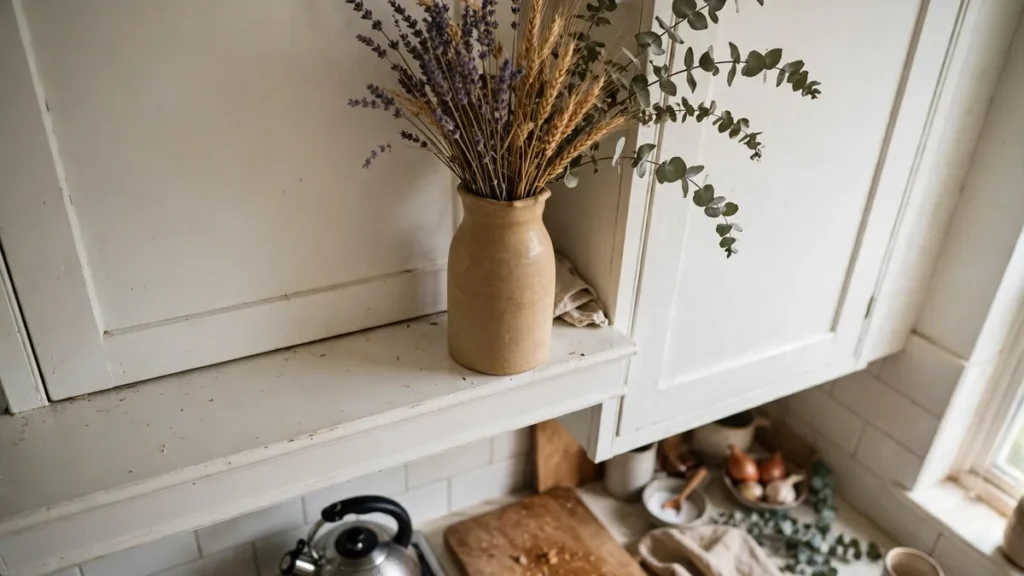
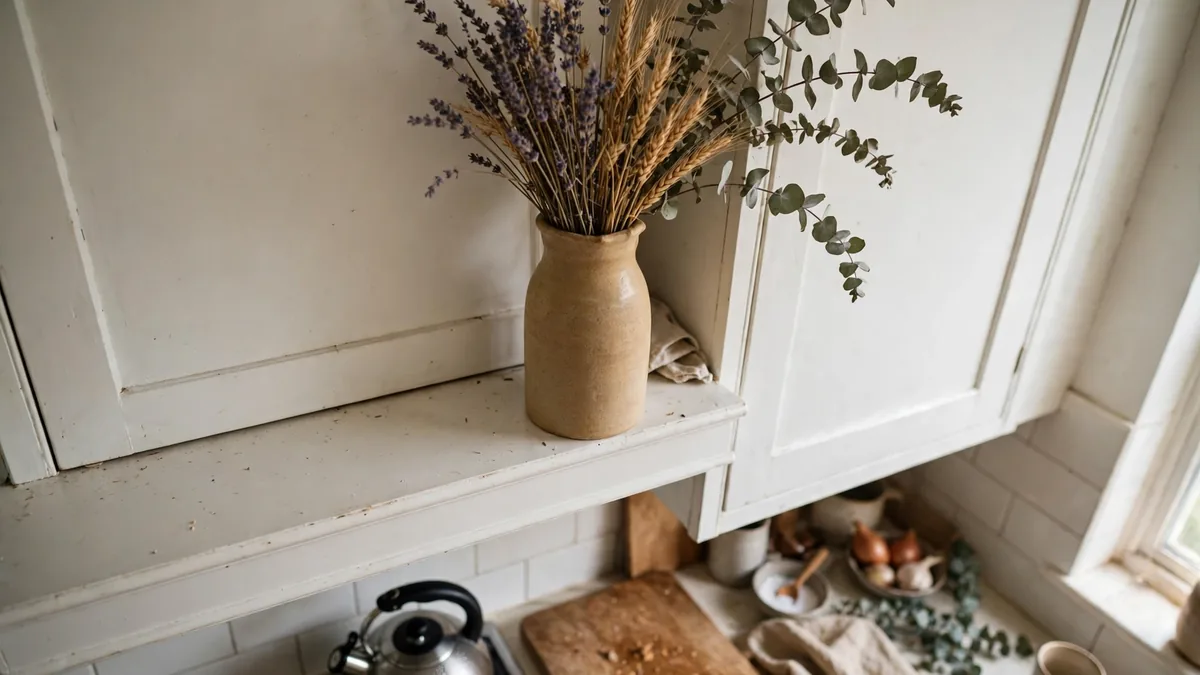
The space on top of the wall cabinets is the single best home for dried flowers. It is high, so it is clear of steam from pans and splashes from the sink, and it is the first thing you see on walking in. A tall jug of wheat, lavender, and eucalyptus up there fills a gap that otherwise looks forgotten. Because the spot is above eye level, you can be generous with height — tall stems that would look awkward on a worktop look natural here.
Keep it simple: one or two vessels with wide, heavy bases, so they cannot be knocked off when you reach for something up there. For ideas on dressing that whole strip, our guide to decorating above kitchen cabinets covers baskets, plants, and objects that sit happily alongside a dried arrangement.

Open Shelves: Small Bunches, Well Spaced
Open shelves are the kitchen’s prettiest spot for dried flowers, and also the easiest to get wrong. Plates and mugs get used every day, so anything on a shelf gets knocked and moved constantly. Keep the flowers small and give them their own patch of shelf: a single small jar of lavender or bunny tails at the end adds warmth without getting in the way of the plates.
Choose narrow-necked jars and short, heavy vases: a tall, top-heavy vase is an accident waiting to happen the first time someone reaches for a mug. Keep the stems short — under about 25 centimetres — so they never brush against the shelf above, where steam and heat collect, and keep the bunch to one end of the shelf rather than in the middle of the crockery.
Jars by the Window: The Bright Spot
A jar of dried flowers on the kitchen windowsill is one of the loveliest sights in a home, and the window is usually the driest, airiest spot in the room. Steam clears through it, and the light keeps the colours looking fresh. A glass mason jar of lavender and strawflowers above the sink catches the morning light.
Watch two things. Direct sun fades dried flowers faster than anything else, so if your window gets strong afternoon sun, move the jar a little to the side or choose warm golds and creams that fade gracefully rather than pale pinks that turn grey. And keep the jar away from the tap: splashes of water are the fastest way to ruin dried petals. To build the jar itself, our guide to how to arrange flowers in a mason jar walks through sizing, stem lengths, and which jars suit a windowsill.

The Worktop: Low, Heavy, and Far From the Hob
The worktop is the spot most people try first, and it needs the most care. Chopping boards, hot pans, and shopping bags all pass across it, and anything tall or light gets knocked over. If you want flowers on the worktop, put them at the far end, away from the hob and the sink, in a low, wide, heavy vase that will not tip when someone sets a bag down beside it.
Keep the bunch low — under about 30 centimetres — so it never blocks your view while you cook and never leans over the hob. Never place dried flowers beside the cooker, and never hang them above it: dry petals catch light easily. Keep dried stems at least an arm’s length from the oven door, too, where heat escapes every time it opens.

Steam, Grease, and Keeping Them Clean
Kitchen dried flowers need a little more care than the same bunch would in a bedroom. Grease settles on the petals as a thin, sticky film, and once it is there, dust sticks and the bunch starts to look grey. Take each bunch outside or over the sink every two to three weeks and give it a gentle shake. A soft paintbrush, brushed downwards, lifts dust without snapping stems. A hairdryer on its coolest, lowest setting, held at least 30 centimetres away, clears dust from clustered flowers like statice.
Never use a damp cloth on dried flowers and never spray them with water or cleaning products: moisture makes petals go limp and invites mould, which is the last thing you want near food. If a bunch has picked up a greasy film that shaking will not shift, retire it rather than try to wash it clean. Run the extractor fan whenever you cook — it pulls steam and grease out before they settle, and it is the single best habit for keeping kitchen flowers fresh.
A Kitchen That Feels Finished
Dried flowers do not last forever, and in a kitchen they show their age sooner: colours fading to grey-brown, stems going limp or brittle, a greasy look that shaking will not fix. When the whole arrangement has faded, retire it and start again with fresh, sturdy stems in the spot that worked best — high up, by the window, or at the far end of the worktop, well away from the hob. Start with one spot and see whether the room wants more.